Bankruptcy Leads Texas: Why the Homestead Exemption Changes Everything
Bankruptcy Leads Texas: Why the Homestead Exemption Changes Everything
TL;DR: Texas is the only state with an unlimited homestead exemption in bankruptcy, meaning primary residences are almost never liquidated. For real estate investors, the real opportunity in bankruptcy leads Texas lies in non-homestead properties: investment rentals, commercial assets, second homes, and vacant land that lose their protection in Chapter 7 or Chapter 13 filings. The state's four federal bankruptcy court districts, its short 60-day non-judicial foreclosure timeline, and a Chapter 13 failure rate above 60% create a steady pipeline of distressed properties worth tracking.
Texas does not protect your primary residence in bankruptcy. It protects it without limit. A homeowner in Dallas with $2 million in equity on a homesteaded property can file Chapter 7 and keep the house entirely. A landlord with that same $2 million in rental properties gets no such shield. That contrast is the entire game for anyone working bankruptcy leads Texas.
The state filed over 47,000 bankruptcy cases in 2024 across its four federal districts. Not all involve real estate, but enough do, and the properties that matter to investors are the ones the homestead exemption cannot touch.
How Bankruptcy Actually Creates Property Leads in Texas
Bankruptcy filings in Texas fall into two buckets that matter for investors. Chapter 7 liquidation and Chapter 13 reorganization. Each creates a different type of lead, on a different timeline, with different risk profiles.
Chapter 7 and Non-Homestead Real Estate
In a Chapter 7 filing, a court-appointed trustee examines the debtor's assets and determines which can be liquidated to pay creditors. The Texas homestead exemption, codified in Texas Property Code Section 41.001, protects a primary residence on up to 10 urban acres or 100 rural acres (200 for families) with no dollar cap. No other state offers this.
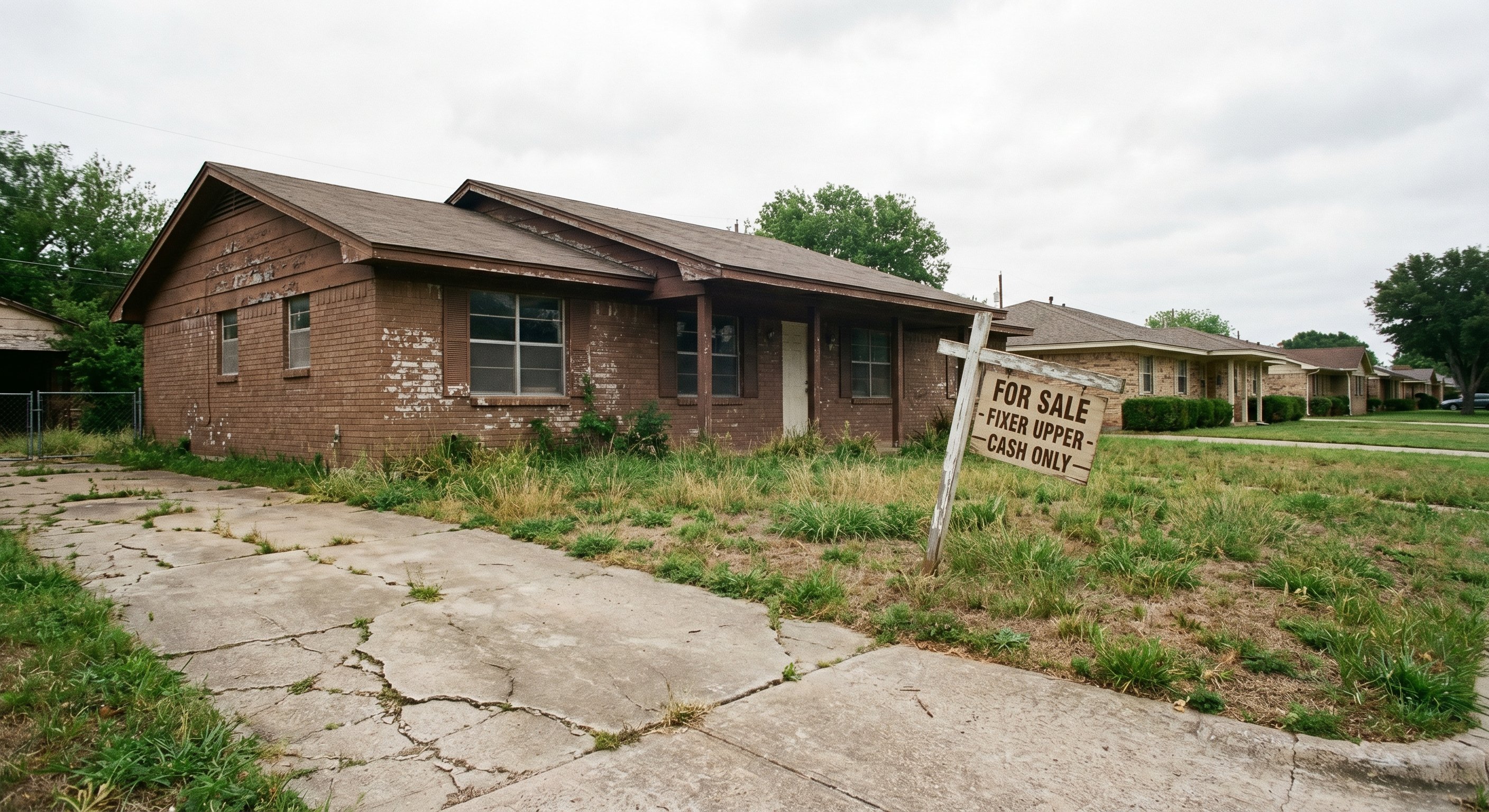
What the exemption does not cover: rental homes, commercial buildings, vacant land, second homes, and any property not designated as a primary residence. These assets fall under the federal exemption system or Texas's personal property exemptions, which cap out at relatively low amounts. A rental property with $150,000 in equity has almost no protection in a Texas Chapter 7 case.

The trustee can sell these non-exempt properties, often at a discount, to satisfy creditor claims. Investors who track these cases early, before the trustee lists the property for sale, can negotiate direct purchases. The timeline is tight: trustees typically move to abandon or sell assets within 60 to 90 days of the Section 341 meeting of creditors.
Chapter 13 Failures and Reverted Properties
Chapter 13 bankruptcy allows debtors to restructure their obligations over a three- to five-year repayment plan. Many Texas filers use Chapter 13 specifically to stop a foreclosure on their primary residence. The homestead exemption makes this strategy particularly attractive because they can protect unlimited equity while catching up on missed payments.
The problem: roughly 60% of Chapter 13 plans fail nationally, according to the American Bankruptcy Institute. When a plan fails, the case converts to Chapter 7 or gets dismissed entirely. Either outcome puts non-homestead properties back in play. Investors tracking these cases from the filing date, not the failure date, get months of advance notice.
Texas Bankruptcy Court Districts and Where Leads Concentrate
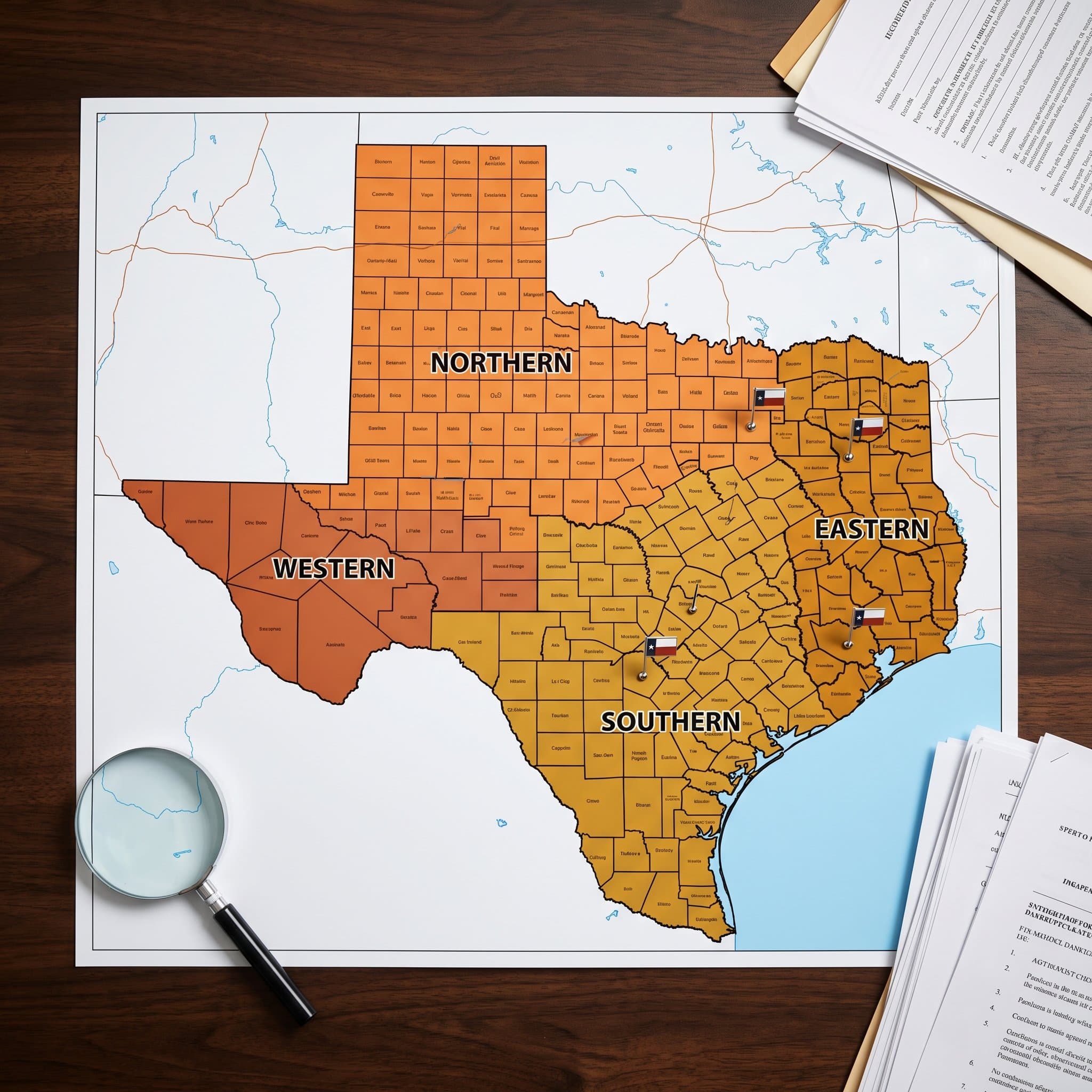
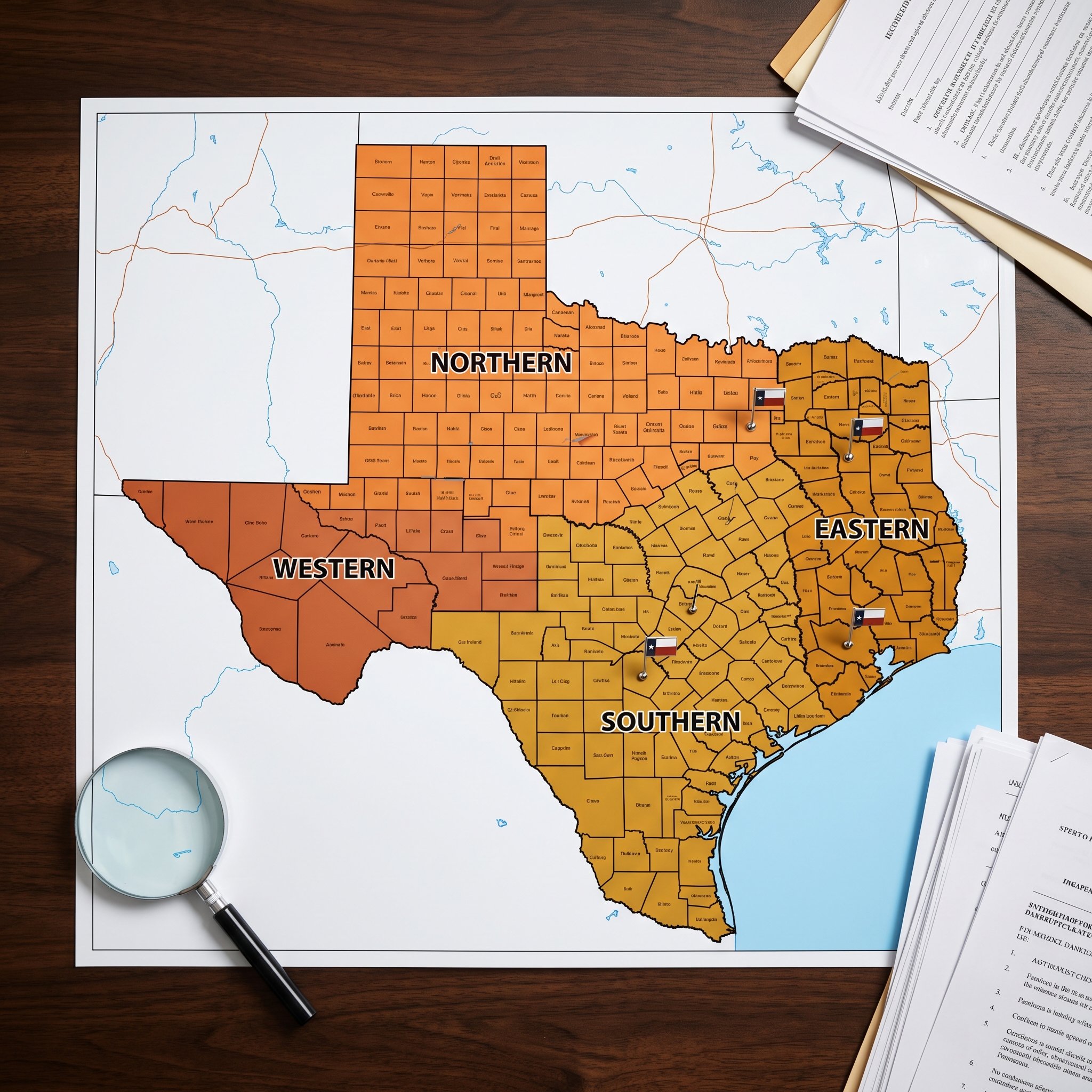
Texas has four federal bankruptcy court districts, each covering distinct geographic regions with different filing volumes and property profiles.
Northern District covers Dallas, Fort Worth, Lubbock, and Amarillo. The Dallas Division handles the highest volume of business-related filings in the state.
Southern District covers Houston, Galveston, Corpus Christi, and the Rio Grande Valley. Harris County generates a significant share of filings, and the area's exposure to oil and gas cycles creates waves of distress tied to commodity prices.
Eastern District covers Tyler, Beaumont, Sherman, and East Texas. Smaller population but higher concentration of rural properties and large land parcels.
Western District covers San Antonio, Austin, El Paso, and West Texas. Rising filing volumes in San Antonio and Austin reflect climbing housing costs in those metros.
Filing patterns follow economic cycles. Oil price drops hit Houston and West Texas hard. Tech layoffs ripple through Austin. Military base reductions affect San Antonio and Killeen. Each shock generates a new wave of filings, typically peaking six to twelve months after the triggering event.
What Makes Texas Different from Other States
Three structural factors separate Texas bankruptcy leads from those in every other state.
First, the unlimited homestead exemption means that investors targeting primary residences through bankruptcy leads are largely wasting their time. The lead pool is narrower but more concentrated: it skews toward investment properties, commercial real estate, and land. If you are used to working bankruptcy leads in states like Georgia or Ohio, where the homestead cap forces sales of primary homes with significant equity, you need to adjust your targeting.
Second, Texas is a non-judicial foreclosure state. Most residential mortgages contain a power-of-sale clause that allows the lender to foreclose without going to court, often within 60 days of default. This short timeline means many homeowners file bankruptcy specifically to trigger the automatic stay and halt a fast-moving foreclosure. The bankruptcy filing itself becomes a distress signal, not just the eventual outcome.
Third, Texas is a community property state. Debts incurred during marriage are generally joint obligations, meaning both spouses' assets may be at risk. This can pull properties into the estate that might be exempt in a common-law property state.
Free Weekly Alerts
See What's Distressed in Your Market
Get free weekly alerts — new distressed properties, motivation scores, and hot neighborhoods in your area. Addresses and contact info available inside DistressIQ.
Free forever · No credit card · Unsubscribe anytime
How to Identify Bankruptcy Leads in Texas Before the Competition
The PACER system (Public Access to Court Electronic Records) is the official source for federal bankruptcy case data. Every filing, trustee motion, and asset schedule is available there. The system charges per page and costs add up quickly. Most experienced investors instead rely on aggregated data sources that consolidate bankruptcy filings with property records, making it possible to see which filings involve real estate without reading hundreds of individual case documents.

The key data points to filter for:
- Chapter 7 filings with real estate listed on Schedule A/B. These are the cases where the trustee is actively evaluating whether to sell property.
- Chapter 13 cases filed within the last 12 to 24 months. These are the plans most likely to fail, converting to liquidation or dismissal.
- Cases with multiple non-homestead properties. A single filing that includes three rental homes and a commercial lot is worth more attention than a case with one primary residence.
- Repeat filers. Multiple bankruptcy filings over several years signal chronic financial distress and a higher probability that the current filing will not end successfully.
Common Mistakes Investors Make with Bankruptcy Leads in Texas
Treating all bankruptcy filings as equal is the fastest way to waste time and money. In Texas, the homestead exemption eliminates the majority of primary residences from the opportunity pool. Investors who do not filter for property type end up chasing leads that will never convert.
Another frequent error: contacting debtors directly before the Section 341 meeting. The automatic stay prohibits creditor contact, and an aggressive approach early in a case can draw trustee scrutiny. The right time to approach is after the trustee has identified the property as a non-exempt asset, typically six to eight weeks after filing.
Stacking Bankruptcy Signals with Other Distress Indicators
Bankruptcy filings rarely happen in isolation. A homeowner or investor who files for bankruptcy has usually been under financial pressure for months or years before reaching that point. The most valuable leads show multiple overlapping distress signals.
A property that appears in a bankruptcy filing and also shows up as tax delinquent, pre-foreclosure, or subject to a lis pendens is far more likely to result in a sale than a bankruptcy filing alone. The bankruptcy confirms the severity of the financial distress. The other signals confirm the timeline and the specific assets at risk.

DistressIQ tracks bankruptcy filings alongside 20-plus other distress signal types across all 254 Texas counties, updated daily from county and federal sources. The motivation scoring stacks these signals to surface properties where the distress is both severe and time-sensitive. Browse the Texas bankruptcy signal map at distressiq.ai to see active filings cross-referenced with tax delinquency and ownership changes.
Working with Bankruptcy Trustees and Attorneys
Building relationships with bankruptcy trustees in the districts you work is one of the most productive activities available. Trustees have a fiduciary duty to maximize returns for creditors, which means they want competitive bids on property sales. An investor who can close quickly, with proof of funds, and without financing contingencies becomes a preferred buyer.
Each district has a panel of standing Chapter 7 trustees and a standing Chapter 13 trustee. Contact information is on each court's website. Trustees can tell you which properties are slated for sale, which have been abandoned, and which are still under evaluation.
Bankruptcy attorneys who represent debtors are also valuable contacts. When a Chapter 13 plan is failing, the debtor's attorney often knows before anyone else that a property sale is coming. They may advise clients to work with an investor who can close fast when the alternative is a trustee sale at a steeper discount.
Frequently Asked Questions
Q: Can a bankruptcy trustee sell a primary residence in Texas?
No, in almost all cases. The Texas homestead exemption protects a debtor's primary residence with no dollar limit, provided the property meets the acreage requirements (10 urban acres or up to 200 rural acres for a family). This protection applies in both Chapter 7 and Chapter 13 cases. The only exceptions involve fraud, such as a debtor who moved into a property and claimed homestead status specifically to shield it from creditors within the lookback period. For practical purposes, investors should assume primary residences in Texas bankruptcy cases are not available for purchase through the trustee.
Q: What types of real estate do Texas bankruptcy leads typically involve?
The most common property types are investment rental homes, small commercial buildings (strip centers, warehouse spaces), vacant residential lots, undeveloped rural acreage, and second homes or vacation properties. These assets lack homestead protection and are subject to liquidation in Chapter 7 cases or can be at risk if a Chapter 13 plan fails. In the Houston and Dallas metros, multifamily properties with four or fewer units surface regularly in bankruptcy filings tied to heavily indebted small investors.
Q: How quickly do bankruptcy trustees move to sell property in Texas?
Trustees typically conduct the Section 341 meeting of creditors within 30 to 45 days of the filing date. After that meeting, they evaluate the debtor's asset schedules and decide which properties to administer. A decision to sell usually comes within 60 to 90 days of filing. The actual sale process, including any court approval, can take another 30 to 60 days. Investors who identify leads at the filing stage have roughly four to five months to prepare an offer before the property reaches the open market.
Q: Are bankruptcy leads Texas better than pre-foreclosure leads?
They are different, not better. Pre-foreclosure leads in Texas move on a faster timeline because of the state's non-judicial foreclosure process, which can complete in as little as 60 days. Bankruptcy leads take longer to develop but often involve more assets per filing, particularly for investors targeting landlords and small commercial owners. The highest-value approach is tracking both signals together, because a borrower who files bankruptcy to stop a foreclosure is someone under maximum financial pressure with a ticking clock.
Q: Which Texas counties generate the most bankruptcy filings with real estate?
Harris County (Houston), Dallas County, Tarrant County (Fort Worth), Bexar County (San Antonio), and Travis County (Austin) consistently produce the highest volumes. The Southern District of Texas, which includes Harris County, regularly leads the state in total filings. For investors focused on commercial bankruptcy properties, Dallas and Harris counties offer the deepest inventory. For rural land and acreage, the Eastern and Western Districts provide opportunities with less competition from institutional buyers.
Q: Does the Texas homestead exemption apply to out-of-state investors who own property in Texas?
No. The homestead exemption only applies to a debtor's primary residence. An investor who lives in Colorado but owns rental properties in Texas cannot claim homestead protection on those rentals. This is precisely why investment properties are the primary opportunity in Texas bankruptcy cases: they enter the estate without exemption protection, making them available for trustee sale or negotiated purchase.
Q: How do investors find bankruptcy filings that involve real estate without using PACER?
Several commercial services aggregate bankruptcy filing data and cross-reference it with property records, including DistressIQ's platform, which tracks bankruptcy signals alongside other distress indicators across all Texas counties. These platforms filter out filings that do not involve real estate, saving the time and expense of manual PACER searches. County appraisal district websites also show ownership changes that may indicate a trustee sale or bankruptcy-related transfer, though these records appear after the fact rather than at the filing stage.
The data behind this article
DistressIQ Monitors These Signals in Real Time
Pre-Foreclosures
NOD + NTS filings
Tax Delinquency
County treasurer records
Code Violations
Municipal inspection filings
Probate Filings
Superior Court records
Every lead is scored 0–100 for seller motivation based on signal type, duration, severity, and stacking. Nationwide coverage — every US county, updated daily.
Ready to find deals in your market?
See Live Distress Signals in Your County
Stop calling dead leads. Every lead in DistressIQ is scored 0–100 for seller motivation, with verified contact info included. Browse the free tier to see what's active in your market right now.
Browse Free Leads — No Credit Card