Foreclosure Leads Vermont: The Quietest Distressed Property Market in New England
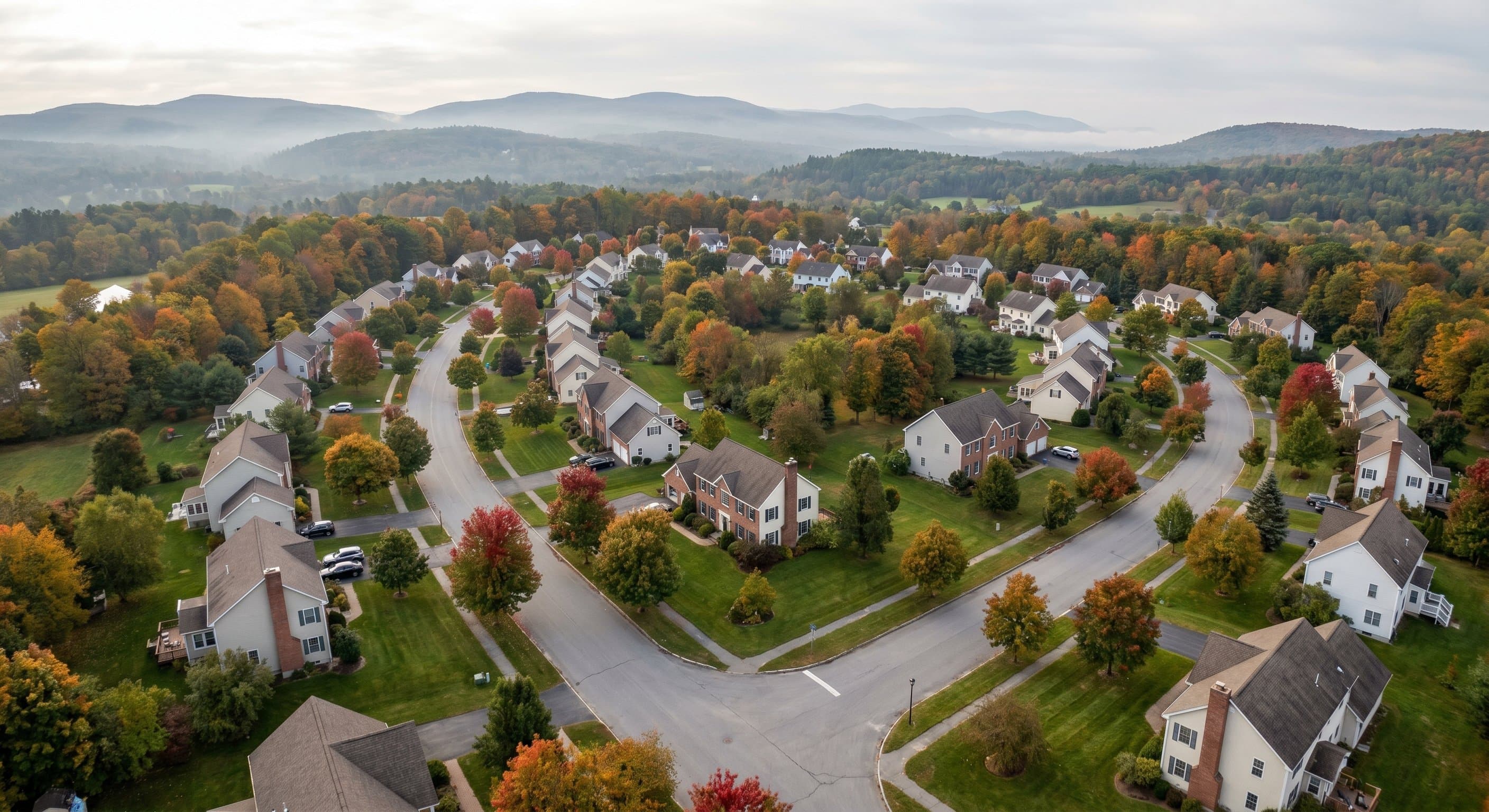
TL;DR: Vermont runs mostly judicial foreclosures, and the state is one of only two in the country that allows strict foreclosure, where a court decree transfers title directly without an auction. Most investors do not know this pathway exists. The foreclosure timeline is approximately 95 days in non-judicial cases and longer in judicial ones, with a 6-month redemption period for owner-occupied homes. There are fewer than 1,000 pre-foreclosure properties statewide, making competition per deal extremely low. The market is concentrated in Chittenden County (Burlington area), which holds roughly 37 of the state's estimated distressed inventory. Vermont's $385,000 median home price and 2.1 months of housing supply mean any distressed property that does hit the market faces strong underlying demand. Investors who understand the judicial process and strict foreclosure option have an edge in one of the least-competed-over distressed property markets in the Northeast.

When investors think about distressed property markets in the Northeast, New Jersey, New York, and Pennsylvania dominate the conversation. Connecticut and Massachusetts get some attention. Vermont barely registers.
That is not an accident. Vermont has one of the smallest distressed property inventories in the country. Statewide, there are fewer than 1,000 pre-foreclosure properties at any given time. By comparison, Florida and Texas each have tens of thousands. The result is that most real estate investors, wholesalers, and flippers never bother learning how Vermont works. They move to easier markets.
The small inventory size is the whole point. Less competition means more opportunity per lead. Less competition means fewer other investors calling the same motivated sellers. Less competition means properties that do come to market tend to move under genuine demand rather than under the weight of a dozen concurrent offers from people who found the same lead on a data platform.
If you are willing to learn the specific rules that govern Vermont foreclosures, you get access to a market where the average investor is not showing up.
How Foreclosure Works in Vermont
Vermont is a judicial foreclosure state, which already sets it apart from most of the country. The lender must file a lawsuit to foreclose, and the court oversees the process. This adds time and legal formality compared to non-judicial states where the trustee can proceed without court involvement.
Here is the detail most investors miss: Vermont is one of only two states that recognizes strict foreclosure as a legally defined pathway under Vermont statute Title 12, Chapter 172. Under strict foreclosure, the court issues a decree foreclosing the borrower's right of redemption and transfers title directly to the lender without a public auction. The borrower gets a redemption period (typically 180 days for owner-occupied homes) to pay off the full amount, and if they fail to do so, title transfers automatically.
Most Vermont foreclosures proceed as judicial sales rather than strict foreclosures, meaning the property does go to auction. But the existence of strict foreclosure as a legal option is unique to Vermont and Connecticut, and it shapes how the entire market operates.
For investors, strict foreclosure creates a specific type of opportunity: properties that fail to sell at auction can sometimes be acquired through post-foreclosure negotiations or direct lender deals, because the lender has already taken title in some cases. Understanding this dynamic matters when you are evaluating a Vermont lead.

The Foreclosure Timeline: What 95 Days Actually Means
Published foreclosure timelines put Vermont at approximately 95 days for a standard case. That number is accurate for non-judicial foreclosures. Judicial foreclosures take longer because court dockets move slower, and the strict foreclosure pathway involves its own redemption period on top of the court proceedings.
In practice, here is how the timeline breaks down:
- Default: Typically after 90 to 120 days of missed payments
- Notice of intent to foreclose: Sent to the borrower, which is the formal start of pre-foreclosure
- Pre-foreclosure window: This is your investment window. In Vermont's judicial process, there is an explicit pre-foreclosure period before the lender files with the court
- Legal filing: The lender files the foreclosure complaint with the appropriate court
- Redemption period: For owner-occupied homes under judicial sale, the court sets the redemption period (typically 6 months)
- Sale or strict foreclosure decree: The property either goes to auction or title transfers via court decree under strict foreclosure
What this means for your outreach: Vermont pre-foreclosure leads give you a longer runway than in non-judicial states. You are not working against a 30-day countdown clock like you would be in Texas or Nevada. The extended timeline means motivated sellers in Vermont often have more time to negotiate, which creates different dynamics than in faster states.
The surprise fact most investors do not know is that Vermont allows redemption periods of up to 180 to 365 days for owner-occupied homes under strict foreclosure, but can reduce that to as little as 30 days for non-owner-occupied property or when the court determines the property has little equity. The variability is driven entirely by the court's assessment, which makes Vermont a state where you really need to understand the specific property's court record.
Where the Deals Are: Vermont's Geographic Breakdown
Vermont's distressed inventory is not evenly distributed. The market is heavily concentrated in a handful of counties, and the distribution has direct implications for your sourcing strategy.
Chittenden County (Burlington and surrounding towns) is Vermont's investment center. With an estimated 37 foreclosure-adjacent listings at any given time, it holds the lion's share of statewide distressed inventory. Burlington is Vermont's largest city, the economic hub, and the market where rental demand and purchase demand both run hot. Average rents in the Burlington area run $2,150 per month, which supports solid cash-flow math on any distressed property you bring to market.
Rutland County is the second-largest market, with approximately 49 foreclosure-adjacent listings. Rutland has been one of Vermont's more active rehab and flip markets in recent years, driven partly by relatively lower entry prices compared to Burlington and partly by ongoing revitalization interest.
Franklin, Windsor, and Windham counties round out the meaningful markets, each with between 12 and 26 listings. Rural counties like Essex, Caledonia, and Grand Isle may have fewer than 5 distressed properties at any given time.

If you are a wholesaler or flippers targeting Vermont, Chittenden and Rutland counties are where your effort pays off. Rutland in particular has been called the value play of Vermont real estate: median prices remain well below Burlington, the city has active development interest, and distressed properties in that market tend to move quickly once repaired because the local demand pool is genuine.
Outside those two counties, Vermont is mostly a buy-and-hold or niche renovation market. The inventory is too thin in rural towns to build a volume wholesaling business around, but for portfolio buyers or local operators, rural Vermont properties at the right price can work.
Free Weekly Alerts
See What's Distressed in Your Market
Get free weekly alerts — new distressed properties, motivation scores, and hot neighborhoods in your area. Addresses and contact info available inside DistressIQ.
Free forever · No credit card · Unsubscribe anytime
Why Vermont's Market Size Is a Feature, Not a Bug
Most investors read "fewer than 1,000 statewide pre-foreclosures" and move on. That reaction costs them money.
Vermont's tight inventory is a structural feature of the market, not a temporary condition. The state has underbuilt housing for years relative to projected needs, with some analyses suggesting a deficit of tens of thousands of units. Zoning reform efforts are slow. Construction costs are high. New supply is not materializing fast enough to close the gap.
The result is that Vermont has 2.1 months of housing supply, which is firmly in extreme seller market territory. Homes spend an average of 25 days on market before going under contract. The median home price is $385,000, and appreciation has been running at 6 to 7 percent annually even as the market has normalized from the pandemic boom.
What this means for distressed property investing in Vermont is direct: any property that comes to market in distressed condition faces strong underlying demand from regular buyers. That supports your ARV math whether you are flipping or wholesaling. Distressed properties in Burlington and Rutland do not sit unsold.
The small market size also means reduced competition from other investors working distressed leads. Most distressed property investors never build Vermont into their sourcing strategy because the raw numbers look thin. That thinness is your competitive advantage. When you do find a Vermont lead, there are not 50 other investors calling the same seller that week.
Vermont Foreclosure Laws: What Determines Your Pathway
Understanding the two foreclosure types matters for every Vermont lead you evaluate:
Non-judicial foreclosure: Available when the mortgage was structured as a deed of trust (which most Vermont mortgages are). The lender can proceed outside court by publishing notice of sale weekly for three consecutive weeks in a local newspaper, with the first publication at least 21 days before the sale. The notice of intention to sell must be sent to the borrower at least 30 days before the sale date. This is the fastest pathway at approximately 95 days total.
Judicial foreclosure (strict foreclosure): The lender files a lawsuit and the court enters a decree. In a strict foreclosure, the court sets a redemption period (typically 180 days for owner-occupied homes), and if the borrower fails to redeem, title transfers directly to the lender without an auction. In a judicial sale, the property is sold at a public auction at the courthouse.
Redemption rights: Vermont allows redemption periods that can run 180 days to a full year for owner-occupied homes under judicial sale. Non-owner-occupied property can have redemption reduced to 30 days or eliminated entirely by the court.
Deficiency judgments: Vermont statute Title 12, Section 4531 allows deficiency judgments after foreclosure, meaning the lender can pursue the borrower for the difference between the foreclosure sale price and the outstanding loan balance. This matters for your negotiations because it affects how motivated a seller is to find a way out before the auction.
How to Find Foreclosure Leads in Vermont
Vermont does not publish a statewide centralized foreclosure listing. Finding leads requires either direct county courthouse research or using a platform that aggregates county-level data.
The county sheriff's office maintains the official auction docket for judicial foreclosures. Sheriff sales in Vermont are most often held at the county courthouse at least once per month. Public notice requirements mean the auctions are advertised, but the information does not flow into consumer-facing listing platforms automatically.
This is where county-direct data sourcing changes your outcome. Most investors working Vermont manually call county courthouses, which is time-consuming and low-volume. Platforms that pull from county records directly give you the pre-foreclosure window before the auction date, when the seller is most motivated to talk.
The key outreach window in Vermont is between the notice of default and the court filing. That is when the borrower is actively exploring options and is most reachable. Once the redemption period is running, the dynamics shift, but the extended Vermont timelines mean you have a longer window to make contact than in fast-moving non-judicial states.
For Vermont specifically, focus your outreach on properties where the mortgage amount suggests a loan-to-value ratio that creates genuine motivation. Vermont homeowners with high equity positions but income disruptions are often the best targets because they have real estate they can protect, which creates genuine motivation to sell before foreclosure completes.

What Vermont's $385,000 Median Price Means for Your Deal Math
Vermont's median home price of $385,000 sits below the national median of $412,000, which makes it an accessible market compared to neighboring states like Massachusetts and New Hampshire. But the price point is not uniform across the state.
Burlington and its immediate suburbs run $400,000 to $450,000 for typical single-family homes. Rutland represents the affordable end of the market, with median prices closer to $200,000 to $250,000 for homes that need work. The rural towns and smaller metros like Montpelier ($345,000 median) and Brattleboro ($295,000 median) fill in the range below that.
For flippers, Rutland is the standout opportunity. Homes in the $200,000 to $300,000 range that need $20,000 to $40,000 in rehab can appraise at $350,000 to $400,000 after renovation, which puts you in solid ARV territory with realistic repair budgets. The local demand is genuine, and the rental market supports $1,400 to $1,800 per month for turnkey properties.
For wholesalers working the Vermont market, the key is matching the property condition and location to the right buyer. A distressed colonial in Rutland at $180,000 is a different deal than the same property type in Burlington at $380,000. Know your submarket.
The Strict Foreclosure Opportunity Nobody Is Talking About
Vermont's strict foreclosure law deserves its own section because it is the most underutilized concept in Vermont distressed property investing.
When a lender pursues strict foreclosure, they are asking the court to simply transfer title after the redemption period expires, rather than selling at auction. This is not a distressed sale in the traditional sense, but it creates a pipeline of properties that lenders eventually need to liquidate. These post-foreclosure properties often come to market after the lender has taken title, and the lender's goal is simple: get the property sold.
For investors who understand the court process and have relationships with local attorneys or trustees handling Vermont foreclosures, the post-strict-foreclosure inventory is a sourcing channel that most investors do not even know exists.
This is not about exploiting a legal loophole. It is about understanding that a Vermont property caught in a strict foreclosure process has a longer runway than in most other states, and that longer runway creates more contact opportunities, more negotiation windows, and ultimately more ways to structure a deal that works for both sides.
Vermont Market Fundamentals Every Investor Should Know
Vermont's housing market has some characteristics that directly affect distressed property investing:
Housing shortage is structural: The state has underbuilt for years, with estimates ranging from thousands to tens of thousands of units short of what's needed. Zoning reform is slow and contested. This means the supply-demand imbalance that drives distressed property opportunity is not going away.
Migration is real: Vermont has gained 25,000 or more net new residents over the past three years, with some of the strongest in-migration in New England. Remote workers and lifestyle-focused buyers are the primary driver. This demand pool buys in Burlington and also in the smaller towns.
Property taxes are a factor: Vermont property taxes are among the highest in the country, rising approximately 5.9% in 2025 alone with 30 to 40% increases over three to four years in some towns. For your deal math, ongoing holding costs and property tax burden need to be in your renovation timeline. Properties that sit on the market in Vermont are often sitting because the carrying costs are eating into buyer appetite, not because there is no demand.
Days on market: At 25 days average to pending, Vermont moves faster than many people assume for a small market. The days-on-market figure also means your flip timeline needs to be tight: you do not have the luxury of a six-month marketing period.
Rental yields: The Burlington metro averages 4.5 to 6% cap rates for turnkey rentals, with some Burlington suburb markets hitting 8 to 12% in areas like Colchester and Winooski where appreciation has been running 18 to 22% over two years.

Finding Verified Foreclosure Leads in Vermont
Vermont's thin distressed inventory makes data quality critical. When there are only a few hundred pre-foreclosure properties statewide, you cannot afford to be working from stale or inaccurate lead lists. Every lead needs to be verified against county records, the county sheriff's auction docket, and the court filing system.
The practical way to do this is through a platform that pulls county-direct data rather than relying on third-party aggregators who may not have Vermont in their coverage priority. DistressIQ tracks pre-foreclosures, code violations, and other distress signals across every US county, including Vermont, with data sourced directly from county records.
Browse foreclosure leads in Vermont on DistressIQ, filtered by county, signal type, and motivation score.
Frequently Asked Questions
How long does foreclosure take in Vermont?
Vermont foreclosure timelines run approximately 95 days in non-judicial cases. Judicial foreclosures take longer because court proceedings are involved, and strict foreclosure cases include a redemption period of 180 days or more for owner-occupied homes before title transfers.
Does Vermont allow deficiency judgments after foreclosure?
Yes. Vermont Statute Title 12, Section 4531 allows deficiency judgments, meaning the lender can pursue the borrower for the difference between the foreclosure sale price and the outstanding loan balance after the sale is complete.
What is strict foreclosure in Vermont?
Strict foreclosure is a court-supervised process where the court issues a decree foreclosing the borrower's right of redemption and transfers title directly to the lender without a public auction. Vermont is one of only two states (alongside Connecticut) that formally recognize strict foreclosure as a defined legal pathway.
Where are the most foreclosure properties in Vermont?
Chittenden County (Burlington) holds the most distressed inventory, with approximately 37 foreclosure-adjacent properties at any given time. Rutland County is the second-largest market with around 49 properties. Rural counties like Essex and Grand Isle may have fewer than 5.
Can you buy foreclosure properties in Vermont with a loan?
Most foreclosure auctions require cash or certified funds at the sale, but USDA and FHA financing can sometimes be used for properties purchased post-foreclosure after the redemption period has passed and title has transferred to the lender.
What are the property taxes like in Vermont?
Vermont property taxes are among the highest in the country, with recent annual increases of 5 to 6% and compounded increases of 30 to 40% over three to four years in some towns. Property tax burden should be factored into holding cost calculations for any Vermont investment.
The data behind this article
DistressIQ Monitors These Signals in Real Time
Pre-Foreclosures
NOD + NTS filings
Tax Delinquency
County treasurer records
Code Violations
Municipal inspection filings
Probate Filings
Superior Court records
Every lead is scored 0–100 for seller motivation based on signal type, duration, severity, and stacking. Nationwide coverage — every US county, updated daily.
Ready to find deals in your market?
See Live Distress Signals in Your County
Stop calling dead leads. Every lead in DistressIQ is scored 0–100 for seller motivation, with verified contact info included. Browse the free tier to see what's active in your market right now.
Browse Free Leads — No Credit Card