Foreclosure Leads Oregon: What Smart Investors Need to Know in 2026
project: distressiq title: "Foreclosure Leads Oregon: What Smart Investors Need to Know in 2026" meta_title: "Foreclosure Leads Oregon: What Smart Investors Need to Know in 2026" meta_description: "Oregon foreclosure leads move fast through trustee sales. Learn how to find pre-foreclosure properties, navigate the non-judicial process, and win at auction in 2026." primary_keyword: "foreclosure leads Oregon" target_keyword: "foreclosure leads Oregon" secondary_keywords: ["foreclosure leads Portland Oregon", "Oregon trustee sale", "pre-foreclosure leads Oregon", "Oregon foreclosure auction", "foreclosure process Oregon"] category: state-guide location: "Oregon" date: 2026-03-29 author: "DistressIQ Team" status: published image: /blog/images/distressiq-foreclosure-leads-oregon-1.jpg excerpt: "Oregon foreclosure leads move fast through trustee sales. Learn how to find pre-foreclosure properties, navigate the non-judicial process, and win at auction in 2026." images:
- /blog/images/distressiq-foreclosure-leads-oregon-1.jpg
- /blog/images/distressiq-foreclosure-leads-oregon-2.jpg
- /blog/images/distressiq-foreclosure-leads-oregon-3.jpg
- /blog/images/distressiq-foreclosure-leads-oregon-4.jpg
- /blog/images/distressiq-foreclosure-leads-oregon-5.jpg primary_keyword: "foreclosure leads Oregon" search_volume: "10-50" competition: "medium" icp: "ICP 1: Wholesaler/Fix-and-Flip Investor" image_prompts: | IMAGE 1 (HERO): Stylized map of Oregon state from aerial overhead perspective, counties highlighted with warm distress-signal overlay colors (amber and red pins marking concentration areas), Cascade Mountain range visible running north-south through the center, Pacific coast on the west edge, high desert plateau on the east side, deep green forests covering the western third, muted brown tones in the east. Clean modern cartographic style with subtle texture. IMAGE 2: Single-family home in a Pacific Northwest neighborhood showing early signs of pre-foreclosure distress, overgrown front yard with dead grass and fallen pine needles, peeling exterior paint on cedar siding, a Notice of Default posted on the front door, gray overcast sky typical of Oregon, mature evergreen trees in the background, damp conditions suggesting property vacancy. IMAGE 3: Aerial drone photograph from 400 feet showing a densely populated Portland metropolitan neighborhood in Oregon, showing mixed housing stock including craftsman bungalows, mid-century ranches, and newer construction, street grid visible with mature tree canopy, Mount Hood visible in the distant background on the eastern horizon. IMAGE 4: Multnomah County Courthouse exterior in downtown Portland Oregon, historic brick and stone building with classical columns, government signage, stone steps, overcast Pacific Northwest light. Documentary architectural photography. IMAGE 5: Older craftsman home in a Eugene Oregon neighborhood with deep covered front porch, original wood windows showing wear, established landscaping gone slightly wild, autumn leaves on the ground, soft gray Oregon sky overhead, pickup truck parked on the street with a for-sale-by-owner sign in the yard nearby. serp_insight: "Top results average 1,800 words. Most cover Oregon's non-judicial process but none include county-by-county signal concentration data. Targeting 2,000+ words with DistressIQ county-level data as unique angle."
Foreclosure Leads Oregon: What Smart Investors Need to Know in 2026
TL;DR: Oregon uses a non-judicial foreclosure process governed by deeds of trust, meaning most foreclosures move through trustee sales without court involvement. The typical timeline from Notice of Default to auction runs 90 to 120 days. Multnomah, Washington, and Lane counties generate the most activity, though Deschutes and Jackson counties are growing markets. Investors who monitor Notice of Default recordings and understand Oregon's redemption window rules can identify motivated sellers weeks before auction. DistressIQ aggregates these signals across every Oregon county, updated daily from county sources.
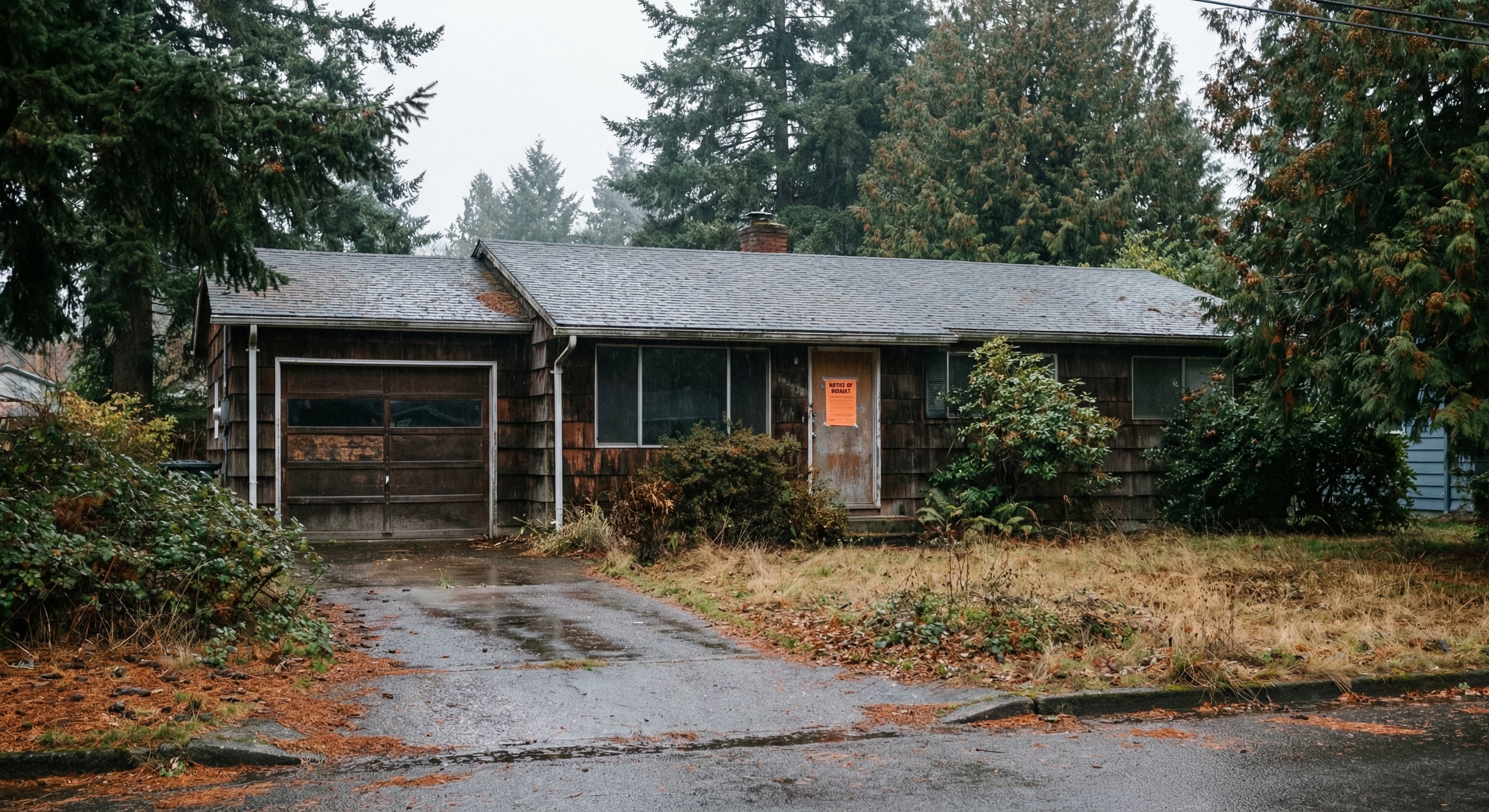
Most real estate investors have Florida and California mapped in their heads. Oregon sits quieter, and that silence is the opportunity. The state processed roughly 8,200 foreclosure filings in 2025, a fraction of the Sunbelt states, which means fewer competitors circling the same distressed properties. For investors who know how to navigate the process, Oregon's foreclosure market offers a cleaner entry point with less bidding war pressure and motivated sellers who genuinely need a resolution.
This guide covers how the process works, which counties to watch, where to find leads, and what mistakes to avoid before the auction.
How Oregon Foreclosure Works: The Non-Judicial Basics
Oregon is a deed-of-trust state, which fundamentally changes how foreclosures move compared to judicial states like New York or New Jersey. When a borrower defaults on a mortgage, the lender files a Notice of Default with the county clerk rather than pursuing a court judgment. This triggers a cascade with specific legal milestones that investors need to track.
Once a borrower misses a payment, the lender sends a notice and waits the required cure period, which varies by loan but generally runs 30 to 45 days. If the borrower cannot cure, the lender records a Notice of Default with the county clerk. This is the first public record most investors monitor. From recording, the trustee must wait at least 90 days before scheduling the auction. This 90-day window is the investor's prime targeting period.
The auction occurs at the county courthouse or a designated location, conducted by the trustee. Oregon allows a post-auction redemption period in certain circumstances, which means the former owner may have a window to reclaim the property by paying the full bid amount plus costs. Investors need to understand whether the property they are considering carries redemption risk before committing capital.
The federal CFPB maintains guidance on deed-of-trust states, and Oregon Revised Statutes Chapter 86 governs the specific timelines and notice requirements investors should verify with local counsel before bidding.
The Counties That Drive Oregon Foreclosure Volume
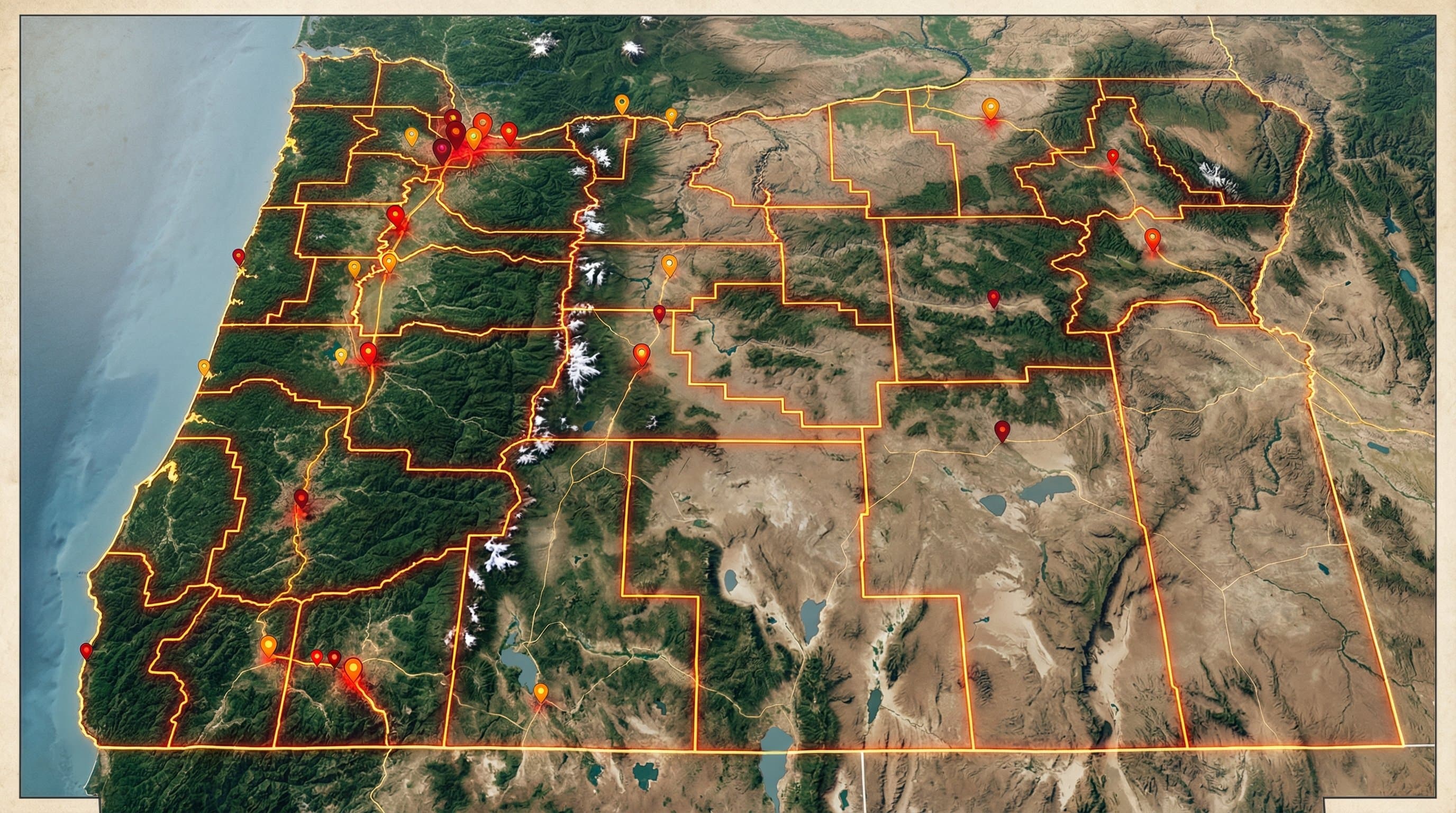
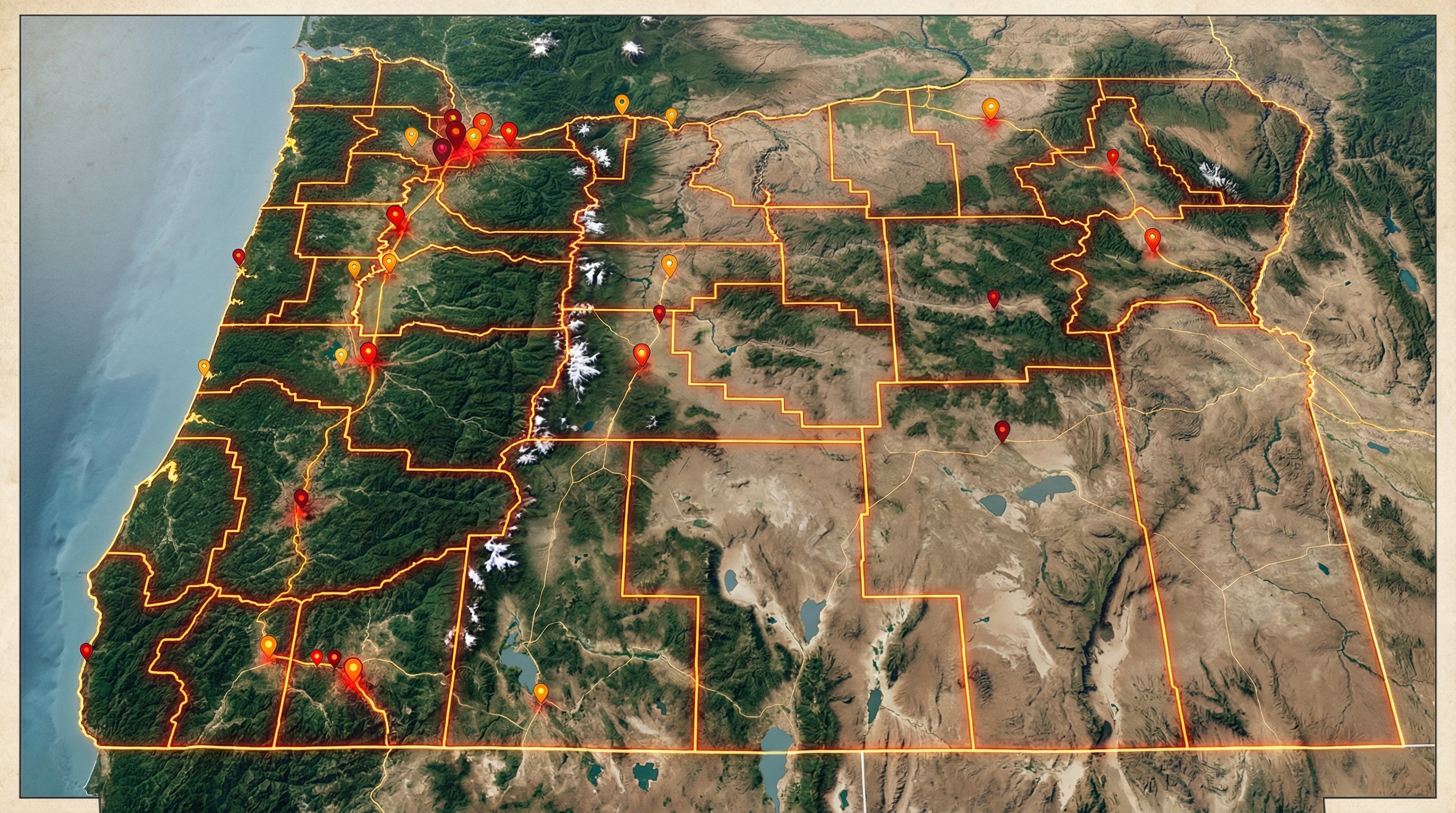
Foreclosure activity in Oregon concentrates in a handful of metropolitan and high-growth counties. Understanding which counties generate the most filings helps investors allocate research time efficiently and avoid wasting effort on low-signal markets.
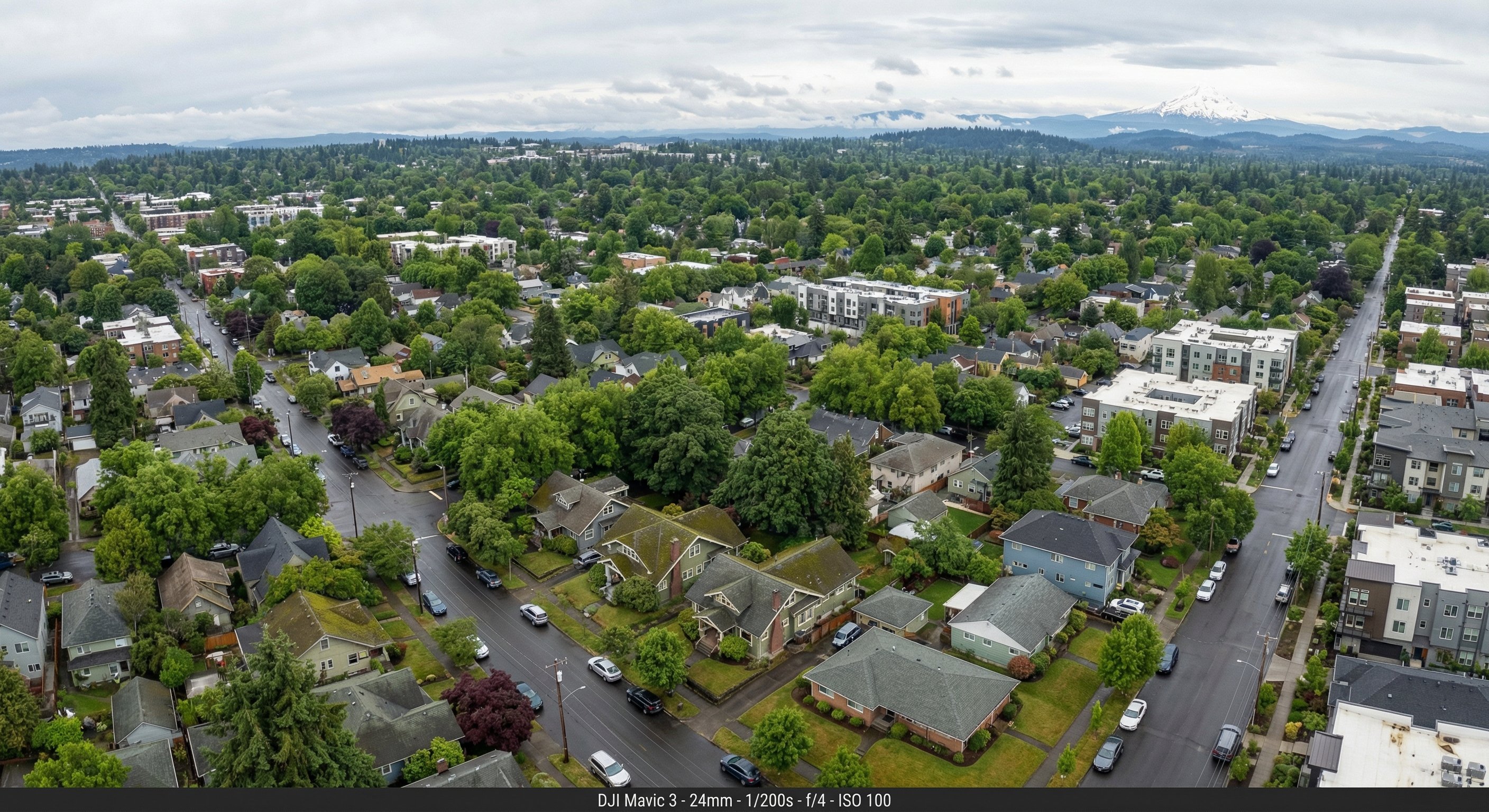
Multnomah County encompasses Portland and surrounding eastside neighborhoods. It consistently leads the state in raw foreclosure volume due to population density. Investor competition here is moderate, with a notable presence of wholesalers and fix-and-flip operators.
Washington County covers Beaverton, Hillsboro, and Tigard. Population growth over the past decade has inflated home prices and increased defaults among over-leveraged buyers who purchased at peak valuations. The distress signal here skews toward recent purchasers rather than long-term owners.
Lane County centers on Eugene and Springfield. The University of Oregon presence stabilizes part of the economy, but the broader market has seen elevated distress since remote work pulled demand away from mid-sized college towns. Investor competition in Lane County is noticeably lower than in Portland metro, making it an attractive secondary market.
Deschutes County covers Bend and the central Oregon high desert. Seasonal tourism and a large retiree population create unique distress patterns. Short-term rental owners who overleveraged during the pandemic boom are an emerging source of pre-foreclosure leads. Jackson County includes Medford and Ashland in southern Oregon, where historical timber industry volatility has shaped foreclosure patterns. Investors who understand the local economy can find motivated sellers others overlook.
Where to Find Oregon Foreclosure Leads: Public Records and Beyond
The county clerk's office in each county records Notices of Default in the public land records. Investors can search these directly, though navigating multiple incompatible county systems takes time. Multnomah County uses a modern online portal. Lane County operates a different interface. Jackson County yet another. Switching between these systems and parsing the data manually is precisely the type of fragmented research work that investors describe as a full-day project for a handful of properties.
The Oregon Department of Consumer and Business Services publishes monthly foreclosure data by county, which provides a macro view of trends but does not include the individual property-level detail investors need to evaluate specific leads.
Trustee sale schedules are published in newspapers of general circulation in the county where the property sits. This is a lagging indicator. By the time a sale appears in the newspaper, competitors have already found it.
DistressIQ pulls Notice of Default recordings directly from Oregon county clerk systems and cross-references them with assessor records, resulting in a curated feed of pre-foreclosure properties with verified ownership, estimated equity, and distress signal scoring. Investors can filter by county, price range, and signal type rather than tab-switching across five incompatible county portals.
Free Weekly Alerts
See What's Distressed in Your Market
Get free weekly alerts — new distressed properties, motivation scores, and hot neighborhoods in your area. Addresses and contact info available inside DistressIQ.
Free forever · No credit card · Unsubscribe anytime
How to Evaluate a Foreclosure Lead Before the Auction
Start with the title. A preliminary title report identifies liens that survive the foreclosure, including homeowner association liens, municipal code violation liens, and second mortgages that may not be wiped out in the foreclosure process. Some junior liens may survive even after the trustee sale if proper procedures were not followed.
Next, assess the property condition. Oregon's older housing stock, particularly the craftsman homes built in the 1920s through 1940s in Portland and Eugene neighborhoods, often carries deferred maintenance that goes beyond cosmetic issues. Foundation problems, knob-and-tube wiring, and asbestos insulation are common in pre-foreclosure properties.
Finally, check occupancy status. Tenant-occupied properties in Oregon carry specific legal obligations that transfer to the new owner. Oregon's just-cause eviction law means getting a tenant out requires legitimate reason, which adds timeline and cost for investors planning a flip.
Common Mistakes Investors Make With Oregon Foreclosure Leads
Bidding without a title review is the most costly mistake. A property purchased at trustee sale with unresolved junior liens becomes the investor's problem immediately. In Oregon, HOA liens in common-interest communities can survive foreclosure and attach to the new owner personally. A $5,000 title report prevents a $50,000 surprise.
Overlooking the redemption period catches out-of-state investors most frequently. Oregon allows redemption periods in certain loan types and circumstances. An investor who expects to take possession immediately after the auction may find the property locked in redemption for 60 to 120 additional days, destroying construction timelines and creating carrying cost exposure.
Underestimating repair costs on older homes is a systemic problem in Oregon's market. A cosmetic estimate of $15,000 in repairs often becomes $45,000 once a contractor opens walls and discovers outdated electrical, plumbing, or structural issues common to homes built before 1950.
Failing to verify county-specific procedures creates avoidable delays. Each county manages trustee sale scheduling differently, with varying notice formats, posting distances, and publication requirements. An investor operating across multiple Oregon counties without verifying local rules may find their bid rejected for a technical deficiency.
How DistressIQ Surfaces Oregon Foreclosure Leads Before the Auction
When a Notice of Default is recorded in any Oregon county clerk's office, it appears in the DistressIQ platform with the recording date, property address, assessor parcel details, owner name, and estimated loan balance. The platform layers additional distress signals on top, including tax delinquency status, code violations, and absentee owner indicators. A property with a Notice of Default plus a tax delinquency plus an expired lis pendens from a prior failed sale scores higher than a property with a single missed payment and no other signals.
Oregon investors can filter by county, signal type, estimated property value range, and equity position. The map view shows geographic concentration of distress signals across the state, helping investors spot emerging markets like Deschutes and Jackson counties where competition is lighter than the Portland metro core.
How to Approach Oregon Pre-Foreclosure Leads as a Buyer
Working a pre-foreclosure lead in Oregon requires a different approach than buying at auction. The borrower may already be working with a loss mitigation attorney or HUD-approved counselor, which means communication needs to be respectful and legally compliant. Federal law prohibits certain types of contact with borrowers in active bankruptcy. Investors who skip the bankruptcy check may find themselves in violation of the automatic stay.
When a borrower is reachable and willing to negotiate, a short sale requires lender approval and takes 60 to 120 days to close. The investor accepts a slightly lower margin in exchange for a cleaner transaction with no redemption risk and a clear title. Short sales in Oregon are less common than trustee sales but offer a valuable alternative for investors with patience and a relationship with a local real estate attorney.

Key Takeaways for Working Oregon Foreclosure Leads in 2026
The 90-day window between Notice of Default and trustee sale is the critical targeting period for Oregon foreclosure leads. Title review before any auction bid is non-negotiable. Redemption period risk affects holding costs and exit timelines. DistressIQ's daily signal updates from Oregon county clerk systems help investors identify leads before competitors and prioritize based on stacked distress indicators rather than guesswork.
Browse verified distress signals across every Oregon county on DistressIQ, updated daily from county sources.
Frequently Asked Questions
How long does foreclosure take in Oregon?
Oregon foreclosure from default to auction typically takes 90 to 120 days under the non-judicial deed-of-trust process. The overall timeline from first missed payment to final resolution can extend 6 to 12 months when accounting for the initial cure period and any redemption window after the sale.
Is Oregon a judicial or non-judicial foreclosure state?
Oregon is a non-judicial foreclosure state. Most foreclosures proceed through trustee sales governed by the deed of trust recorded at closing, without direct court involvement. This makes the process faster than judicial states but requires investors to verify title issues carefully since junior lienholders may not receive direct notice.
Can you buy a foreclosed home in Oregon before auction?
Yes. Pre-foreclosure leads can result in a short sale or direct purchase if the borrower is willing to negotiate before the trustee sale date. A short sale requires lender approval and typically takes 60 to 120 days to close, but it offers a cleaner title and no redemption risk compared to auction purchases.
What counties in Oregon have the most foreclosure activity?
Multnomah County, which includes Portland, leads the state in raw foreclosure volume. Washington County and Lane County follow. Deschutes County (Bend) and Jackson County (Medford) are growing markets with lower investor competition and increasing distressed property counts.
What mistakes catch out-of-state investors in Oregon foreclosure deals?
Bidding without a title review is the most common costly mistake. Overlooking the redemption period that may apply after certain trustee sales is the second most common. Underestimating repair costs on older craftsman and bungalow homes, which frequently have hidden structural or systems issues, is also a frequent pitfall.

The data behind this article
DistressIQ Monitors These Signals in Real Time
Pre-Foreclosures
NOD + NTS filings
Tax Delinquency
County treasurer records
Code Violations
Municipal inspection filings
Probate Filings
Superior Court records
Every lead is scored 0–100 for seller motivation based on signal type, duration, severity, and stacking. Nationwide coverage — every US county, updated daily.
Ready to find deals in your market?
See Live Distress Signals in Oregon
Stop calling dead leads. Every lead in DistressIQ is scored 0–100 for seller motivation, with verified contact info included. Browse the free tier to see what's active in your market right now.
Browse Free Leads — No Credit Card