Foreclosure Leads Massachusetts: What Smart Investors Need to Know in 2026

Foreclosure Leads Massachusetts: What Smart Investors Need to Know in 2026
TL;DR: Massachusetts processes foreclosures through a judicialSale method with a statutory redemption period of up to 6 months after the sale date. High-demand markets like Suffolk, Middlesex, and Worcester counties offer the most active distress signals, with single-family homes and triple-deckers dominating the distressed inventory. The key to finding actionable foreclosure leads in Massachusetts in 2026 is accessing properties at the pre-foreclosure stage, before they hit auction, when motivated sellers are most reachable and the deals are cleanest.
Massachusetts sits in a category by itself among US real estate markets. The state's combination of high property values, a judicial foreclosure process, strong tenant protection laws, and a dense urban-suburban housing stock creates a distinct set of opportunities for investors who know how to navigate it. Foreclosure leads in Massachusetts do not behave like foreclosure leads in Georgia or Arizona. The timelines are longer, the legal complexity is higher, and the motivated sellers you find here are often dealing with circumstances that require a different approach.
This guide covers everything an experienced investor needs to source and evaluate foreclosure leads in Massachusetts in 2026, from the mechanics of the state process to the specific counties and property types that are producing the most actionable opportunities.

Understanding Massachusetts Foreclosure Law: The Judicial Sale Framework
Massachusetts is one of roughly 22 states that use a judicial foreclosure process, meaning every foreclosure must go through the court system before a property can be sold at auction. This differs fundamentally from states like Georgia or Arizona, where non-judicial foreclosure through a power of sale clause can move much faster.
The Massachusetts foreclosure timeline typically breaks down as follows:
Notice of Default: When a borrower misses a payment, the lender files a complaint in Land Court or Superior Court. The homeowner receives service and has 30 days to respond.
Publication Period: Once the court approves the foreclosure, the notice must be published in a newspaper for three consecutive weeks before the auction date can be set.
Auction (Sheriff Sale): The property is sold at a public auction conducted by the sheriff or a court-appointed officer. The opening bid typically reflects the outstanding mortgage balance plus fees.
Redemption Period: Here is where Massachusetts diverges most sharply from non-judicial states. After the auction, the homeowner retains a statutory right of redemption. This period runs for a minimum of 6 months from the sale date, though it can extend longer depending on court dockets and appeals.
The practical implication for investors is significant: buying at the auction stage in Massachusetts does not immediately grant possession. The redemption period means the former owner has legal standing to reclaim the property by paying the full sale price plus costs, unless the contract specifically carves out the redemption right. Experienced investors typically structure their auction purchases with this window in mind, and many prefer to work with sellers during the pre-foreclosure stage specifically to avoid this uncertainty entirely.

The Pre-Foreclosure Window: Where the Best Deals Hide
For most investors focused on foreclosure leads Massachusetts, the pre-foreclosure stage is where the highest-value opportunities live. A property in pre-foreclosure has received a notice of default from the lender but has not yet been scheduled for auction. The homeowner is still the legal owner, still has the right to sell the property themselves, and is often highly motivated to avoid the public shame and legal consequences of a sheriff sale.
Pre-foreclosure leads in Massachusetts tend to fall into a few common categories:
Job loss or reduction in income remains the leading cause of mortgage distress in Massachusetts, particularly in the Greater Boston metro where the cost of living is extreme and commuting costs are high. A homeowner who could afford a mortgage when interest rates were 3 percent and lost that property to a rate reset at 7 percent represents a classic Massachusetts foreclosure scenario.
Divorce is a significant driver of pre-foreclosure in Massachusetts, particularly in high-asset counties like Suffolk and Norfolk where marital homes represent substantial equity. When one spouse retains the property in a divorce settlement and cannot carry the mortgage independently, pre-foreclosure often follows within 12 to 24 months.
Health crises disproportionately affect older Massachusetts homeowners. A major medical event can deplete savings rapidly in a state where property taxes, insurance premiums, and maintenance costs on older housing stock compound quickly.
Investment property distress became more prevalent in Massachusetts after 2022 as rental vacancy rates tightened and property tax assessments climbed for second-home and investment owners who cannot pass costs through to tenants fast enough.

Key Massachusetts Counties for Foreclosure Lead Generation
Not all Massachusetts counties produce foreclosure leads at the same rate or quality. The distribution reflects local economy, housing stock age, investor competition, and court processing speeds.
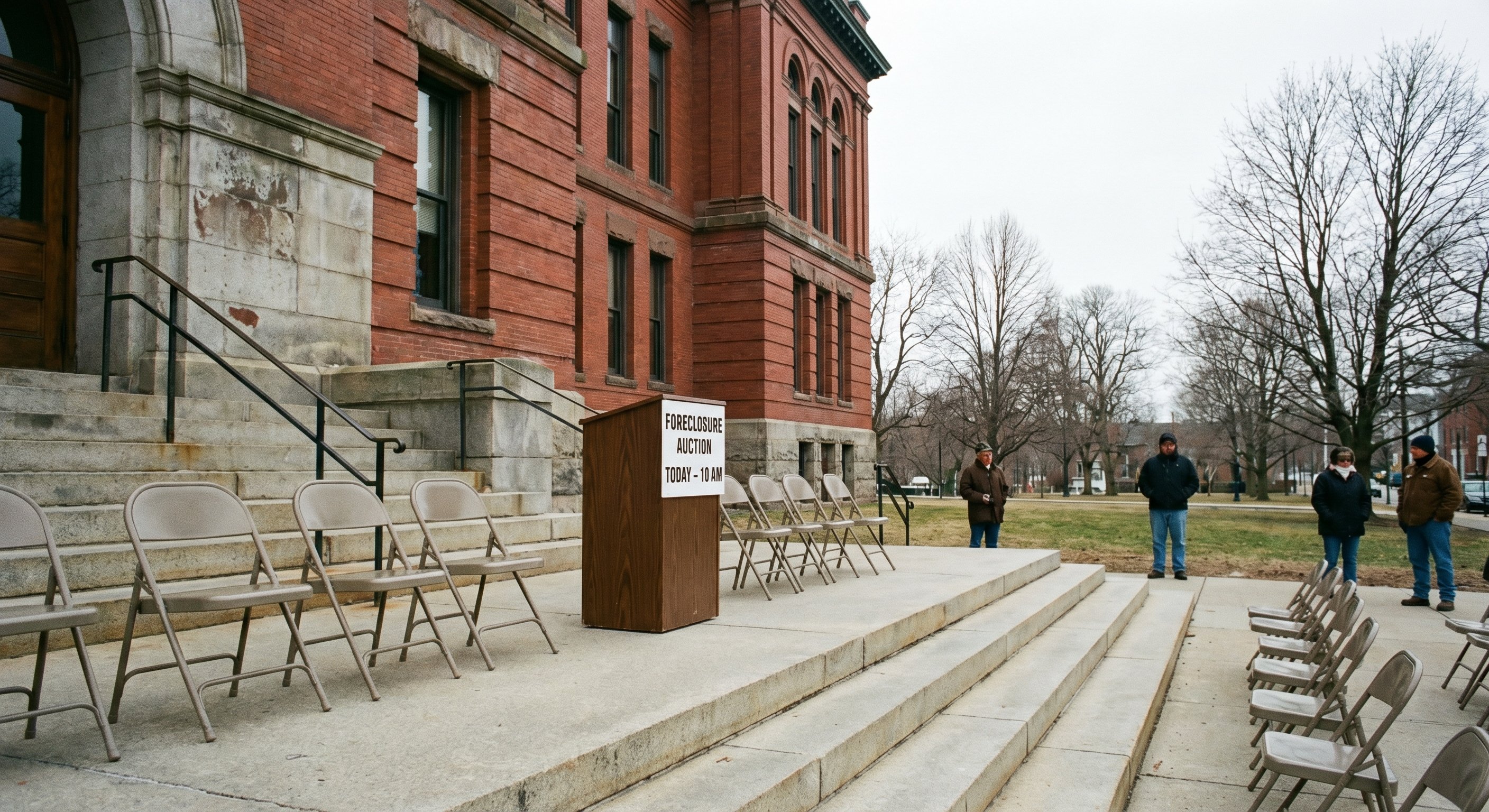
Suffolk County (Boston)
Suffolk County, which encompasses Boston, Chelsea, Revere, and Winthrop, processes the highest volume of foreclosure cases in Massachusetts. The Boston housing market's combination of high values and extreme density creates a two-tier opportunity: distressed single-family homes and triple-deckers in neighborhoods like Dorchester, Roxbury, and East Boston trade at significant discounts relative to the regional median, while condo conversions in the same areas offer lower entry points for investors with smaller budgets.
A key dynamic in Suffolk County is the prevalence of condos in pre-foreclosure. The Boston metro saw substantial condo development between 2018 and 2022, and a meaningful percentage of those units are now held by investors who purchased at peak prices with adjustable-rate financing. These properties often show up as pre-foreclosure leads with lower absolute discount but higher liquidity.
Middlesex County
Middlesex is the largest county in Massachusetts by population and consistently ranks second or third in foreclosure volume. The county spans a remarkable range of market conditions, from working-class communities like Lowell and Lawrence to affluent suburbs like Lexington, Arlington, and Winchester. Foreclosure leads in Middlesex County tend to be older single-family homes in communities where economic disruption in specific industries (biotech layoffs in 2024 and 2025 affected Newton and Cambridge-adjacent markets) created mortgage stress among highly leveraged buyers.
Worcester County
Worcester County has emerged as one of the more active foreclosure markets in Massachusetts over the past 18 months. The median home price in Worcester County remains meaningfully lower than Boston-adjacent markets, which creates better entry points for investors targeting the $250,000 to $450,000 price range. Worcester itself has seen meaningful investment property activity, with landlords who purchased multi-family homes during the pandemic rental boom facing elevated property tax assessments and higher carrying costs.
The city of Worcester offers some of the strongest gross rental yield potential for Massachusetts foreclosure investors, particularly in the 3- to 6-unit class where distressed properties can often be acquired below $350,000 in pre-foreclosure.
Bristol and Plymouth Counties
These southeastern Massachusetts counties provide exposure to more affordable entry points, with median prices in the $350,000 to $500,000 range for distressed properties. Bristol County, which includes Fall River and New Bedford, historically shows higher foreclosure rates per capita than the Boston metro, driven by the industrial economic history of these communities and the persistent gap between local incomes and housing costs.
Plymouth County offers a mix of more stable suburban markets like Brockton and Bridgewater alongside distressed urban centers. Foreclosure leads here tend toward single-family homes and small multi-family properties.
Free Weekly Alerts
See What's Distressed in Your Market
Get free weekly alerts — new distressed properties, motivation scores, and hot neighborhoods in your area. Addresses and contact info available inside DistressIQ.
Free forever · No credit card · Unsubscribe anytime
How Foreclosure Signals Differ in Massachusetts
Massachusetts foreclosure leads require a different analytical approach than those in non-judicial foreclosure states. Several factors shape how distress signals should be evaluated:
Statutory redemption period. As noted above, the 6-month minimum redemption window after auction affects exit strategy planning. Investors who need certainty of possession should prioritize pre-foreclosure leads over auction leads. The redemption risk is a discount that must be priced into any auction purchase offer.
Homestead protections. Massachusetts law provides homeowners with a homestead exemption of up to $500,000 in equity that survives foreclosure. This affects the negotiating position of homeowners in pre-foreclosure, as they may have meaningful equity cushion that makes them less desperate than comparable homeowners in non-homestead states. Investors need to evaluate each lead individually rather than assuming desperation.
Condominium association liens. Massachusetts condominium law allows associations to place liens on units for unpaid dues, and those liens can have super-priority status in certain circumstances. This matters significantly when evaluating foreclosure leads for condo units, as a junior lienholder may find their position wiped out by an HOA super-priority lien at the auction stage.
Price disclosure requirements. Massachusetts is one of a shrinking number of states that still requires publication of the winning bid amount at foreclosure auctions. This transparency is useful for investors tracking auction market activity and understanding where competition is concentrated.
Building a Massachusetts Foreclosure Lead Pipeline
Sourcing actionable foreclosure leads in Massachusetts requires combining multiple data sources, because no single channel captures the full picture of distressed properties in the state.
Court dockets are the most authoritative source for tracking active foreclosure cases. The Massachusetts Land Court and county Superior Courts maintain online docket systems that can be searched by county, date range, and case type. The limitation is that court records require manual review and do not include property-level financial data that helps prioritize which cases are most actionable.
Lis pendens filings provide an early signal of impending foreclosure litigation. A lis pendens filed in Massachusetts indicates that a lender has initiated foreclosure proceedings. Properties with active lis pendens filings are typically 3 to 9 months from auction, depending on court scheduling. This window is precisely where the most actionable pre-foreclosure leads exist.
Tax delinquency records at the municipal level are another leading indicator. Massachusetts cities and towns assess property taxes annually, and delinquent accounts are a matter of public record. Properties that are both tax delinquent and in the early stages of foreclosure represent a compounding distress scenario that often produces the most motivated sellers.
Probate and divorce filings at the county level can signal incoming foreclosure volume, because homeowners going through these processes frequently lose the income or cash flow needed to service a mortgage. An investor who monitors these public records can sometimes identify future foreclosure leads before the lis pendens is filed.
The challenge with all of these sources is the same problem that faces every Massachusetts investor: the data is fragmented across dozens of municipalities and multiple court systems, it moves slowly, and the properties that appear most attractive in the data are often the ones already being targeted by the largest number of competitors.

Evaluating Massachusetts Foreclosure Leads: What the Data Cannot Tell You
Raw foreclosure data, whether sourced from court records, tax rolls, or lead platforms, tells you what properties are in distress. What it cannot tell you is whether a particular lead is worth pursuing. A few factors that experienced Massachusetts investors evaluate before committing time to a foreclosure lead:
Equity position. Using publicly available property record data, experienced investors estimate the loan balance against the estimated current market value. A property with a loan balance of $380,000 in a neighborhood where comparable properties sell for $475,000 has roughly $95,000 in equity above the loan, which may give the homeowner options beyond a distressed sale. A property with a loan balance of $520,000 in the same neighborhood represents negative equity and a far more motivated seller.
Condition and carrying costs. Massachusetts has some of the oldest housing stock in the country, with substantial percentages of homes built before 1950. A pre-foreclosure lead on a 1920s colonial in Worcester or a triple-decker in Somerville may require significant rehabilitation. Investors who factor carrying costs (mortgage, taxes, insurance, utilities, and potential condo fees) for 6 to 12 months of resale timeline can quickly determine whether a lead represents a viable deal.
Occupancy status. A tenant-occupied foreclosure lead in Massachusetts involves additional legal considerations, including the requirement to honor existing leases and, in some municipalities, just cause eviction requirements that extend well beyond the standard 30-day notice period. Investors who plan to convert properties to owner-occupied use should prioritize leads where the owner-occupant is the distressed seller.
Local market absorption. In tighter submarkets like Cambridge, Somerville, and Brookline, distressed properties that are correctly priced move quickly. In softer markets like Fall River or Lawrence, distressed inventory can sit on the market for 90 to 120 days even after renovation. Matching the lead's profile to the local absorption rate is essential for accurate deal analysis.
Massachusetts Foreclosure Market Outlook for 2026
Several indicators suggest that foreclosure activity in Massachusetts will remain elevated through 2026, creating ongoing opportunities for investors who have the systems in place to identify and act on leads efficiently.
The Massachusetts median home price corrected roughly 8 to 12 percent from its 2022 peak through mid-2025, depending on the submarket. While prices have stabilized in most Boston-adjacent communities, the correction eliminated the phantom equity cushion that allowed many over-leveraged homeowners to refinance or sell their way out of distress. Homeowners who purchased at peak prices with minimal down payments and are now 5 to 10 percent underwater on a property they cannot afford are the primary source of 2026 foreclosure leads.
Massachusetts unemployment, while still below the national average, has risen modestly from its 2022 trough, with particular softness in the technology and life sciences sectors that disproportionately affect the Cambridge/Boston corridor. These job market conditions typically produce a 12- to 24-month lag in foreclosure filings, meaning the distress visible in 2026 foreclosure data reflects economic conditions from 2024 and early 2025.
For investors, the current environment presents a window of opportunity that is neither as oversaturated as the post-2008 distress wave nor as competitive as the 2021 boom market. Foreclosure leads in Massachusetts in 2026 are more plentiful than they have been at any point in the past three years, while the investor competition for those leads is less intense than in Texas or Florida markets where institutional buyers have concentrated their capital.
Frequently Asked Questions
How long does foreclosure take in Massachusetts?
Massachusetts foreclosure is a judicial process that typically requires 9 to 18 months from the initial notice of default to the completion of the sheriff sale, followed by a statutory redemption period of at least 6 months. Combined, the full timeline from first missed payment to the end of the redemption period can stretch to 2 years or longer in contested cases. The Massachusetts court system publishes standard foreclosure timeline benchmarks through the Land Court website and the Housing Court Department, which provide case processing expectations by county.
Can you buy a home before the foreclosure auction in Massachusetts?
Yes. Pre-foreclosure sales are legal in Massachusetts and represent the stage where most investors source their best deals. The homeowner retains legal ownership until the auction date and can sell the property to pay off the mortgage. A short sale during pre-foreclosure requires lender approval but allows the transaction to close before the auction, avoiding the public nature of the sheriff sale.
What is a short sale in Massachusetts foreclosure?
A short sale occurs when the homeowner sells the property for less than the outstanding mortgage balance with lender approval. In Massachusetts, short sales during pre-foreclosure typically take 60 to 120 days to close after lender approval and require the lender to accept the sale proceeds as full settlement of the debt. Short sales are less common in Massachusetts than in non-judicial states because the longer foreclosure timeline gives homeowners more time to explore alternatives.
What happens after the Massachusetts sheriff sale?
After the sheriff sale, the winning bidder typically receives a certificate of sale. The former homeowner has a statutory redemption period of at least 6 months during which they can reclaim the property by paying the sale price plus costs, as established under Massachusetts General Laws Chapter 244, Section 15B. In practice, redemption occurs in a minority of Massachusetts foreclosure cases, particularly when the former owner has no alternative financing available.
What counties in Massachusetts have the most foreclosure activity?
Suffolk, Middlesex, and Worcester counties consistently rank highest in Massachusetts foreclosure volume. Suffolk County (Boston) has the highest absolute number of filings due to its population density. Worcester County has shown the most meaningful increase in foreclosure activity relative to historical norms over the past 18 months. Bristol and Plymouth counties in southeastern Massachusetts offer more affordable entry points with elevated distress signals.
Can you buy a home before the foreclosure auction in Massachusetts?
Yes. Pre-foreclosure sales are legal in Massachusetts and represent the stage where most investors source their best deals. The homeowner retains legal ownership until the auction date and can sell the property to pay off the mortgage. A short sale during pre-foreclosure requires lender approval but allows the transaction to close before the auction, avoiding the public nature of the sheriff sale.
What is a short sale in Massachusetts foreclosure?
A short sale occurs when the homeowner sells the property for less than the outstanding mortgage balance with lender approval. In Massachusetts, short sales during pre-foreclosure typically take 60 to 120 days to close after lender approval and require the lender to accept the sale proceeds as full settlement of the debt. Short sales are less common in Massachusetts than in non-judicial states because the longer foreclosure timeline gives homeowners more time to explore alternatives.
What happens after the Massachusetts sheriff sale?
After the sheriff sale, the winning bidder typically receives a certificate of sale. The former homeowner has a statutory redemption period of at least 6 months during which they can reclaim the property by paying the sale price plus costs. In practice, redemption occurs in a minority of Massachusetts foreclosure cases, particularly when the former owner has no alternative financing available.
What counties in Massachusetts have the most foreclosure activity?
Suffolk, Middlesex, and Worcester counties consistently rank highest in Massachusetts foreclosure volume. Suffolk County (Boston) has the highest absolute number of filings due to its population density. Worcester County has shown the most meaningful increase in foreclosure activity relative to historical norms over the past 18 months. Bristol and Plymouth counties in southeastern Massachusetts offer more affordable entry points with elevated distress signals.
For investors who want to access foreclosure leads Massachusetts markets without manually combing through court records and municipal databases, DistressIQ tracks pre-foreclosure and auction signals across every Massachusetts county, updated daily from public record sources. Properties are scored by distress intensity so you can focus on the leads most likely to convert.
Browse active foreclosure signals in Suffolk, Middlesex, Worcester, and all other Massachusetts counties on DistressIQ.
The data behind this article
DistressIQ Monitors These Signals in Real Time
Pre-Foreclosures
NOD + NTS filings
Tax Delinquency
County treasurer records
Code Violations
Municipal inspection filings
Probate Filings
Superior Court records
Every lead is scored 0–100 for seller motivation based on signal type, duration, severity, and stacking. Nationwide coverage — every US county, updated daily.
Ready to find deals in your market?
See Live Distress Signals in Your County
Stop calling dead leads. Every lead in DistressIQ is scored 0–100 for seller motivation, with verified contact info included. Browse the free tier to see what's active in your market right now.
Browse Free Leads — No Credit Card