Foreclosure Leads Minnesota: What Smart Investors Need to Know in 2026

Foreclosure Leads Minnesota: What Smart Investors Need to Know in 2026
TL;DR: Minnesota runs primarily non-judicial foreclosures with no fixed timeline cap, meaning cases can stretch 180 to 300+ days depending on the borrower's actions. The standard redemption period after a sheriff's sale is 6 months, but a little-known Affidavit of Postponement filing cuts that to just 5 weeks, creating a compressed acquisition window that savvy investors can target. Most foreclosure activity in the state concentrates in Hennepin, Ramsey, and Dakota counties. DistressIQ surfaces pre-foreclosure and sheriff's sale signals across all Minnesota counties with daily updates from county records.

If you have been working foreclosure leads in other states and just started looking at Minnesota, you are walking into one of the more borrower-friendly foreclosure processes in the country. That sounds like a problem for investors. It is not, not really. The borrower is redemption window, the Affidavit of Postponement option, and the sheer volume concentrated in a handful of Twin Cities counties all create a specific and highly targetable market, once you understand the mechanics.
This guide covers the Minnesota foreclosure process from the investor's side: the timeline, the local signal types, the counties generating the most activity, and what you need to know before you start pulling lists.
What Are Foreclosure Leads in Minnesota
Foreclosure leads are properties in the formal foreclosure process, meaning the lender has initiated legal action to take possession of the home because the borrower stopped making payments. In Minnesota, that process starts with a notice of pendency filed at the county recorder's office and unfolds through a series of public steps that create verifiable, timestamped distress signals.
Unlike some states where the foreclosure process is fast and almost purely judicial, Minnesota gives borrowers multiple procedural levers to delay or postpone the sale. That sounds like a complication. For investors, it creates a longer window to identify properties, research them, and make contact before the sale date, and in some cases, a dramatically shorter window after the sale if the Affidavit of Postponement was used.
The signals that matter for investors in Minnesota:
Lis pendens is filed at the county recorder the moment the lender initiates foreclosure. This is your earliest possible identification point. A lis pendens on a Minnesota property means the lender has committed to a legal process. Minnesota does not formally require a notice of default separate from this. The lis pendens IS the process starting.
Sheriff's sale notice is published for 6 consecutive weeks in the county's designated legal newspaper and served to the occupant at least 4 weeks before the sale, per Minn. Stat. Section 580.04. The sale is held at the county courthouse, typically between 9 AM and 4 PM on the scheduled date.
Affidavit of Postponement is the MN-specific wrinkle that most investors miss. After the notice of sale is published, a borrower can file an Affidavit of Postponement up to 15 days before the scheduled sale date. One filing delays the sale for up to 5 months. The trade-off: the redemption period drops from 6 months to 5 weeks. Investors targeting properties where the postponement has already been filed are looking at a 5-week post-sale redemption window, one of the shortest in the country.
Redemption period is the window after the sheriff's sale during which the borrower or junior lien holders can redeem by paying the sale price plus interest and allowable costs. Standard residential: 6 months per Minn. Stat. Section 580.23. Abandoned property with borrower affidavit: 5 weeks. Agricultural or 40-plus acre properties: 12 months.

The Minnesota Foreclosure Timeline: What Investors Need to Know
Most sources cite 180 days as the baseline Minnesota foreclosure timeline. That is the floor, not the ceiling. Here is how the actual process breaks down:
Days 1 through 30: Pre-foreclosure
The lender files a notice of pendency at the county recorder's office. Minnesota does not have a formal notice of default stage separate from this. The lis pendens filing is the public record that kicks off the clock. This is the window where a motivated seller might still work with the lender on a modification, short sale, or deed-in-lieu. Pre-foreclosure leads in Minnesota are identified by lis pendens filings, which DistressIQ pulls directly from county recorder records.
Days 30 through 90: Publication period
The lender must publish the notice of sale for 6 consecutive weeks in the county's designated legal newspaper. In parallel, the lender must serve notice to the property occupant at least 4 weeks before the sale. This publication requirement is strictly enforced. A procedural defect in publication can invalidate the sale.
Day 90 onward: Sheriff's sale
After the 6-week publication requirement is satisfied, the property goes to sheriff's sale at the county courthouse. The highest bidder wins. The lender can credit-bid up to the outstanding loan balance. The winning bidder receives a Sheriff's Certificate of Sale. The borrower retains possession during the redemption period.
Post-sale: Redemption period
Standard residential property: 6 months from the sale date. The borrower can redeem by paying the sale price plus interest and allowable costs. If the borrower does not redeem, the certificate holder receives the deed.
The Affidavit of Postponement variable
If the borrower files an Affidavit of Postponement, which they can do up to 15 days before the scheduled sale, the sale is postponed for up to 5 months. This delays the sheriff's certificate issuance but also reduces the post-sale redemption period to 5 weeks. Properties where the postponement affidavit has been filed represent a specific investor opportunity: a longer pre-sale window combined with a compressed post-sale window.
Minnesota is one of the minority of states that does not impose a hard maximum timeline on the overall foreclosure process. Cases involving borrower litigation, contested sales, or multiple postponement filings can stretch well beyond 300 days.
Why Minnesota's Dual-Tracking Ban Matters for Investors
This is the Minnesota-specific rule that most out-of-state investors do not know about, and it fundamentally changes how you interpret pre-foreclosure signals in the state.
Federal law prohibits mortgage servicers from simultaneously pursuing a loan modification review and a foreclosure sale. Minnesota codified and strengthened this protection. A Minnesota servicer that receives a complete loan modification application from the borrower before midnight of the seventh business day prior to the scheduled sale must halt the sheriff's sale and review the application. The servicer must issue a written denial before rescheduling the sale.
What this means for investors: a Minnesota property with a lis pendens filed and a scheduled sheriff's sale is not necessarily close to auction. If the borrower submitted a loan mod application in the weeks before the sale, the sale may have been postponed. DistressIQ tracks the current status of foreclosure filings across Minnesota counties, so you see the actual sale date, not just the initial filing date.
This also means your best pre-foreclosure outreach window in Minnesota may be narrower than in other states. By the time a lis pendens appears, the sale may already be postponed pending loan mod review. Investors who are monitoring county records daily through DistressIQ catch the lis pendens at filing, before the postponement cycle begins.
Free Weekly Alerts
See What's Distressed in Your Market
Get free weekly alerts — new distressed properties, motivation scores, and hot neighborhoods in your area. Addresses and contact info available inside DistressIQ.
Free forever · No credit card · Unsubscribe anytime
Where Minnesota Foreclosure Leads Are Concentrated
Foreclosure activity in Minnesota is heavily concentrated in the Twin Cities metro and its inner-ring suburbs. Three counties account for the majority of the state's annual foreclosure volume:
Hennepin County is Minneapolis and its surrounding suburbs. The highest-volume county in Minnesota for foreclosure filings by a significant margin. Dense urban and suburban housing stock, high property values relative to the rest of the state, and a large population of investment properties create consistent flow.
Ramsey County is St. Paul and its suburbs. Second-highest volume. Similar dynamics to Hennepin, with a mix of single-family homes, small multi-unit buildings, and condos.
Dakota County is the southern Twin Cities suburbs including Burnsville, Eagan, and Lakeville. Strong volume linked to suburban development patterns and a higher proportion of FHA loans, which historically carry higher foreclosure rates.
Beyond the metro core, watch Anoka County (northern suburbs), Washington County (east metro), and St. Louis County (Duluth) for secondary activity.
The Twin Cities concentration is an investor advantage. You are not dealing with a geographically dispersed rural market. You can cover the majority of Minnesota's foreclosure inventory by focusing on three contiguous counties. That means shorter drive times for on-site evaluations, more consistent comparable sales data, and a deeper local agent network.
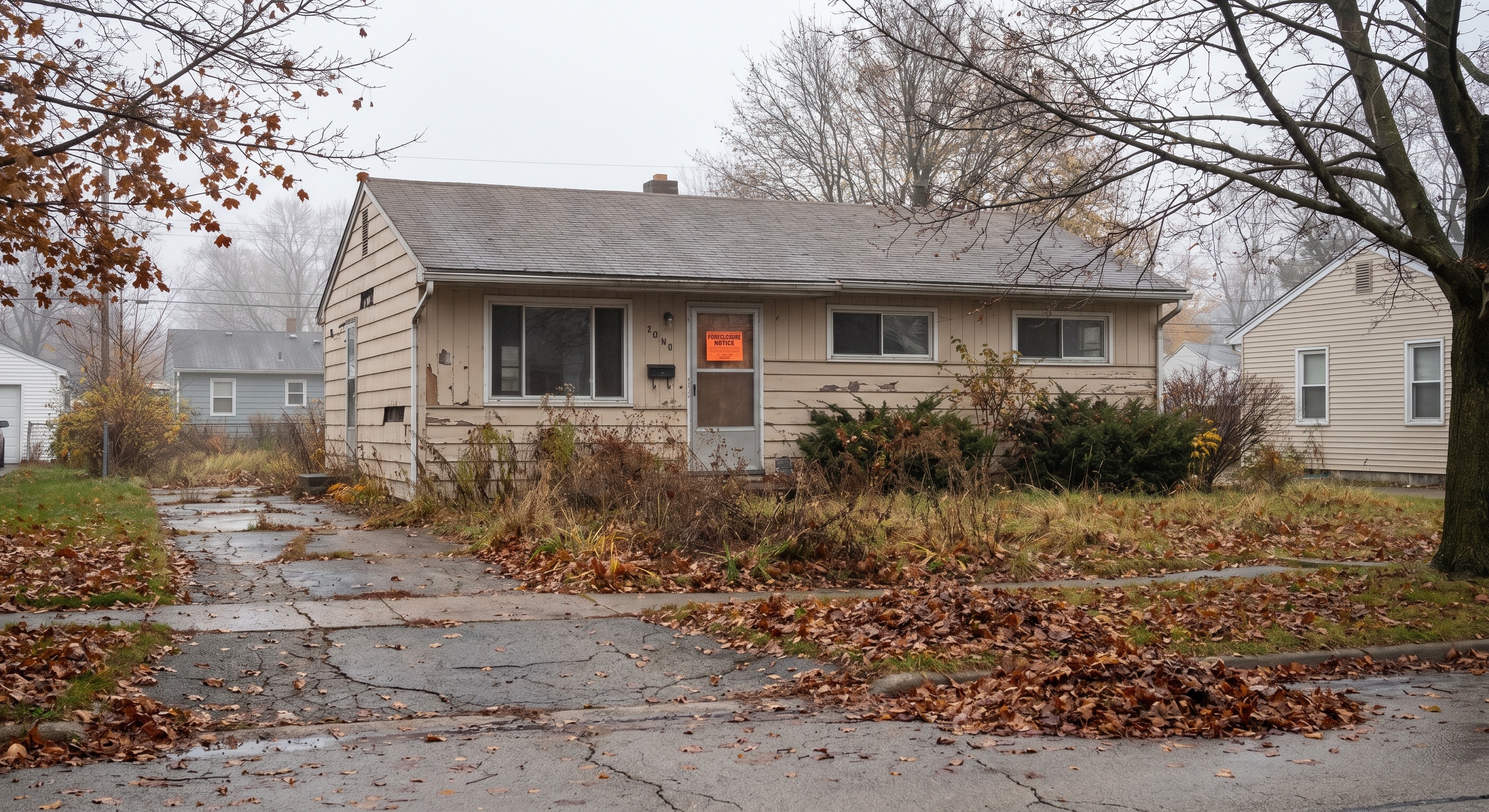
How to Find Foreclosure Leads in Minnesota: A Practitioner's Approach
Finding foreclosure leads in Minnesota requires accessing county recorder and sheriff's office records. Here is how the options stack up from an investor's practical standpoint.
County recorder offices (Hennepin, Ramsey, Dakota) all have online record search portals. You can search by document type (lis pendens, notice of sale) and date range. The data is public but the portals are built for one-off searches, not bulk lead generation. Pulling a comprehensive list across multiple counties means navigating three different systems with different search interfaces.
Sheriff's sale listings are published by each county sheriff's office. Hennepin County posts sales on its website. The listing includes property address, parcel number, scheduled sale date, and the outstanding judgment amount. This is useful for confirming what you have found in recorder data and for catching postponements, since updated sale dates appear on the sheriff's website.
Online lead platforms are where the time differential matters most. County websites update when staff process filings, sometimes 3 to 7 days after the document is executed. DistressIQ pulls directly from county record systems and updates daily, so you see new lis pendens filings and sale status changes faster than if you were checking county portals manually.
DistressIQ is built specifically for this. The platform aggregates pre-foreclosure and sheriff's sale signals across all 87 Minnesota counties, assigns motivation scores based on signal recency and equity estimates, and delivers a daily-updated pipeline you can filter by county, signal type, and estimated distress stage. You can browse free without an account.
Common Mistakes Investors Make with Minnesota Foreclosure Leads
Assuming the listed sheriff's sale date is accurate. Minnesota allows postponements, sometimes multiple postponements on the same case. A sale scheduled for next month may have already been postponed to next year. Always verify the current status before spending time on lead research.
Ignoring the Affidavit of Postponement. Most investor education focuses on the standard 6-month redemption timeline. Properties where the borrower has already filed the postponement affidavit have a 5-week redemption window instead. Investors who know to look for this signal can target a different kind of opportunity.
Using assessed value for ARV estimates. Minnesota county assessors update values on a cadence that lags market conditions by 12 to 18 months in fast-moving Twin Cities neighborhoods. Run comparable sales from the past 6 months, not assessor data, when evaluating a lead's ARV.
Waiting until the sheriff's sale to engage. By the time a property reaches auction, the most motivated sellers have already either resolved their situation or been lost to competitors who contacted them during the lis pendens window. Investors who monitor county records daily through DistressIQ reach motivated homeowners before the postponement and loan mod cycles begin.

The Bottom Line
Minnesota foreclosure leads are not the fastest-moving deals in the country, and that is precisely the point. The non-judicial process with borrower postponement rights creates a longer pre-sale window, and the Affidavit of Postponement creates a compressed post-sale window. Both are exploitable. The homeowners in this pipeline have been dealing with financial distress for months. Many of them are tired of the process and want out before the sheriff's sale.
Investors who understand the Minnesota foreclosure timeline, focus their efforts on Hennepin and Ramsey counties, and use county-direct data to identify leads early are positioned to find deals that investors competing on speed never see.
Browse verified foreclosure leads across Minnesota's 87 counties on DistressIQ. Every property includes distress signals, motivation scoring, and county-assessor-verified property data. Free to browse, no credit card required.
Frequently Asked Questions
How long does it take to foreclose on a property in Minnesota?
The baseline is approximately 180 days from the initial lis pendens filing to the sheriff's sale, per Minnesota Statutes Section 580. However, Minnesota has no fixed maximum timeline. Cases involving loan modification reviews, borrower postponement filings, or litigation can extend to 300 days or longer. The 6-month post-sale redemption period adds to the total timeline before the certificate holder receives the deed.
Can a foreclosed homeowner redeem the property in Minnesota after the sale?
Yes. Minnesota provides a 6-month redemption period for most residential properties after the sheriff's sale. The homeowner can redeem by paying the sale price plus interest and allowable costs. If the property is abandoned, the redemption period can be shortened to 5 weeks if the borrower files an affidavit of abandonment. Properties over 40 acres or used for agricultural purposes have a 12-month redemption period.
What is an Affidavit of Postponement in Minnesota?
An Affidavit of Postponement is a legal filing a borrower makes to delay a scheduled sheriff's sale. Filed up to 15 days before the scheduled sale date, it can postpone the sale for up to 5 months. The trade-off is that the post-sale redemption period is reduced from 6 months to 5 weeks. Investors specifically watch for properties where this affidavit has been filed because it creates a compressed post-sale acquisition window.
Which Minnesota counties have the most foreclosure activity?
Hennepin County (Minneapolis) has the highest volume, followed by Ramsey County (St. Paul) and Dakota County (southern Twin Cities suburbs). Together these three counties account for the majority of Minnesota's annual foreclosure filings. Secondary markets include Anoka, Washington, and St. Louis (Duluth) counties.
Does Minnesota allow dual tracking of loan modifications and foreclosures?
No. Minnesota banned dual tracking. If a servicer receives a complete loan modification application from the borrower before midnight of the seventh business day prior to the scheduled sheriff's sale, the servicer must halt the sale and review the application. The servicer must issue a written denial before rescheduling. This makes pre-foreclosure outreach timing critical for investors.
How does the Minnesota sheriff's sale work?
The sheriff's sale is a public auction held at the county courthouse. Properties are sold to the highest bidder. The lender can credit-bid up to the full outstanding loan balance. The winning bidder receives a Sheriff's Certificate of Sale, not the deed. The deed transfers only after the redemption period expires without redemption. Bidders should bring certified funds or cash to the sale and understand that properties are sold as-is with no inspection contingency.
What is the biggest mistake investors make with Minnesota foreclosure leads?
Waiting until the sheriff's sale to engage. By that point, the pool of motivated sellers who can still negotiate a pre-sale deal has shrunk considerably. Investors who identify foreclosure leads from the lis pendens stage and engage while the homeowner is still trying to avoid the auction consistently find better deals than those who compete at the auction itself.
The data behind this article
DistressIQ Monitors These Signals in Real Time
Pre-Foreclosures
NOD + NTS filings
Tax Delinquency
County treasurer records
Code Violations
Municipal inspection filings
Probate Filings
Superior Court records
Every lead is scored 0–100 for seller motivation based on signal type, duration, severity, and stacking. Nationwide coverage — every US county, updated daily.
Ready to find deals in your market?
See Live Distress Signals in Your County
Stop calling dead leads. Every lead in DistressIQ is scored 0–100 for seller motivation, with verified contact info included. Browse the free tier to see what's active in your market right now.
Browse Free Leads — No Credit Card