Foreclosure Leads Louisiana: How Louisiana's Civil Law System Creates Investor Opportunities the Rest of the Country Misses
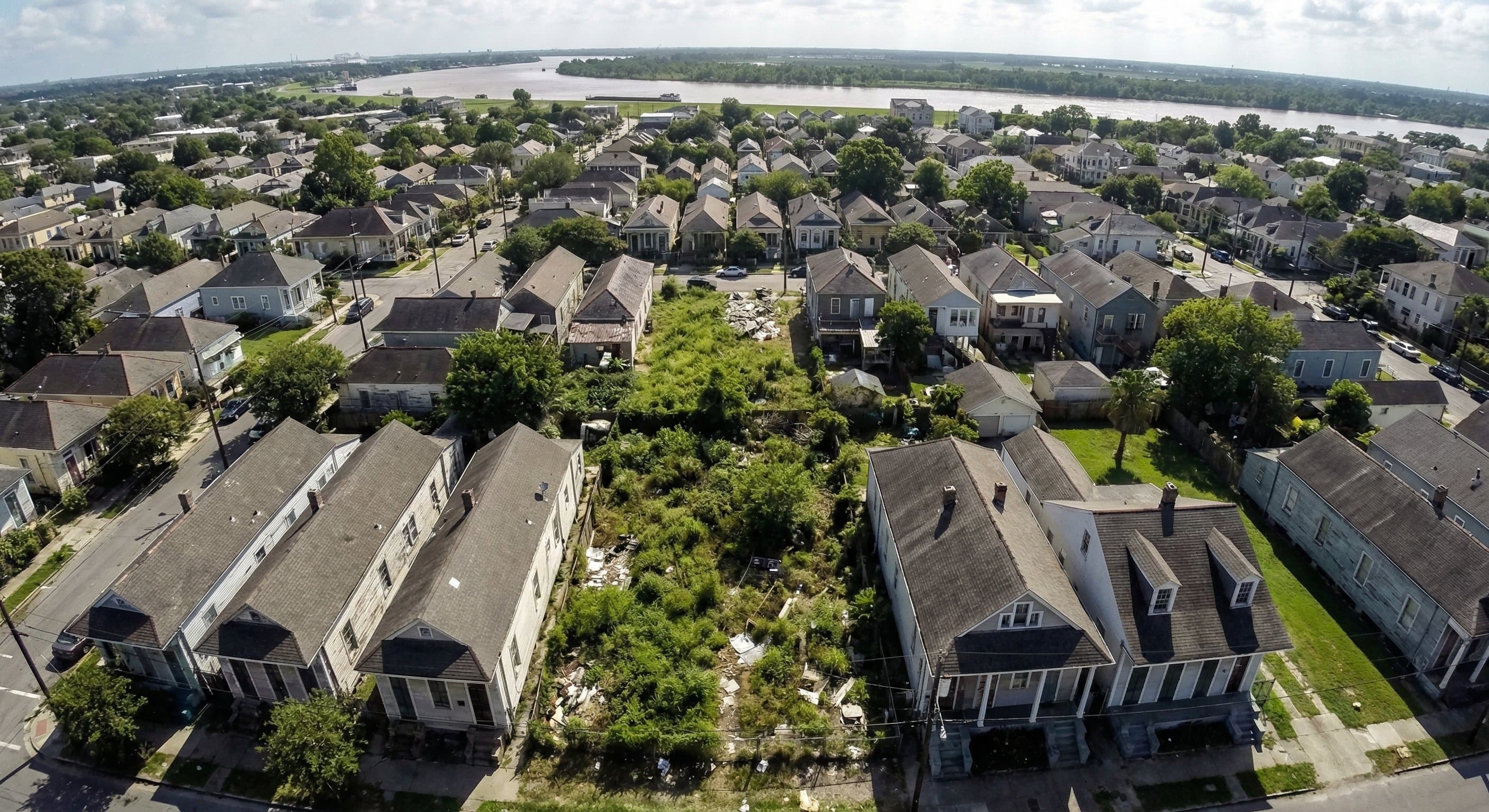
TL;DR: Louisiana runs a civil law foreclosure system that differs from every other US state. Foreclosure leads in Louisiana follow an executory process with no post-sale redemption period, a three-bidder auction rule, and parish-level court filings. Investors who understand Louisiana's 64 parishes can find properties trading well below after-repair value. Major markets: East Baton Rouge Parish, Jefferson Parish, and Orleans Parish.
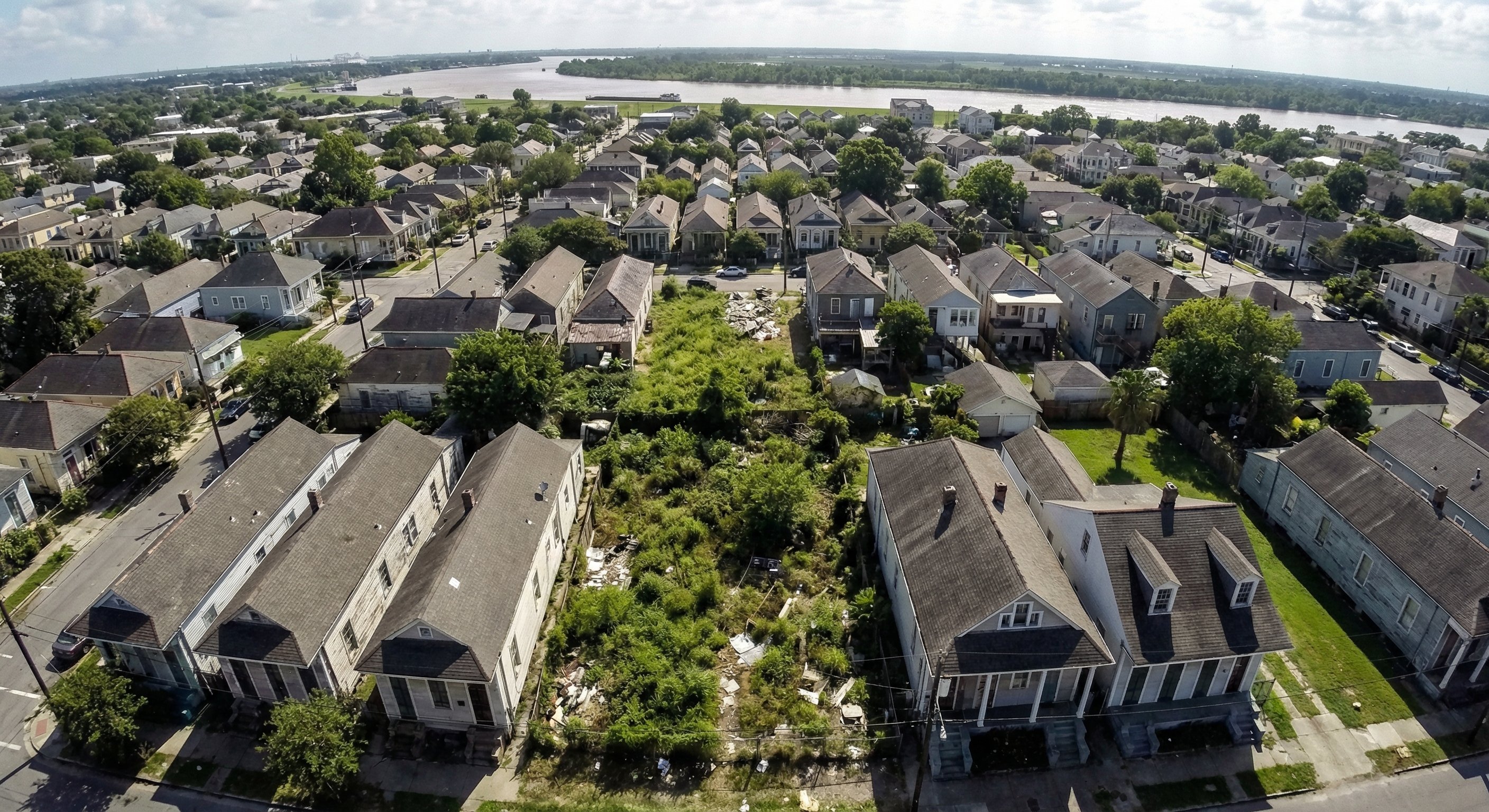
Louisiana operates under a civil law legal framework derived from the Napoleonic Code, not English common law. For real estate investors, this means the foreclosure process, property rights, and title mechanics all function differently from Texas, Arkansas, Mississippi, or Florida. Most out-of-state investors never look because the learning curve feels steep. That gap is exactly where disciplined investors find their best deals.
Why Louisiana's Foreclosure System Is Different
In 48 states, a lender forecloses through either judicial process or power-of-sale. Louisiana uses executory process, which requires pre-existing authentic acts and moves faster than judicial foreclosure in many states but requires more documentation upfront.
The practical implications are significant. Louisiana requires no redemption period after the auction. In most states, a foreclosed homeowner has 30 to 90 days after a foreclosure sale to redeem the property by paying the outstanding debt plus costs. Louisiana eliminates that step once the sale is confirmed. This creates cleaner title faster and reduces the uncertainty window that makes some investors hesitant about auction purchases elsewhere.
Louisiana also requires a minimum of three bidders at a judicial sale. If fewer than three qualified bidders appear, the sale may be postponed or conducted under modified terms. Well-capitalized investors who attend Louisiana auctions consistently face less competition than they would at a foreclosure auction in most other states.
The state also maintains a separate tax adjudicated property system. When a property owner fails to pay property taxes, the parish sells a tax lien at its annual tax sale. If the lien is not redeemed within a statutory period, the property title transfers to the tax sale buyer via adjudication. This creates distressed property opportunities that do not appear in the standard foreclosure pipeline.
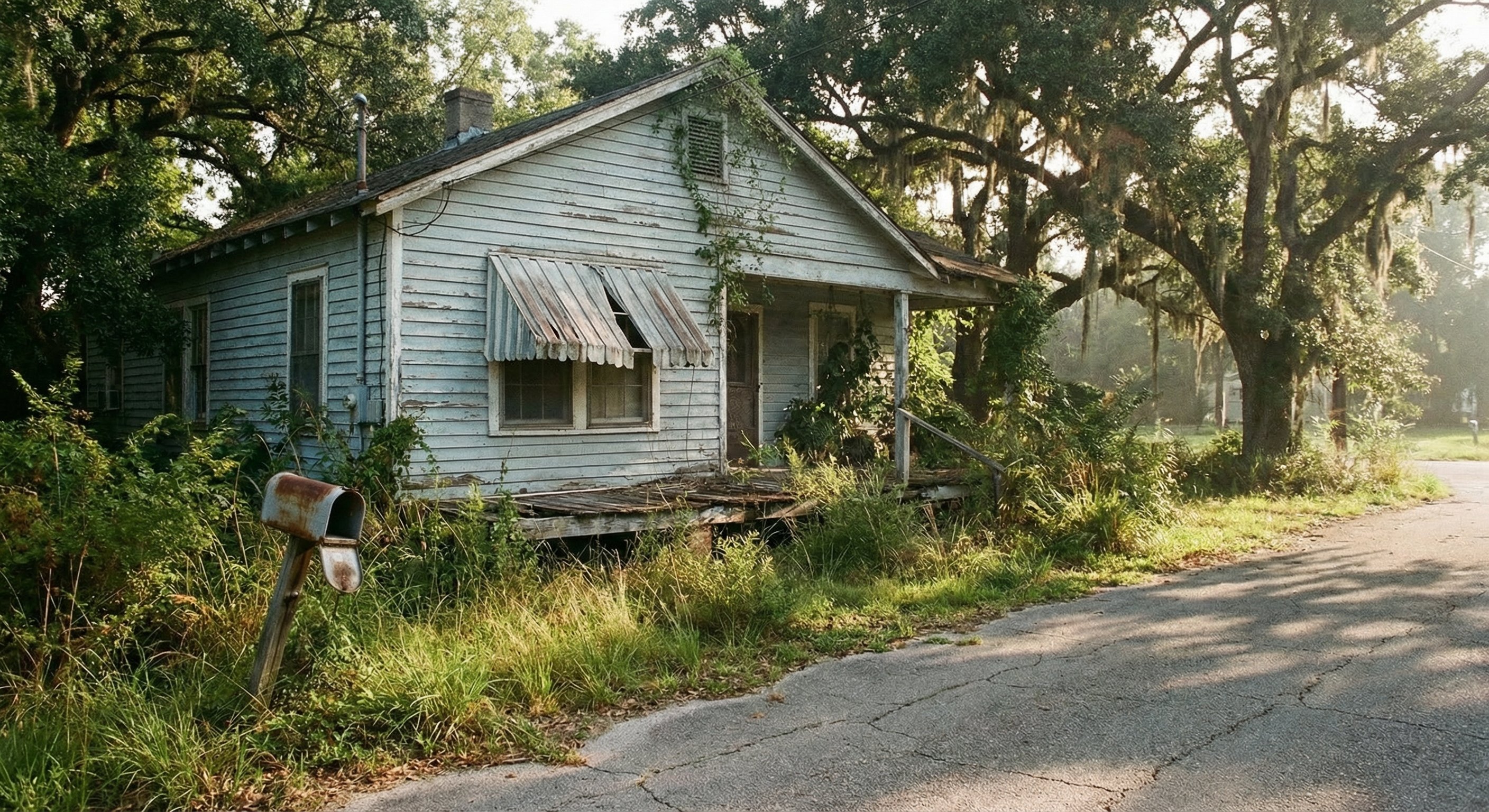
The Three Louisiana Markets That Matter Most
Not all Louisiana parishes generate equivalent investor activity. Concentrate research and lead generation efforts on these three areas.
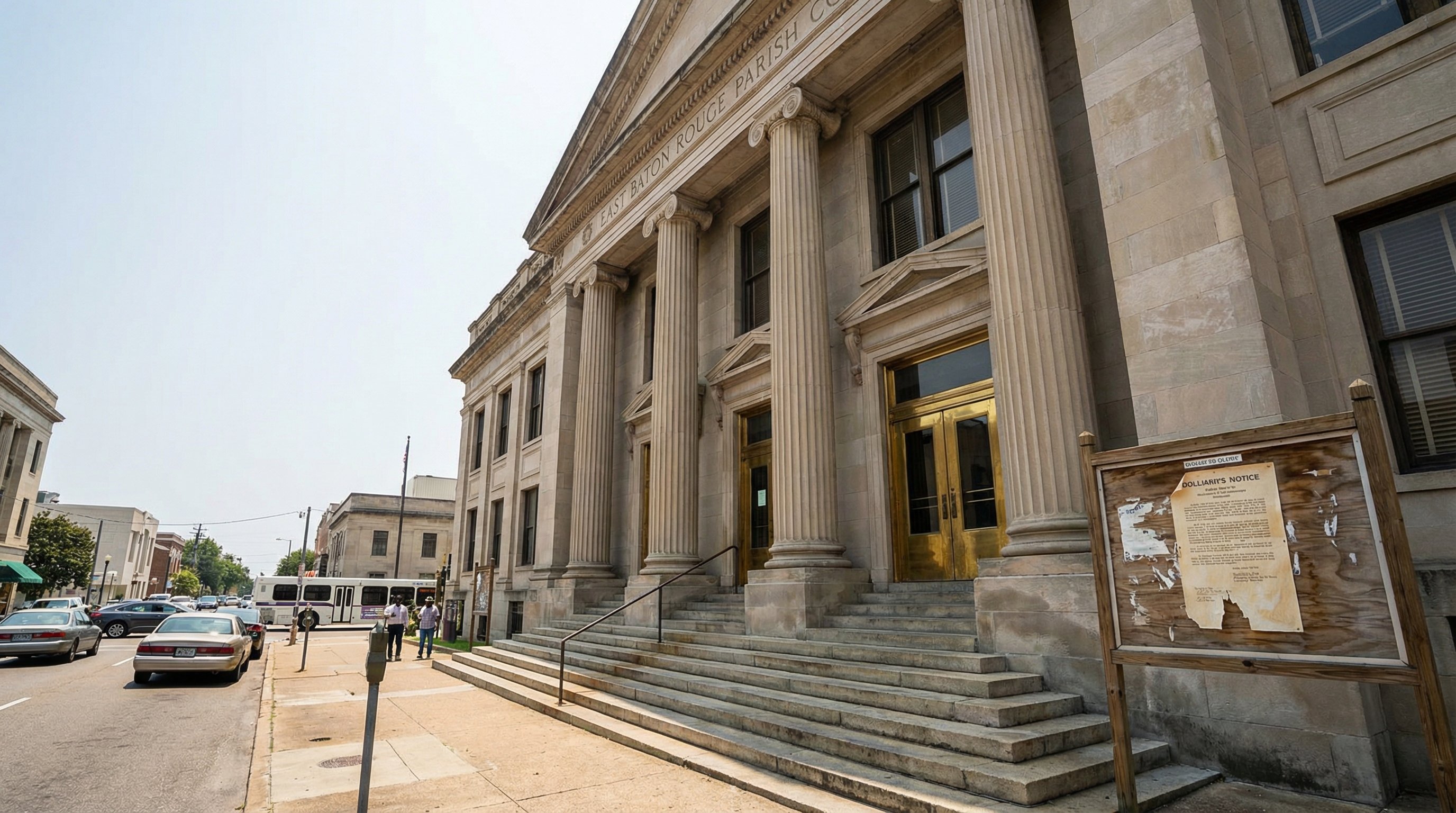
East Baton Rouge Parish is the state's economic center and the seat of state government. Baton Rouge generates the highest volume of foreclosure filings in Louisiana due to its large population, university economy, and petrochemical industry employment cycles. Foreclosure leads tend toward mid-market single-family homes and small multi-unit buildings. The parish uses the district court system for executory process filings, with docket information searchable through the 19th Judicial District Court.
Jefferson Parish sits immediately west of New Orleans and is the most populous parish in the state. Jefferson Parish has a diverse housing stock ranging from suburban ranch homes in Metairie to older homes in Gretna and Harahan. The high density of rental and investor-owned homes creates more distressed inventory alongside more sophisticated counterparties at auction.
Orleans Parish includes the city of New Orleans. The aftermath of Hurricane Katrina in 2005 continues to shape the distressed property landscape. Many parcels that changed hands during reconstruction have since passed through estates and financial hardships. Orleans Parish foreclosure leads often involve properties with complicated title histories or multiple lienholders. The reward for navigating those complications can be significant: New Orleans properties in recovering neighborhoods trade well above comparable properties in other Louisiana markets.
How the Louisiana Foreclosure Timeline Works
Understanding the actual timeline helps investors plan acquisition strategies and avoid surprises at closing.
The process begins when a borrower defaults. Most pre-foreclosure periods run 60 to 120 days before a foreclosure petition is filed with the district court.
Once the lender files the executory process petition and the court validates the authentic acts, the property is scheduled for sheriff's sale. Louisiana law requires the sheriff to advertise the sale in the official parish journal for at least 30 days. The sale is conducted at the parish courthouse and bidders must register and present proof of funds.
The period between filing and sale varies by parish but typically runs 60 to 180 days from initial filing. Winning bids above the upset price set by the lender are confirmed by the court and the purchaser receives a sheriff's sale certificate. Louisiana has no post-sale redemption right, so once the sale is confirmed, title transfers relatively quickly.
Free Weekly Alerts
See What's Distressed in Your Market
Get free weekly alerts — new distressed properties, motivation scores, and hot neighborhoods in your area. Addresses and contact info available inside DistressIQ.
Free forever · No credit card · Unsubscribe anytime
How Louisiana Distressed Sellers Differ From Other States
Louisiana homeowners in financial distress face state-specific circumstances that affect how they negotiate and what motivates them to sell.
The Louisiana homestead exemption provides meaningful protection for owner-occupants. A homeowner may claim an exemption for up to $75,000 of equity in a personal residence. This does not eliminate foreclosure but affects how much flexibility a distressed homeowner has to pursue a short sale or negotiate a deed-in-lieu with the lender.
Community property rules also affect Louisiana real estate. Louisiana is one of nine community property states in the US. When a married couple holds property, both spouses typically have an interest in the community estate, even if only one name appears on the mortgage. This can complicate short sales and loan modifications, which require both spouses to participate. For investors, this complexity can translate into longer transaction timelines but also more motivated sellers who are eager to resolve a difficult financial situation.
How to Research Louisiana Foreclosure Leads
Investors who want to find foreclosure leads Louisiana should understand the key research touchpoints available in the state.
Parish tax assessor websites are the starting point. Every Louisiana parish maintains an online property database with current assessed values, tax payment status, and ownership records. Several parishes, including East Baton Rouge and Jefferson, offer searchable databases that allow investors to identify tax delinquent properties before they appear in any other research system.
Louisiana court case search tools allow investors to look up district court docket information by parish and case type, revealing executory process filings before the property reaches the sheriff's sale stage. Sheriff's sale listings are published by each parish sheriff's office and include upcoming auction properties, opening bids, and addresses.
Parish recorder of mortgages maintains lien records for all properties in the parish. Searching the recorder's database reveals prior mortgages, liens, and any assignments that affect the title chain. Every serious investor in Louisiana should be working with a Louisiana-licensed real estate attorney who can identify title issues before they surface at closing.
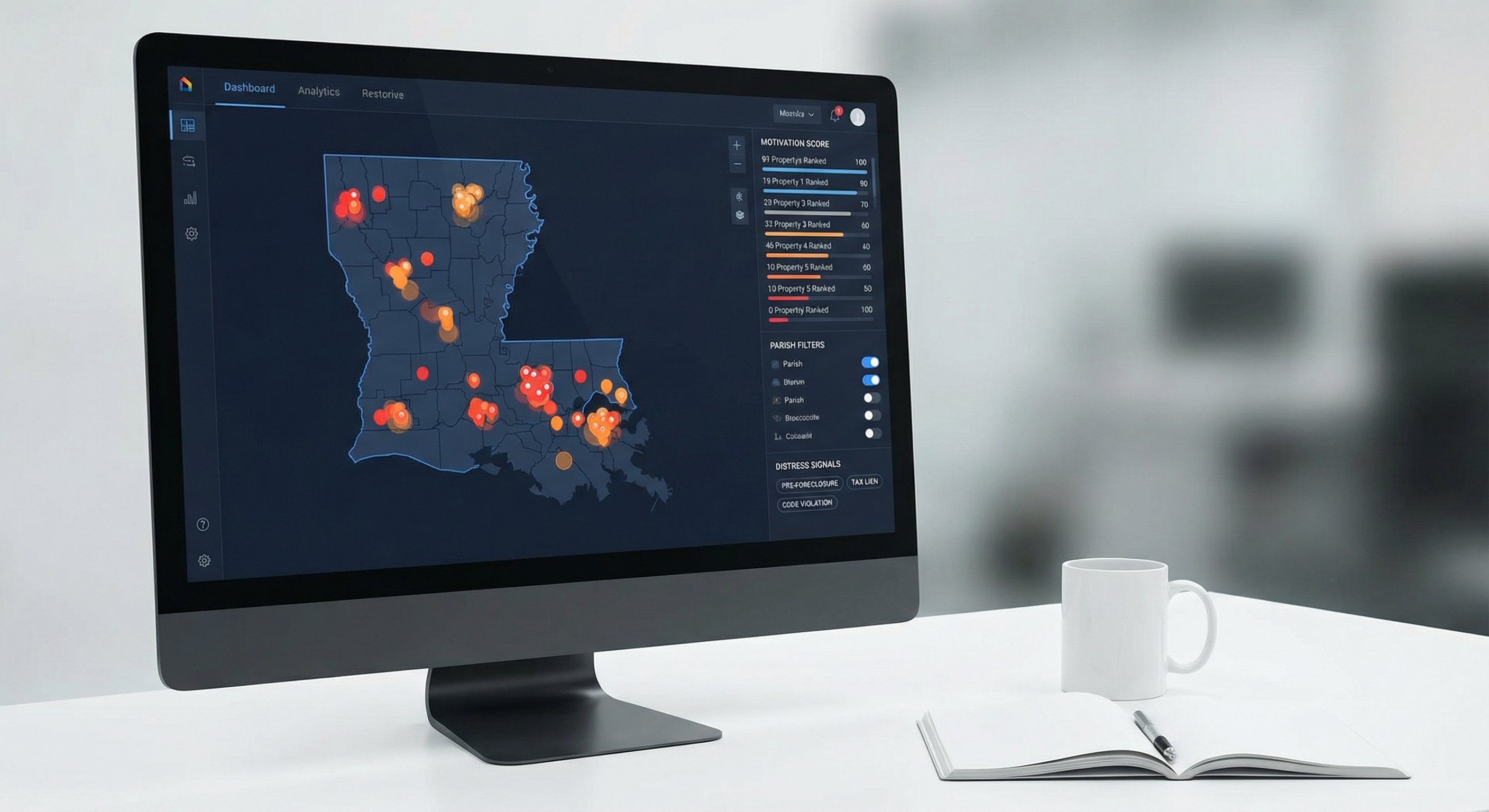
DistressIQ pulls distress signals from parish-level public records across Louisiana, including pre-foreclosure filings, tax delinquent properties, code violations, and bankruptcy signals. Properties are scored by motivation likelihood, which helps investors focus on leads most likely to convert to a working conversation with the owner.
Frequently Asked Questions
Q: How does Louisiana foreclosure process differ from other states?
Louisiana uses executory process, a civil law foreclosure procedure that requires more upfront documentation from the lender than most states. Unlike 48 other states, Louisiana has no redemption period after the sheriff's sale is confirmed. The three-bidder auction requirement is also unique and reduces competition at sales with low attendance.
Q: How long does foreclosure take in Louisiana?
Most Louisiana foreclosures run 180 to 300 days from the initial filing to the auction date. Pre-foreclosure periods of 60 to 120 days typically precede the filing, giving motivated sellers a window of 3 to 6 months from default to auction.
Q: Can out-of-state investors buy foreclosed properties in Louisiana?
Yes. There is no residency requirement. Investors unfamiliar with Louisiana's civil law system, community property rules, and parish-level court processes should work with a Louisiana-licensed real estate attorney before purchasing at auction.
Q: What are the best parishes for Louisiana foreclosure leads?
East Baton Rouge Parish, Jefferson Parish, and Orleans Parish generate the highest volume of foreclosure leads in Louisiana. East Baton Rouge offers the most liquid auction market. Orleans Parish offers opportunities in recovering neighborhoods with strong after-repair value. Jefferson Parish combines volume with a diverse housing stock.
Q: What is tax adjudicated property in Louisiana?
When a property owner fails to pay property taxes, the parish sells a tax lien at its annual tax sale. If the lien is not redeemed within the statutory redemption period (generally three years), the property title transfers to the tax sale buyer via tax adjudication. This creates distressed property opportunities that exist separately from the conventional mortgage foreclosure pipeline.
Q: What due diligence is required before buying a Louisiana foreclosure at auction?
At minimum, investors should conduct a title search through a Louisiana real estate attorney, verify the opening bid amount against outstanding liens, confirm the property's occupancy status, and understand any prior mortgage, judgment, or tax lien that will survive the sale.
Q: How does Louisiana community property law affect real estate transactions?
Louisiana is a community property state. When a married couple owns property, both spouses have a legal interest in the community estate regardless of which spouse's name appears on the mortgage. This affects short sales, loan modifications, and other transactions involving distressed homeowners.
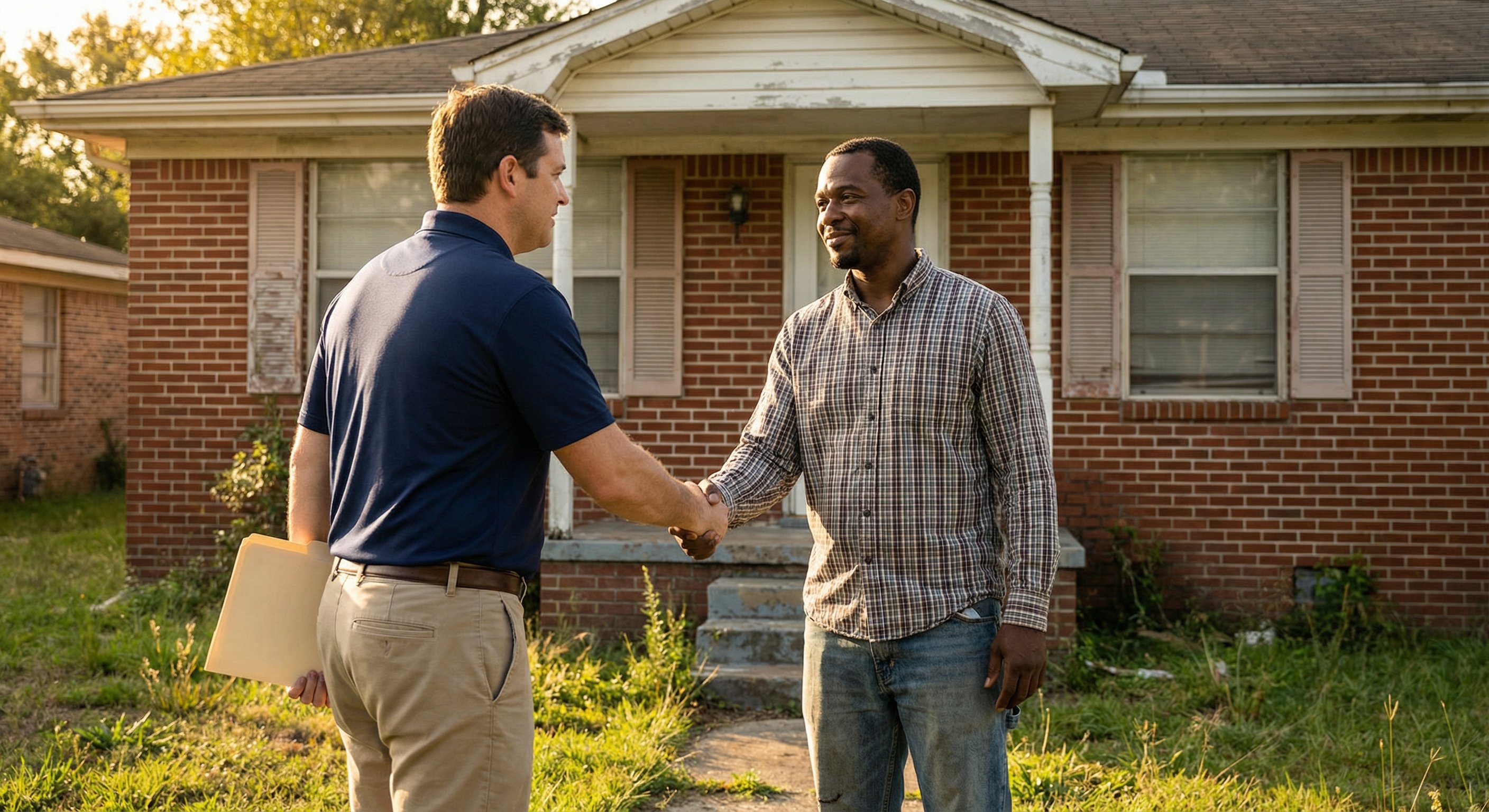
Louisiana foreclosure leads represent one of the most under-researched distressed property markets in the United States. The civil law system, the three-bidder auction rule, and parish-level record keeping create friction that keeps most investors out. That friction is the edge for the investor who does the work. Understanding executory process, working with Louisiana real estate attorneys, and using a platform that tracks distress signals across all 64 parishes transforms a confusing market into a systematic deal flow engine.
The data behind this article
DistressIQ Monitors These Signals in Real Time
Pre-Foreclosures
NOD + NTS filings
Tax Delinquency
County treasurer records
Code Violations
Municipal inspection filings
Probate Filings
Superior Court records
Every lead is scored 0–100 for seller motivation based on signal type, duration, severity, and stacking. Nationwide coverage — every US county, updated daily.
Ready to find deals in your market?
See Live Distress Signals in Your County
Stop calling dead leads. Every lead in DistressIQ is scored 0–100 for seller motivation, with verified contact info included. Browse the free tier to see what's active in your market right now.
Browse Free Leads — No Credit Card