Foreclosure Leads Indiana: What Smart Investors Need to Know in 2026
Foreclosure Leads Indiana: What Smart Investors Need to Know in 2026
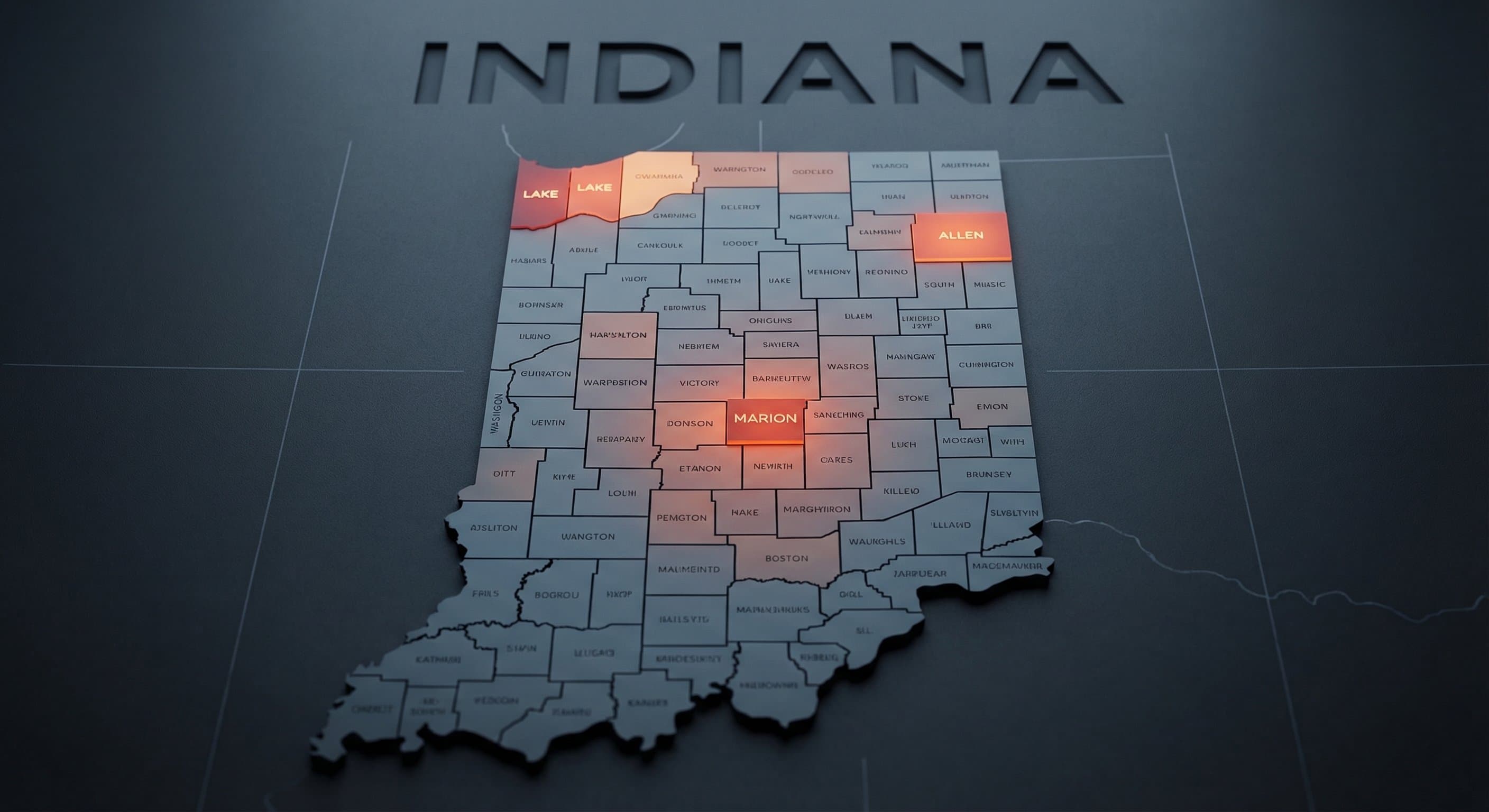
TL;DR: Indiana operates as a judicial foreclosure state, meaning every foreclosure must pass through the court system before a property reaches the sheriff sale auction block. That court process typically stretches 6 to 9 months, creating a wide pre-foreclosure window where homeowners are financially distressed but the property has not yet hit public auction. For investors, that window is where the best opportunities live. Marion County (Indianapolis), Lake County (Gary/Hammond), and Allen County (Fort Wayne) generate the most volume. DistressIQ aggregates distress signals across all Indiana counties and sorts leads by motivation score, so investors spend time calling properties most likely to engage rather than working through static court dockets manually.
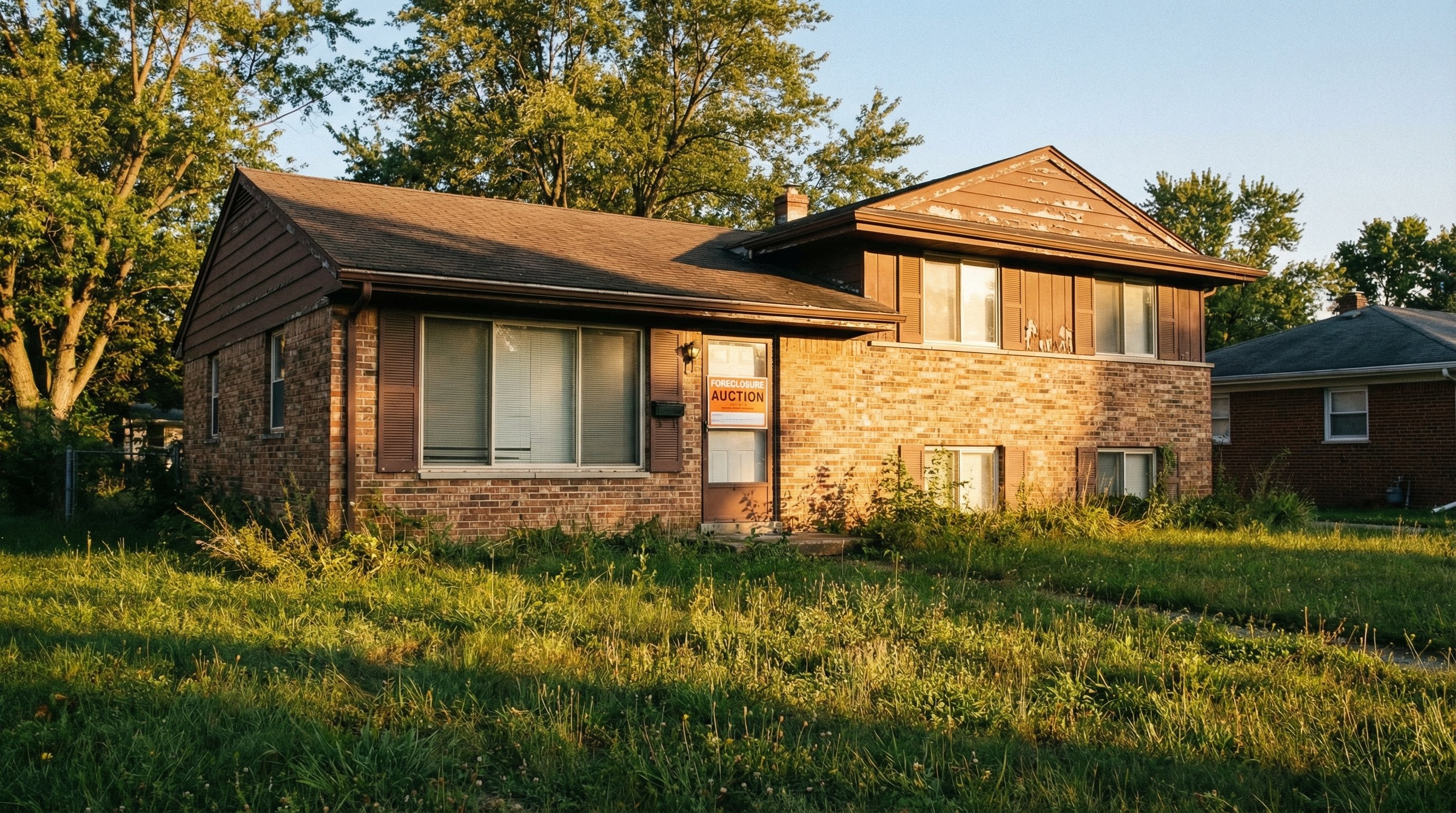
Most investors hunting for foreclosure leads in Indiana make the same mistake: they show up at the sheriff sale auction and compete with every other wholesaler who had the same idea. By that point, the motivated sellers have already been picked over, the best properties are gone, and what remains often carries title issues that take months to untangle.
The smarter play is to find foreclosure leads Indiana before they reach the auction. That requires understanding how Indiana's judicial foreclosure process actually works, which counties produce the most volume, and what signals indicate a distressed homeowner is most likely to accept an off-market deal before the court deadline arrives.
How Indiana's Judicial Foreclosure Process Creates Investor Opportunity
Indiana is one of roughly 22 states that uses judicial foreclosure exclusively. That means a lender cannot simply post a notice and sell a property at auction. Every single foreclosure must be filed through the county circuit court, reviewed by a judge, and then scheduled for sheriff sale. No shortcuts, no non-judicial fast tracks.
The process unfolds in distinct stages, and each stage presents a different type of opportunity.
Pre-foreclosure (Notice of Default): When a homeowner falls at least 90 days behind on mortgage payments, the lender files a Complaint for Foreclosure with the county circuit court. The homeowner is formally served and has 30 days to respond. During this period, the homeowner is highly motivated to find a solution. They have equity in the property (usually), they do not want a foreclosure on their credit report, and they are actively looking for a way out. This pre-foreclosure window is the prime opportunity for investors.
The Court Proceedings: If the homeowner does not respond or cannot reach a loan modification, the court enters a Judgment of Foreclosure. This establishes the amount owed and sets a Sheriff Sale date. In Indiana, the redemption period after judgment runs 6 to 12 months depending on whether the property is the homeowner's primary residence and whether it has been deemed abandoned. The court docket determines the exact timeline, and Indiana court dockets vary significantly by county.
Sheriff Sale: If the homeowner does not redeem the property during the redemption period, it goes to the county sheriff's auction. Opening bids at Indiana sheriff sales are set by the court and are frequently well below market value. Properties that fail to attract adequate bids at auction revert to the lender as real estate owned (REO).
The judicial process is slower than non-judicial states like Texas or California, but that slowness works in the investor's favor. A 6 to 9 month court timeline means a larger pool of pre-foreclosure homeowners actively seeking alternatives. Investors who move early can often structure deals that benefit the seller (avoiding foreclosure on their record) while securing the property at a discount.
Indiana's Highest-Volume Foreclosure Counties
Not all Indiana counties are created equal when it comes to foreclosure lead volume. Investor opportunity is concentrated in a handful of metropolitan counties where population density, economic cycles, and housing stock combine to generate consistent distressed property flow.
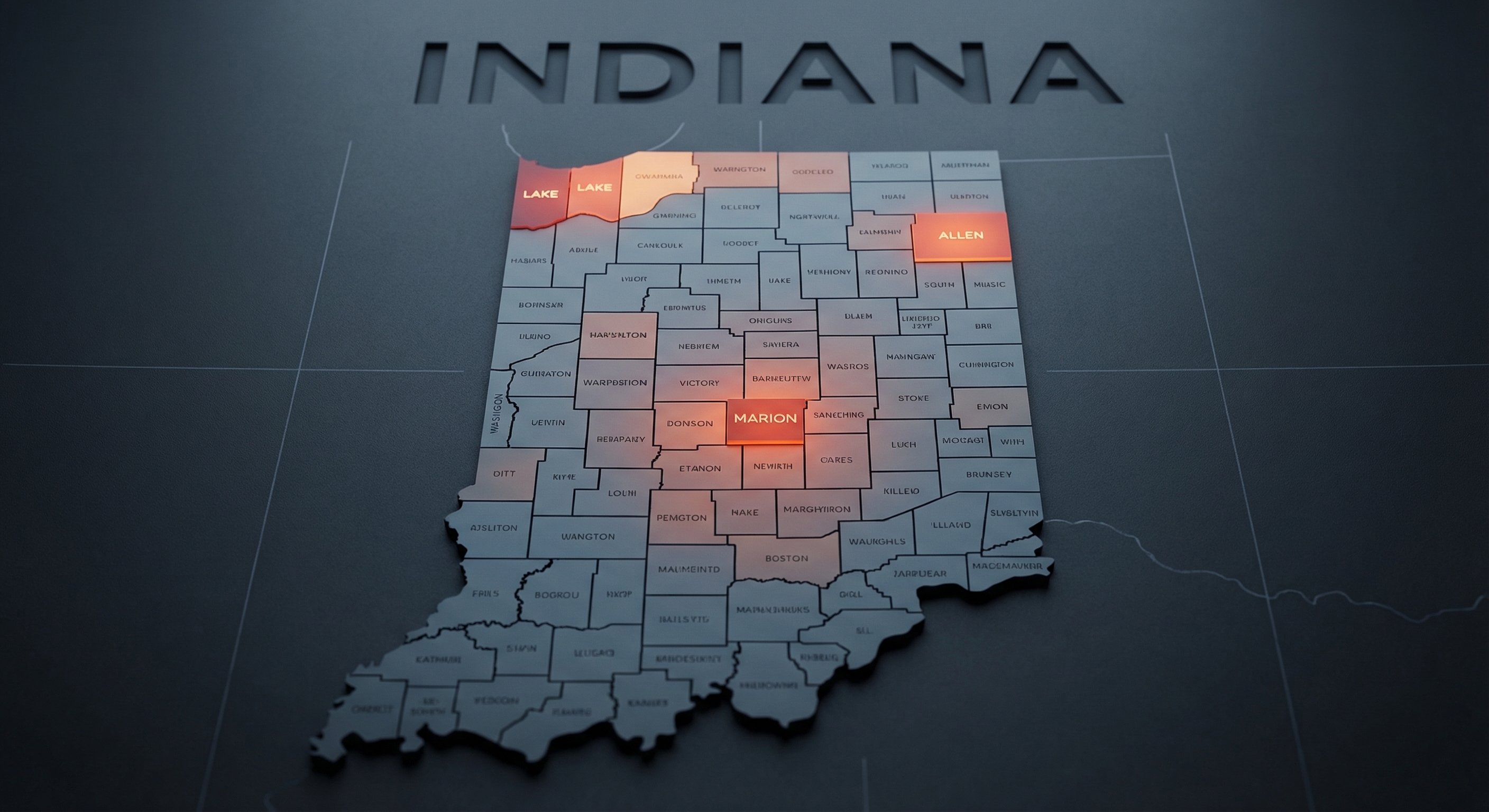
Marion County (Indianapolis) is the undisputed leader. As Indiana's most populous county and the Indianapolis metropolitan area, Marion County handles more foreclosure filings than any other county in the state. The market is large enough to support dedicated investor activity, and distressed properties appear across every price range from entry-level bungalows in Fall Creek Heights to mid-century homes on the Near Eastside. Indianapolis's diverse economy (healthcare, manufacturing, logistics) means foreclosure triggers range from corporate layoffs to divorce and inheritance situations.
Lake County (Gary/Hammond/East Chicago) is Indiana's second-largest county and one of the most foreclosure-dense markets in the Midwest. Its proximity to Chicago drives a unique dynamic: Lake County absorbs overflow Chicago-area investor demand while maintaining significantly lower entry prices. The county's post-industrial economy produces chronic distress, and neighborhoods like Gary, East Chicago, and Hammond show elevated vacancy and code violation rates that compound foreclosure filings.
Allen County (Fort Wayne) is Indiana's third-largest county and a major hub for manufacturing and healthcare. The presence of large employers like Lutheran Health Network and the stability of Fort Wayne's economy means foreclosure rates here are lower than Marion or Lake County, but the properties that do come through tend to be higher quality from an investment standpoint.
St. Joseph County (South Bend/Mishawaka) and Vanderburgh County (Evansville) round out the top tier. South Bend's economy has historically been tied to manufacturing and the University of Notre Dame, producing a predictable cycle of distress tied to employment fluctuations. Evansville, Indiana's southwestern hub, serves a multi-state region and generates consistent foreclosure volume across its river city housing stock.
Other counties worth monitoring include Delaware County (Muncie), Elkhart County (driven by recreational vehicle manufacturing volatility), and Madison County (Anderson).
Pre-Foreclosure vs. Sheriff Sale: Two Different Games
Investors new to Indiana often conflate pre-foreclosure leads with sheriff sale leads, but these are fundamentally different acquisition strategies with different risk profiles and different deal structures.
Pre-foreclosure leads are properties where the lender has filed a foreclosure complaint but the court has not yet entered a judgment or scheduled a sheriff sale. These homeowners have the most flexibility: they can accept a short payoff, execute a deed-in-lieu of foreclosure, or sell the property on the open market before the judgment is entered. The investor's advantage is timing and motivation. The homeowner needs a solution now, before the court date. For the investor who can move quickly and has a title clearance process in place, pre-foreclosure deals in Indiana frequently close at 75 to 85 percent of after-repair value.
Sheriff sale leads are properties that have survived the redemption period and are scheduled for public auction. At this stage, the homeowner's options are severely limited. The negotiating position shifts toward the investor because the alternative is losing the property at auction. However, sheriff sale deals in Indiana come with a specific risk: the redemption period means some properties may have been occupied and deteriorated for months before the auction date. Title issues also accumulate during redemption periods, and investors need a title search before bidding at any Indiana sheriff sale.
The practical implication is this: investors who monitor pre-foreclosure filings through Indiana's Odyssey case management system and reach homeowners before the judgment date consistently find more motivated sellers and cleaner deals than those who wait for sheriff sale listings.

Free Weekly Alerts
See What's Distressed in Your Market
Get free weekly alerts — new distressed properties, motivation scores, and hot neighborhoods in your area. Addresses and contact info available inside DistressIQ.
Free forever · No credit card · Unsubscribe anytime
What Distress Signals to Stack When Evaluating Indiana Foreclosure Leads
A foreclosure filing alone is a single data point. Experienced investors who consistently find the best deals stack multiple distress signals to identify properties where the homeowner is most likely to engage with an offer and most likely to follow through to closing.
In Indiana specifically, these compounding signals matter most:
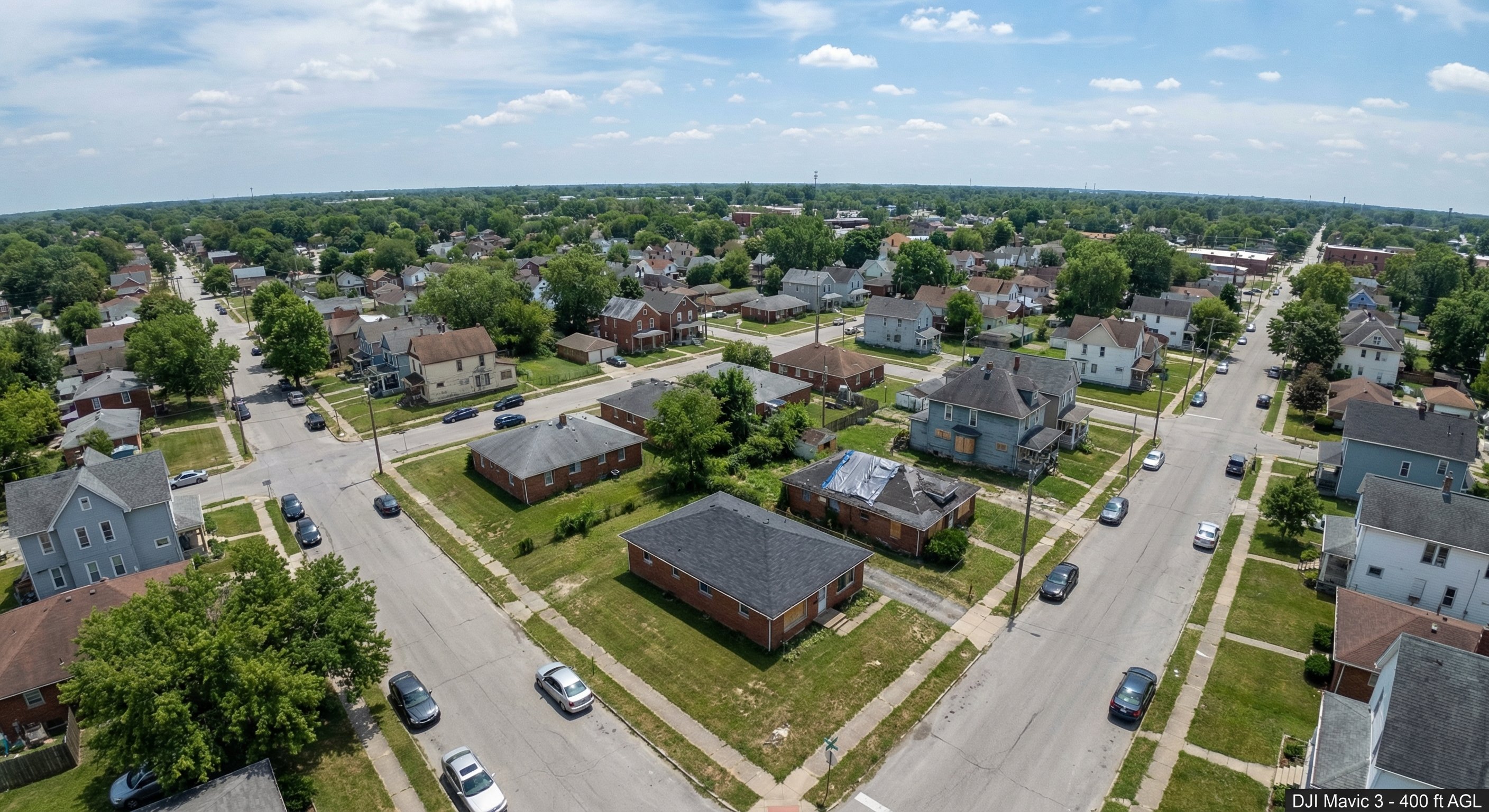
Code enforcement violations frequently precede or accompany mortgage delinquency. Properties with unrepaired code violations, unaddressed inspections, or city-registered vacancy orders are operating under a different set of pressures than a homeowner who simply fell behind on payments. The combination of code enforcement activity and an active foreclosure filing indicates a homeowner who is losing control of the property and has fewer options than a standard pre-foreclosure case.
Tax delinquency compounds mortgage distress into a two-front problem. Indiana's property tax cycle means that homeowners who cannot pay their mortgage are often also delinquent on property taxes, creating a dual-lien situation that lenders move quickly to resolve. Properties with both mortgage foreclosure filings and tax sales scheduled represent highly motivated situations where the homeowner needs a clean exit.
Absentee ownership is a strong negotiating signal in Indiana's rental-heavy markets. Indianapolis, Gary, and Fort Wayne all have elevated absentee owner rates in specific neighborhoods. An absentee landlord facing foreclosure on a rental property is not living in the unit and has less emotional attachment to the outcome. These homeowners often prefer a quiet cash deal to the public record of a foreclosure filing.
Utility shutoff records indicate a property is almost certainly vacant, which in Indiana means the redemption clock may be running faster than the court docket suggests. Vacant properties in Indiana are eligible for a shortened 6-month redemption period rather than the standard 12-month period for homesteads.
DistressIQ stacks all of these signal types across Indiana counties and ranks leads by a motivation score that weighs how many compounding distress indicators are present. A property with a foreclosure filing, a code violation, and a utility shut-off scores higher than a property with a single foreclosure filing and no other visible distress signals.
How to Reach Foreclosure Leads in Indiana Before the Sheriff Sale
The strategy that separates consistently active Indiana investors from occasional ones is timeliness. Pre-foreclosure windows close faster than most investors realize, and the homes with the most equity and the cleanest title are the first to find off-market solutions.
Indiana's court system publishes new foreclosure filings through the Odyssey case management system, but monitoring Odyssey requires knowing which counties to watch and understanding how to interpret docket entries. Most individual investors lack the infrastructure to check all 92 Indiana counties on a daily basis. The investors who win on pre-foreclosure in Indiana typically rely on aggregated platforms that push new filings as they are entered, rather than manually checking county dockets.
Once a pre-foreclosure lead is identified, outreach timing matters in Indiana's specific market conditions. Homeowners in the 30-day response window after being served are often overwhelmed and defensive. Outreach 30 to 60 days after service, when the homeowner has had time to process the situation and begin actively seeking solutions, tends to produce higher engagement rates.
Direct mail to the property address remains the most reliable outreach method in Indiana's foreclosure market. Phone outreach to the homeowner works when skip-traced contact information is available, but many Indiana homeowners in pre-foreclosure have disconnected phones or are avoiding calls from unknown numbers. A well-crafted letter delivered to the property address within the first 30 days of the filing date gives the homeowner something concrete to react to when they are ready.
Key Takeaways for Indiana Foreclosure Investors
Indiana's judicial foreclosure process is slower than neighboring states, but that is a feature, not a bug. The extended court timeline creates a genuine pre-foreclosure window where motivated homeowners are actively seeking solutions and the property title is clean. Investors who understand this timeline and move on pre-foreclosure leads before the sheriff sale date consistently find better deals than those who compete at auction.
Marion, Lake, and Allen counties produce the most consistent foreclosure lead volume, but the best individual opportunities often appear in secondary markets where investor competition is lower and distressed situations are locally known. Stacking multiple distress signals, including code violations, tax delinquency, and absentee ownership, identifies the most highly motivated sellers within any county's foreclosure docket.
See current foreclosure leads in Indiana sorted by motivation score on DistressIQ, with distress signals updated daily across all Indiana counties.

Frequently Asked Questions
How long does foreclosure take in Indiana?
Indiana is a judicial foreclosure state, meaning every foreclosure must go through the court system. The full process from missed payment to sheriff sale typically takes 6 to 12 months, depending on the county docket and whether the property is occupied. The pre-foreclosure window, between the Notice of Default filing and the court judgment, usually spans 60 to 120 days.
Does Indiana have a redemption period after foreclosure?
Yes. Indiana allows a redemption period after the court enters a Judgment of Foreclosure but before the sheriff sale. For homestead properties, the redemption period is generally 12 months. For properties deemed abandoned by the court, the redemption period may be shortened to 6 months.
What counties in Indiana have the most foreclosure activity?
Marion County (Indianapolis) has the highest absolute volume, followed by Lake County (Gary/Hammond) and Allen County (Fort Wayne). St. Joseph County (South Bend) and Vanderburgh County (Evansville) also produce consistent foreclosure lead volume. Together, these five counties account for the majority of Indiana's annual foreclosure filings.
Can an investor buy a property before the sheriff sale in Indiana?
Yes. This is known as buying in the pre-foreclosure stage. The homeowner can sell the property at any point before the sheriff sale as long as the sale proceeds satisfy the existing mortgage and any liens. Pre-foreclosure deals in Indiana typically require a title search to confirm the payoff amount and may require lender approval if the sale price is below the outstanding loan balance.
What is the difference between a sheriff sale and a bank-owned property in Indiana?
A sheriff sale is a public auction where properties that have completed the foreclosure process are sold to the highest bidder. If a property does not sell at sheriff sale, it becomes bank-owned real estate (REO). REO properties typically have clearer title and are managed by asset management companies, but they are usually listed after the best pre-foreclosure opportunities have already been worked.
The data behind this article
DistressIQ Monitors These Signals in Real Time
Pre-Foreclosures
NOD + NTS filings
Tax Delinquency
County treasurer records
Code Violations
Municipal inspection filings
Probate Filings
Superior Court records
Every lead is scored 0–100 for seller motivation based on signal type, duration, severity, and stacking. Nationwide coverage — every US county, updated daily.
Ready to find deals in your market?
See Live Distress Signals in Your County
Stop calling dead leads. Every lead in DistressIQ is scored 0–100 for seller motivation, with verified contact info included. Browse the free tier to see what's active in your market right now.
Browse Free Leads — No Credit Card