How to Find Foreclosure Leads in Georgia (2026 Investor Guide)
How to Find Foreclosure Leads in Georgia (2026 Investor Guide)
TL;DR: Georgia is a non-judicial foreclosure state where the entire process, from Notice of Default to auction, can finish in 30 to 60 days. There is no court filing, no judge, and no statutory right of redemption after the sale. Auctions happen on the first Tuesday of every month on county courthouse steps. Fulton, Gwinnett, DeKalb, Cobb, and Clayton generate the most foreclosure activity. The Notice of Default stage is the only realistic window for investors to contact homeowners before the property sells.
Why Georgia Foreclosure Leads Are Different
Georgia runs one of the fastest foreclosure timelines in the country. Most states take six months to two years. Georgia can complete a foreclosure in as few as 30 days from the first default notice, and rarely more than 60.
The state uses a non-judicial foreclosure process. No court filing, no judge, no lawsuit. The lender sends a Notice of Default to the borrower, waits 30 days, then publishes a Notice of Sale in the county's official legal organ newspaper for four consecutive weeks. After publication, the property goes to auction on the courthouse steps.
For investors tracking foreclosure leads in Georgia, this compressed timeline changes everything. The window between default and sale is measured in weeks. Speed of data and speed of outreach determine who gets the deal.

The Non-Judicial Process Step by Step
Georgia's foreclosure statute, O.C.G.A. § 44-14-162, gives lenders a clear path to sale without judicial oversight.
The borrower defaults on the mortgage. The lender issues a Notice of Default to the borrower's last known address. Georgia does not require the notice to be filed with any court. This makes NOD data harder to find through public record aggregators compared to judicial states where every filing hits a county docket.
After the 30-day cure period, the lender publishes the Notice of Sale in the county's designated legal organ. The notice must run once per week for four consecutive weeks preceding the sale date. It includes the property address, borrower name, lender, outstanding debt, and sale location.
The sale takes place on the first Tuesday of the following month, on the courthouse steps. This first-Tuesday tradition is unique to Georgia and Texas.
Once the property sells, the deal is final. Georgia has no statutory right of redemption for conventional mortgages. The former homeowner cannot reclaim the property after the sale, unlike Minnesota or Oregon where redemption windows extend past the auction.
Where to Find Foreclosure Leads in Georgia
Because Georgia does not require NODs to be filed in court, the data sources differ from judicial foreclosure states.
County Legal Organ Newspapers
Every foreclosure notice must appear in the county's official legal organ. In Fulton County, that is the Daily Report. In Gwinnett, the Gwinnett Daily Post. These newspapers are the most authoritative source for upcoming auctions.
The limitation is speed. By the time a notice appears in the legal organ, the borrower is past the cure period and the property is four weeks from sale.
Notice of Default Lists
Some data providers track NODs before they become public notices of sale. Because Georgia NODs are not filed with courts, these lists come from proprietary data sources, credit bureau triggers, or lender-servicer feeds.
NOD data is the highest-value stage. Homeowners in default but not yet in active foreclosure are more responsive, less overwhelmed by competing outreach, and still have time to evaluate options like a short sale or direct purchase.
Auction Calendars
After the notice of sale is published, the property appears on the county's auction calendar. This stage is the most competitive, since properties have been visible in the legal organ for up to four weeks.

Free Weekly Alerts
See What's Distressed in Your Market
Get free weekly alerts — new distressed properties, motivation scores, and hot neighborhoods in your area. Addresses and contact info available inside DistressIQ.
Free forever · No credit card · Unsubscribe anytime
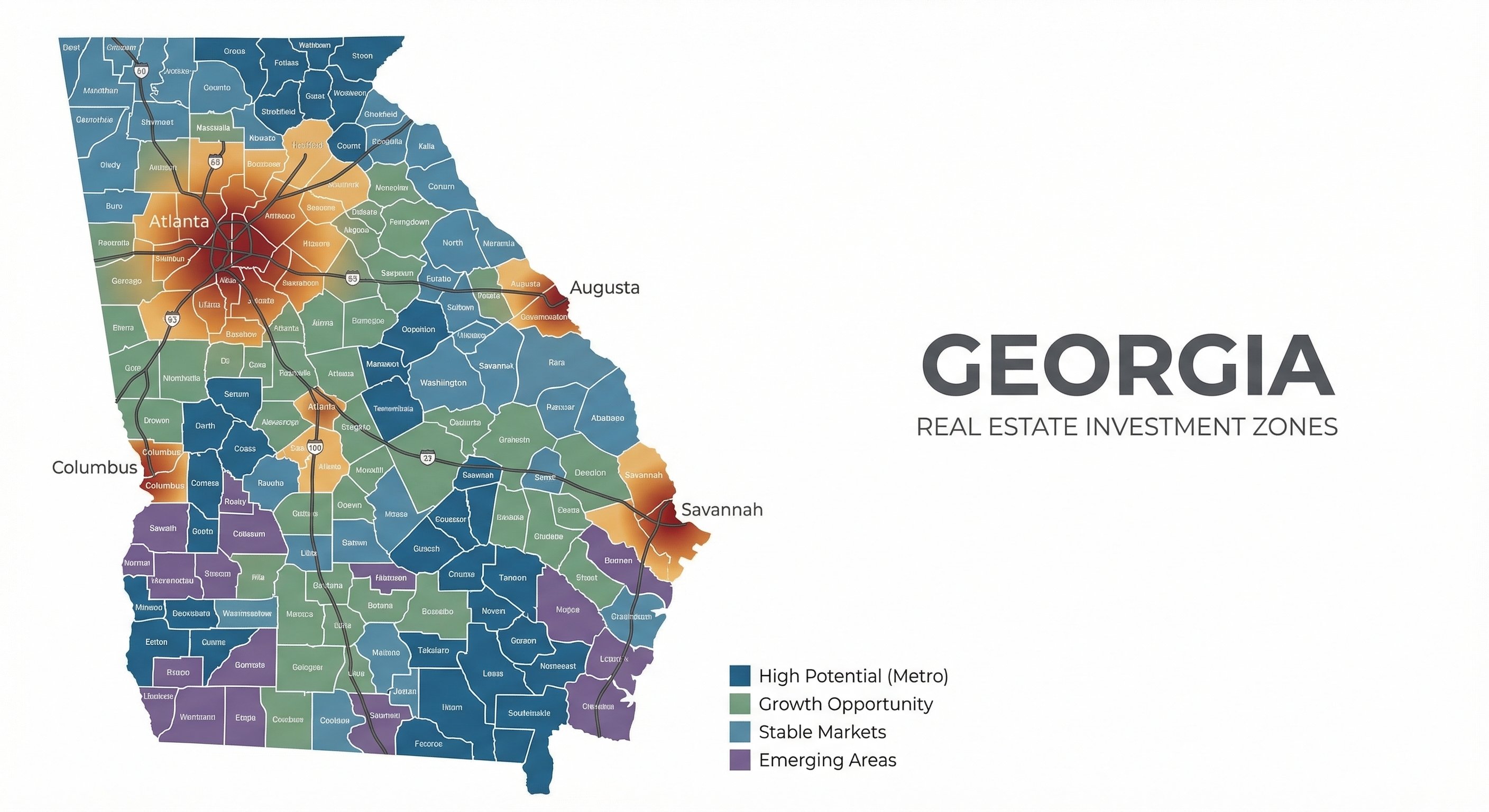
Top Counties for Foreclosure Leads in Georgia
Fulton County
Fulton County consistently leads Georgia in foreclosure filings. Housing stock ranges from intown Atlanta bungalows to suburban subdivisions in South Fulton. Focus areas include south and southwest Atlanta, College Park, East Point, and Union City, where default rates run above the county average.
Gwinnett County
Gwinnett ranks second in foreclosure volume. Lawrenceville, Norcross, and Snellville have active investor markets. Housing stock skews newer than Fulton's, appealing to fix-and-flip buyers with lower renovation budgets.
DeKalb County
DeKalb produces heavy volume in its southern and eastern portions. Decatur, Lithonia, and Stone Mountain have large inventories of distressed properties. A high proportion of absentee-owned properties creates opportunities for investors targeting landlords in default.
Cobb County
Cobb generates solid numbers with higher average home values than Fulton or DeKalb. Marietta, Smyrna, and Kennesaw attract both fix-and-flip and buy-and-hold investors. Higher price points mean larger spreads but require more capital.
Clayton County
Clayton County, directly south of Atlanta, has a smaller population but a disproportionately high foreclosure rate. Jonesboro, Riverdale, and Forest Park offer lower entry prices than the northern counties. For investors working with limited capital, Clayton is worth monitoring.
Secondary Markets: Bibb and Richmond Counties
Bibb County (Macon) and Richmond County (Augusta) produce meaningful activity with far less investor competition. Property values are low enough that wholesale spreads work on modest after-repair values. The tradeoff is thinner buyer pools at resale.
Timing Strategies for Georgia Foreclosure Leads
The NOD Window: Days 1 Through 30
This is the most valuable and hardest-to-reach stage. The borrower has received a Notice of Default but the foreclosure is not yet public. No legal organ notice has been published. No auction date is set.
Investors with early NOD data can reach homeowners before competing mail and calls begin. Response rates are higher because the homeowner has not been overwhelmed. Options remain open: reinstate the loan, negotiate a modification, pursue a short sale, or sell directly.
For foreclosure leads in Georgia, this 30-day window is the only stage where an investor can reliably close before auction.
The Publication Window: Weeks 5 Through 8
Once the notice of sale appears in the legal organ, the homeowner receives a barrage of mail, calls, and door knocks. Response rates drop. Investors working this stage need differentiated outreach: property-referenced direct mail and phone contact via skip-traced numbers.
The Auction Stage: First Tuesday
Some investors skip homeowner outreach and buy at auction. This requires cash, title research, and risk tolerance. Properties are purchased as-is with no inspection contingencies and no financing. Georgia's lack of a redemption period eliminates one risk, but there is no safety net for undisclosed problems.
Building a Georgia Foreclosure Lead Pipeline
Data Sources
Investors need at least two data sources for strong Georgia coverage. The county legal organ covers the publication stage. A proprietary NOD provider covers the earlier default stage. A single source means missing leads or finding them too late.
Direct Mail
Direct mail remains the highest-response outreach channel for foreclosure leads in Georgia. Postcards and letters referencing the specific property address, default amount, and a clear call to action outperform generic investor mail. Mail sent within the first two weeks of default generates two to three times the response of mail sent during the publication stage.
County-Level Focus
Georgia has 159 counties, but the vast majority of foreclosure activity concentrates in fewer than 20. Investors should pick three to five target counties and build deep familiarity with those markets: property values, buyer demand, legal organ schedules, and auction logistics. Covering the entire state dilutes focus and slows response times.
Common Mistakes
Waiting too long is the biggest error. Investors who find leads through legal organ notices are already behind. By publication time, the homeowner has four weeks or less before auction. The investors who consistently close deals reach homeowners during the NOD stage.
Ignoring secondary markets is another misstep. Atlanta gets the most attention and competition. Bibb, Richmond, Muscogee (Columbus), and Chatham (Savannah) offer less competition and workable spreads.

FAQ
Q: How long does the foreclosure process take in Georgia?
Georgia's non-judicial process typically takes 30 to 60 days from the initial Notice of Default to the auction sale. The lender waits 30 days after issuing the NOD before publishing the Notice of Sale, which runs in the county legal organ for four consecutive weeks. After the fourth week, the property sells at auction on the next first Tuesday. This is one of the fastest foreclosure timelines among all US states.
Q: Can a homeowner redeem a property after the foreclosure sale in Georgia?
No. Georgia has no statutory right of redemption for conventional mortgages. Once the property sells at auction, the former homeowner cannot reclaim it. This contrasts with states like Minnesota or Kansas, where redemption windows extend past the sale date. The absence of a redemption period gives auction buyers certainty but means homeowners have no second chance.
Q: Which Georgia counties have the most foreclosure activity?
Fulton, Gwinnett, DeKalb, Cobb, and Clayton generate the highest volumes year over year. Fulton typically leads the state in total filings. Clayton has a smaller population but a disproportionately high foreclosure rate. Outside metro Atlanta, Bibb (Macon) and Richmond (Augusta) produce meaningful activity with less competition.
Q: Where are foreclosure notices published in Georgia?
Georgia law requires notices in the official county legal organ newspaper. Every county designates a specific paper. In Fulton County, the Daily Report serves as the legal organ. In Gwinnett, it is the Gwinnett Daily Post. The notice runs once per week for four consecutive weeks before the sale date.
Q: What is the best stage to contact homeowners facing foreclosure in Georgia?
The Notice of Default stage, before the public notice of sale is published, offers the highest response rates and least competition. Homeowners have not yet been bombarded with outreach and are more receptive to discussing options. Because Georgia's process moves so quickly, the NOD window may be the only practical opportunity to reach the homeowner and close before auction. After the notice of sale hits the legal organ, competition spikes and response rates drop sharply.
Q: Are Georgia foreclosure auctions held on a specific day?
Yes. Georgia holds foreclosure auctions on the first Tuesday of every month on the county courthouse steps. This predictable schedule allows investors to plan research and bidding around a fixed calendar. All foreclosures in a given county sell on the same day, concentrating competition.
Q: What data sources work best for finding foreclosure leads in Georgia?
Because Georgia does not require NODs to be filed with a court, investors need multiple data sources. County legal organs capture every property in the publication stage. Proprietary NOD providers offer earlier visibility into defaults. Auction calendars from county clerk offices track upcoming first-Tuesday sales. Using at least two sources catches more leads earlier in the process.
For investors looking to build a consistent pipeline of foreclosure leads in Georgia, DistressIQ tracks default filings across all 159 Georgia counties and delivers leads at the earliest possible stage, before the legal organ notice appears. Visit distressiq.ai to see current coverage and pricing.
Sources
- Georgia Foreclosure Statute, O.C.G.A. § 44-14-162, Georgia General Assembly
- "State Foreclosure Laws," National Conference of State Legislatures, 2025
- "Georgia Legal Organ Directory," Georgia Press Association, 2025
The data behind this article
DistressIQ Monitors These Signals in Real Time
Pre-Foreclosures
NOD + NTS filings
Tax Delinquency
County treasurer records
Code Violations
Municipal inspection filings
Probate Filings
Superior Court records
Every lead is scored 0–100 for seller motivation based on signal type, duration, severity, and stacking. Nationwide coverage — every US county, updated daily.
Ready to find deals in your market?
See Live Distress Signals in Your County
Stop calling dead leads. Every lead in DistressIQ is scored 0–100 for seller motivation, with verified contact info included. Browse the free tier to see what's active in your market right now.
Browse Free Leads — No Credit Card