Foreclosure Leads Connecticut: What Smart Investors Need to Know in 2026
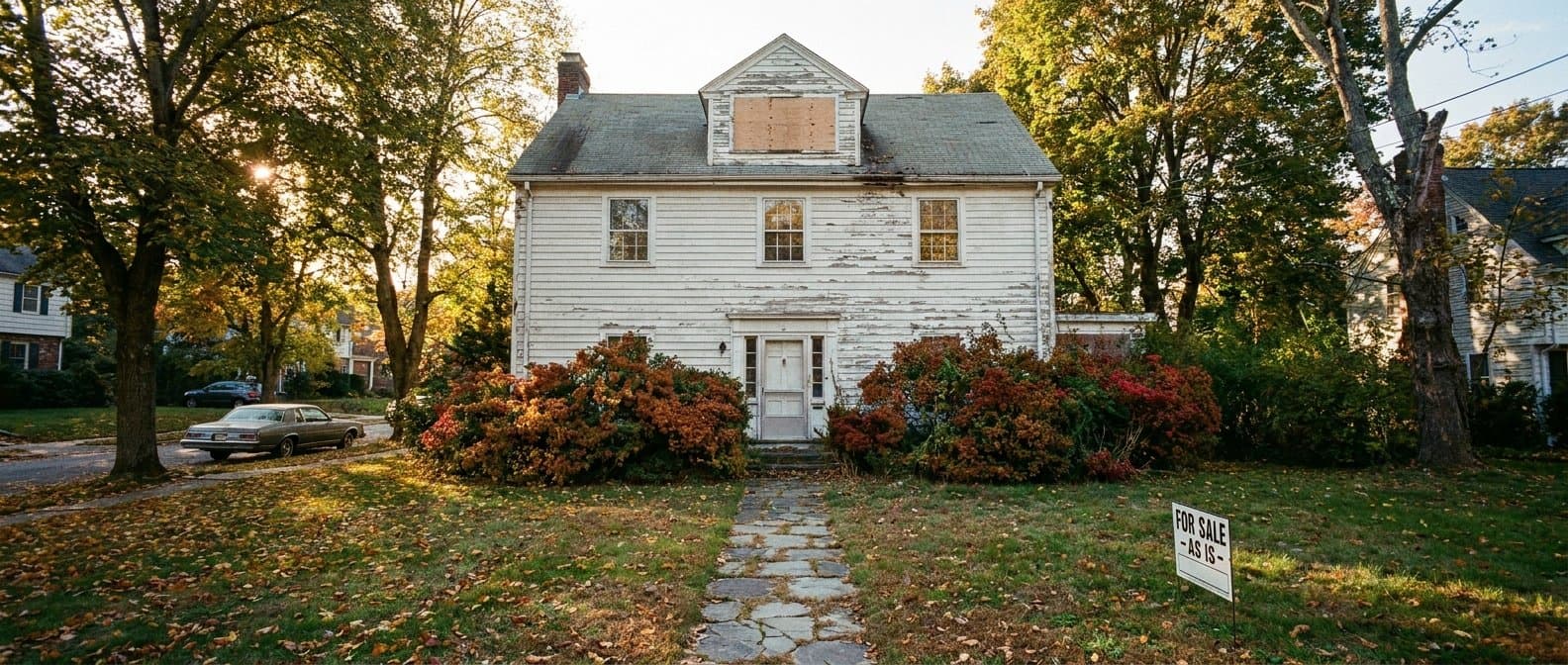
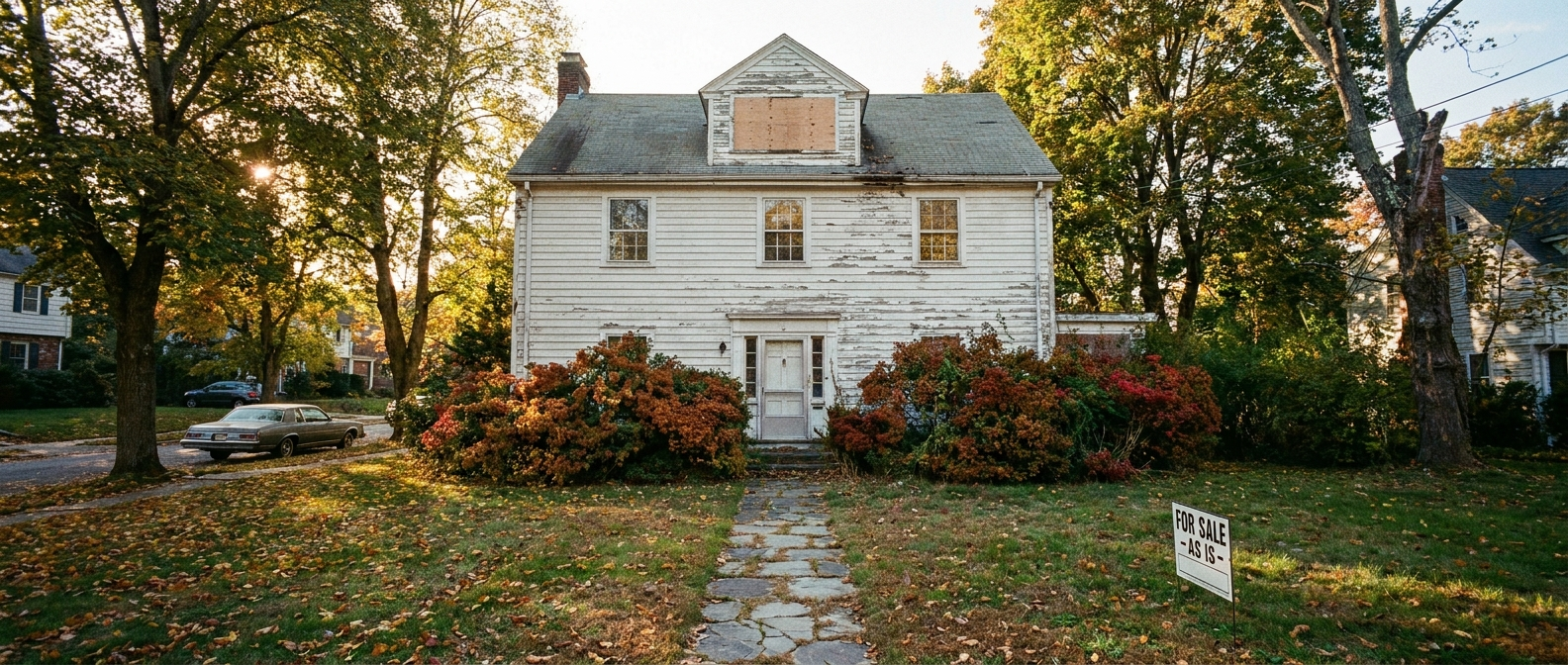

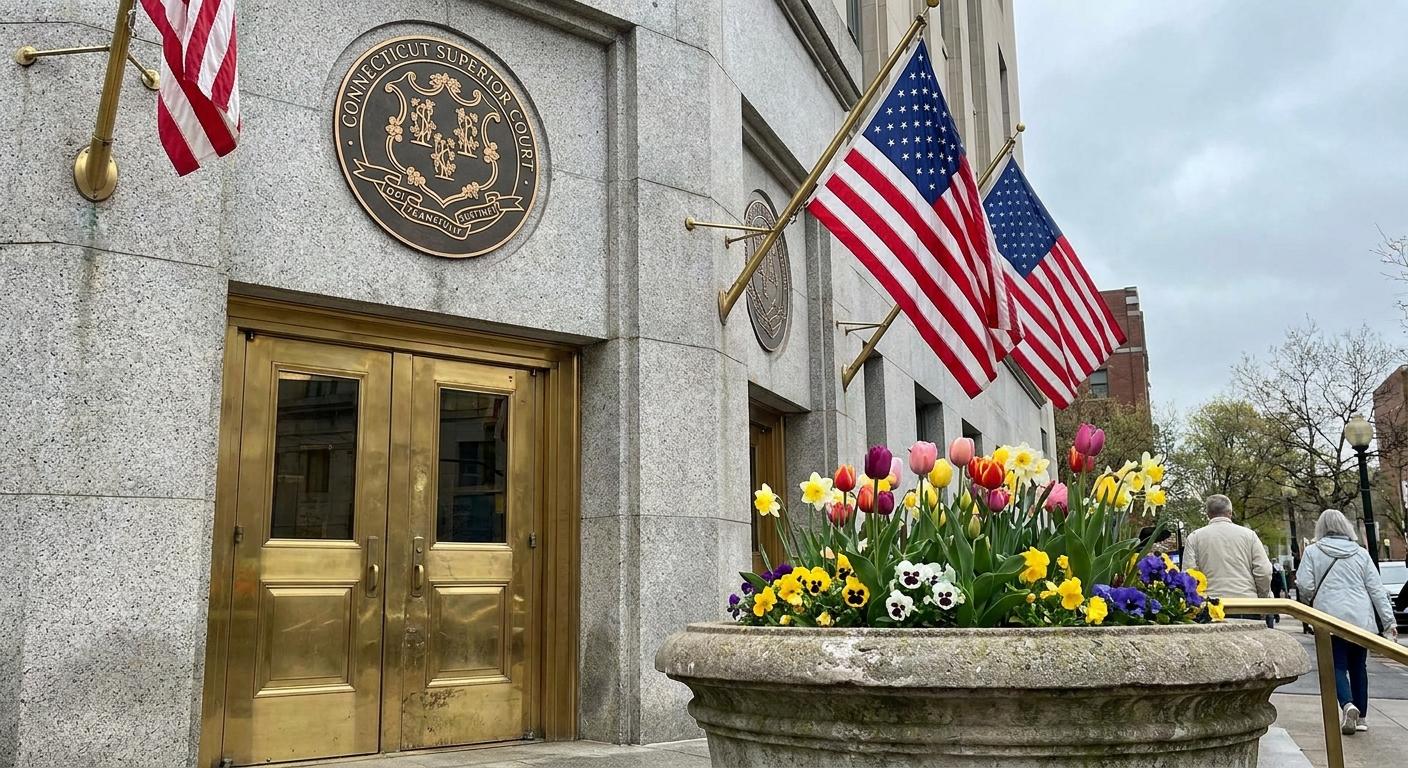
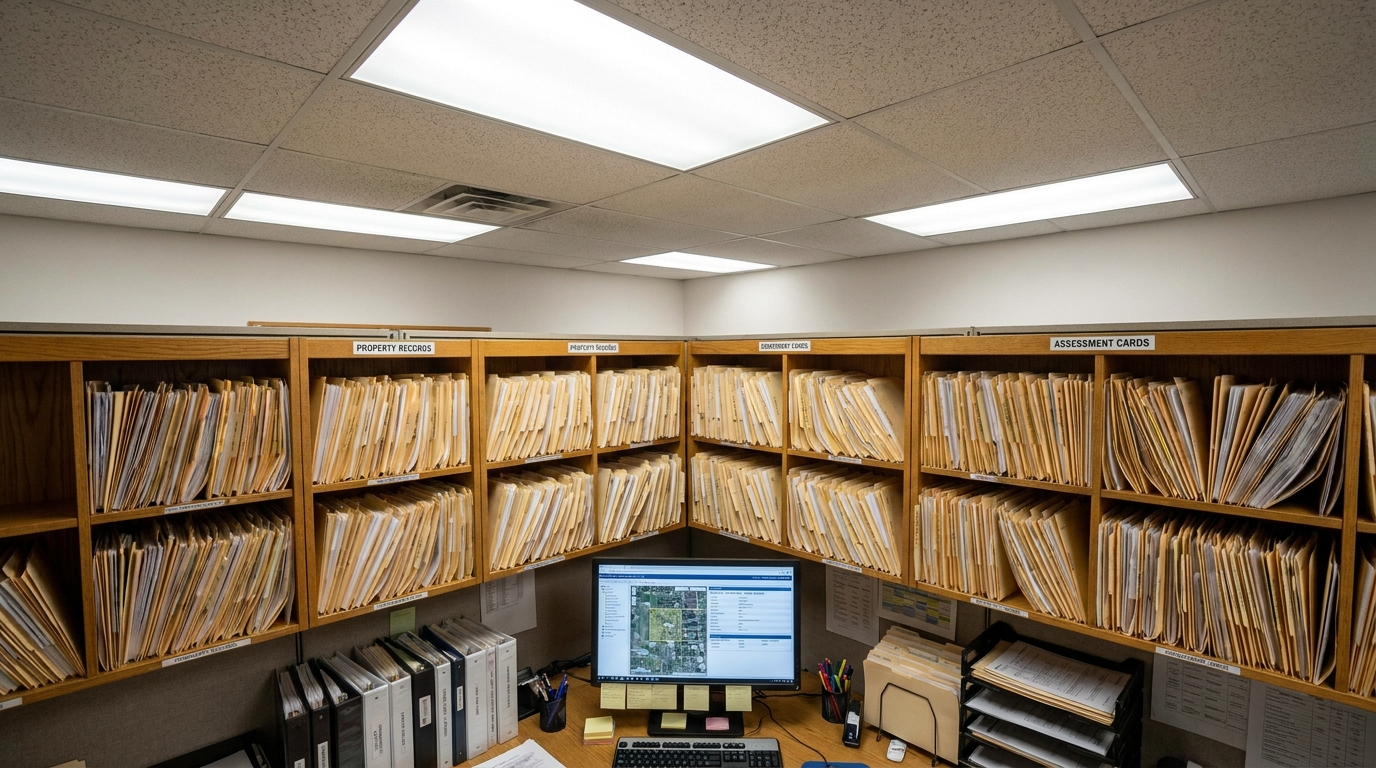

IMAGE 1 (HERO): A photorealistic wide-angle photograph of a two-story Connecticut colonial home with faded white clapboard siding, overgrown azalea bushes, boarded attic window, cracked stone walkway, autumn light, New England suburban street, Westport or Greenwich setting, documentary photography. IMAGE 2: A photorealistic aerial drone photograph from 400 feet showing the Bridgeport harbor and downtown skyline, the Pseg Bridge, mix of historic homes and industrial buildings, Long Island Sound in background, early morning golden hour light, Connecticut coastal aerial cinematography. IMAGE 3: A photorealistic close-up photograph of the Connecticut Superior Court building in Hartford, stone facade with state seal, brass doors, American flags, spring flowers in foreground planter, documentary photography. IMAGE 4: A photorealistic wide-angle photograph of a county assessor's office with property record cards in Manila folders on a wooden shelf, computer screen showing property data, fluorescent lighting, administrative setting, documentary flat-lay photography. IMAGE 5: A photorealistic medium photograph of a real estate investor reviewing a tablet showing Connecticut property records and a foreclosure auction list, reading glasses on, warm desk lamp lighting, coffee mug nearby, home office setting, documentary photography.
Foreclosure Leads Connecticut: What Smart Investors Need to Know in 2026
TL;DR: Connecticut runs exclusively judicial foreclosures through its Superior Court, but unlike every other judicial state, it offers two distinct paths. Strict foreclosure sets a "Law Day" where the borrower must pay the full debt or lose title directly to the lender, with no auction. Foreclosure by sale proceeds to a public auction on a Saturday at noon. Connecticut is one of only two states using strict foreclosure, creating a process with no competitive bidding in most cases. Foreclosure leads Connecticut investors who understand this process gain access to a wide pre-sale window — the state's average foreclosure completion timeline is 4.5 years, one of the longest in the country. Foreclosure activity dropped 14 percent in 2025, yet Connecticut still ranks 12th nationally for foreclosure rate, with Bridgeport and New Haven leading auction volume.
Connecticut's foreclosure market is unlike any other state in the Northeast. The state's unique combination of strict foreclosure law, an active foreclosure mediation program, and one of the longest average completion timelines in the country creates a specific set of foreclosure leads in Connecticut that most out-of-state investors never see.
Why Connecticut Foreclosure Is Different From Every Other State
Forty-eight states use either judicial or non-judicial foreclosure. Connecticut and Vermont use a third path.
The strict foreclosure process is the most distinctive feature of Connecticut law. When a lender forecloses, it can ask the court to apply strict foreclosure rather than foreclosure by sale. The court grants this request in most cases unless the borrower demonstrates meaningful equity in the property. Under strict foreclosure, the court does not set an auction date. Instead, it assigns a Law Day: a specific deadline by which the borrower must pay the full judgment amount or lose the property. If the borrower misses that deadline, title transfers directly to the lender without any competitive bidding.
No auction means no public sale. No pool of bidders competing to drive the price toward fair market value. For investors who acquire properties before the Law Day passes, this distinction matters less, but for anyone watching the auction pipeline, strict foreclosure means most Connecticut foreclosures never produce a public sale at all.
The practical implication for investors is that the pre-sale window in Connecticut is wider than it appears. A property in strict foreclosure may never reach an auction. The investor who contacts the homeowner during the mediation or pre-judgment phase is working a market where the competitive auction dynamic simply does not exist for most cases.
The Two Paths: Strict Foreclosure vs. Foreclosure by Sale
Connecticut law provides for two types of judicial foreclosure, and the distinction determines whether an auction ever occurs.
Strict foreclosure is the default path when the lender can demonstrate that the property's value does not exceed the outstanding debt. The court sets a Law Day for the borrower, typically 45 to 90 days after the judgment is entered, though it can be as short as 21 days. Junior lienholders receive subsequent law days in order of priority. Each party must pay the full redemption amount by the close of business on their assigned date or lose their interest in the property.
The critical feature of strict foreclosure is what does not happen. The lender takes title directly upon the expiration of the borrower's Law Day, without any competitive sale. The property does not hit a public auction block. The lender acquires the property at whatever discount the original loan represented, not at a market-clearing price.
Foreclosure by sale is the alternative when the borrower demonstrates sufficient equity that a sale would generate proceeds beyond the outstanding debt. The court appoints a committee to conduct the sale, which occurs at a physical location, almost always on-site at the property, on a Saturday at noon. The sale must be approved by the court before it is final. If the sale price is less than the judgment amount, the lender may pursue a deficiency judgment against the borrower within 30 days.
Most Connecticut foreclosures proceed through strict foreclosure unless the homeowner contests the equity question. For investors, this means the properties that do reach the auction stage in Connecticut are disproportionately cases where the homeowner had equity and fought for the sale route, making the auction a more meaningful price-discovery event than the typical non-judicial auction in other states.
Free Weekly Alerts
See What's Distressed in Your Market
Get free weekly alerts — new distressed properties, motivation scores, and hot neighborhoods in your area. Addresses and contact info available inside DistressIQ.
Free forever · No credit card · Unsubscribe anytime
The Foreclosure Mediation Program: Connecticut's Unique Layer
One feature that distinguishes Connecticut from every other state is its mandatory Foreclosure Mediation Program. Passed in the wake of the Great Recession and repeatedly extended, the program now runs through June 30, 2029. It applies to foreclosure actions with a return date up to that deadline.
Under the program, homeowners who meet the eligibility requirements are assigned to a mediation session with the lender before the case proceeds to judgment. A neutral mediator facilitates the conversation. Homeowners who participate in mediation have historically shown significantly higher rates of retaining their homes or negotiating a mutually acceptable resolution than homeowners who do not participate.
For investors, the mediation program creates a defined window. Mediation sessions run up to 7 months, which extends the pre-judgment timeline beyond what the court process alone would suggest. Properties in mediation are not yet in the active foreclosure pipeline in the traditional sense, but the homeowner is actively engaged and exploring alternatives. A direct offer from an investor during this period can interrupt the process if the homeowner is willing.
The extension of the mediation program through 2029 means this extended pre-sale window is a structural feature of the Connecticut market for the foreseeable future.
Connecticut's 4.5-Year Timeline: The Slowest Foreclosure Market in the Northeast
Connecticut has one of the longest average foreclosure completion timelines of any state in the country. Attom Data tracked the time from the initial filing to the completed repossession across all 50 states and found that Connecticut lenders required an average of 4.5 years to complete a foreclosure in 2025. Only Louisiana, New York, and Hawaii took longer.
This is not a reflection of inefficiency. It is a product of the judicial process combined with the mediation program and the court's active docket management. Every step requires attorney involvement, court filing, and judicial review. The mediation program alone can add 7 months before a case is ready for judgment.
For investors, the 4.5-year timeline creates an unusual situation. Properties in active distress are available for a prolonged period, giving a determined investor time to negotiate. The practical implication is that Connecticut foreclosure leads require a longer time horizon and a focus on the pre-mediation and mediation window when the timeline is most compressed and the homeowner is most reachable.
Connecticut Counties Where Foreclosure Leads Are Most Concentrated
Fairfield County dominates the state's foreclosure market. Bridgeport leads all Connecticut municipalities in scheduled auction volume, with Stamford, Norwalk, and Stratford adding to county totals. Foreclosure.com currently lists 42 active sheriff sale properties in Fairfield County alone. The county's proximity to New York City makes property values more volatile, and investor competition for distressed properties runs higher here than in the rest of the state.
New Haven County ranks second. The city of New Haven and surrounding towns generate significant volume, with foreclosure listings numbering over 1,100 across county databases. The Yale-adjacent market supports a mix of student housing, working-class neighborhoods, and higher-value shoreline properties.
Hartford County includes the capital city and its immediate suburbs. Hartford's older housing stock and elevated property tax rate create a distinct distressed property profile where renovation costs are generally predictable and entry points are lower than Fairfield County.
Connecticut Foreclosure Auction Data: What Properties Actually Sell For
CT Property Auctions analyzed 834 completed Connecticut foreclosure sales and found a median discount of 17.5 percent below appraised value. Eighty-two percent of all properties sold at auction went for below their appraised value, and the median number of competing bidders per auction was four. Bridgeport and New Haven properties skew toward lower entry points in the $100,000 to $180,000 range, while Fairfield County's southwestern suburbs operate in a higher price band where distressed single-family homes occasionally appear in the $400,000 to $700,000 range.
How to Access Connecticut Foreclosure Records
Connecticut's judicial foreclosure records are publicly accessible through the Connecticut Judicial Branch website. The Civil/Family case search allows investors to search for foreclosure complaints and lis pendens filings by name, case type, and date range. The committee worksheet for cases proceeding to foreclosure by sale lists the appraised value and total debt used to set the reserve price, which is the most important document for auction bidders.
Key Takeaways for Investors Working Connecticut Foreclosure Leads
Connecticut is one of only two states using strict foreclosure, where the lender can take title without a competitive auction if the borrower misses their Law Day. Foreclosure by sale is the alternative when equity exists, and these are the properties that reach the Saturday-at-noon auction block.
The state's average foreclosure timeline of 4.5 years creates an unusually wide pre-sale window. The Foreclosure Mediation Program, extended through June 30, 2029, adds up to 7 months of mandatory mediation before cases proceed to judgment.
Bridgeport, New Haven, and the Fairfield County municipalities account for the majority of the state's foreclosure volume. The median auction discount in Connecticut is 17.5 percent below appraised value, with four bidders per auction on average.
Foreclosure leads Connecticut investors who understand this process gain access to a pre-mediation and mediation window that is the highest-value period for investor outreach.
DistressIQ provides pre-foreclosure leads and court filing data across Connecticut's highest-volume counties, updated daily.
Frequently Asked Questions
Is Connecticut a judicial or non-judicial foreclosure state?
Connecticut uses judicial foreclosure exclusively. All foreclosure cases must be filed in the Connecticut Superior Court and reviewed by a judge before the lender can take any action to enforce the mortgage.
What is strict foreclosure in Connecticut?
Strict foreclosure is a court-supervised process where the lender takes title directly when the borrower misses an assigned Law Day, rather than selling the property at a public auction. Connecticut and Vermont are the only two states that use strict foreclosure. The lender typically requests this path when the property has little or no equity, and the court generally approves the request.
How long does foreclosure take in Connecticut?
The average foreclosure completion time in Connecticut is 4.5 years from filing to repossession, one of the longest timelines in the country. The pre-mediation and mediation phase alone can add 7 months. The actual timeline for any specific case depends on whether the case enters the mediation program and whether it proceeds via strict foreclosure or foreclosure by sale.
Does Connecticut have a redemption period after foreclosure?
Connecticut does not have a traditional post-sale redemption period. In strict foreclosure, the borrower has until their Law Day to pay the full debt and redeem. In foreclosure by sale, the sale must be confirmed by the court before title transfers. The redemption opportunity is the Law Day itself in strict foreclosure, not a period after the sale.
What is Connecticut's Foreclosure Mediation Program?
Connecticut's Foreclosure Mediation Program requires eligible homeowners to participate in mediation with their lender before the case proceeds to judgment. The program has been extended through June 30, 2029, and can extend the pre-judgment timeline by up to 7 months. Homeowners who participate have historically shown higher rates of reaching a workout agreement with the lender.
Can investors buy Connecticut foreclosure properties before the auction?
Yes. The extended pre-mediation, mediation, and pre-judgment timeline in Connecticut creates a meaningful window for direct purchase negotiations with homeowners before any sale occurs. Properties in strict foreclosure may never reach an auction at all, making pre-sale acquisition the primary exit for many deals.
What discount can investors expect at Connecticut foreclosure auctions?
CT Property Auctions data from 834 completed sales shows a median discount of 17.5 percent below appraised value, with 82 percent of properties selling below appraised value. The average auction attracts four competing bidders.
Start building your Connecticut foreclosure lead pipeline with a 7-day free trial at DistressIQ.
The data behind this article
DistressIQ Monitors These Signals in Real Time
Pre-Foreclosures
NOD + NTS filings
Tax Delinquency
County treasurer records
Code Violations
Municipal inspection filings
Probate Filings
Superior Court records
Every lead is scored 0–100 for seller motivation based on signal type, duration, severity, and stacking. Nationwide coverage — every US county, updated daily.
Ready to find deals in your market?
See Live Distress Signals in Connecticut
Stop calling dead leads. Every lead in DistressIQ is scored 0–100 for seller motivation, with verified contact info included. Browse the free tier to see what's active in your market right now.
Browse Free Leads — No Credit Card