How to Find Foreclosure Leads in Arizona (2026 Investor Guide)
How to Find Foreclosure Leads in Arizona (2026 Investor Guide)
TL;DR: Arizona runs one of the fastest non-judicial foreclosure timelines in the country — as short as 90 days from Notice of Trustee's Sale to auction. That speed creates urgency and motivated sellers, but it also means the window to act is narrow. The best foreclosure leads in Arizona are found at the Notice of Trustee's Sale filing, weeks before any listing aggregator shows the property. DistressIQ monitors Arizona's 15 counties daily for trustee sale filings, tax delinquency, code violations, and vacancy signals — all scored by motivation level so you know who to call first.
Most investors hunting Arizona foreclosure deals show up at the Maricopa County Courthouse auction and wonder why margins are thin. There are 20 other cash buyers in that same crowd, all with the same information, all looking at the same properties.
The deal is never at the auction. It's 60 to 90 days before the auction — at the moment the Notice of Trustee's Sale gets recorded at the County Recorder's office.
Here's how Arizona foreclosure actually works, where the real opportunities are, and how investors who consistently find deals in this state approach the search differently.

Why Arizona's Process Is Different — And Why Speed Is the Point
Arizona is a deed-of-trust state, like California and Texas, but the timelines are significantly shorter. When a borrower defaults, the trustee (not a court) manages the entire foreclosure process. No judge. No courtroom. Just public records at the County Recorder.
The result is a process that can legally close in around 90 days — one of the fastest in the nation. For homeowners, that's brutal. For investors, it creates a class of highly motivated sellers who know they have very little time before the auction.
The Arizona foreclosure pipeline runs through three key stages:
1. Notice of Trustee's Sale (NTS) — Arizona's public foreclosure signal. Unlike California or Ohio, Arizona doesn't require a separate Notice of Default before the NTS. Once the lender instructs the trustee to act, the NTS is recorded directly with the County Recorder and must be published in a newspaper of general circulation in the county where the property is located. The homeowner gets a minimum of 91 days before the sale can proceed.
2. Postponement Notices — Trustees can postpone a scheduled sale (often multiple times) to allow negotiations, loan modifications, or short sale attempts. Postponed properties remain in pre-foreclosure limbo and are prime targets for investor outreach.
3. Trustee's Sale (Auction) — Held at the County Courthouse steps (or an authorized online venue). Cash-only, no contingencies, no interior access guaranteed. The minimum bid is set by the lender. Winning bid takes title immediately — or the lender takes it back as REO.
What makes Arizona stand out: the NTS is the only required public notice before the auction. That means the moment that document gets recorded is your best lead. Investors who monitor county recording in real time have weeks of outreach window before the auction crowd even knows the property exists.
Where Arizona Foreclosure Leads Actually Come From
County Recorder's Offices
Arizona has 15 counties, and each one records NTS documents through its own Recorder's Office. There's no centralized state registry — you have to pull from each county separately.
Maricopa County (Phoenix metro) handles the largest volume by far. The Maricopa County Recorder's Office provides online access to recorded documents, but the interface is designed for individual document lookup, not bulk lead generation. Serious investors run automated monitoring or use platforms that aggregate the data.
Pima County (Tucson area) is Arizona's second-largest market and consistently generates solid deal flow, particularly in older neighborhoods with higher deferred maintenance.
Pinal County (between Phoenix and Tucson — cities like Casa Grande, Maricopa city, Coolidge) saw explosive growth in the 2000s and carries significant inventory of over-leveraged properties.
Other active counties for foreclosure lead volume: Yavapai (Prescott area), Mohave (Kingman/Lake Havasu), Coconino (Flagstaff), and Yuma.
Published Notice Requirements
Under Arizona Revised Statutes § 33-808, the trustee must:
- Record the NTS with the County Recorder
- Serve the NTS on the trustor (borrower) by certified mail
- Post the NTS at the courthouse and on the property
- Publish a notice in a newspaper of general circulation for at least four weeks prior to sale
The newspaper publication creates a secondary lead source — services that monitor legal notices across Arizona's county newspapers can catch NTS filings as early as the publication date. This is a slower path than directly monitoring the county recorder, but it catches some filings that slip through digital monitoring.
Tax Delinquency + Foreclosure Overlap
Some of the highest-motivation Arizona foreclosure leads involve properties that are simultaneously delinquent on taxes. An owner who's behind on the mortgage and hasn't paid property taxes is facing pressure from two directions. Arizona counties send delinquent tax notices separately, and counties like Maricopa hold annual tax lien certificate sales for properties at least two years delinquent.
Combining foreclosure filing data with tax delinquency creates a stacked signal — and stacked signals mean higher motivation to sell.
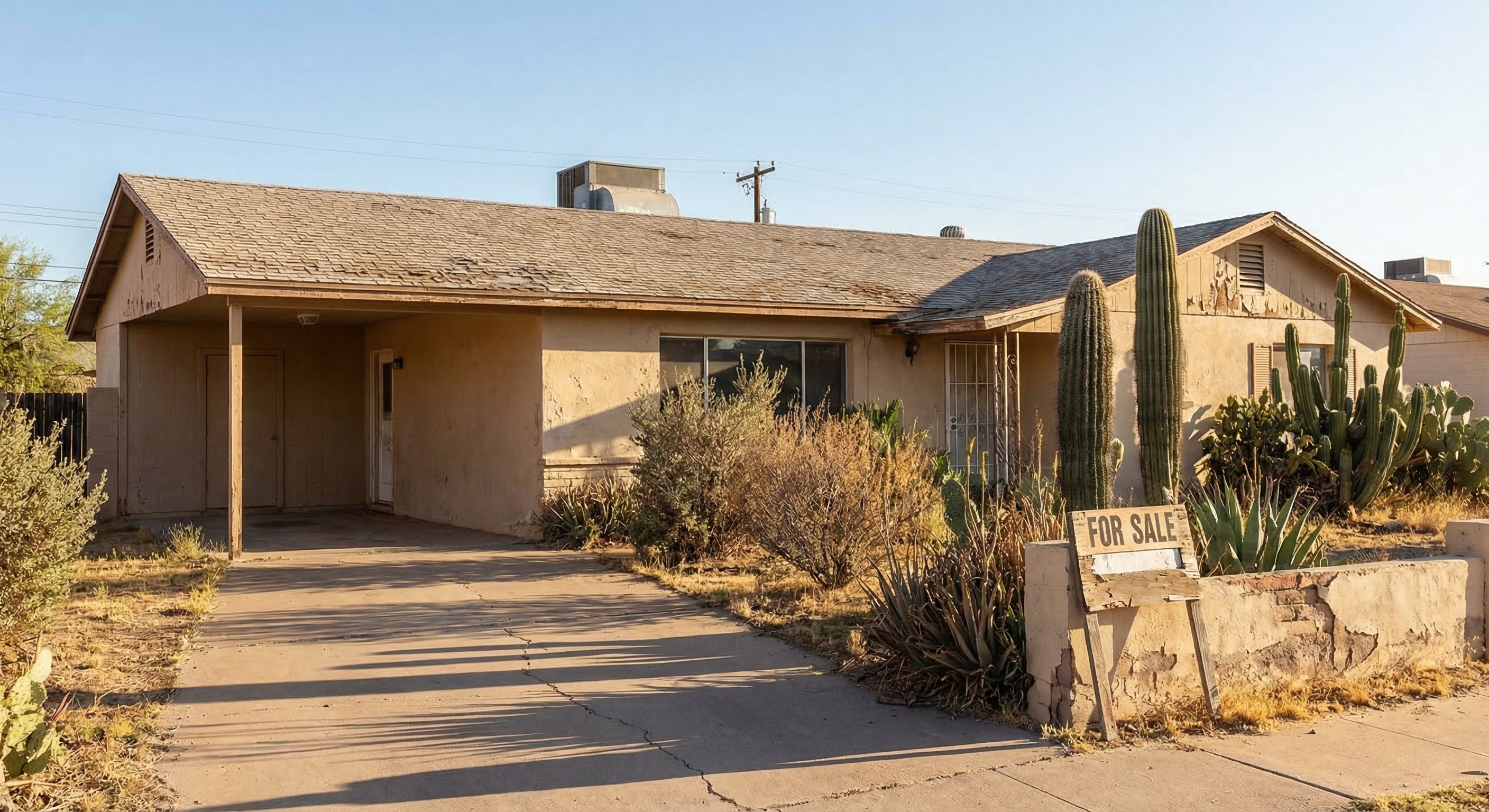
The Arizona Foreclosure Timeline: What Investors Need to Know
Understanding the timeline helps you know exactly when to make contact — and when you're already too late.
| Stage | Timing | Investor Action |
|---|---|---|
| NTS Recorded | Day 0 | Best time to make contact — homeowner has maximum time and motivation |
| Publication Begins | Day 1–7 | Leads appear in legal notice aggregators |
| Notice Served on Borrower | Within 5 days of recording | Homeowner is now formally aware |
| 91-Day Minimum Window | Day 0–91+ | Active outreach period — homeowner weighing options |
| Postponement Notices | Anytime before sale | Extended window; check recorder for updates |
| Trustee's Sale | Day 91+ | Auction — deal window largely closed |
| REO (if no bidder) | Post-sale | Bank-owned, negotiated through listing agent |
The sweet spot: Days 1–30 after NTS recording. The homeowner knows the clock is running. They haven't fully committed to any resolution path. They're most receptive to creative solutions — short sale, cash offer below market, subject-to deals, or simply selling fast to pay off the lender and walk away with some equity.
By Day 60+, most homeowners have either worked out a deal with the lender, listed the property, or resigned themselves to the auction.
Free Weekly Alerts
See What's Distressed in Your Market
Get free weekly alerts — new distressed properties, motivation scores, and hot neighborhoods in your area. Addresses and contact info available inside DistressIQ.
Free forever · No credit card · Unsubscribe anytime
Arizona-Specific Rules That Affect Investor Strategy
No Redemption Period After Trustee's Sale
Some states give foreclosed homeowners months to "redeem" the property after the sale by paying off the debt. Arizona does not. Once the trustee's deed is recorded after auction, title transfers immediately and there's no statutory right of redemption for the prior owner. This cuts off a possible avenue some investors use in other states to work with homeowners post-auction — in Arizona, that window doesn't exist.
Deficiency Judgments — Complicated
Arizona has anti-deficiency statutes (ARS § 33-814) that protect homeowners from deficiency judgments in certain circumstances — specifically on purchase-money loans secured by 2.5 acres or less used for residential purposes. This means some homeowners who owe more than the property is worth can walk away from the trustee's sale without owing the difference. For investors, understanding this helps when talking to underwater homeowners: they may be more willing to let the property go than you'd expect if they know they have anti-deficiency protection.
SB 1091 and Trustee Sale Reform
Arizona periodically revisits its foreclosure statutes. Investors serious about the market should track any legislative session updates through the Arizona State Legislature website (azleg.gov). Recent sessions have addressed electronic recording, notification requirements, and trustee qualification.
How to Find Arizona Foreclosure Leads Without Doing It Manually
Option 1: Monitor County Recorders Directly
Each county provides some level of online document search. For Maricopa, the Recorder's Office at recorder.maricopa.gov allows document type searches — but it requires knowing what you're looking for and manually checking back regularly. It's free but labor-intensive and not designed for bulk monitoring.
Option 2: Legal Notice Monitoring Services
Services that aggregate Arizona's county newspaper legal notices provide a second-hand feed of NTS filings as they get published. This is typically a 5–14 day lag from the actual recording date — you're getting it after the newspaper runs the notice, not the moment it's filed.
Option 3: Automated Data Platforms
Platforms that connect directly to county recording data and aggregate across all 15 Arizona counties are the fastest path to the lead. The best of them layer additional signals — tax delinquency, vacancy, code violations, ownership demographics — so you can prioritize which NTS filings are worth chasing.
DistressIQ monitors all 15 Arizona counties for trustee sale filings, tax delinquency, code violations, and ownership signals updated daily. Instead of logging into 15 different county recorder portals, you get a unified Arizona lead list with each property scored by how many distress signals it shows. High score = higher motivation = better use of your outreach time.

Maricopa County Foreclosure Leads: The Core Arizona Market
Maricopa is the center of gravity for Arizona real estate investing — and the market where foreclosure lead quality varies most dramatically based on when you're sourcing.
What makes Maricopa different:
- Largest county in Arizona by population (4.5M+) and transaction volume
- Phoenix metro includes sub-markets with very different dynamics: Scottsdale/Paradise Valley (high-end, fewer distressed), Mesa/Gilbert (suburban, higher investor activity), Avondale/Maryvale/Glendale (older stock, more distress concentration)
- Maricopa County has historically been sensitive to rate cycles — both the 2008 crash and the post-2022 rate spike hit the Phoenix market early and hard
Maricopa foreclosure filing concentration by zip code shifts over time, but historically centers in West Phoenix, South Phoenix, Avondale, Buckeye, and parts of Mesa. These areas combine older housing stock, higher owner occupancy among lower-income households, and susceptibility to economic pressure.
For investors, these areas also tend to have the clearest path to assignment or wholesale: motivated sellers with some equity, buyers who are familiar with the neighborhoods, and enough comparable transactions to establish value quickly.
Stacking Signals: Arizona's Best Foreclosure Leads
The NTS filing alone is a qualified lead. But the highest-quality Arizona foreclosure leads combine multiple distress signals:
NTS + Tax Delinquency: Owner is behind on both mortgage and taxes — maximum financial pressure, genuine urgency to resolve.
NTS + Code Violations: Property has municipal citations for maintenance failures — suggests owner is disengaged, possibly absentee, unlikely to fight for the property.
NTS + Vacancy: Property is vacant — reduces the sensitivity of the outreach conversation and often indicates the owner has already mentally moved on.
NTS + Absentee Ownership: Owner doesn't live at the property — typically an investor or landlord who views it as a financial asset, not a home. More likely to respond to a straight business conversation.
Properties that check two or more of these boxes represent a small fraction of the total NTS filing volume but a disproportionate share of the deals that actually close.

Building Your Arizona Foreclosure Outreach System
Finding the lead is step one. Converting it is a completely different game.
Contact methods that work in Arizona:
Direct mail: Trustee's Sale notices are public records with property addresses. A well-timed mailer — arriving within the first two weeks of the NTS recording — catches homeowners while they're still processing options. Multiple touches across the 90-day window outperform single-shot campaigns.
Skip tracing to phone/email: The NTS includes the trustor's name. Cross-referencing against skip trace data to get a current phone number enables direct outreach. Arizona homeowners in pre-sale foreclosure aren't always listed at the property address — many have already moved.
Door knocking: Particularly effective for occupied properties where you can verify the owner is still present. Takes more time per lead but converts at higher rates when executed well.
MLS monitoring for concurrent listings: Some homeowners in foreclosure try to list the property simultaneously — hoping to close before the trustee's sale date. Watch for properties that appear on MLS with short timelines and prices that leave room for a fast sale.
Scripts and positioning:
The conversation with an Arizona homeowner facing trustee's sale isn't a negotiation — it's a problem-solving session. They know the timeline. Lead with empathy, explain what you can do (close fast, handle logistics, give them something to walk away with), and let the number come second. "I buy houses in Maricopa County and I'm familiar with trustee sales — I may be able to help you close before the auction date" opens more doors than any aggressive opener.
Frequently Asked Questions
How many foreclosure filings does Arizona see per year? Arizona filing volumes fluctuate with interest rates and economic cycles. Post-2022 rate increases pushed filings higher after years of historically low foreclosure activity during the pandemic moratoriums. Maricopa County typically accounts for 60–70% of total Arizona NTS filings.
Can I get Arizona NTS data for free? Individual county recorders provide free public access to recorded documents, but not in a bulk export format useful for lead generation. Free access means manual searching, not an automated feed. Third-party platforms aggregate and normalize the data for a subscription fee.
How long after the NTS is recorded before the auction? Arizona law requires a minimum of 91 days from NTS recording to the scheduled trustee's sale. In practice, many sales get postponed multiple times — extending the window. Track postponement notices through the county recorder to stay current.
What happens to a property after the trustee's sale? If an outside bidder wins, they take title immediately — there's no redemption period. If no bidder exceeds the lender's credit bid, the lender acquires the property as REO (real estate owned) and typically lists it within 90 days.
Does DistressIQ cover all 15 Arizona counties? Yes. DistressIQ monitors all 15 Arizona counties for trustee sale filings, tax delinquency, code violations, and related distress signals — updated daily across the full state.
Start Finding Arizona Foreclosure Leads
The homeowners facing Arizona trustee sales aren't unreachable — they're filing paperwork in public county records right now. The investors who find them first, reach out thoughtfully, and solve a real problem are the ones who close deals before the auction crowd shows up.
DistressIQ gives you Arizona's foreclosure pipeline across all 15 counties — with signals layered and scored so you're spending time on the highest-motivation leads.
The data behind this article
DistressIQ Monitors These Signals in Real Time
Pre-Foreclosures
NOD + NTS filings
Tax Delinquency
County treasurer records
Code Violations
Municipal inspection filings
Probate Filings
Superior Court records
Every lead is scored 0–100 for seller motivation based on signal type, duration, severity, and stacking. Nationwide coverage — every US county, updated daily.
Ready to find deals in your market?
See Live Distress Signals in Arizona
Stop calling dead leads. Every lead in DistressIQ is scored 0–100 for seller motivation, with verified contact info included. Browse the free tier to see what's active in your market right now.
Browse Free Leads — No Credit Card