Divorce Leads in North Carolina: How to Find Motivated Sellers Before They Hit the MLS
Divorce Leads in North Carolina: How to Find Motivated Sellers Before They Hit the MLS
TL;DR: Divorce leads in North Carolina are among the highest-conversion distress signals available to real estate investors. When married couples separate, shared real estate becomes a problem both parties want resolved quickly — often below market value. North Carolina processes roughly 35,000+ divorces annually, and in most cases the family home must be sold or bought out. This guide covers where NC divorce filings are recorded, how to find them before the MLS, and how stacking divorce signals with other distress data produces the best results.
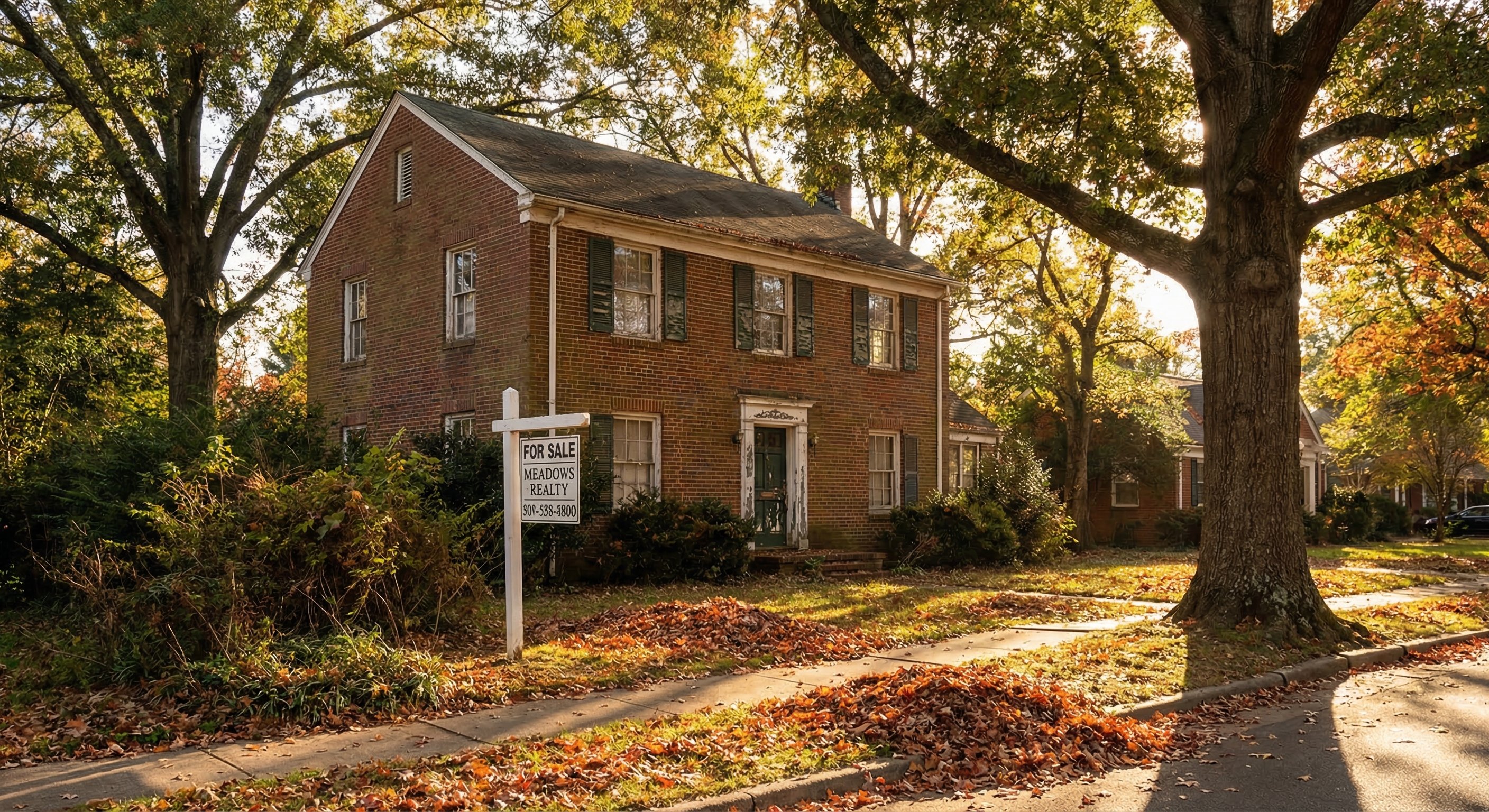
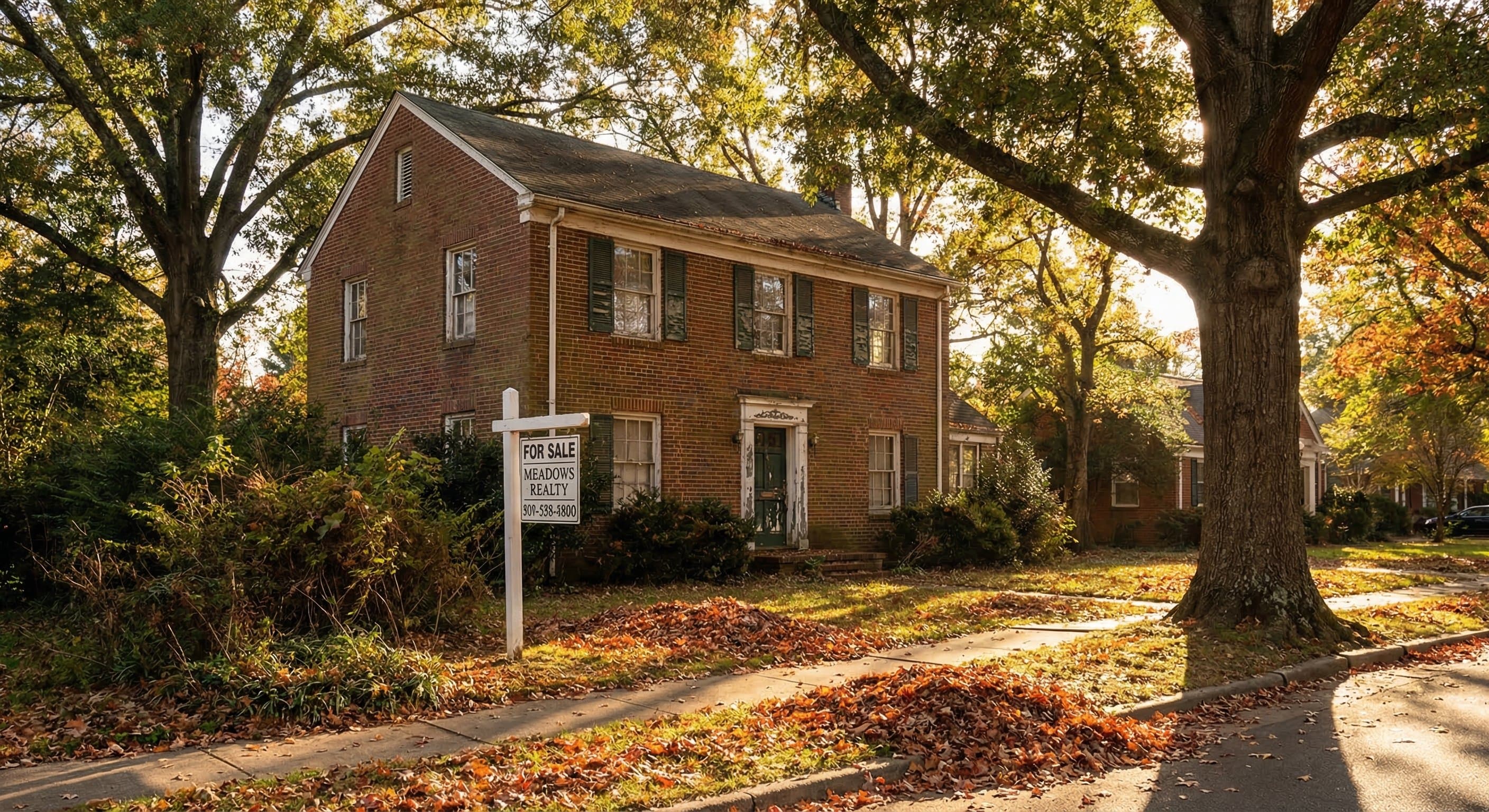
North Carolina's real estate market moves fast — but not all sellers are racing for the highest price. Divorcing homeowners are often racing for the fastest close. They want the asset divided, the mortgage resolved, and the chapter closed. That urgency creates a genuine window for investors who know where to look and how to approach it right.
The problem is timing. By the time a divorce property hits Zillow or the MLS, the urgency may have faded, an agent has been hired, and the price has been set to maximize equity. The investors who win in this niche catch the signal earlier — at the courthouse filing, before the listing, before the listing agent even calls.
What Makes North Carolina Divorce Leads Different
NC Is an Equitable Distribution State
North Carolina follows equitable distribution law for marital property. That doesn't mean 50/50 — it means courts aim for what's "equitable" given the circumstances. In practice, most couples reach a negotiated settlement before a judge decides for them. The family home is almost always the largest asset in that negotiation.
When neither party can buy out the other (which is common — it requires refinancing plus cash), the home goes on the market. The faster it sells, the faster the divorce finalizes. That's the investor opportunity.
Separation Period Requirements
North Carolina has a mandatory one-year separation period before a divorce can be finalized (N.C.G.S. § 50-6). This means:
- Couples who separated in early 2025 are becoming eligible for divorce in 2026
- The property decision-making window often starts during separation — not at filing
- Investors who identify separating couples early have a 6-12 month runway to reach out
The Volume Reality
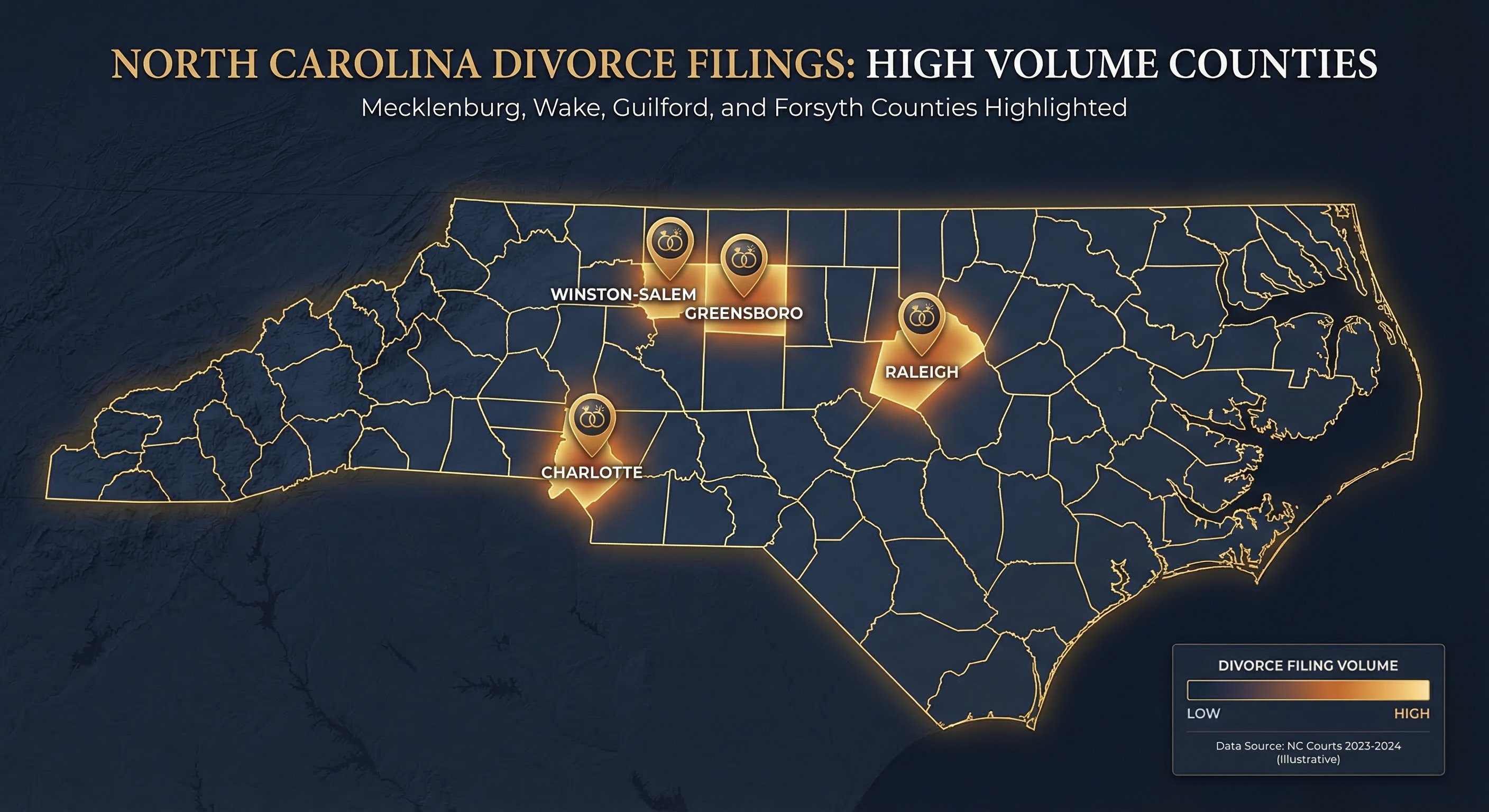
North Carolina consistently ranks in the top 15 states for divorce filings annually. With a population of 10.8 million and growing (significant transplant population from high-cost metros like NYC and DC), the state sees substantial real estate churn tied to family law events each year. Mecklenburg, Wake, Guilford, and Forsyth counties account for the highest volumes by population.
Where NC Divorce Records Are Filed
Superior Court — The Primary Source
In North Carolina, divorce actions are filed in the Superior Court of the county where either spouse resides. This is public record under N.C. G.S. § 132-1. The filing itself — the Complaint for Absolute Divorce — typically includes:
- Names of both parties
- County of residence
- Date of separation
- Whether minor children are involved
- Whether real property is at issue
Most counties make civil filings (including divorces) searchable through their Clerk of Superior Court's online portal. The NC Courts eCourts system (eCourts.nccourts.gov) has been rolling out statewide and provides case search functionality.
Key NC County Resources
Mecklenburg County (Charlotte): The Mecklenburg County Clerk of Superior Court maintains an online case search. Charlotte is NC's largest market and consistently generates the most divorce-related property transactions.
Wake County (Raleigh): Wake County's rapid growth makes it a top target. The Triangle real estate market (Raleigh-Durham-Chapel Hill) has seen median home prices rise sharply, meaning divorcing couples have more equity to split — and more reason to sell quickly.
Guilford County (Greensboro/High Point): One of the state's more affordable markets, Guilford sees strong investor activity in the buy-and-hold and wholesale niches.
Forsyth County (Winston-Salem): Growing investor market with solid rental demand from healthcare and education sector employment.
How to Find Divorce Leads in North Carolina
Method 1: Courthouse Research
The most direct method. Walk or log into the Clerk of Superior Court's civil records portal for your target county and search for recent divorce filings. Look for:
- Case type: Absolute Divorce, Divorce from Bed and Board, Equitable Distribution
- Recent filings (last 30-90 days for fresh leads)
- Cases where real property is listed as a contested asset
Limitation: This is time-intensive, varies in interface quality by county, and doesn't stack with other distress signals unless you cross-reference manually.
Method 2: Lis Pendens and Equitable Distribution Filings
When real estate is formally contested in a North Carolina divorce, an Equitable Distribution claim may be attached. Some attorneys also file a notice of pending litigation (similar to lis pendens in foreclosure contexts) that gets recorded with the Register of Deeds.
Monitoring the Register of Deeds in target counties — specifically new encumbrances related to domestic matters — can surface properties actively in the division process.
Method 3: Stacked Distress Signal Platforms
The most efficient method for active investors. Platforms like DistressIQ pull divorce-adjacent signals from county assessor records, court filings, and cross-reference them with financial distress indicators. A property showing:
- Recent ownership transfer to one spouse
- Simultaneous tax payment gap
- Multiple mortgages or equity line activity
- Change in mailing address (one owner moved out)
...is far more likely to be motivated than a divorce filing alone. The signal stack is what separates a warm lead from a cold one.
Free Weekly Alerts
See What's Distressed in Your Market
Get free weekly alerts — new distressed properties, motivation scores, and hot neighborhoods in your area. Addresses and contact info available inside DistressIQ.
Free forever · No credit card · Unsubscribe anytime
Signal Stacking: Why One Signal Isn't Enough
Most investors who pursue divorce leads make the same mistake: they treat every divorce filing as a hot lead. It isn't. Some divorcing couples are high-equity, represented by top attorneys, and will list with a full-service agent at full price. Others are underwater, stressed, unrepresented, and want to be done yesterday.
The difference lies in the supporting signals:
Tier 1 Lead (All signals present):
- Active divorce proceeding OR separation-triggered equity split
- Tax delinquency (even one missed quarter)
- High days-since-last-payment on equity line
- Absentee mailing address for one owner
- Property showing deferred maintenance indicators
Tier 2 Lead (Some signals present):
- Divorce filing + no delinquency but significant mortgage balance
- Equitable distribution case + recent lien
- One owner transferred title to the other (buyout attempt that fell through)
Tier 3 (Single signal — lower priority):
- Divorce filing only, no financial distress indicators
DistressIQ's scoring engine runs 31 signal types simultaneously and surfaces the properties with the highest stack density — so your outreach effort goes to the leads most likely to convert, not the entire county docket.
According to a 2024 report by the National Association of Realtors, divorce accounts for approximately 9% of all home sale motivations — making it one of the top five reasons homeowners sell. In high-cost metros, that percentage climbs because the asset-splitting math gets harder.
How to Approach NC Divorce Leads Without Being Predatory
This matters. A lot.
People going through divorce are in a stressful, emotionally charged situation. The investors who do well in this niche long-term are the ones who lead with solutions, not pressure tactics. The ones who make lowball offers to someone who just signed divorce papers don't get referrals. They get reported.
Best practices:
1. Contact the attorney of record first, when possible. Family law attorneys in NC know their clients need liquidity and speed. A real estate investor who can close in 14 days with cash is genuinely useful to them. Many attorneys will refer investor buyers to clients proactively.
2. Use neutral, solution-framed language. "I buy properties quickly, all cash, no repairs needed" is a solution statement. It doesn't require you to mention the divorce, acknowledge the distress, or pressure anyone.
3. Respect the one-year separation window. In NC, contacting a property owner who has just filed for divorce and is still in the mandatory separation period requires extra care. They cannot finalize the divorce until a year has passed — which means the urgency hasn't peaked yet. Patience is an advantage here.
4. Be prepared to work with both parties. In equitable distribution cases, both spouses may need to sign off on any sale. Having a process that accommodates this (including clear timelines and contingency management) makes you the easier option.

North Carolina-Specific Deal Structures for Divorce Properties
Cash Offer with Fast Close
The cleanest option and most attractive to divorcing sellers. 14-21 day close, AS-IS purchase, no inspection contingencies. For investors, this works in any condition from turnkey to gut renovation.
Subject-To or Assumption
When one or both owners are behind on the mortgage, a subject-to deal (taking title while leaving the existing mortgage in place) can solve the problem without requiring payoff. NC courts can sometimes require disclosure and approval if the property is still contested — consult a local real estate attorney.
Leaseback Option
Some divorcing homeowners need more time to transition — they want to sell but need 60-90 days to find new housing. A leaseback arrangement (investor buys, rents back to seller for 60-90 days) can close the deal that a standard buyer's timeline wouldn't.
Short Sale Coordination
When the property is underwater, a short sale may be the only option. NC family law attorneys and divorce mediators who work with underwater properties often need investor buyers who understand the short sale timeline. Being a known resource in this niche opens deal flow that most investors never see.
Building a Divorce Lead Pipeline in NC
The investors who consistently close 3-5 divorce-related deals per year in North Carolina aren't running one-off courthouse searches. They've built a repeatable pipeline:
1. Define your counties. Start with 2-3 max. Charlotte (Mecklenburg), Raleigh (Wake), or Greensboro (Guilford) if you're new to the state. Understand the local courts, the typical timeline, and the price ranges you can underwrite.
2. Set up a monitoring system. Whether you use DistressIQ's real-time county feed or manual courthouse alerts, you need something that surfaces new filings weekly — not monthly. Divorce leads have a narrow urgency window.
3. Build relationships with family law attorneys. There are approximately 800+ active family law attorneys in North Carolina (per the NC State Bar). A relationship with 5-10 of them, built over 6-12 months, can become a consistent off-market deal flow channel. Sponsor their continuing education events. Show up at bar association mixers.
4. Refine your offer process. Speed and simplicity close divorce deals. If your offer takes 10 days and 12 conditions, you'll lose to a cash buyer who responds in 24 hours. Streamline your process to the bare minimum needed to protect your position.
5. Track your conversions and refine. Which counties convert best for your buy box? Which signal combinations lead to accepted offers? The data compounds. After 12 months, you'll know exactly which deal profile to prioritize.
Key Takeaways
- North Carolina's mandatory one-year separation period creates an extended window to reach divorcing sellers before the MLS
- The state processes 35,000+ divorces annually — largest volumes in Mecklenburg, Wake, Guilford, and Forsyth counties
- Superior Court civil filings and the NC Courts eCourts system are the primary public data sources
- Signal stacking (divorce + tax delinquency + absentee mailing address + deferred maintenance) identifies motivated leads vs. cold ones
- Approach matters: lead with solutions, consider working through family law attorneys, prepare for dual-signature requirements
- DistressIQ surfaces divorce-adjacent distress signals county-verified and cross-referenced with 30 other signal types — so you're not cherry-picking from a courthouse docket but targeting the highest-score properties first
Ready to build a real divorce lead pipeline in North Carolina? DistressIQ pulls verified distress signals — including divorce-adjacent indicators stacked with tax delinquency, lis pendens, and absentee ownership data — across 3,200+ counties nationwide.
Founding member pricing: 30% off locked for life — fewer than 50 spots remaining. Starter $89/mo, Pro $174/mo, Elite $349/mo.
👉 Start your free trial at distressiq.ai
Frequently Asked Questions
Q: Are divorce records public in North Carolina?
Yes. Divorce filings are civil court records in North Carolina and are generally public under N.C.G.S. § 132-1. They are filed with the Clerk of Superior Court in the county where either spouse resides. Most counties provide online case search access through the NC Courts eCourts system, though interface quality and search depth varies by county.
Q: How long does a divorce take in North Carolina?
At minimum, one year from the date of separation before a divorce can be filed (N.C.G.S. § 50-6). After filing, uncontested divorces can finalize in 30-60 days. Contested divorces with equitable distribution disputes can take 12-24 months or longer. Investors have the longest lead-time advantage when they identify properties during the separation period.
Q: Do both spouses have to agree to sell the home?
In most North Carolina divorces, yes — both spouses must sign the deed if the property is still jointly titled. If the equitable distribution case is open, a court order may be required to compel a sale. Investors who build flexibility into their offer timelines (and work with both parties' attorneys) close more of these deals.
Q: What counties have the most divorce leads in North Carolina?
By population and divorce volume: Mecklenburg (Charlotte), Wake (Raleigh), Guilford (Greensboro), and Forsyth (Winston-Salem) generate the most filings. Durham, Buncombe (Asheville), Cumberland (Fayetteville), and Union counties also have significant investor interest.
Q: How is divorce different from other distress signals in real estate?
Unlike pre-foreclosure (where financial distress drives the urgency) or probate (where death triggers the sale), divorce is motivation-driven. The property may be in perfect condition with significant equity — the seller's urgency comes from wanting the divorce finalized, not from financial crisis. This means the deals can be at better price points than deep-distress signals, but require a different approach.
Q: What does DistressIQ show for North Carolina divorce leads?
DistressIQ surfaces divorce-adjacent signals — ownership changes, mailing address splits, equity line activity, and cross-referenced financial distress indicators — county-verified from assessor data across all NC counties. The platform stacks these against 30+ other signal types so you can see which properties have multiple distress indicators rather than just one. Coverage spans all 3,200+ counties nationwide including all North Carolina counties.
Q: Is it ethical to target divorce leads?
Yes, when done correctly. Divorcing homeowners often need exactly what a cash buyer offers: speed, simplicity, and certainty of close. The ethical line is in the approach — solution-framed outreach that respects the person's situation, not pressure tactics that exploit emotional vulnerability. Investors who lead with genuine solutions build referral networks through family law attorneys and title companies. Those who use pressure tactics burn relationships and invitations to better deal flow.
Sources: North Carolina Judiciary (nccourts.gov), NC General Statutes § 50-6, National Association of Realtors 2024 Profile of Home Buyers and Sellers, NC State Bar Attorney Directory
Internal resources: How to Find Divorce Leads in Real Estate | Divorce Leads in Georgia: How to Find Motivated Sellers | How to Find Pre-Foreclosures in North Carolina
The data behind this article
DistressIQ Monitors These Signals in Real Time
Pre-Foreclosures
NOD + NTS filings
Tax Delinquency
County treasurer records
Code Violations
Municipal inspection filings
Probate Filings
Superior Court records
Every lead is scored 0–100 for seller motivation based on signal type, duration, severity, and stacking. Nationwide coverage — every US county, updated daily.
Ready to find deals in your market?
See Live Distress Signals in Your County
Stop calling dead leads. Every lead in DistressIQ is scored 0–100 for seller motivation, with verified contact info included. Browse the free tier to see what's active in your market right now.
Browse Free Leads — No Credit Card