Divorce Leads in Arizona: How to Find Motivated Sellers Before They Hit the MLS
Divorce Leads in Arizona: How to Find Motivated Sellers Before They Hit the MLS
TL;DR: Arizona divorce leads are one of the highest-conversion sources for real estate investors because divorcing couples often need a fast, clean sale to split proceeds and move on. Arizona is a community property state, which means both spouses share ownership equally — and that legal requirement frequently accelerates the decision to sell. Investors who identify divorce leads through court filings, lis pendens records, and stacked distress signals find sellers 30–90 days before a property hits the MLS.
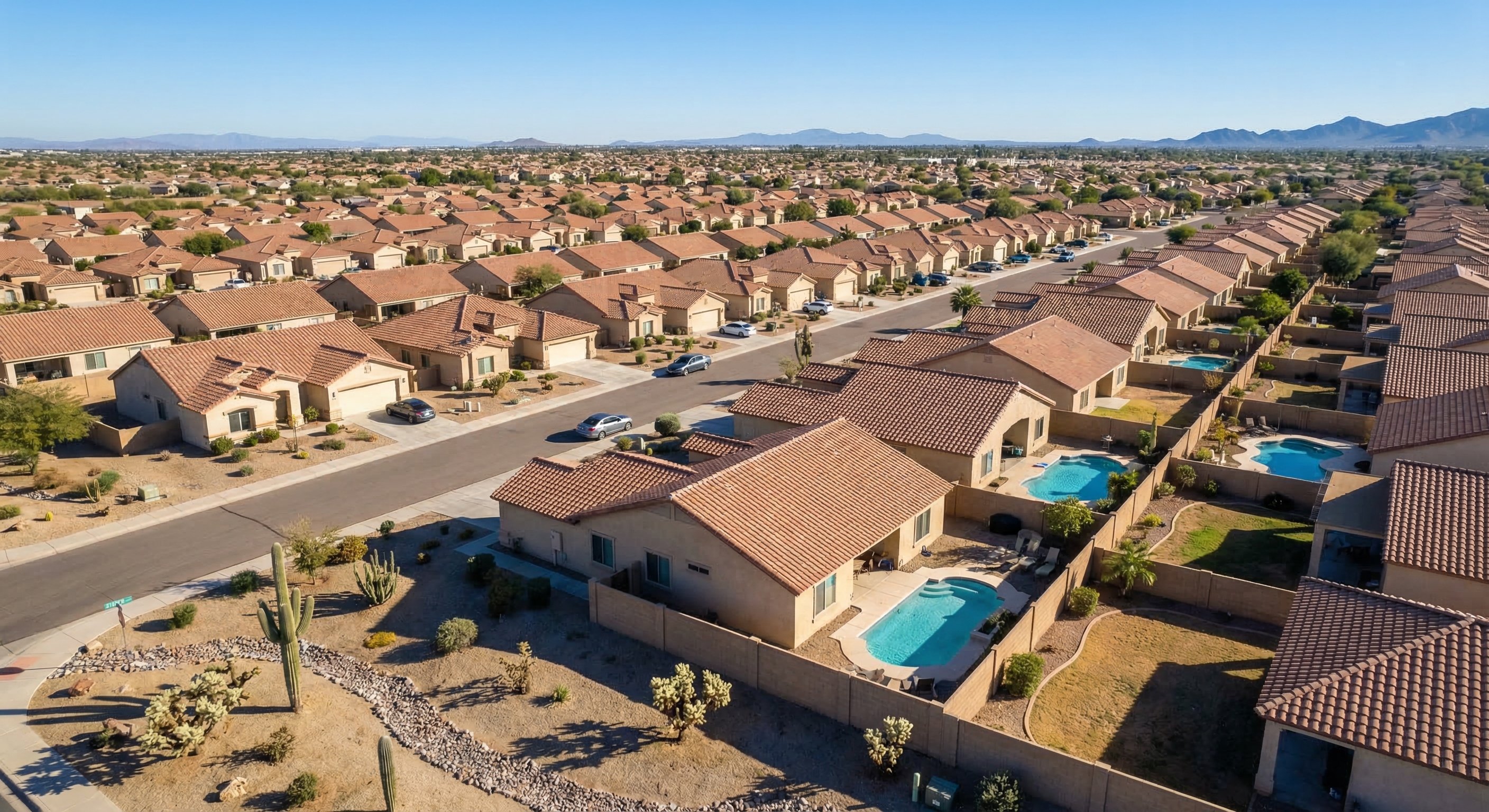
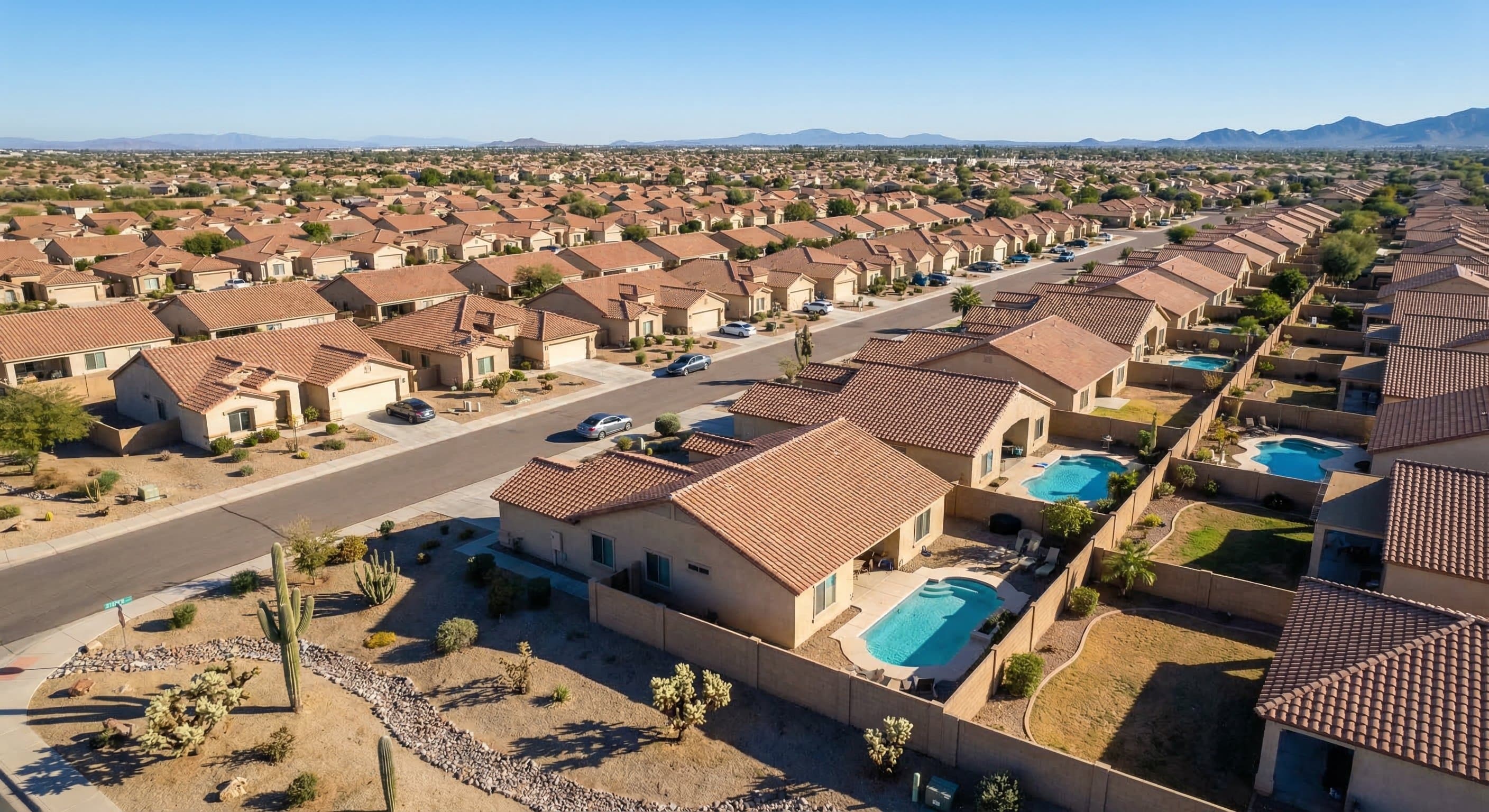
Arizona consistently ranks among the top 10 states for divorce rate. With Maricopa County handling tens of thousands of family court filings each year and a real estate market defined by high equity and rapid appreciation, the conditions for motivated seller leads from divorce proceedings are unusually strong. For investors, that means one thing: most of your competitors are still searching Zillow while the best deals are resolving in the Maricopa Superior Court family division.
This guide covers exactly how to find Arizona divorce leads, what the state's community property law means for your deal flow, and how to stack signals to find the highest-probability motivated sellers before anyone else does.
Why Arizona Divorce Leads Are Different From Most States
Arizona is one of only nine community property states in the United States. Under Arizona Revised Statutes § 25-211, any real property acquired during marriage is presumed to be community property — owned equally 50/50 by both spouses, regardless of whose name is on the deed or who made the mortgage payments.
This changes the seller dynamic in a meaningful way.
In a common-law property state, one spouse might own a property outright and delay a sale indefinitely. In Arizona, both spouses must agree to sell, and courts can and do compel a sale when spouses can't agree. That legal pressure creates genuine urgency — not just motivation, but often a legal obligation to liquidate. The Arizona Legislature's community property statutes outline the specific rules governing marital property disposition.
For investors: you're not convincing someone to sell. You're offering a path of least resistance through a situation that's already decided.
According to the Arizona Supreme Court's 2024 Annual Report, Maricopa County alone processes over 22,000 family court cases annually. Even a small percentage involving real property represents thousands of potential motivated seller leads per year — most of which never surface on any investor's radar.

Arizona Divorce Timeline: Where the Leads Are
Understanding the Arizona divorce process tells you exactly when to approach:
1. Petition filing (Day 1) One spouse files a Petition for Dissolution of Marriage with the Superior Court in their county. This is a public record. At this stage, the property situation is still fluid — but the intent is clear.
2. Service of process (Days 1–30) The other spouse is served. Some cases move to settlement quickly; others drag into contested proceedings. Investors who move early are reaching out to people still figuring out their options.
3. Community property disclosure (Days 30–60) Both spouses must file a Preliminary Injunction and financial disclosure listing all community property, including real estate. This is a goldmine for investigators monitoring court records — specific properties tied to divorce proceedings, with equity and valuation data attached.
4. Mandatory 60-day waiting period Arizona law requires a minimum 60-day cooling-off period after service before any divorce can be finalized. Uncontested divorces often resolve in 90–120 days. Contested divorces can stretch 12–24+ months.
5. Property settlement or court order (Days 60–365+) Most couples settle without a judge deciding. The most common outcomes: one spouse buys out the other, or both agree to sell and split proceeds. Contested cases can result in a court-ordered sale.
The investor window: Days 30–90 are the sweet spot. Both parties know the marriage is ending, financial pressure is building, and the sale decision hasn't been made yet. A fair cash offer solves their coordination problem cleanly.
How to Find Divorce Leads in Arizona
Method 1: Superior Court Records (Free, Labor-Intensive)
Arizona divorce petitions are filed through the Maricopa County Superior Court (for Phoenix metro), Pima County Superior Court (Tucson), and equivalent courts in each of Arizona's 15 counties.
Maricopa County: The eAccess portal at superiorcourt.maricopa.gov allows public search of family court cases by filing type ("Dissolution of Marriage") and date range. You can pull recent filings and cross-reference against property records.
What to look for:
- Dissolution of Marriage cases filed within the last 90 days
- Cases with real property listed in financial disclosures
- Cases where a lis pendens has been filed on the property
The limitation: This method requires daily monitoring of multiple county portals, manual cross-referencing with assessor data, and significant time investment. Most investors can't sustain it consistently.
Method 2: Lis Pendens Cross-Reference
When a divorce involves a property dispute — typically when spouses can't agree on the sale — one party or their attorney often files a lis pendens against the property. This flags the property as involved in active litigation and prevents a clean sale without court approval.
A lis pendens on a property during an active divorce is a strong signal that:
- The owners are in conflict over the property
- A forced sale or buyout is likely
- The owners may be receptive to a cash offer that resolves the dispute cleanly
Arizona lis pendens filings are recorded with the county recorder. In Maricopa County, these are searchable through the Maricopa County Recorder's Office. For a full breakdown of how lis pendens works as an investor signal, see our guide on how to find lis pendens filings.
Method 3: Assessor Record + Signal Stacking
The most efficient approach doesn't rely on a single signal. It starts with what's already publicly available in county assessor and recorder data, then layers signals to identify the highest-probability motivated sellers.
Signal stack for divorce leads:
- Owner address differs from property address (absentee owner indicator — often one spouse has moved out)
- Name on mortgage differs from name on current mail forwarding (USPS change-of-address signals)
- Mortgage recorded in last 3–7 years with recent tax payment irregularity (financial stress)
- Recent lis pendens filing on the property
- Utility connection changes (one party left the property)
A property showing 3+ of these signals simultaneously isn't just a divorce lead — it's a divorce lead with compounding motivation. These are the deals that close fastest and with the least resistance.
DistressIQ tracks 31 signal types across Arizona's 15 counties and stacks them automatically. A property with divorce-adjacent signals (absentee owner + recent name changes + lis pendens + tax irregularity) surfaces at the top of the stack — not buried on page 47 of an Excel export.
Browse Arizona divorce and distress leads on DistressIQ — free to explore →
Free Weekly Alerts
See What's Distressed in Your Market
Get free weekly alerts — new distressed properties, motivation scores, and hot neighborhoods in your area. Addresses and contact info available inside DistressIQ.
Free forever · No credit card · Unsubscribe anytime
Community Property + Equity = Urgency
Arizona's real estate market has generated significant equity for homeowners who purchased before 2020. According to Federal Reserve Economic Data (FRED), the median home price in Phoenix metro hit $430,000 in 2025, up from $275,000 in 2020. For divorcing couples who bought during that window, there's often $100,000–$200,000 in equity at stake.
That equity creates a motivation pattern unique to community property states:
Both spouses are entitled to 50% of the equity. Neither can walk away from that money without the other's cooperation. And neither wants to be the one who delays the other's access to their share. The result? Divorcing Arizona homeowners often move faster toward a sale than their counterparts in common-law states.
The investor who shows up with a clean cash offer, no contingencies, and a 21-day close is solving a coordination problem that both spouses desperately want solved.

County-by-County: Where Arizona Divorce Leads Concentrate
Maricopa County (Phoenix Metro)
Maricopa is the obvious starting point. With 4.5 million residents, it's the largest county in Arizona and processes the most family court cases. Phoenix, Scottsdale, Tempe, Mesa, Chandler, and Gilbert all fall within Maricopa.
Key investor submarkets for divorce leads:
- Central Phoenix / Ahwatukee: Older stock, more homeowners who purchased pre-2015 and have substantial equity
- East Valley (Mesa, Gilbert, Chandler): High homeownership rates, family-formation neighborhoods where divorce filings are concentrated
- West Phoenix (Avondale, Goodyear): Fast-growing areas with newer homeowners and higher financial stress indicators
- Scottsdale: Higher price points, often contested divorces with attorney involvement — harder to reach but higher margin
Pima County (Tucson)
Tucson runs a separate Superior Court family division. The market is slower than Phoenix but also less competitive for off-market leads. Properties around the University of Arizona corridor often appear in divorce proceedings where absentee investor-owners are splitting assets.
Yavapai County (Prescott)
Prescott and Prescott Valley have experienced significant appreciation as Phoenix retirees and remote workers relocated. Divorce proceedings in Yavapai County often involve primary residences purchased at lower basis — more equity, more motivation.
Coconino County (Flagstaff)
Flagstaff's tourism and university economy creates a distinct lead profile. Many divorce cases here involve primary residences with short-term rental income — sellers who need a clean exit from a complex asset.
Approaching Arizona Divorce Sellers: What Works
Divorce is a human situation before it's a financial transaction. The investors who close the most divorce deals treat it that way.
What works:
- Lead with solving the problem, not the deal. "I buy homes directly from owners in situations where a quick, clean sale makes sense" communicates value without mentioning divorce.
- Respect the timeline. Don't push for urgency they already feel. Acknowledge they have options and you're one of them.
- Offer certainty. Divorcing sellers aren't shopping for top dollar — they're shopping for certainty. A firm cash offer with no inspection contingency beats a higher financed offer every time.
- Single point of contact. If you can get both spouses' contact info, reach out to both with the same offer. Never try to negotiate with only one party — it creates distrust and kills deals.
- Work with the attorneys. In contested divorces, family law attorneys often drive the property sale decision. Building relationships with Maricopa County family law attorneys is a long-term lead source that most investors ignore entirely.
What doesn't work:
- Referencing the divorce explicitly in cold outreach. "I saw you're going through a divorce" signals you've been monitoring their court records — it's unsettling, not helpful.
- Lowballing. Divorcing sellers still have attorneys. An insulting offer gets dismissed immediately and poisons the relationship.
- Taking sides. Never align with one spouse against the other.
Key Takeaways
- Arizona is a community property state — both spouses own real estate 50/50, creating genuine legal urgency to sell and split proceeds
- The ideal investor window is Days 30–90 after a divorce petition is filed
- Maricopa County Superior Court processes 22,000+ family cases annually — the largest concentrated source of divorce leads in Arizona
- Signal stacking (absentee indicator + lis pendens + tax irregularity + name change) identifies the highest-probability motivated sellers
- Lead with solving the problem, not negotiating the deal — certainty and speed matter more than price to most divorcing sellers
- Community property law combined with Arizona's equity run-up means the average divorce lead has significant equity and genuine motivation to sell
Ready to stop chasing cold lists and start finding Arizona sellers who actually need to sell? DistressIQ stacks 31 distress signals across all 15 Arizona counties — updated daily from county sources. Founding member pricing: Starter $89/mo, Pro $174/mo, Elite $349/mo — 30% off locked for life, fewer than 50 spots remaining.
Start finding Arizona divorce leads on DistressIQ →
Frequently Asked Questions
Q: Is Arizona a community property state for real estate?
Yes. Under Arizona Revised Statutes § 25-211, any property acquired during marriage is presumed to be community property, owned equally by both spouses. This includes real estate purchased during the marriage regardless of whose name is on the deed.
Q: How long does a divorce take in Arizona?
Arizona has a mandatory 60-day waiting period after the other spouse is served. Uncontested divorces typically resolve in 90–120 days total. Contested divorces involving property disputes can take 12–24 months or longer.
Q: Where are Arizona divorce records filed?
Divorce petitions are filed with the Superior Court in the county where the parties reside. Maricopa County uses the eAccess portal at superiorcourt.maricopa.gov. Each of Arizona's 15 counties has its own Superior Court with public records access.
Q: Can a judge force a sale of marital property in Arizona?
Yes. Arizona courts have the authority to order the sale of community property when spouses cannot agree on a disposition. A court-ordered sale typically results in a fast, non-negotiable timeline — creating strong seller motivation.
Q: What's the best way to find divorce leads in Arizona without manually searching court records?
The most efficient approach is to use a distress signal platform that stacks multiple indicators — absentee owner signals, lis pendens filings, tax delinquency flags, and name-change indicators — to surface divorce-adjacent properties automatically. Manual court record monitoring is accurate but unsustainable at scale.
Q: How do I approach a divorcing seller without mentioning the divorce?
Lead with the value of a fast, certain sale. Messaging like "I work with homeowners who need a clean, quick close — no MLS, no showings, no contingencies" communicates your offer without referencing court filings. Let them bring up their situation; your job is to be the obvious solution when they do.
Q: Which Arizona counties have the most divorce property leads?
Maricopa County (Phoenix metro) generates the highest volume by far, followed by Pima County (Tucson), Yavapai County (Prescott), and Mohave County (Kingman/Bullhead City). Each county has its own Superior Court with public records accessible online.
The data behind this article
DistressIQ Monitors These Signals in Real Time
Pre-Foreclosures
NOD + NTS filings
Tax Delinquency
County treasurer records
Code Violations
Municipal inspection filings
Probate Filings
Superior Court records
Every lead is scored 0–100 for seller motivation based on signal type, duration, severity, and stacking. Nationwide coverage — every US county, updated daily.
Ready to find deals in your market?
See Live Distress Signals in Your County
Stop calling dead leads. Every lead in DistressIQ is scored 0–100 for seller motivation, with verified contact info included. Browse the free tier to see what's active in your market right now.
Browse Free Leads — No Credit Card