Distressed Properties in Bexar County TX: San Antonio Investor Guide for 2026
Distressed Properties in Bexar County TX: San Antonio Investor Guide for 2026
TL;DR: Texas foreclosure sales happen on the first Tuesday of every month, and Bexar County conducts its auctions at the Paul Elizondo Tower starting at 10 a.m. The state's non-judicial foreclosure process runs on one of the fastest timelines in the country, just 21 days from posting to sale. For investors targeting distressed properties in Bexar County TX, that compressed window means motivated sellers have limited time to act. San Antonio's lower median home prices, reduced institutional competition, and high-volume distress signals across older neighborhoods create a market that rewards preparation and speed.
Texas runs one of the fastest foreclosure clocks in the country. Twenty-one days from posting to sale. No court involvement. No redemption period after the auction. For a county with 2.1 million residents and an aging housing stock concentrated in neighborhoods built before 1970, that timeline generates a steady pipeline of urgent seller situations.
Bexar County does not attract the same institutional capital as Dallas or Houston. Out-of-state hedge funds and large portfolio buyers concentrate in those larger metros, leaving San Antonio's distressed inventory less picked over. That gap is the core opportunity for wholesalers, fix-and-flip operators, and buy-and-hold investors.
Why Bexar County Produces Consistent Distress Inventory
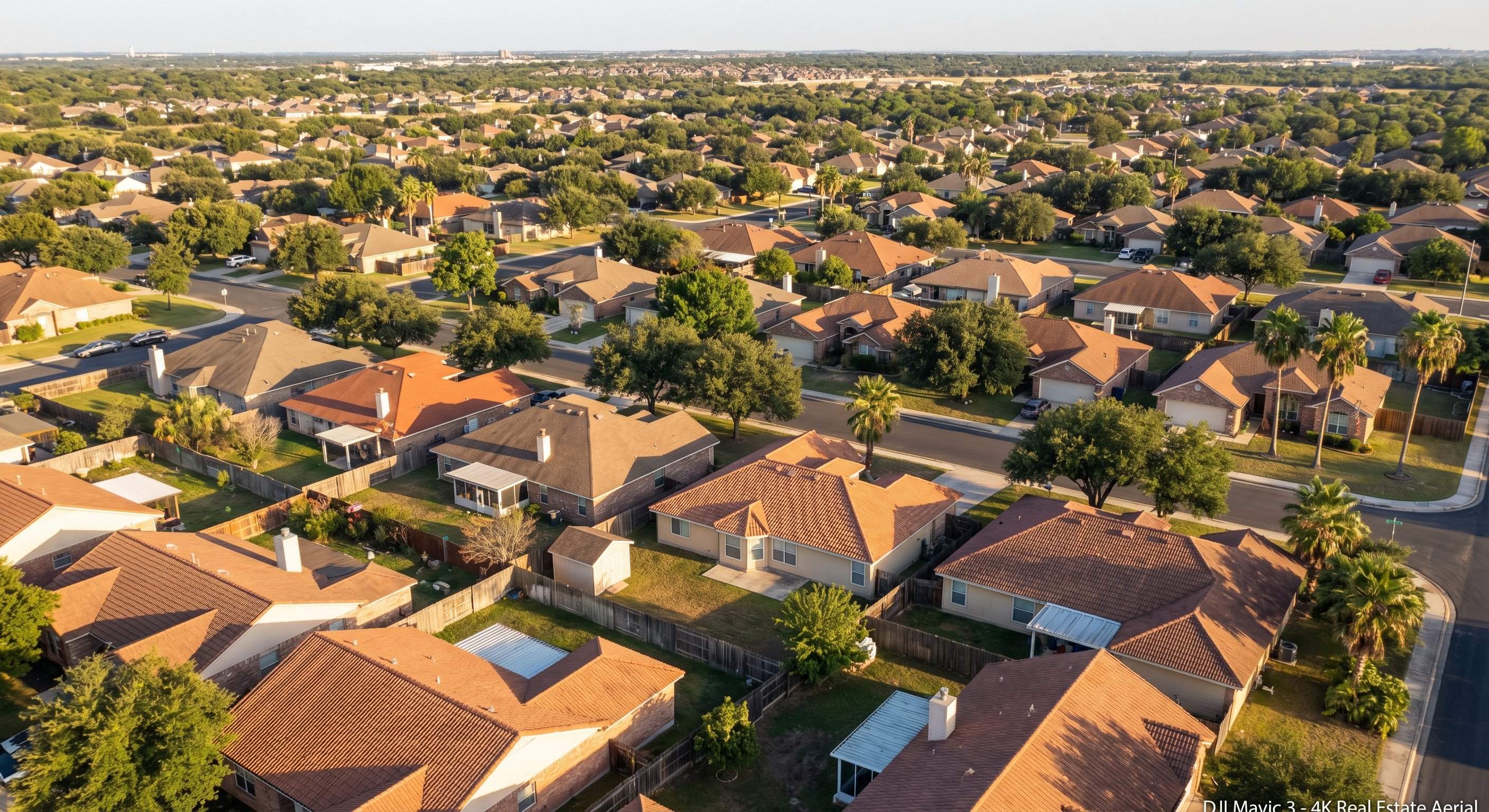
Three structural forces drive the volume of distressed properties in Bexar County. None are cyclical. They are baked into the market's demographics and legal framework.
Aging housing stock with deferred maintenance. A large share of San Antonio's owner-occupied housing was built between 1940 and 1975, concentrated in the urban core. These properties require increasing capital to maintain, and their owners, many on fixed incomes, defer repairs until the cost becomes unmanageable. Code violations compound. Tax payments slip. The property enters distress gradually before surfacing in public records.
Military relocation and absentee ownership. Bexar County hosts Joint Base San Antonio, encompassing Fort Sam Houston, Randolph Air Force Base, and Lackland Air Force Base. Military families receive transfer orders on short notice. When a service member deploys and cannot sell, the property often becomes a rental by default. Over time, absentee landlords fall behind on taxes or maintenance, and some become highly motivated sellers after years of long-distance property management.
Property tax pressure on long-term owners. Texas has no state income tax, so local governments rely on property tax revenue. For homeowners who purchased decades ago in neighborhoods now appreciating, the rising tax bill can outpace fixed or slow-growing income. Tax delinquency among long-term owners in gentrifying corridors is a measurable and growing pattern.
The Three Distress Signal Types in Bexar County
Tax Delinquent Properties
Texas property taxes are due January 31 each year. Once an account goes delinquent for two or more years, the county can file a tax foreclosure suit. Bexar County holds its tax lien sale in November, and the delinquent roll is published in advance through the county and through the attorney firms contracted to conduct the sale.
The most actionable leads are owners carrying two or more years of delinquency with penalties and interest compounding. By that stage, a cash offer often represents the owner's best available exit.
Bexar County Appraisal District, accessible at bcad.org, maintains current ownership records and assessed values for cross-referencing tax data.
Pre-Foreclosure and Lis Pendens Filings
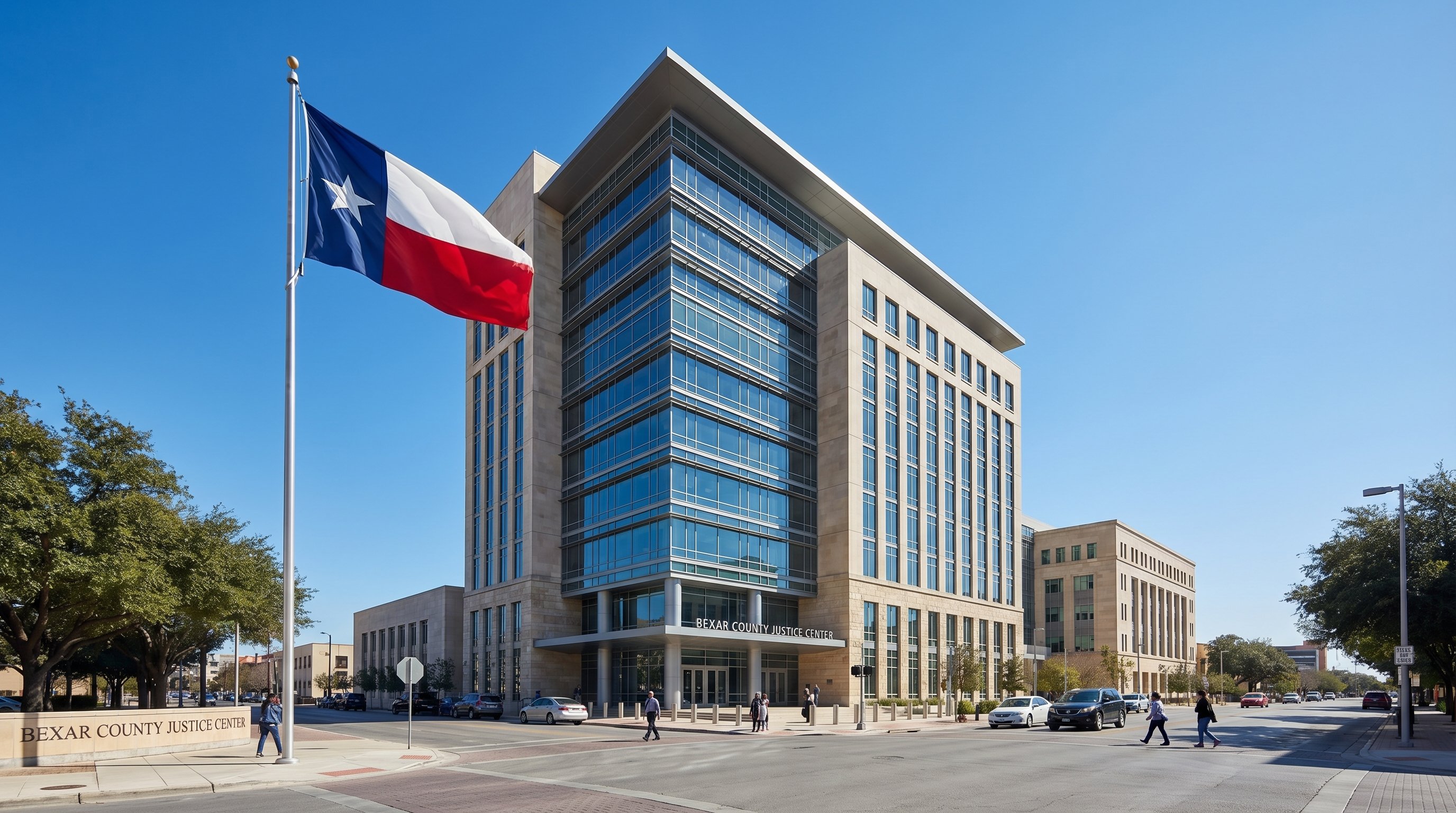
Texas is a non-judicial foreclosure state. Most residential foreclosures proceed without court involvement. The lender posts a Notice of Sale and mails notice to the borrower. The sale occurs on the first Tuesday of the following month at the Paul Elizondo Tower, starting at 10 a.m.
That 21-day timeline creates a narrow but intense window for investors. Homeowners who have received a Notice of Sale are under genuine time pressure, and many have exhausted loan modification options by that point.
Lis pendens filings appear in the Bexar County Clerk's records at countyclerk.bexar.org. They surface in contested foreclosures, title disputes, and certain divorce or partition actions. They are a secondary signal worth monitoring alongside standard Notice of Default and Notice of Sale filings.
Probate and Estate Sales
Bexar County's probate courts process a significant volume of estate cases annually. The investor-relevant situations involve heirs who inherited properties they cannot maintain or are physically distant from. Common patterns include out-of-state heirs, multiple heirs who disagree on disposition, and estates with carrying costs the heirs cannot absorb.
Uncontested estates can close in three to six months. Contested cases can run 12 to 24 months. Longer timelines correlate with higher heir motivation as accumulated taxes and maintenance costs build pressure to liquidate. Probate leads in San Antonio frequently involve older housing stock with more renovation upside and cleaner title than pre-foreclosure leads.
Where Distress Concentrates in Bexar County
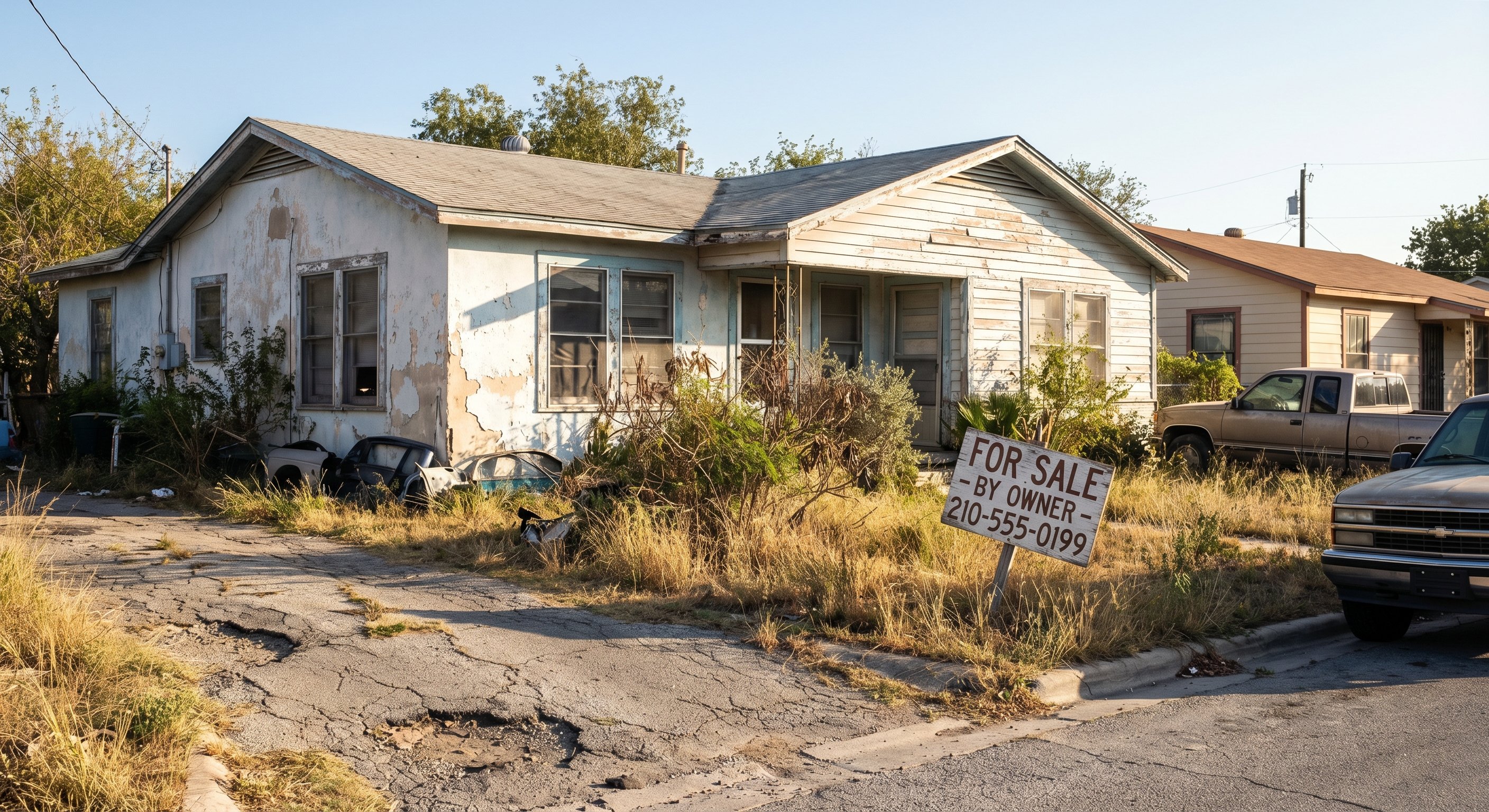
78207 and 78208 (Near Downtown West): Among the highest-density distress zones in the county. Housing dates to the 1940s and 1950s. Owner incomes fall below the county median. Code violation and tax delinquency rates both exceed the county average. A significant portion of owners are more comfortable in Spanish, making bilingual outreach a meaningful advantage.
78220 and 78221 (South San Antonio): Older working-class neighborhoods with tax delinquency rates above the county average. Values have appreciated with broader market growth, but many long-term owners have not kept pace financially.
78237 (West San Antonio): Older housing, lower incomes, high delinquency. Properties tend to be smaller and fit the wholesale price range of $100,000 to $180,000 after repair value.
78210 and 78214 (Near South Side): Aging bungalows, active probate pipeline. Properties passed down informally sometimes carry title complications that delay sale but also reduce competition.
North San Antonio (78232, 78249): Lower distress volume overall, but probate leads here involve higher-value properties with more equity. Estate leads in northern zip codes can produce larger margins.
Free Weekly Alerts
See What's Distressed in Your Market
Get free weekly alerts — new distressed properties, motivation scores, and hot neighborhoods in your area. Addresses and contact info available inside DistressIQ.
Free forever · No credit card · Unsubscribe anytime
San Antonio's Pricing Advantage
San Antonio's median home price sits in the $260,000 to $310,000 range, lower than Dallas, Austin, and Houston. For distressed property investors, this has practical effects.
The after-repair value of a typical wholesale deal in high-distress zip codes falls in the $100,000 to $180,000 range. Entry costs are lower, so investors can deploy capital across more deals or carry a wider margin of safety.
Institutional buyers and large-scale wholesalers are less concentrated in San Antonio than in other major Texas metros. Platforms like PropStream and BatchLeads have fewer active users working Bexar County compared to Harris or Dallas County. First-mover contact matters more here because fewer investors are making the call.
The rental market is strong, supported by steady population inflow and the military base economy. Buy-and-hold investors acquiring at a discount can generate competitive yields while building equity through forced appreciation.
Public Record Sources
Bexar County Appraisal District (bcad.org): Ownership records, assessed values, exemption status, and basic property characteristics. Updated annually. Useful for confirming ownership and comparable sales checks.
Bexar County Clerk (countyclerk.bexar.org): Lis pendens filings, deed records, and probate filings. Search interface allows filtering by document type and date range.
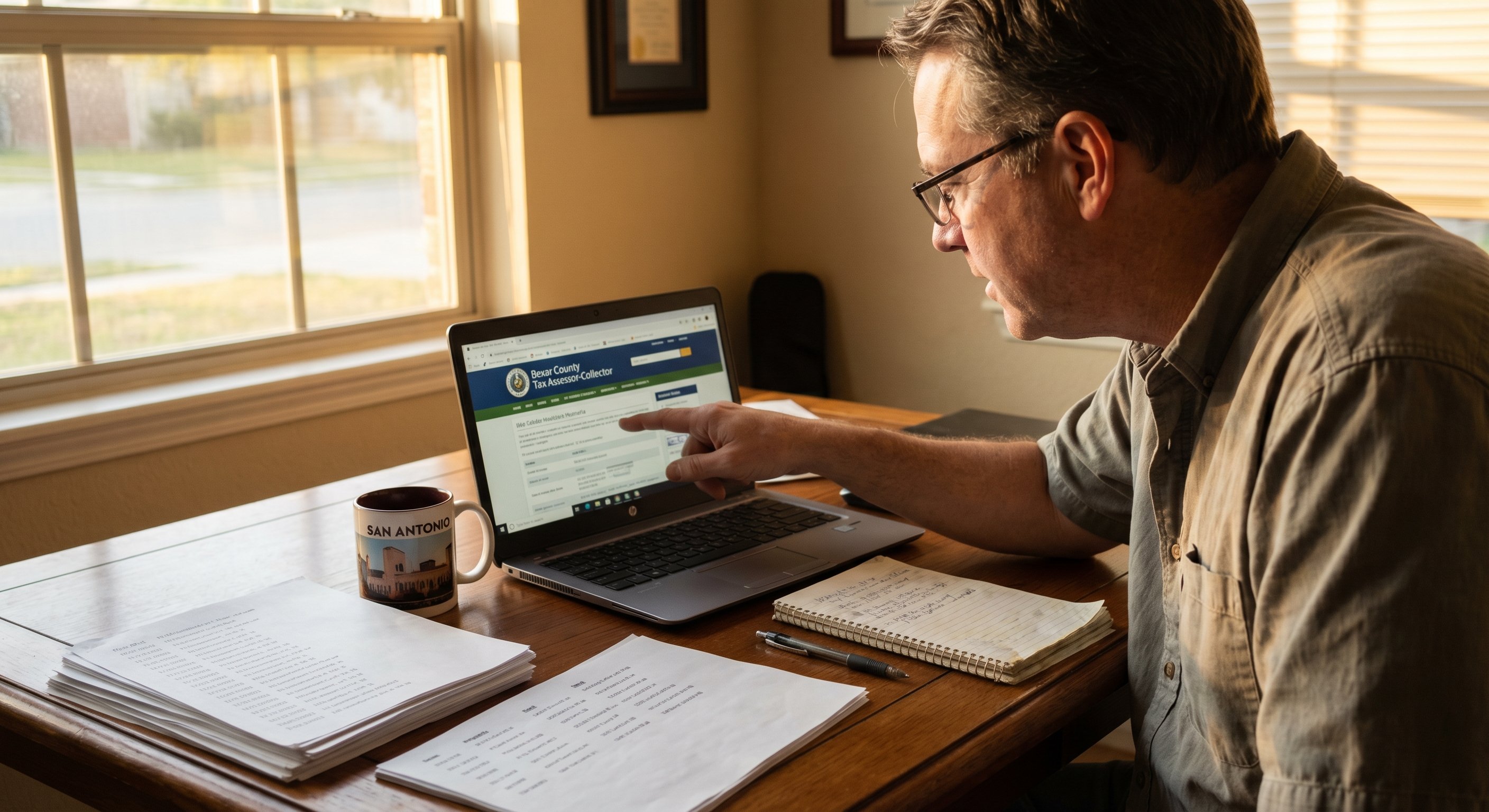
Bexar County Tax Assessor-Collector: Delinquent tax accounts and the delinquent roll ahead of the November tax lien sale. Data exports require manual cross-referencing against BCAD ownership records.
Each system operates independently. Ownership data in one may not match another due to timing differences or LLC structures. Building an accurate, deduplicated list from these three sources is time-intensive, and the result does not indicate which leads are most urgent without additional analysis.
Practical Considerations
Texas requires an attorney for closings. Work with a title company experienced in investor transactions. Several San Antonio title companies specialize in wholesale double-closes and assignments.
Property taxes are paid in arrears. The 2025 tax bill becomes due in January 2026. Account for any delinquent back taxes that transfer with the property. These must be cleared at closing.
BCAD provides free ARV data. The appraisal district's comparable sales search is not as granular as the MLS but works for quick after-repair value estimates on distressed properties.
Bilingual outreach improves response rates. Direct mail and calling campaigns with Spanish-language materials will outperform English-only outreach in 78207, 78228, 78237, and surrounding areas.
Probate leads are underworked. Most investors focus on tax delinquency and pre-foreclosure. Probate leads tend to have cleaner title, higher motivation, and less competition relative to how productive they are.
FAQ
Q: How many distressed properties are active in Bexar County at any given time?
Based on county population, housing stock age, and regional distress rates, Bexar County maintains an estimated 20,000 to 24,000 properties with at least one active distress signal. This count includes tax delinquencies, pre-foreclosure filings, probate cases, and code violation actions. The specific mix fluctuates seasonally, with pre-foreclosure filings typically increasing in the first quarter as lenders act after the holiday moratorium period ends.
Q: Where are foreclosure sales held in Bexar County?
Texas law requires foreclosure sales on the first Tuesday of each month. In Bexar County, sales take place at the Paul Elizondo Tower, part of the county courthouse complex in downtown San Antonio, beginning at 10 a.m. The sale is a public auction conducted by the trustee named in the deed of trust. Buyers should bring certified funds and understand that properties are purchased as-is with no title insurance provided at the time of sale.
Q: What makes San Antonio different from Dallas or Houston for distressed property investing?
San Antonio's median home prices are lower than Dallas, Houston, and Austin, which reduces entry costs. Institutional capital and large-scale wholesaling operations are less concentrated in Bexar County than in Harris or Dallas County. Fewer investors work the same lead sources, so first-mover contact carries more weight. The heavy military presence also creates a recurring supply of relocation-related motivated sellers that other Texas metros do not produce at the same volume.
Q: How does the tax lien sale work in Bexar County?
Bexar County conducts its tax lien sale in November. The delinquent roll is published in advance through the county and through attorney firms administering the sale. Investors bid on tax liens, not the properties themselves. If the owner redeems by paying the delinquent amount plus interest and penalties, the lien holder recovers the investment plus a statutory return. If the owner does not redeem, the lien holder can initiate foreclosure proceedings to acquire the property.
Q: Can out-of-state investors work Bexar County effectively?
Yes. Many successful investors in Bexar County operate remotely, relying on local inspectors, property managers, and title companies. The critical requirements are a trusted property inspector to evaluate condition and a title company experienced with distressed transactions. Public record research can be conducted entirely online through BCAD, the County Clerk's website, and the Tax Assessor-Collector's portal.
Q: Which zip codes have the highest concentration of distressed properties?
The highest-distress zip codes include 78207 and 78208 near downtown west, 78220 and 78221 in south San Antonio, and 78237 on the west side. These areas share older housing stock built before 1960, below-median owner incomes, and tax delinquency rates above the county average. The near south side zip codes of 78210 and 78214 produce strong probate-driven leads. Northern zip codes like 78232 and 78249 generate fewer distress signals but offer higher equity positions when probate leads surface.
For investors ready to stop building lists manually from scattered county databases, DistressIQ aggregates tax delinquency, pre-foreclosure, probate, and code violation data across Bexar County into a single scored dashboard. Every lead is ranked by motivation level so the most urgent contacts surface first. Browsing is free. Sign up and start filtering distressed properties in Bexar County at distressiq.ai.
Sources
- Bexar County Appraisal District, bcad.org, property ownership and assessed value records.
- Bexar County Clerk, countyclerk.bexar.org, lis pendens, deed, and probate filings.
- Texas Property Code, Title 5, Chapter 51, non-judicial foreclosure procedures and timelines.
The data behind this article
DistressIQ Monitors These Signals in Real Time
Pre-Foreclosures
NOD + NTS filings
Tax Delinquency
County treasurer records
Code Violations
Municipal inspection filings
Probate Filings
Superior Court records
Every lead is scored 0–100 for seller motivation based on signal type, duration, severity, and stacking. Nationwide coverage — every US county, updated daily.
Ready to find deals in your market?
See Live Distress Signals in Your County
Stop calling dead leads. Every lead in DistressIQ is scored 0–100 for seller motivation, with verified contact info included. Browse the free tier to see what's active in your market right now.
Browse Free Leads — No Credit Card