BatchLeads Review 2026: Is It Still Worth It After the PropStream Acquisition?
BatchLeads Review 2026: Is It Still Worth It After the PropStream Acquisition?
TL;DR: PropStream acquired BatchLeads in 2023, and both brands now share the same underlying data infrastructure. BatchLeads still offers competitive skip tracing at roughly $0.19 per record, a clean list stacking interface, and a solid driving-for-dollars mobile app. But the data freshness, customer support quality, and independent differentiation that once justified a separate subscription have all eroded post-acquisition. This review covers pricing, performance, and who should still consider it.
When one company acquires its closest competitor and keeps both brands alive, the result is usually the same: two storefronts, one back office. That is precisely what happened when PropStream bought BatchLeads in 2023. The brands still compete for attention in Facebook ads and comparison posts, but behind the curtain, the data pipelines, aggregator relationships, and infrastructure have largely merged.
Most BatchLeads reviews skip this detail. They list features, quote pricing, and move on. But anyone paying for a lead generation platform in 2026 needs to understand what consolidation actually costs: fewer real choices, shared data ceilings, and a vendor that owns both sides of the comparison table.
This review covers what BatchLeads does well, where it falls short, and who should still consider paying for it now that the pre-acquisition version no longer exists.
What BatchLeads Does Well
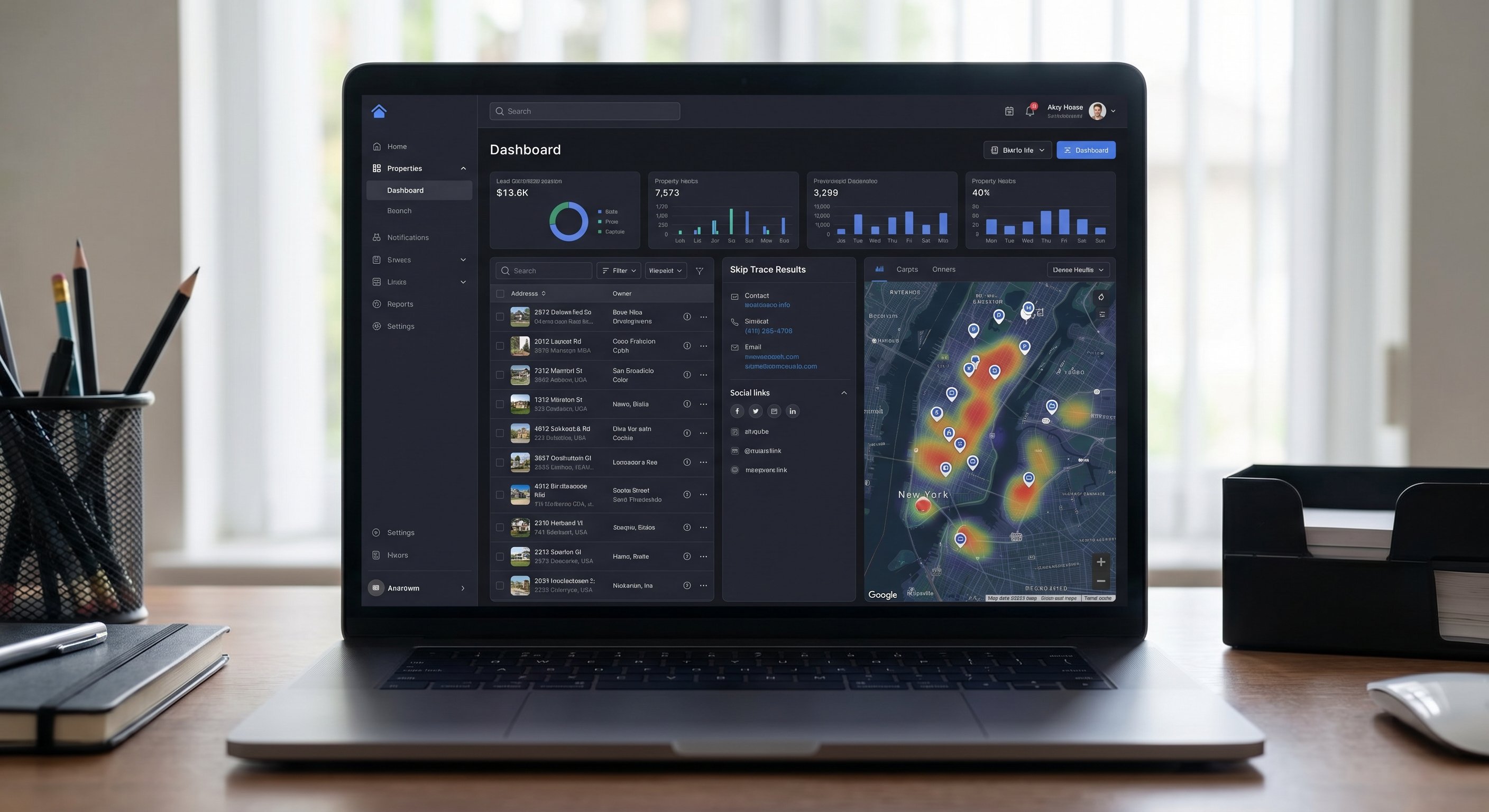
BatchLeads built its reputation on three capabilities that remain functional post-acquisition: skip tracing, list stacking, and driving for dollars.
Skip tracing. This is where BatchLeads still has a genuine edge. At roughly $0.19 per record for bulk skip tracing, the pricing beats most standalone services and undercuts PropStream's separate skip trace add-on. Credits are bundled into the monthly subscription starting at around $97 per month for a single user, which means high-volume wholesalers can work through thousands of records without a separate invoice from a third-party vendor. For investors whose primary workflow is "pull list, skip trace, call," this bundled model keeps costs predictable.
List stacking. BatchLeads lets users combine multiple filter criteria (equity percentage, ownership length, vacancy status, pre-foreclosure flags) into layered lists. The interface for this is cleaner and more intuitive than PropStream's equivalent, which tends to bury useful filters under nested menus. Investors who build complex prospect lists regularly will notice the difference. It is not a dealbreaker in either direction, but it saves time.
Driving for dollars. The mobile app remains actively maintained, which is more than some competitors can claim. Users can pin properties while driving through neighborhoods, attach photos and notes, and route those pins directly into the skip tracing workflow. For wholesalers who still rely on physical scouting as part of their pipeline, the DFD app is one of the stronger options on the market.
These features work. The question is whether they work well enough to justify paying for a platform whose data is now functionally identical to PropStream's.
The Acquisition Problem
Before 2023, BatchLeads maintained independent data partnerships. The company sourced property records, ownership data, and court filings through its own aggregator contracts, which meant its database sometimes surfaced different records than PropStream's. Not better, necessarily, but different enough to justify maintaining both subscriptions if an investor wanted maximum coverage.
That independent layer has largely collapsed. Post-acquisition, BatchLeads and PropStream pull from the same aggregator infrastructure. Users across forums and community groups report that property records, ownership changes, and pre-foreclosure filings now appear identically in both platforms with matching timestamps. The differentiation that once made BatchLeads worth a separate line item is gone.
This creates an awkward situation. An investor paying $97 per month for BatchLeads and $99 per month for PropStream is spending nearly $200 monthly for the same data rendered in two different interfaces. Before the acquisition, that dual subscription at least provided marginal coverage gains. Now it is pure redundancy.
Customer support has also declined. Multiple user reports across Reddit, BiggerPockets, and Facebook groups describe slower response times and less knowledgeable support staff since the acquisition closed. This tracks with a common pattern in platform consolidations: support resources get centralized, the smaller brand's team gets absorbed or cut, and response quality drops for users who signed up expecting a dedicated support experience.
Data Freshness: The Shared Ceiling

BatchLeads and PropStream both operate on an aggregator data model. Neither platform sources records directly from county clerks or court systems. Instead, they purchase compiled data from third-party aggregators that collect, clean, and resell property records from thousands of individual counties.
The aggregator model introduces a lag between when an event occurs (a lis pendens filing, a tax lien, a deed transfer) and when it appears in the platform. That lag typically runs one to four weeks depending on the county, the data type, and the aggregator's update cycle. In fast-moving markets where motivated sellers receive dozens of mailers within days of a filing, that delay is not a minor inconvenience. It is a direct hit to conversion rates.
BatchLeads updates its database on a weekly to bi-weekly batch cycle, which matches PropStream's cadence post-acquisition. Neither platform offers daily updates. Neither sources directly from county recorders. The data freshness ceiling is the same regardless of which brand you log into.
For investors targeting broad lists (high-equity homeowners, absentee owners, long-term ownership) the batch cycle is tolerable. Those filters do not depend on timing. But for distress-specific signals like pre-foreclosures, tax delinquencies, and probate filings, the window to reach a seller before their situation resolves can be as short as two weeks. Data that arrives three weeks after the filing event is already expired.
Free Weekly Alerts
See What's Distressed in Your Market
Get free weekly alerts — new distressed properties, motivation scores, and hot neighborhoods in your area. Addresses and contact info available inside DistressIQ.
Free forever · No credit card · Unsubscribe anytime
Pricing Breakdown
BatchLeads pricing starts at approximately $97 per month for a single user. That base tier includes skip tracing credits, list stacking, and access to the driving-for-dollars mobile app. Mid-tier plans run $197 to $249 monthly with higher export volumes. Team plans exceed $397 per month.
A few details worth noting:
- Unused skip trace credits do not roll over. If you pay for 1,000 credits and use 400, the remaining 600 vanish at the end of the billing cycle. This is a recurring complaint across both BatchLeads and PropStream, and it has not changed post-acquisition.
- Annual billing reduces the effective monthly rate by 15 to 20 percent. Worth taking if you have validated the data quality in your market and plan to stick around.
- Pricing has shifted since the acquisition. The tiers described above reflect early 2026 levels. Check the current pricing page directly, as credit allocations and plan names continue to evolve under shared corporate management.
The value equation depends entirely on volume. At $97 per month with bundled skip tracing, a wholesaler running 2,000+ records per month gets a reasonable cost-per-contact. A solo investor making 50 targeted calls per week is overpaying for capacity they will not use.
Who BatchLeads Still Makes Sense For
Despite the erosion of independent data and post-acquisition support issues, BatchLeads is not a bad platform. It serves a specific investor profile well.
Volume skip tracers. The $0.19 per record pricing is best-in-class for bulk skip tracing. Investors who run high-volume direct mail or cold calling campaigns and need thousands of phone numbers per month will find BatchLeads' bundled model cheaper than sourcing skip tracing separately.
Driving-for-dollars regulars. The mobile app workflow is genuinely better than PropStream's equivalent. Pinning properties, attaching photos, and routing directly into skip tracing works smoothly. Investors who build their pipeline through physical scouting get real value here.
Legacy pricing holders. Some users locked in lower rates before the acquisition. If your monthly cost is significantly below current list price and the features still meet your needs, there is no urgency to switch.
Who Should Look Elsewhere
Investors who need current distress signals. Neither BatchLeads nor PropStream updates daily. For pre-foreclosure, tax delinquency, probate, and lis pendens leads, the batch update cycle means data arrives too late for the most competitive scenarios. Platforms that pull directly from county recorders on a daily cycle offer a meaningful timing advantage for these signal types.
Anyone paying for both platforms. Post-acquisition, dual subscriptions are redundant. The data is the same. Save the $100 per month and invest it in a tool that does something BatchLeads cannot.
Investors who want prioritized leads. BatchLeads provides filters, not rankings. Every list exports as an unsorted spreadsheet. The investor still has to decide who to call first, which is where most of the time gets wasted. Platforms that stack multiple distress signals into a motivation score eliminate this bottleneck.
The DistressIQ Alternative

Where BatchLeads provides volume and broad property data, DistressIQ provides precision and timing. DistressIQ sources distress signals directly from county recorders, updated daily. No aggregator layer. No batch cycle. When a lis pendens filing hits the county clerk's office, it appears in the DistressIQ dashboard within 24 hours, not two to four weeks later.
The platform stacks multiple distress signals per property into a single motivation score from 0 to 100. A property that is simultaneously in pre-foreclosure, tax delinquent, and flagged for code violations scores higher than one with a single signal. Instead of exporting 500 unsorted pre-foreclosure records and manually deciding who to contact first, the top 20 highest-urgency sellers are already ranked at the top of the list.
DistressIQ is purpose-built for distress signals. It does not try to be a general property database. No broad list building for high-equity homeowners or absentee owners. The focus is narrower: motivated sellers identified through verified county filings, refreshed every day, scored by urgency.
Browsing is free. Anyone can explore the map, see signal types, and verify coverage in their target market before paying. BatchLeads requires a subscription before revealing what the data looks like in specific counties.
Comparison Table
| Feature | BatchLeads | PropStream | DistressIQ |
|---|---|---|---|
| Data source | Aggregator (shared with PropStream) | Aggregator (shared with BatchLeads) | County-direct |
| Update frequency | Weekly to bi-weekly batch | Weekly to bi-weekly batch | Daily from source |
| Skip tracing | Bundled ($0.19/record bulk) | Separate add-on cost | On-demand ($0.08/lead) |
| Motivation scoring | Filters only | Filters only | 0-100 score per lead |
| List stacking | Yes, clean interface | Yes, cluttered interface | Signal-based stacking |
| Mobile DFD app | Yes, actively maintained | Yes | No |
| Browse before subscribing | No | No | Yes, free |
| Starting price | ~$97/month | ~$99/month | $129/month |
| Ownership | PropStream parent company | PropStream parent company | Independent |
FAQ
Q: Is BatchLeads the same as PropStream now?
Post-acquisition, BatchLeads and PropStream share the same underlying data infrastructure. Both platforms pull from identical aggregator sources, which means property records, ownership data, and filing information appear with matching timestamps across both tools. The interfaces differ, and BatchLeads retains its driving-for-dollars app and list stacking workflow, but the raw data feeding both platforms is functionally the same. Paying for both subscriptions is redundant.
Q: What does BatchLeads cost per month?
BatchLeads pricing starts at approximately $97 per month for a single user, which includes skip tracing credits, list stacking tools, and the mobile driving-for-dollars app. Mid-tier plans run $197 to $249 monthly with higher export volumes. Team plans exceed $397 per month. Annual billing reduces the effective monthly cost by 15 to 20 percent. Pricing continues to shift post-acquisition, so checking the current rate directly is advisable before committing.
Q: How accurate is BatchLeads skip tracing?
Skip tracing accuracy varies significantly by market and property type. Metropolitan areas with conventional single-family ownership tend to produce strong hit rates. Rural counties, LLC-owned properties, and absentee owners who have moved multiple times see noticeably lower accuracy. BatchLeads does not publish a specific hit rate benchmark, so running a test batch of 50 to 100 records in your target market before scaling is the most reliable way to project actual cost-per-contact.
Q: Can you browse BatchLeads data without paying?
No. BatchLeads requires a paid subscription before users can view property data or skip tracing results for specific markets. There is no free tier or trial browse. Investors who want to verify data coverage and quality in their target counties before committing financially will need to evaluate whether the subscription cost justifies an exploratory month, or consider platforms that offer free browsing like DistressIQ.
Q: Who should use BatchLeads in 2026?
BatchLeads remains a reasonable choice for two specific investor profiles: high-volume wholesalers who need bulk skip tracing at competitive per-record rates, and driving-for-dollars investors who want a well-maintained mobile scouting app. The bundled skip tracing at roughly $0.19 per record is genuinely competitive for volume users. Investors who locked in lower rates before the acquisition may also find continued value. For anyone else, the shared data infrastructure with PropStream and the weekly batch update cycle make alternatives worth exploring.
Q: What is the best alternative to BatchLeads for finding motivated sellers?
For investors specifically targeting distress signals like pre-foreclosures, tax delinquencies, probate filings, and lis pendens, platforms that source directly from county recorders on a daily cycle offer a meaningful timing advantage over aggregator-based tools. DistressIQ pulls daily from county sources, stacks multiple distress signals per property, and scores leads from 0 to 100 by motivation level. Browsing is free at distressiq.ai, so investors can verify coverage and data quality before committing to a subscription.
For investors ready to see what daily-updated, county-direct distress data looks like, the map at distressiq.ai is open to browse with no subscription required.
Sources
- PropStream parent company acquisition announcement, 2023
- User reports on data parity between BatchLeads and PropStream post-acquisition, Reddit and BiggerPockets forums, 2024-2026
- BatchLeads pricing page, verified April 2026
The data behind this article
DistressIQ Monitors These Signals in Real Time
Pre-Foreclosures
NOD + NTS filings
Tax Delinquency
County treasurer records
Code Violations
Municipal inspection filings
Probate Filings
Superior Court records
Every lead is scored 0–100 for seller motivation based on signal type, duration, severity, and stacking. Nationwide coverage — every US county, updated daily.
Ready to find deals in your market?
See Live Distress Signals in Your County
Stop calling dead leads. Every lead in DistressIQ is scored 0–100 for seller motivation, with verified contact info included. Browse the free tier to see what's active in your market right now.
Browse Free Leads — No Credit Card