Bankruptcy Leads Ohio: What Smart Investors Need to Know in 2026
Bankruptcy Leads Ohio: What Smart Investors Need to Know in 2026
TL;DR: Bankruptcy leads in Ohio create genuine motivated seller opportunities that most investors overlook. Chapter 13 filers have 3-5 years of repayment plans that can be disrupted by life events, creating actionable leads 60-90 days post-filing. Ohio's judicial foreclosure process means every bankruptcy triggers a court record that serious investors can cross-reference against tax delinquent, code violation, and pre-foreclosure signals. A motivation score that stacks multiple distress types ranks these leads far above generic bankruptcy lists.
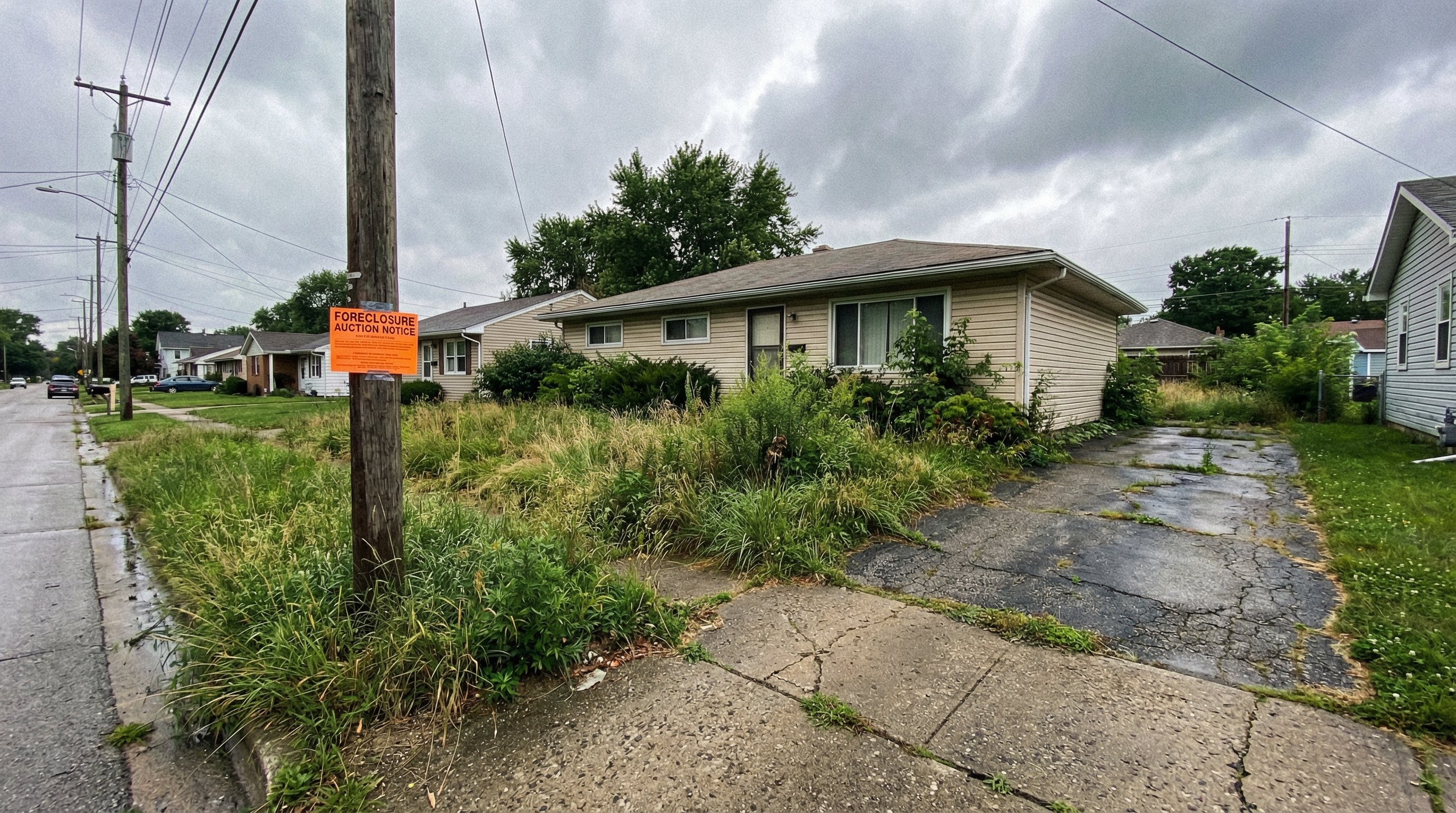
Most Investors Ignore Bankruptcy Filings. That Is a Mistake.
Every experienced wholesaler and fix-and-flip investor in Ohio has a version of the same story: a list of 200 pre-foreclosure leads from a county database, 40 of them return phone calls, 8 agree to a conversation, 2 make an offer that pencil out. The common diagnosis is "the market is saturated." The real diagnosis is that a single distress signal, taken in isolation, produces a list with low intent density.
Bankruptcy leads Ohio cut through that noise in a specific way that most investors never learn to exploit. When a homeowner files Chapter 13 bankruptcy, it is not a tentative signal. It is not a maybe. It is a federal court record signed under penalty of perjury that says: this person has exhausted every other option, owes more than they can pay, and has a repayment plan approved by a federal judge. Nobody files Chapter 13 on a whim.
The problem is not that bankruptcy leads are bad. The problem is that most investors do not know how to find them systematically, how to interpret the filing schedule, or how to time outreach to hit the moment when the homeowner is actually reachable.
What Bankruptcy Filings Actually Mean for Real Estate Investors
The United States Bankruptcy Court for the Southern District of Ohio and the Northern District of Ohio divide the state geographically. Both courts publish docket filings weekly. Every bankruptcy petition includes Schedule A (real property), Schedule D (secured creditors), Schedule E/F (unsecured creditors), and Schedule I/J (income and expenses). These documents are public record, and they tell an investor exactly what a traditional motivated seller intake call would try to extract through conversation.
Chapter 13 bankruptcy is the filing type that creates the most actionable real estate leads in Ohio. Chapter 13 filers propose a 3-5 year repayment plan, usually paying back a portion of debts through a court-appointed trustee. Their homes are part of the estate, and the bankruptcy court has authority over what happens to secured assets, including real property.
Chapter 7 bankruptcy liquidates assets to pay creditors. In Ohio, homestead exemptions allow debtors to protect up to $145,300 in equity in their primary residence (for cases filed after April 1, 2022, adjusted periodically). Filers with significant equity above the exemption may lose the property in the Chapter 7, which creates a different type of motivated seller situation: one who wants to sell before the trustee forces the sale.
In both cases, the automatic stay under 11 U.S.C. Section 362 halts all foreclosure proceedings the moment the petition is filed. For the homeowner, this is a temporary reprieve. For the investor who understands the timeline, this stay is a countdown.
The Ohio Bankruptcy Timeline That Investors Must Learn
Ohio uses judicial foreclosure for residential properties, meaning every defaulted mortgage that goes to sheriff's sale must pass through a court. When a homeowner files Chapter 13 during an active foreclosure, the automatic stay immediately pauses the sale. The Chapter 13 plan then typically runs 36-60 months.
This timeline creates a specific investor opportunity window: the 60-90 day mark after filing. In the first 30 days after a bankruptcy filing, homeowners are overwhelmed with attorney correspondence, trustee notifications, and document requests. They are not thinking about selling. By day 60-90, the initial shock has worn off, the plan is operating, and the homeowner often confronts the same underlying problem that caused the filing: the payment is still too high, the income changed, or the property is too large for their current situation.
Investors who monitor new Chapter 13 filings in Cuyahoga County (Cleveland), Franklin County (Columbus), Hamilton County (Cincinnati), and Montgomery County (Dayton) and reach out in that 60-90 day window consistently report higher contact rates than investors who work generic pre-foreclosure lists.
After the Chapter 13 plan concludes, a discharge order releases the homeowner from personal liability on most debts. At that point, if they still cannot afford the property, they are highly motivated to sell before the lender resumes foreclosure. This creates a second, often overlooked opportunity window.
Free Weekly Alerts
See What's Distressed in Your Market
Get free weekly alerts — new distressed properties, motivation scores, and hot neighborhoods in your area. Addresses and contact info available inside DistressIQ.
Free forever · No credit card · Unsubscribe anytime
The Manual Research Problem: Why Most Investors Give Up on Bankruptcy Leads
Finding bankruptcy leads Ohio manually requires navigating three separate systems with no unified interface. The Bankruptcy Court docket for the Southern and Northern Districts of Ohio publishes filings in PDF format on PACER (Public Access to Court Electronic Records). PACER charges per-page fees and has a steep learning curve. Separately, county auditor websites in Ohio provide property records that must be cross-referenced to determine whether the bankruptcy filer owns real property. Third, the county sheriff's office maintains the foreclosure auction calendar, which tracks which properties are in active judicial foreclosure.

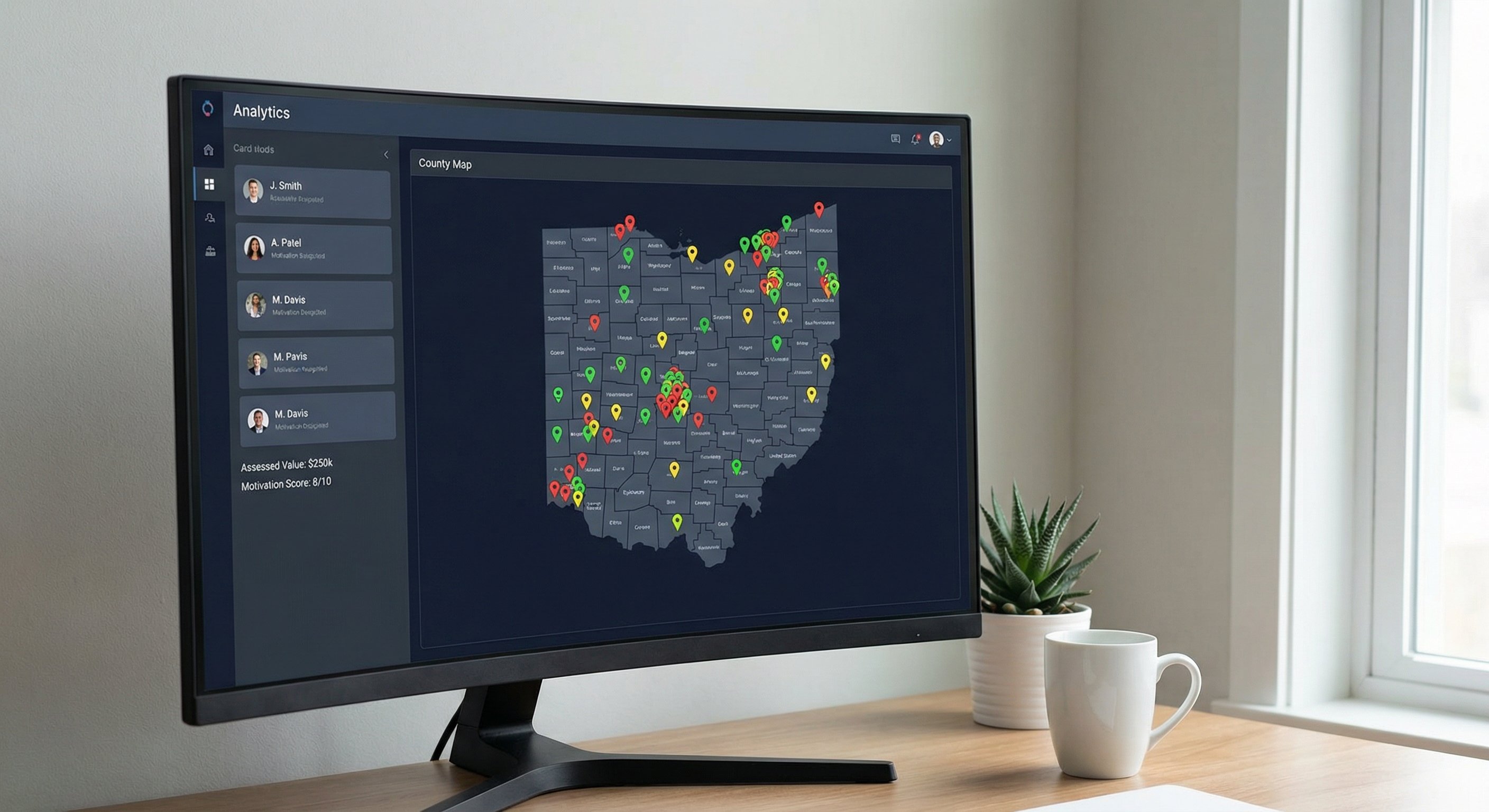
This is exactly the gap that a motivation scoring system fills. When bankruptcy signals are cross-referenced against tax delinquency records, code violation filings, lis pendens notices, and pre-foreclosure auction dates, the result is a ranked list where the top entries represent homeowners who are distressed on multiple verified dimensions simultaneously. The bankruptcy says they are legally obligated to restructure their debt. The tax delinquency says they have not paid property taxes in 12-24 months. The code violation says the city has documented property neglect. Taken together, these signals identify homeowners who are not just motivated to sell, but whose circumstances make a negotiated purchase the most rational path forward for everyone involved.

The Four-County Investor Map: Where the Best Ohio Bankruptcy Leads Concentrate
Ohio's distressed property market is not evenly distributed across the state. The highest-density opportunities concentrate in five metropolitan areas where population decline, older housing stock, and economic restructuring have created consistent distress signals for decades.
Cuyahoga County (Cleveland) has one of the highest concentrations of tax delinquent properties in the United States. Active Chapter 13 filings in the Northern District of Ohio frequently involve Cleveland-area homes with assessed values between $80,000 and $180,000. The combination of bankruptcy and tax delinquency is particularly strong in Cleveland's East Side neighborhoods, where sheriff's sale prices at the Cuyahoga County Sheriff's Auction regularly clear at 40-60 cents on the assessed value.
Franklin County (Columbus) is Ohio's fastest-growing metro area, but it carries significant legacy distressed inventory from the 2008 foreclosure wave that hit Columbus harder than most Midwestern cities realized. New Chapter 13 filings in the Southern District of Ohio from Franklin County filers frequently involve rental properties and investment condos that the owner can no longer service.
Hamilton County (Cincinnati) combines strong urban poverty distress signals with a surprising amount of mid-market investor activity. The city's urban core has significant code violation density, and the combination of code violations with bankruptcy filings creates motivated seller scenarios that are more reachable than the Cleveland equivalents because the homeowners are less likely to be working with attorneys who advise against direct investor contact.
Montgomery County (Dayton) and Lucas County (Toledo) round out the highest-signal-density areas. Both have experienced significant population decline, high vacant property rates, and consistent Chapter 13 filing volumes. Properties in Dayton and Toledo can sometimes be sourced at sheriff's sale for under $40,000, creating significant equity spread opportunities even after a full rehab.
How to Combine Bankruptcy Signals With Other Distress Types
Signal stacking is not a generic concept in this context. It is a specific practice that changes lead quality in measurable ways. A homeowner who is 90 days behind on property taxes and has filed Chapter 13 in the past 18 months is a fundamentally different lead than one who filed Chapter 13 five years ago and has since reorganized successfully.
The most productive stacking combinations for Ohio bankruptcy leads include:
Bankruptcy plus tax delinquency. Ohio counties sell tax liens at annual or semi-annual auctions. Properties with a bankruptcy filing in process AND a tax delinquent status are almost always in the middle of a multi-party negotiation that an investor can resolve by purchasing at or below the tax lien payoff amount.
Bankruptcy plus code violations. Ohio municipalities with strong code enforcement (Cleveland, Cincinnati, Dayton, Youngstown) document property violations through the county municipal court. Properties with open code violations and an active Chapter 13 are cases where the homeowner is dealing with the city, the lender, and the bankruptcy trustee simultaneously. A clean cash offer resolves all three parties at once, which is a powerful motivation lever.
Bankruptcy plus lis pendens. When a lender files a notice of pending litigation (lis pendens) after a mortgage default, and the homeowner responds with a Chapter 13 filing, the property is in active pre-foreclosure litigation that the bankruptcy automatically stays. Investors who monitor new Chapter 13 filings and cross-reference them against lis pendens filings in the county recorder's office can identify properties that will hit the sheriff's sale calendar the moment the bankruptcy case closes or is dismissed.
What to Do With Bankruptcy Leads Once You Have Them
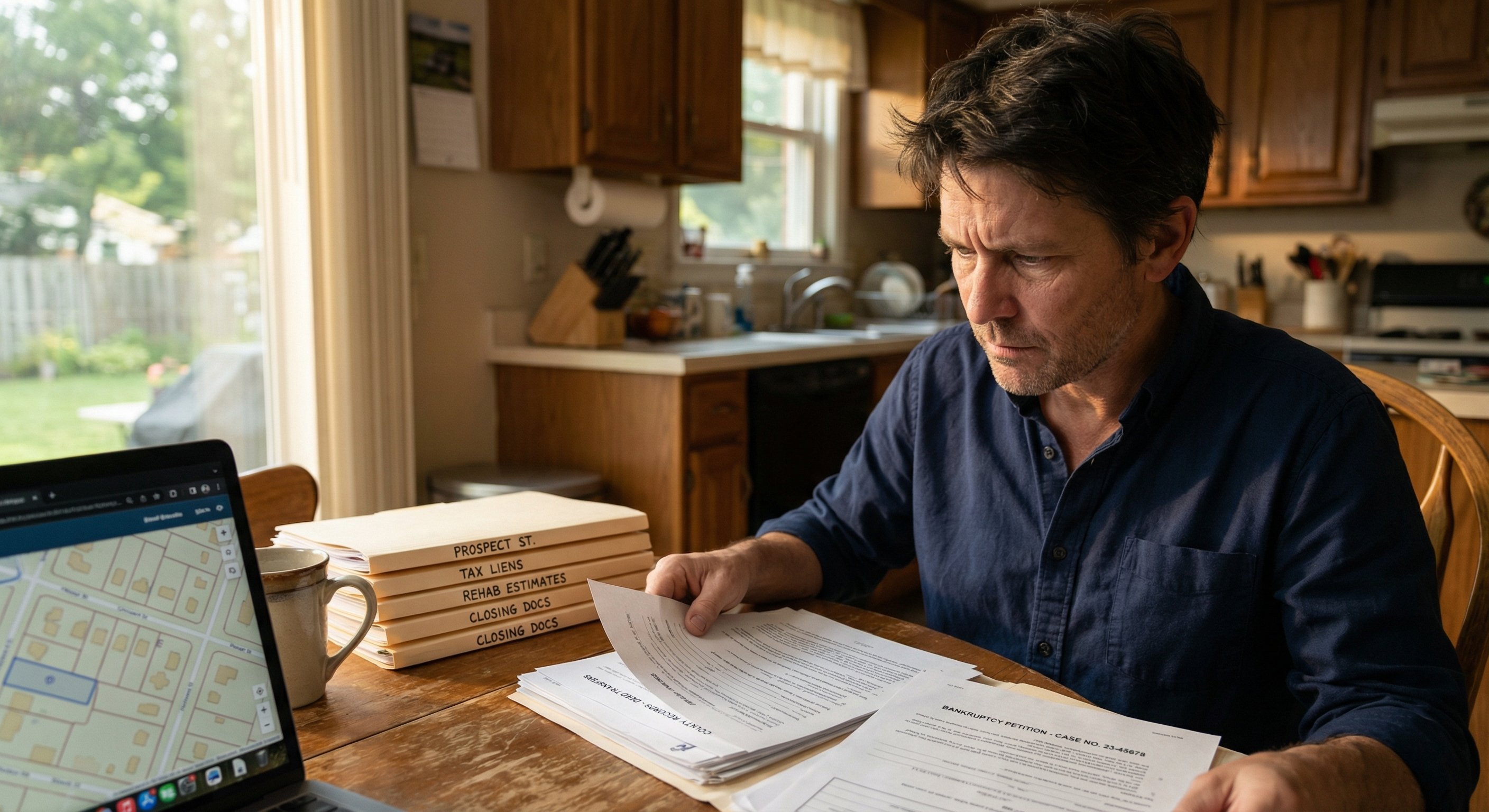
Outreach to bankruptcy leads requires a calibrated approach that respects the federal court process while being direct about the investment opportunity. The optimal first contact is a direct mail piece sent to the property address, not the bankruptcy attorney's office. The content should lead with the specific situation: "We purchase properties in situations like yours, including properties in bankruptcy. We can work with your attorney if needed."
This framing demonstrates familiarity with the bankruptcy process and reduces homeowner suspicion. It offers a solution rather than requesting sensitive financial information.
For investors working Ohio bankruptcy leads at scale, the most effective workflow involves three steps: first, pull new Chapter 13 filings from the Southern and Northern District of Ohio PACER docket summaries every week. Second, cross-reference the debtor name and address against county auditor property records to confirm real property ownership. Third, run the top candidates through a skip trace to get a direct cell phone number, then conduct a brief qualification call focused on the property condition and timeline rather than the bankruptcy specifics.
The homeowners who answer and engage are almost always in one of two situations. Either the Chapter 13 plan is experiencing a payment shock (interest rate adjustment on an adjustable rate mortgage included in the plan, or a payment increase at the 3-year mark), or the household income has changed again since filing and the plan is no longer workable. In both cases, a clean cash offer at a reasonable discount resolves the situation for everyone.
Stop building lists from a single signal source. Bankruptcy leads Ohio combined with tax delinquency, code violations, and pre-foreclosure filings create a motivation density that no single-source list can match. See all bankruptcy distress signals across Ohio counties scored by urgency at distressiq.ai and start qualifying leads in the same session you browse.
Ohio-Specific Rules That Change How Bankruptcy Leads Should Be Worked
Several Ohio legal specifics affect how bankruptcy leads should be approached that investors from other states sometimes miss.
Ohio Revised Code Section 2329.17 governs sheriff's sale procedures. The redemption period for residential properties in Ohio runs 90 days after the sheriff's sale confirmation. This means an investor who purchases at sheriff's sale does not receive title immediately. The redemption period allows the foreclosed borrower or any lienholder to redeem the property by paying the full sale price plus costs. Investors who buy at sheriff's sale need to factor this 90-day period into their timeline and holding costs.
Ohio is also a recourse state for deficiency judgments. After a foreclosure sale, if the sale price does not cover the full mortgage balance, the lender can pursue the borrower personally for the deficiency. Homeowners in Chapter 13 who lose properties at sheriff's sale are therefore highly motivated to find a private sale that nets them enough to pay off the mortgage and avoid a deficiency judgment. This motivation creates negotiating room that a straightforward foreclosure auction does not.
Frequently Asked Questions
How do I find bankruptcy leads in Ohio for real estate investing?
Bankruptcy leads Ohio can be found through the federal PACER system (pacer.uscourts.gov) by searching new Chapter 13 filings in the Southern and Northern Districts of Ohio. Cross-reference the debtor name and property address against the county auditor website to confirm real property ownership. Platforms that aggregate county-direct data and overlay bankruptcy filings with other distress signals rank these leads by motivation, saving the manual research step.
What is the difference between Chapter 13 and Chapter 7 for real estate investors in Ohio?
Chapter 13 involves a 3-5 year repayment plan and the homeowner retains the property during the plan period. Chapter 7 is a liquidation case where non-exempt assets are sold to pay creditors. For real estate investors, Chapter 13 filers are more likely to be actively looking for a negotiated sale because they are in a multi-year court-supervised process. Chapter 7 filers are more likely to have already lost the property or to be surrendering it as part of the case.
When is the best time to contact a bankruptcy lead in Ohio?
The 60-90 day window after a Chapter 13 filing is filed typically produces the highest contact rates and engagement. By this point, the homeowner has received their plan approval order and is beginning to confront whether the plan is sustainable. Investors who reach out in this window catch the homeowner while they are still actively problem-solving rather than in crisis management mode.
Does bankruptcy stop foreclosure in Ohio?
Yes, the automatic stay under 11 U.S.C. Section 362 halts all collection activity, including foreclosure proceedings, the moment a bankruptcy petition is filed. In Ohio's judicial foreclosure process, this means the sheriff's sale is paused for the duration of the bankruptcy case. When the case closes, the lender can move to vacate the stay and resume foreclosure. The automatic stay is a temporary protection, which is why it creates the specific investor opportunity window.
Can you buy a property that is in Chapter 13 bankruptcy in Ohio?
Yes, properties in Chapter 13 can be purchased, but the transaction requires court approval. The sale is typically structured as a sale free and clear of liens, with proceeds distributed according to the Chapter 13 plan priority waterfall. Investors working with a title company experienced in bankruptcy sales in Ohio can navigate this process, and it often results in below-market acquisition prices because fewer buyers understand the mechanism.
The data behind this article
DistressIQ Monitors These Signals in Real Time
Pre-Foreclosures
NOD + NTS filings
Tax Delinquency
County treasurer records
Code Violations
Municipal inspection filings
Probate Filings
Superior Court records
Every lead is scored 0–100 for seller motivation based on signal type, duration, severity, and stacking. Nationwide coverage — every US county, updated daily.
Ready to find deals in your market?
See Live Distress Signals in Ohio
Stop calling dead leads. Every lead in DistressIQ is scored 0–100 for seller motivation, with verified contact info included. Browse the free tier to see what's active in your market right now.
Browse Free Leads — No Credit Card