Bank Owned Homes: What Every Real Estate Investor Needs to Know About REO Properties in 2026
Bank Owned Homes: What Every Real Estate Investor Needs to Know About REO Properties in 2026
TL;DR: Bank owned homes are properties that failed to sell at foreclosure auction and were taken back by the lender. They are listed at roughly market value but often require significant repairs and carry unique title risks. DistressIQ tracks pre-foreclosure, auction, and REO-stage properties across 3,200+ counties, helping investors identify which distressed properties are worth pursuing before they hit bank-owned inventory.
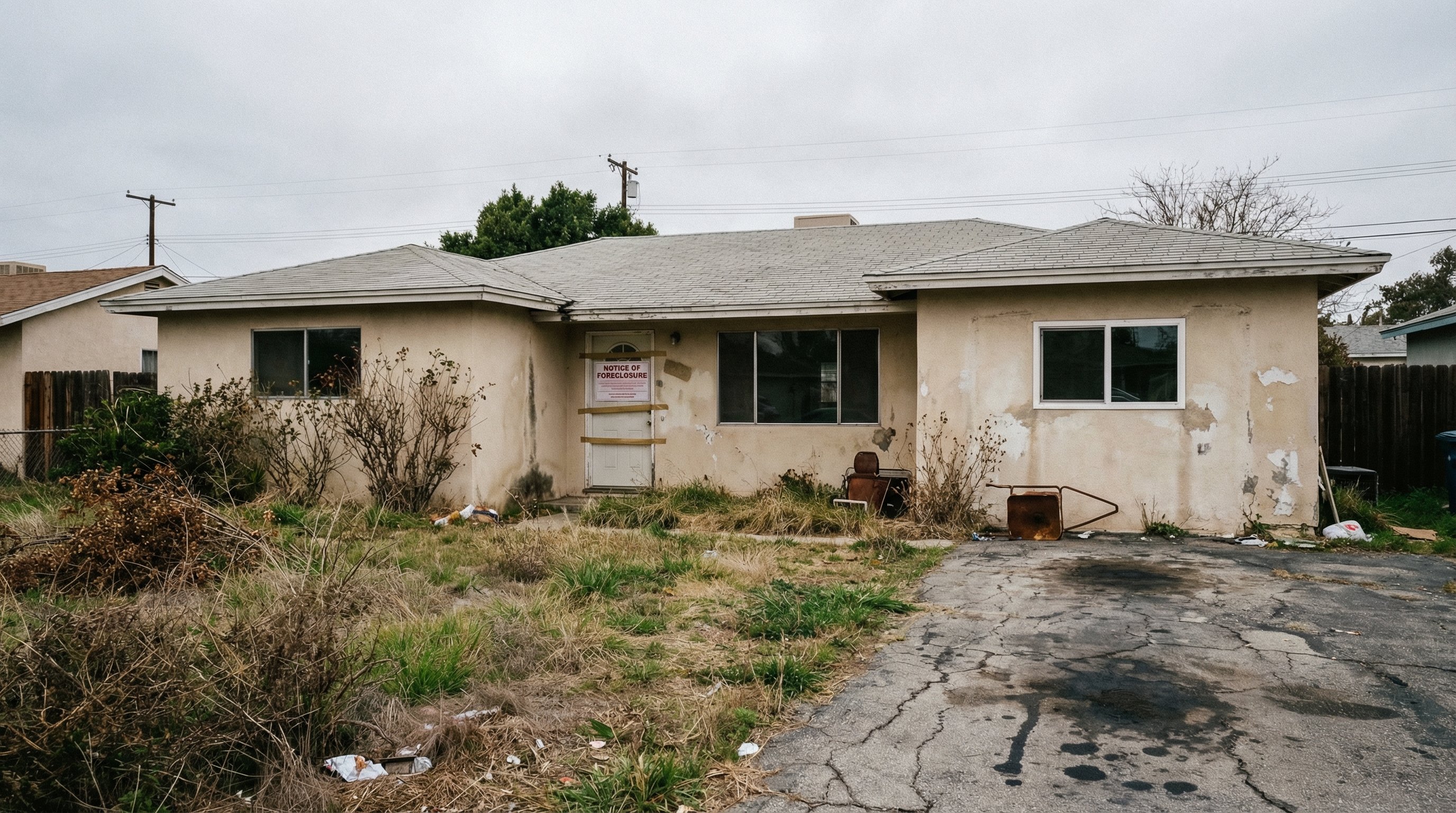
The word "bank owned" shows up in a lot of investor conversations, usually attached to the idea of easy money. Buy a house for 60 cents on the dollar, fix it, flip it for a windfall. The reality is more complicated. Bank owned homes move in their own market with their own rules, and the investors who lose money on REO deals almost always lose it for the same reasons.
What Exactly Is a Bank Owned Home
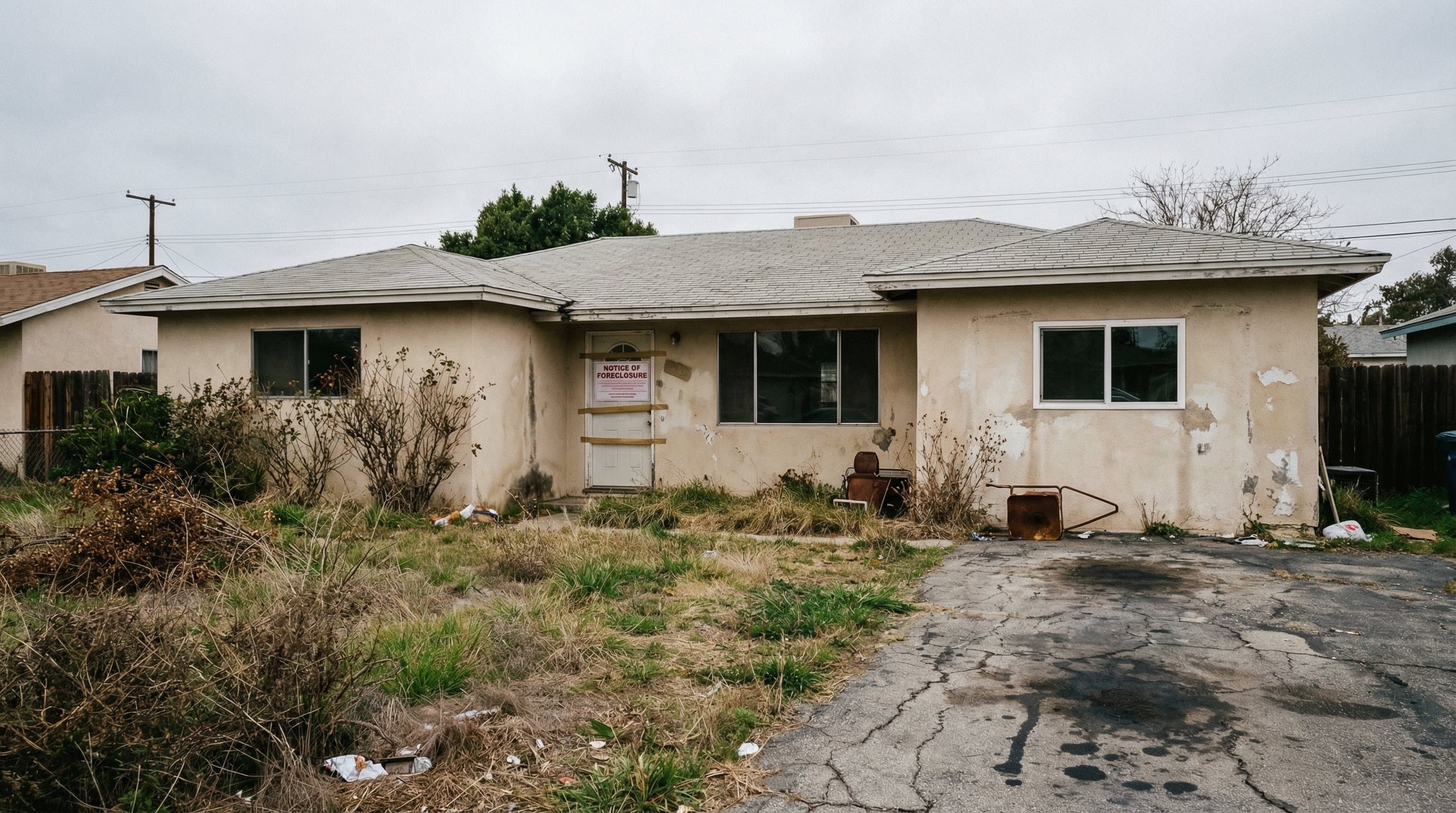
A bank owned home starts as a foreclosure. The borrower stops making payments. The lender initiates foreclosure. The property goes to public auction. If no bidder meets the minimum price, the lender bids the property in and takes title. The property then transitions from real estate owned by a lender to an asset listed for sale on the open market.
This stage matters because it changes incentives. At auction, a third party might buy the property for any number of reasons including speculation. When the bank owns it, the lender's goal shifts to recovering as much of the defaulted loan balance as possible. That changes pricing, disclosure behavior, and negotiation dynamics.
The formal term is REO, which stands for Real Estate Owned. Investors use REO and bank owned interchangeably, but REO technically refers to the accounting status of the asset on the lender's books, not the condition or history of the property itself.
How Banks Actually Price REO Properties
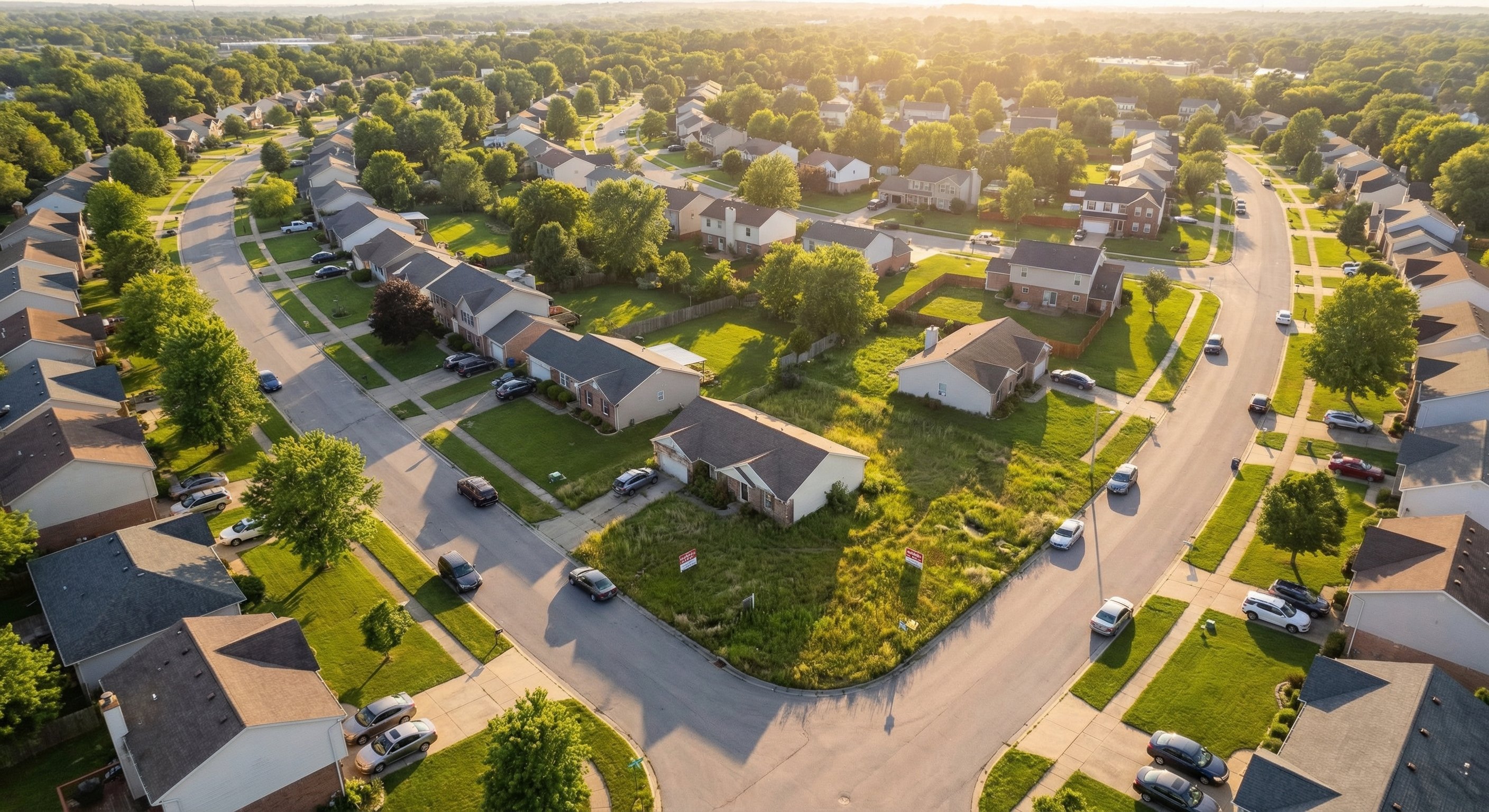
This is where most retail buyers and many new investors consistently misjudge the opportunity. Banks price REO properties to sell, but "to sell" does not mean "at a steep discount to market value." Banks typically list REO properties at or near current market value based on comparable sales. The discount investors expect comes from condition issues, not the list price.
Consider the typical pricing logic. A lender foreclosing on a $300,000 mortgage might have $30,000 in accumulated arrearages, legal fees, and maintenance costs by the time the property reaches REO status. According to ATTOM Data's 2025 foreclosure market report, monthly foreclosure filings have returned to pre-pandemic levels across most US metros. The lender needs to recover those costs. The property goes on the market at a price calibrated to local comps, with the understanding that condition issues will drive actual offers below list price.
The gap between list price and final sale price is where investor profits are made, and where the risks live. A property listed at $285,000 that sells for $255,000 might seem like a 10% discount. But if it requires $40,000 in deferred maintenance, the effective cost basis is $295,000, and the discount disappears before the investor breaks even.
DistressIQ monitors REO-stage signals across its nationwide coverage to help investors track when properties transition from auction to bank-owned inventory, often before they appear on MLS platforms.
The Hidden Costs That Destroy REO Profit Margins
Experienced investors who lose money on bank owned homes almost always cite one or more of the following hidden costs. Understanding them before making an offer is not optional.
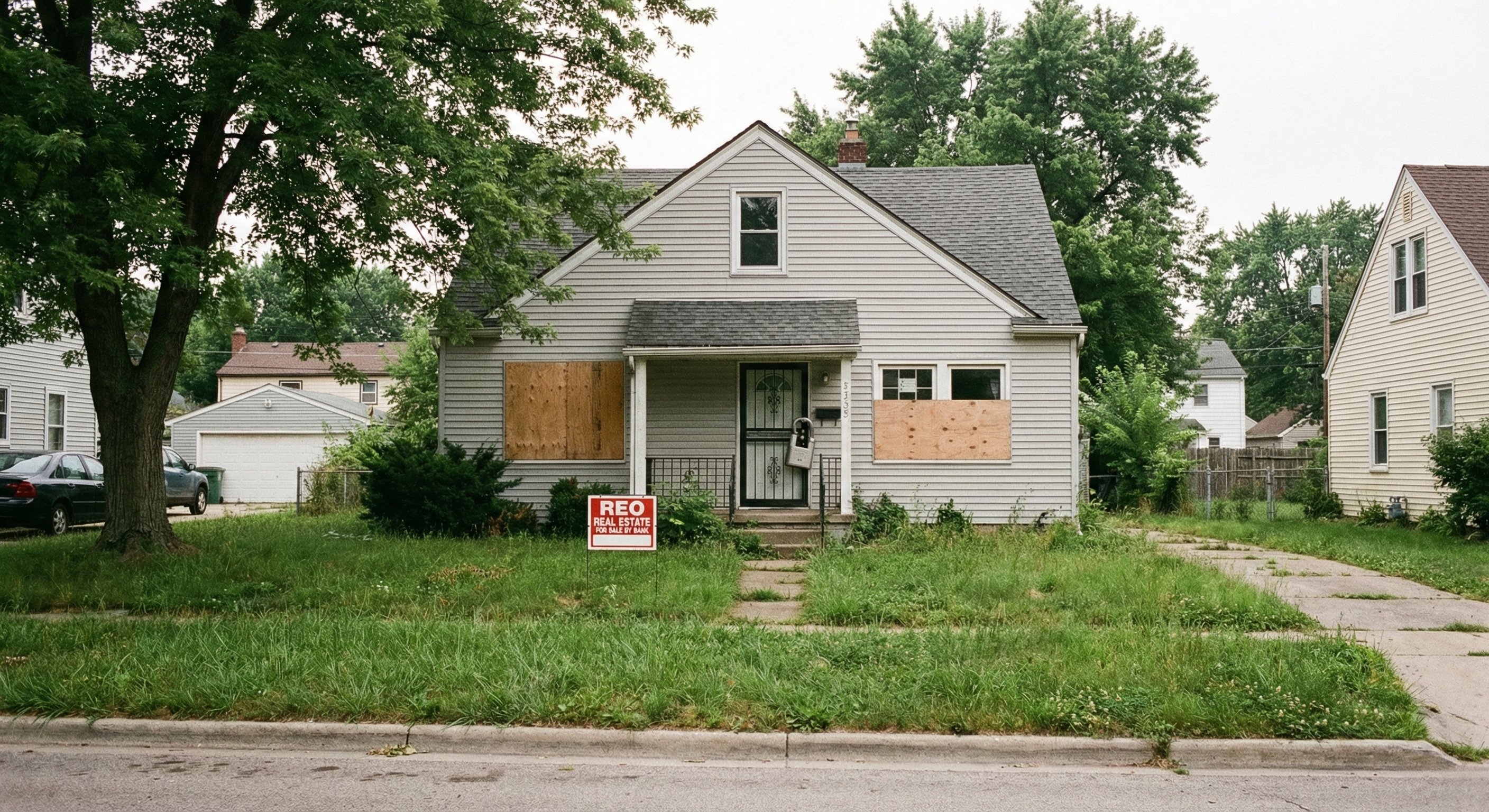
Repairs and deferred maintenance. Lenders are not in the property management business. After foreclosure, the property sits vacant for months. Deferred maintenance accumulates. Water damage, HVAC failures, vandalism, and neglect compound. Lenders sell REO properties as-is with no disclosure obligations beyond what state law requires. In most states, this means the buyer receives no warranty and no repair credits after closing.
Title complications. Foreclosure creates cloud-on-title situations that sometimes take months to resolve. Junior liens, mechanic's liens placed after the foreclosure filing, and state homestead exemptions can create complications that do not surface until the title search. Investors who buy REO properties without a thorough title review sometimes discover after closing that they acquired the property subject to debts they did not anticipate.
Holding costs. If a property takes six months to renovate and three months to sell, the carrying costs matter. In 2026, financing costs, property taxes, insurance, and HOA fees add up faster than most investors budget. A property purchased at a reasonable price can turn unprofitable when holding costs are properly accounted for.

Free Weekly Alerts
See What's Distressed in Your Market
Get free weekly alerts — new distressed properties, motivation scores, and hot neighborhoods in your area. Addresses and contact info available inside DistressIQ.
Free forever · No credit card · Unsubscribe anytime
The REO Purchase Process Is Not Like a Normal Home Sale
Most investors approach REO purchases assuming the transaction works like buying a home from a traditional seller. It does not.
When you submit an offer on an REO property, the counterparty is a bank or hedge fund that owns the property as an investment asset. Decision-making runs through committees and asset managers. Offer response times vary from 24 hours to two weeks. Banks typically counter once or reject outright, often with a deadline attached designed to push the buyer toward quick acceptance.
Inspection periods and repair requests are handled differently. Most REO contracts specify that the property is sold as-is and the buyer waives the right to request repairs or credits after inspection. The inspection confirms the buyer's understanding of the property condition, not to renegotiate the price.
Financing contingencies are viewed unfavorably by REO sellers. Cash offers and offers with proof of funds attached consistently outperform financed offers in REO transactions. Investors who need mortgage financing face longer response times and higher rejection rates.

How DistressIQ Helps Investors Track REO Opportunities Before They Appear on MLS
By the time an REO listing appears on a major portal, dozens of other investors have already found it. DistressIQ monitors distress signal data across 3,200+ counties, tracking properties at multiple stages of the foreclosure-to-REO pipeline, including pre-foreclosure filings and auction results. The window between auction failure and REO listing is when an investor with the right data can make direct contact with the lender's asset management department before the property is formally listed. Pre-foreclosure stage leads, auction results, and REO transition signals are all accessible through the platform without paying for a lead detail view. Only owner contact information and skip-traced phone numbers require a paid action.
What Experienced Investors Prioritize in REO Deals
Not all bank owned homes are created equal. Experienced REO investors apply a consistent framework before making any offer.
Location fundamentals. REO properties in appreciating markets with strong rental demand outperform REO properties in declining markets, even when the headline discount looks smaller. Investors prioritize markets with positive job growth, population inflows, and limited new construction supply.
Repair scope and cost certainty. Get contractor estimates before making offers, not after. Foundation problems, plumbing in poor condition, and outdated electrical systems can turn a profitable flip into a loss. Budgeting 15% to 20% above the initial estimate is standard practice.
The price-to-rent ratio. For rental buyers, the math starts with whether the monthly rental income covers the mortgage, taxes, insurance, and maintenance reserve. In 2026, interest rates have compressed cap rates in many markets. Run the rental analysis before making an offer.
How REO Compares to Other Distressed Property Strategies
Pre-foreclosure properties offer a different value proposition. In the pre-foreclosure stage, the owner still holds title and is motivated to avoid foreclosure. That creates an opportunity to purchase at a discount through direct negotiation with the homeowner, without competing in the auction or REO marketplace. The tradeoff is more direct outreach, more negotiation skill, and longer deal timelines.
Courthouse auction purchases can offer deeper discounts, but carry substantially higher risks. Auction purchases are cash-only, as-is, with no inspection opportunity and no financing contingency. Many states require immediate payment after the auction. The capital requirements and risk profile are more stringent than REO purchases.
Short sales require the lender to approve a sale price below the outstanding mortgage balance. The approval timeline can run 60 to 120 days with no guarantee of approval even after a contract is signed. DistressIQ covers all three stages, letting investors choose the strategy that fits their capital, timeline, and risk tolerance.
What to Watch Out for in the 2026 REO Market
Large institutional investors have been active buyers of REO inventory since approximately 2012, and their presence has not diminished. HUD's REO property database lists bank-owned properties across the country, and institutional buyers account for a disproportionate share of purchases at any given time. Hedge funds and private equity firms with dedicated REO acquisition teams compete directly with individual investors for bank owned properties in major metros. They have cash, volume relationships with lenders, and dedicated asset managers who submit offers on every REO listing in their target markets. Individual investors need to be faster, more selective, and more willing to pursue off-market opportunities.
Renovation costs also require more conservative budgeting than in prior years. Labor shortages persist across most US metros, and materials costs remain elevated relative to 2020 levels. Add 20% to any contractor estimate before making an REO offer.
Frequently Asked Questions
Q: What is the difference between a foreclosure and a bank owned home?
A foreclosure is the legal process a lender uses to take possession of a property from a borrower who has defaulted on the mortgage. A bank owned home, also called REO or Real Estate Owned, is a property that completed the foreclosure process and is now owned by the lender. Not all foreclosures become bank owned homes. Many sell at auction to third-party buyers before the lender takes title.
Q: Are bank owned homes always cheaper than market value?
Bank owned homes are typically listed at or near current market value based on comparable sales, but often sell below list price because of condition issues and as-is sale terms. The discount comes from repair costs, not from below-market pricing. Properties in poor condition may appear deeply discounted relative to market comps, but after factoring in renovation reserves, the effective cost basis often approaches or exceeds market value.
Q: Can I finance a bank owned home purchase?
Yes, but cash offers perform better in REO transactions. If you use financing, your offer will be evaluated alongside cash offers, which creates a disadvantage. Some lenders offer specialized REO financing products, but FHA and VA financing has specific requirements for REO properties that can complicate or delay closing.
Q: What does as-is mean when buying a bank owned home?
As-is means the buyer is purchasing the property in its current condition and the seller is not obligated to make repairs or provide credits. In most REO contracts, the buyer waives the right to request repairs or credits after the inspection period. It does not eliminate the buyer's obligation to perform due diligence before closing.
Q: How do I find bank owned homes before they hit the market?
DistressIQ tracks distress signals across 3,200+ counties, including properties in pre-foreclosure, at auction, and in the REO pipeline. Investors can access this data before properties appear on MLS listing portals. Direct outreach to lender asset management departments during the pre-listing window occasionally results in off-market REO purchases at better pricing.
Q: What are the biggest risks of buying bank owned homes?
Deferred maintenance that exceeds initial estimates, title complications that surface after closing, extended holding periods, and competition from institutional buyers who have faster closing capability and all-cash offers. The best protection is doing the full due diligence workflow before making an offer.
The Bottom Line
Bank owned homes represent a legitimate segment of the distressed property market with real profit potential for investors who approach them with accurate expectations. The opportunity is not a shortcut. Properties are priced at or near market value, they require accurate repair budgeting, and the purchase process rewards cash buyers and experienced investors who understand how institutional lenders operate.
The investors who consistently profit from REO deals are the ones who do the math before they fall in love with a property. They get contractor estimates upfront, account for holding costs and financing terms, verify title before closing, and use data platforms like DistressIQ to monitor the distressed property pipeline across their target markets.
Browse distressed property signals in your target market on DistressIQ. The platform is free to browse. Whether you are looking at pre-foreclosure leads, auction results, or REO-stage properties, the data is there to make a more informed decision before you spend money on a deal that does not pencil out.
The data behind this article
DistressIQ Monitors These Signals in Real Time
Pre-Foreclosures
NOD + NTS filings
Tax Delinquency
County treasurer records
Code Violations
Municipal inspection filings
Probate Filings
Superior Court records
Every lead is scored 0–100 for seller motivation based on signal type, duration, severity, and stacking. Nationwide coverage — every US county, updated daily.
Ready to find deals in your market?
See Live Distress Signals in Your County
Stop calling dead leads. Every lead in DistressIQ is scored 0–100 for seller motivation, with verified contact info included. Browse the free tier to see what's active in your market right now.
Browse Free Leads — No Credit Card