Absentee Owner List Pennsylvania: Where Out-of-State Landlords Are Selling in 2026

Absentee Owner List Pennsylvania: Where Out-of-State Landlords Are Selling in 2026
TL;DR: Pennsylvania has one of the oldest housing stocks in the country and a landlord population concentrated in Philadelphia and Allegheny County where nearly half of all households rent. Out-of-state owners holding aging properties face rising maintenance costs, complex local tax systems, and the state's judicial foreclosure timeline, all of which create sell pressure. The most productive absentee owner leads in Pennsylvania come from matching tax mailing address discrepancies against properties with stacked distress signals like tax delinquency, code violations, or pre-foreclosure filings. Platforms that cross-reference these signals at the county level deliver higher conversion rates than generic owner-occupancy lists.

Out-of-state landlords who bought Philadelphia duplexes and row homes between 2010 and 2018 are now staring at roof replacements, plumbing overhauls, and property tax reassessments they never budgeted for. The ones who live in New Jersey, New York, or Maryland are the easiest to reach, and the most likely to answer the phone when the call starts with a reference to specific deferred maintenance on their property.
An absentee owner list in Pennsylvania works differently than in Sun Belt states where rental properties are newer and landlord turnover is lower. The age of the housing stock, county-by-county tax variation, and the density of small landlords in legacy industrial cities all change the math.
Why Pennsylvania Has Unusually High Absentee Owner Inventory
Pennsylvania ranks among the top five states nationally for median age of housing stock. In Philadelphia, the median year built is 1949. In Allegheny County, it is 1958. Older properties generate more maintenance emergencies: a landlord who bought a Philadelphia row home in 2015 for $75,000 and rented it for $900 per month may have covered their mortgage, but a $12,000 plumbing re-pipe or a $9,000 roof was probably not in the budget.
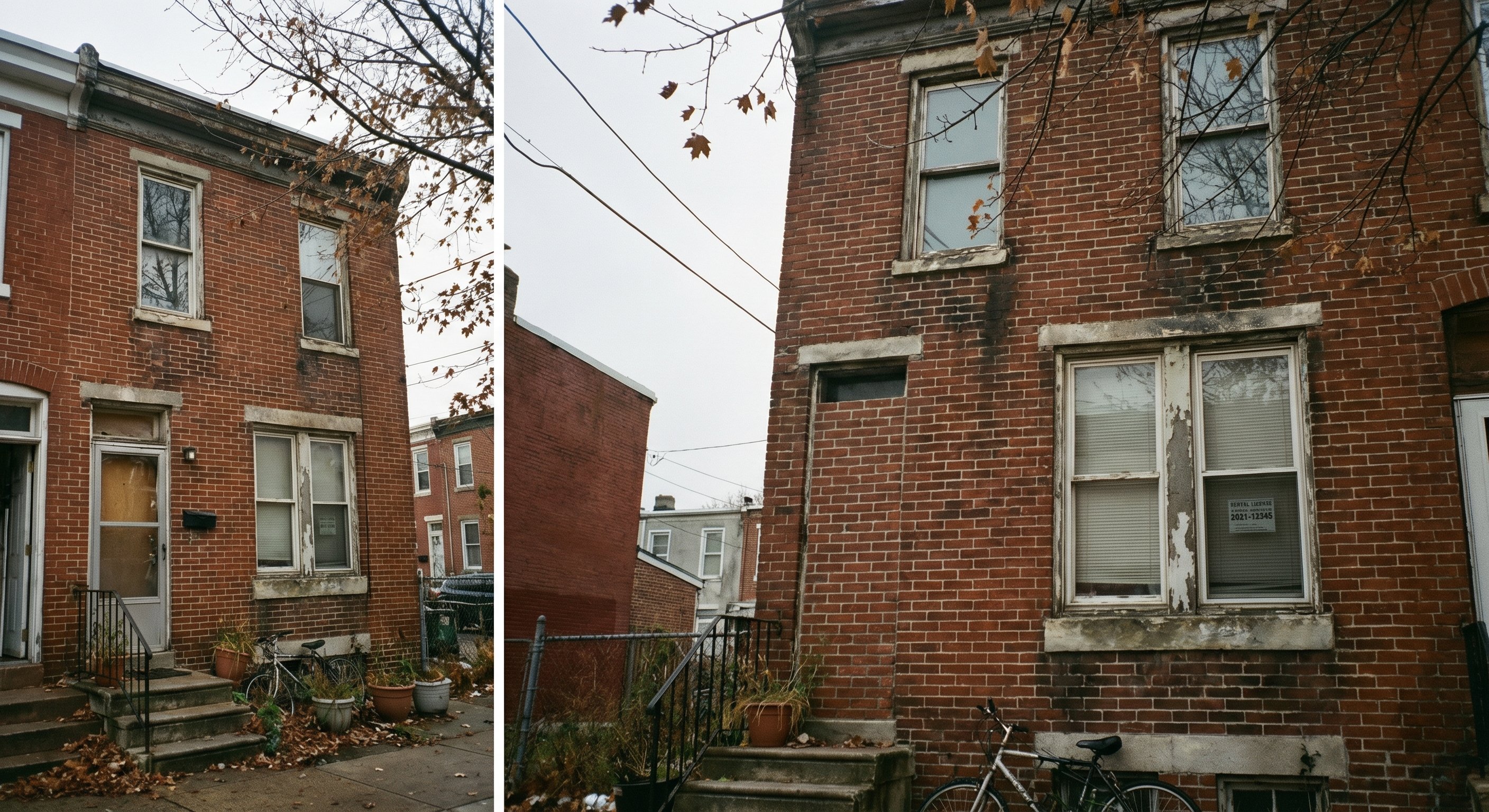
Pennsylvania has no statewide property tax cap. Each of the 67 counties sets its own millage rates. Philadelphia's effective rate hovers around 1.4%, while some rural counties sit below 1%. A reassessment that doubles the tax bill on a low-margin rental can push an absentee-owned asset from break-even to negative cash flow in a single year.
Where to Focus: The Counties That Matter Most
Not every Pennsylvania county produces equal results for absentee owner outreach. The highest-density areas for out-of-state landlords cluster around the state's major population centers and near its borders.
Philadelphia County. Nearly 48% of households rent, and a substantial share of rental properties are owned by investors living outside the state. Zip codes 19124 (Frankford), 19134 (Kensington), 19140 (North Philadelphia), and 19143 (West Philadelphia) have high concentrations of absentee owners combined with older housing stock and frequent tax delinquency.
Allegheny County (Pittsburgh). The second-largest rental market. Neighborhoods like Homewood, Wilkinsburg, and McKees Rocks have aging housing and owners who moved out of state after the steel industry decline. Some inherited properties they have never visited.
Delaware and Montgomery Counties. Suburban counties with growing rental markets. Properties are in better condition, so these work well for higher-ARV deals.
Lehigh County (Allentown) and Lackawanna County (Scranton). Legacy industrial cities with low entry prices and a growing cohort of New York and New Jersey investors who bought during the pandemic and are now re-evaluating. High mail-response rates.
Dauphin County (Harrisburg). Stable employment base with aging rental inventory near downtown. Owners tend to be regional rather than truly out-of-state.
How Absentee Owner Data Works in Pennsylvania
Pennsylvania's property records are maintained at the county level, with no single statewide database. The standard approach compares the property's situs address against the owner's mailing address on file with the county tax assessor. When the mailing address is in a different state, the property flags as absentee-owned.

Philadelphia and Allegheny County offer online assessment portals, but smaller counties may require in-person visits or Right-to-Know requests. Mailing address data can be stale. Some owners use PO Boxes that appear in-state. Others use LLCs registered in Delaware or Nevada. A raw address-mismatch list produces a high false-positive rate unless cross-referenced against additional signals.
Free Weekly Alerts
See What's Distressed in Your Market
Get free weekly alerts — new distressed properties, motivation scores, and hot neighborhoods in your area. Addresses and contact info available inside DistressIQ.
Free forever · No credit card · Unsubscribe anytime
Why Stacking Signals Matters for Pennsylvania Absentee Leads
Not every absentee owner is motivated to sell. The ones worth calling have a second distress signal stacking up:
- Absentee plus tax delinquency. Out-of-state landlords who have not paid property taxes in two or more years face the Tax Claim Bureau's sale process. The clock is ticking.
- Absentee plus code violations. Philadelphia's L&I department issues thousands of code violations annually. Properties with open violations owned by absentee landlords are prime outreach targets, especially violations involving structural issues or lead paint.
- Absentee plus lis pendens or pre-foreclosure. When a lender files on a property owned by an out-of-state investor, that owner is usually deciding whether to fight or walk away. Early contact improves the odds of a negotiated purchase before sheriff's sale.
DistressIQ stacks these signals automatically, ranking properties by a composite motivation score rather than presenting a raw list of address mismatches. A generic absentee owner list in Philadelphia might contain 40,000 records. Filtered for at least one additional distress signal, it narrows to a few hundred high-probability leads.

Pennsylvania's Tax Sale System and What It Means for Absentee Leads
Pennsylvania uses a two-stage tax sale system.
Upset Sale. The Tax Claim Bureau sells the property subject to all existing liens. The minimum bid covers delinquent taxes plus costs. These attract less competition but carry lien risk.
Judicial Sale (Free and Clear). Properties that do not sell at upset sale are offered at judicial sale, where the court clears all liens. The buyer gets clean title. More competitive, but more desirable.
The window between tax delinquency and upset sale is the sweet spot for absentee owner outreach. An absentee landlord two years behind on taxes is receiving increasingly urgent notices. That is when a direct mail piece or phone call offering a cash purchase actually lands. Pennsylvania does not offer a post-sale redemption period, which removes the uncertainty that investors face in states like Texas or Michigan.
Outreach Strategy for Pennsylvania Absentee Owners
Effective outreach accounts for the psychology of long-distance landlord fatigue. These are investors dealing with a property that became a liability.
Lead with property condition. Reference the age of the roof, the last sale date, the tax assessment increase. This signals the caller actually looked at the property.
Acknowledge the distance. The pitch is simple: managing a property in Philadelphia from three hours away is hard. A local buyer who can close in 30 days solves the problem.
Target spring. Absentee owners with tax delinquency receive their most aggressive notices in March through May, when counties prepare for summer upset sales. Outreach aligned with this window produces the best response.
Use multiple touchpoints. A postcard followed by a phone call within seven days produces response rates three to five times higher than mail alone.
Key Takeaways
- Pennsylvania's aging housing stock and high-renter-density cities make it one of the most productive states for absentee owner lead generation.
- Philadelphia and Allegheny County produce the highest volume, but secondary markets like Allentown and Scranton are emerging with strong response rates.
- Raw address-mismatch lists produce too many false positives. Cross-referencing absentee ownership against tax delinquency, code violations, or lis pendens filings dramatically improves lead quality.
- Pennsylvania's two-stage tax sale system (upset sale then judicial sale) creates a predictable timeline for outreach. Target owners during the pre-sale window.
- The state has no post-sale redemption period, which reduces risk for investors who acquire properties through tax sales.
For investors ready to build a targeted absentee owner list in Pennsylvania, DistressIQ provides county-direct data on distressed properties across all 67 counties, with stacked signal scoring that identifies which absentee-owned properties have additional sell pressure. Browse the map for free at distressiq.ai.
Frequently Asked Questions
Q: What qualifies as an absentee owner in Pennsylvania?
An absentee owner is a property owner whose mailing address on file with the county tax assessor differs from the property's physical location. In Pennsylvania, this typically means the owner lives in another state or another county. Investors targeting absentee owners in Pennsylvania should focus on properties where the owner's mailing address is in a different state, as these owners face the highest management friction and are most likely to sell. Some lists also include in-county address mismatches, but the conversion rate on those is lower because the owner can more easily manage the property themselves.
Q: How do I get an absentee owner list for Philadelphia?
Philadelphia property ownership data is available through the city's Office of Property Assessment. The data includes owner name, mailing address, and property address, which allows investors to identify address mismatches. However, building a productive list requires cross-referencing this data against distress signals like tax delinquency (available through the Department of Revenue), code violations (available through Licenses and Inspections), and lis pendens filings (available through the Court of Common Pleas). Pulling these datasets separately and merging them is time-consuming. Platforms like DistressIQ handle this cross-referencing automatically and rank properties by motivation score.
Q: Why do Pennsylvania absentee owners sell at higher rates than other states?
The primary driver is housing stock age. Pennsylvania has some of the oldest residential properties in the United States, particularly in Philadelphia, Pittsburgh, Scranton, and Erie. Older properties generate higher maintenance costs, and landlords who do not live nearby struggle to manage repairs, tenant issues, and compliance with local housing codes. When maintenance costs spike on top of rising property tax assessments, the economics of holding the property deteriorate. Out-of-state owners who cannot visit the property or oversee repairs are the most likely to accept a below-market offer just to exit the situation cleanly.
Q: Can I buy a tax-delinquent absentee property in Pennsylvania before the tax sale?
Yes, but it requires contacting the owner directly and negotiating a purchase before the county Tax Claim Bureau schedules the property for upset sale. This is one of the most effective strategies in Pennsylvania because the owner is already under pressure from tax delinquency notices, and a cash offer that pays off the tax debt provides a clean exit. The key is timing: once the county publishes the upset sale list, competition increases and the owner's negotiating position weakens. Investors who identify tax-delinquent absentee owners early, before the public listing, have the best shot at a favorable deal.
Q: What are the risks of buying absentee-owned properties in Pennsylvania?
The main risk is deferred maintenance. Properties owned by absentee landlords for years often have hidden structural issues, outdated electrical and plumbing systems, lead paint, and code violations that are not apparent from a drive-by inspection. Pennsylvania's older housing stock amplifies this problem. Investors should budget for a thorough inspection, including lead testing for properties built before 1978, and should factor a 15 to 25 percent contingency into renovation budgets. Title issues can also arise if the property has unresolved liens from tax delinquency or mortgage default, so a full title search is essential before closing.
Q: Does Pennsylvania have a redemption period after a tax sale?
No. Pennsylvania does not offer a post-sale redemption period for properties sold at judicial sale. Once the court confirms the sale, the former owner cannot reclaim the property. This is a significant advantage for investors compared to states like Texas, which offers a six-month to two-year redemption window, or Michigan, which offers a full year. The lack of redemption period in Pennsylvania means investors can proceed with renovations or resale immediately after the sale is confirmed, without the uncertainty of a former owner exercising a right of redemption.
Q: How does Allegheny County compare to Philadelphia for absentee owner leads?
Philadelphia produces a higher volume of absentee owner leads due to its larger population and higher percentage of renter households, but Allegheny County offers advantages in deal economics. Property prices in Pittsburgh and surrounding Allegheny County neighborhoods are lower than in Philadelphia, which means lower acquisition costs and potentially higher returns on renovation. Allegheny County also has a significant inventory of inherited properties where heirs live out of state and are highly motivated to sell quickly. Both markets are productive, but they serve different investor profiles: Philadelphia for volume and Allegheny for margin.
Sources: Philadelphia Office of Property Assessment; Pennsylvania Department of Revenue Tax Claim Bureau; U.S. Census Bureau American Community Survey housing characteristics for Pennsylvania.
The data behind this article
DistressIQ Monitors These Signals in Real Time
Pre-Foreclosures
NOD + NTS filings
Tax Delinquency
County treasurer records
Code Violations
Municipal inspection filings
Probate Filings
Superior Court records
Every lead is scored 0–100 for seller motivation based on signal type, duration, severity, and stacking. Nationwide coverage — every US county, updated daily.
Ready to find deals in your market?
See Live Distress Signals in Your County
Stop calling dead leads. Every lead in DistressIQ is scored 0–100 for seller motivation, with verified contact info included. Browse the free tier to see what's active in your market right now.
Browse Free Leads — No Credit Card