Absentee Owner List Arizona: The Snowbird Investor's Edge
Absentee Owner List Arizona: The Snowbird Investor's Edge
TL;DR: Arizona has one of the highest concentrations of absentee-owned properties in the U.S. — driven by snowbirds, out-of-state landlords, and California migration. Maricopa County alone holds hundreds of thousands of non-owner-occupied residential properties. Building an effective absentee owner list in Arizona means filtering by county assessor mailing addresses, layering in distress signals, and targeting owners who are motivated to sell — not just the ones who don't live there.
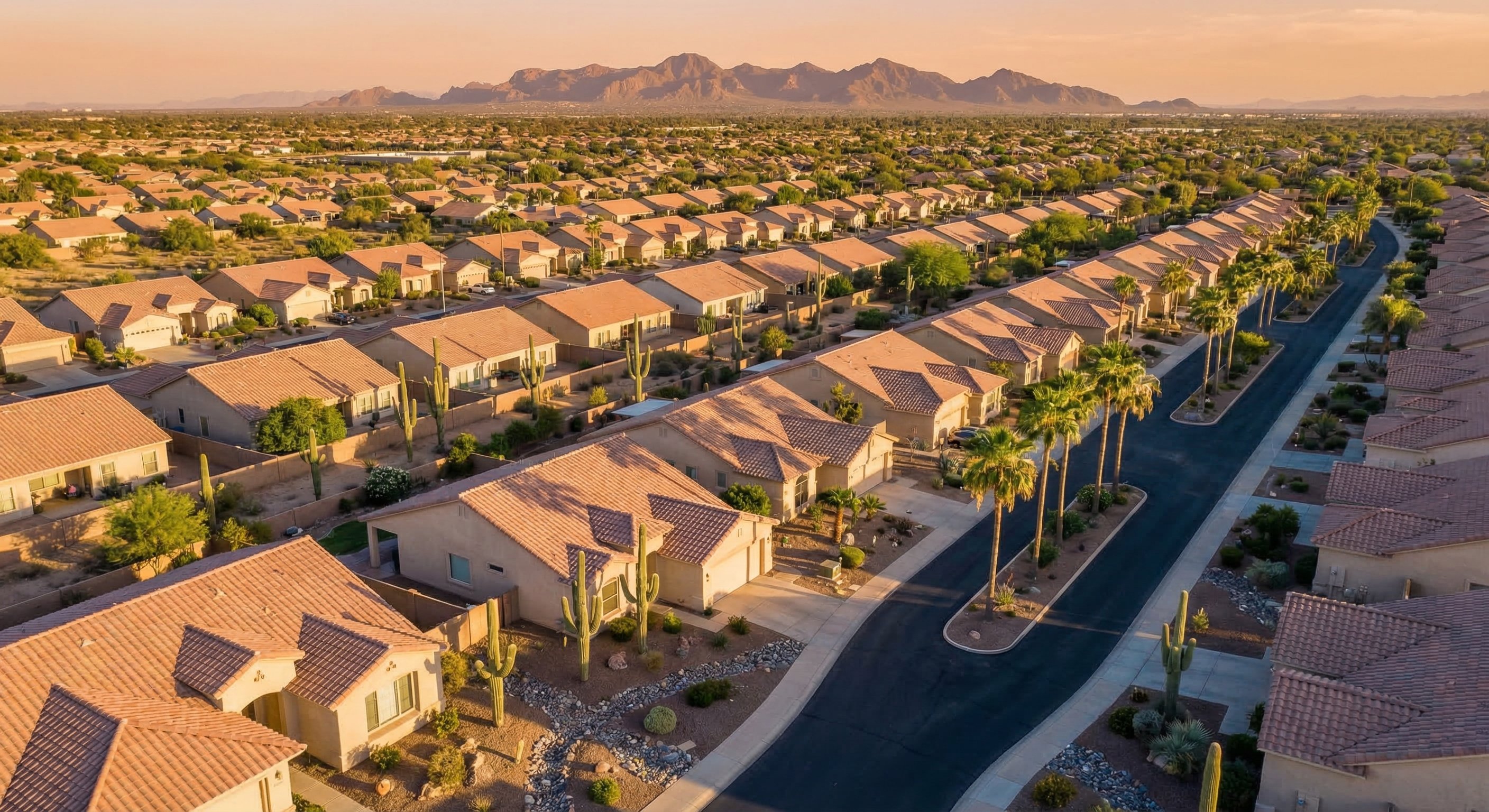
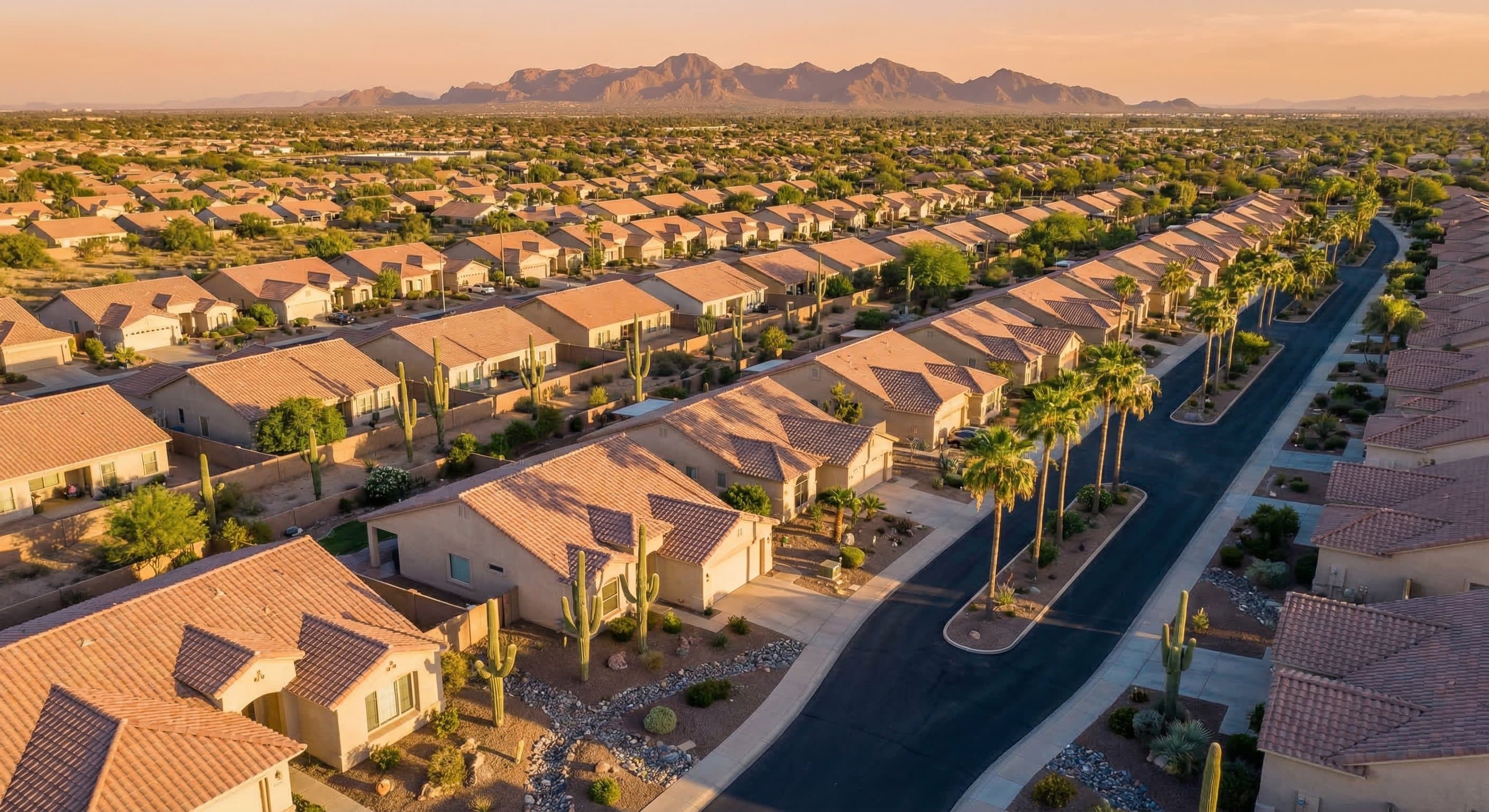
Arizona is one of the most absentee-owner-heavy states in the country — and that's not by accident. The state's warm winters, affordable (by coastal standards) housing prices, and strong rental demand have attracted investors, snowbirds, and out-of-state landlords for decades. Walk through most Phoenix metro neighborhoods and you'll find a surprising number of properties where nobody's home — not because they're abandoned, but because the owner is somewhere in Michigan, Minnesota, or California.
For real estate investors, this concentration creates both an opportunity and a targeting challenge. The opportunity: thousands of owners who don't live near their properties, can't easily manage them, and are often open to a clean cash offer when the timing is right. The challenge: absentee ownership alone doesn't mean motivated seller. The investors who win in this market know which absentee owners are worth pursuing — and why.
What Is an Absentee Owner List in Arizona?
An absentee owner list is a database of property owners whose mailing address differs from the property address. In Arizona, the Maricopa County Assessor's Office and all other county assessors record the owner's mailing address separately from the property situs address — making it possible to identify non-owner-occupied properties directly from public records.
A property can be absentee-owned for different reasons:
- Snowbird investors who spend winters in Arizona but maintain primary residences in colder states
- Out-of-state landlords who bought Arizona rentals during the 2020–2023 investor boom and now manage them remotely
- Inherited properties where heirs live outside the state (often overlaps with probate signals)
- Vacation homes concentrated in Sedona, Flagstaff, and resort-adjacent Scottsdale corridors
- Equity investors who bought for appreciation and are now reassessing with compressed margins
The quality of any absentee owner list depends entirely on what you do with it next. A raw list of every non-owner-occupied property in Maricopa County runs into the hundreds of thousands. You don't want all of them. You want the ones where ownership has become a burden.
Why Arizona Has So Many Absentee Owners
Arizona's absentee ownership rate is structurally elevated compared to most states — and there are compounding reasons for it.
The Snowbird Effect
For decades, retirees from cold northern states have been buying Arizona homes as winter residences. Many of these owners maintain primary residences in Michigan, Illinois, Wisconsin, or Canada. Their Arizona property is secondary — and when health changes, finances shift, or the drive south becomes too difficult, these properties often hit the market through off-market channels. Maricopa County, Pinal County, and Yavapai County all carry significant snowbird ownership concentrations.
According to U.S. Census Bureau American Community Survey data, Arizona consistently ranks in the top five states for seasonal and vacation-home ownership. In Sun City, Sun City West, and similar retirement corridor communities, seasonal and part-time residency rates can exceed 50% of total housing stock.
The California Migration Wave
The 2020–2023 period brought a massive wave of California buyers into Arizona. Some relocated as primary residents; many came as investors deploying capital from coastal appreciation into lower-cost, higher-yield Arizona rentals. These out-of-state California owners now manage Arizona properties remotely — often discovering that property management is harder than anticipated, HOA fees have climbed, and the yield assumptions they underwrote in 2021 haven't held up as rents have stabilized.
The Investor Accumulation Problem
Phoenix and Scottsdale saw institutional and small investor buying at scale during 2020–2022. Many individual investors now hold multiple Arizona properties acquired at peak pricing. As financing costs rose and margins compressed, some are looking to trim positions — particularly on underperforming rentals, deferred-maintenance assets, or properties in submarkets that didn't appreciate as projected.
County-by-County Breakdown: Where to Focus
Arizona has 15 counties. Here's where absentee owner opportunities concentrate by profile type:
Maricopa County (Phoenix Metro) — Highest Volume
By sheer numbers, Maricopa is the most important county for absentee owner leads. It's the most populous county in the state (~4.5M residents) and contains the bulk of investor-purchased residential properties in Arizona. Phoenix, Scottsdale, Tempe, Mesa, Chandler, Glendale, Peoria, and Gilbert all fall within Maricopa.
Absentee concentration is highest in areas with strong rental demand and older housing stock: South Phoenix, West Phoenix, Mesa's inner suburbs (east of downtown), and portions of Glendale near Loop 101. These areas saw heavy absentee investor purchasing during 2020–2022.
Pima County (Tucson) — University + Snowbird Mix
Pima is Arizona's second-largest county. Tucson's investor market is smaller than Phoenix but less saturated with competing investors. The University of Arizona drives a strong rental market with absentee landlord concentration near campus in central Tucson. Retirees represent a significant second cluster in the foothills suburbs (Oro Valley, Marana, Vail).
Pinal County — Phoenix Spillover Growth
Pinal County (Casa Grande, Queen Creek, Apache Junction, San Tan Valley) has seen enormous residential growth as Phoenix sprawl pushed east and south. Many absentee owners here are investors who bought new construction rentals at or near peak pricing. These are high-equity holders with compressed margins — prime candidates for the right conversation.
Yavapai County (Prescott) — Retirement + Second Home
Yavapai County is a retirement and vacation destination with heavy snowbird and second-home ownership. The Prescott and Prescott Valley areas attract buyers from Phoenix who want cooler temperatures, as well as out-of-state retirees. Carrying costs here are lower than Phoenix, but so is liquidity — making motivated absentee sellers somewhat easier to convert when properly identified.
Coconino County (Flagstaff / Sedona) — Vacation Home Profile
Coconino County has a distinct absentee owner profile: vacation homes in Sedona and seasonal rentals near Flagstaff and the Grand Canyon. These owners often carry high acquisition costs against rental income that's limited to shoulder seasons. Motivated sale situations here cluster around divorce, estate settlements, and financial difficulty — the carrying cost of a Sedona vacation rental is real.
Free Weekly Alerts
See What's Distressed in Your Market
Get free weekly alerts — new distressed properties, motivation scores, and hot neighborhoods in your area. Addresses and contact info available inside DistressIQ.
Free forever · No credit card · Unsubscribe anytime
How to Get an Absentee Owner List in Arizona
County Assessor Records (Free, Labor-Intensive)
All Arizona county assessors publish property data including owner mailing addresses. You can technically compile this yourself by downloading parcel data from each county's GIS portal and filtering for properties where the situs address differs from the owner mailing address.
The problem: raw county data is messy. Mailing addresses are inconsistently formatted, many records are outdated (owners move without updating the assessor), and the download format varies county by county. Most investors spend significant time cleaning data before it's usable for outreach.
Data Aggregators (Lists Without Context)
Services that sell pre-filtered absentee owner lists are faster than raw county data but come with trade-offs: they update infrequently, often include stale or duplicate records, and provide no context about which absentee owners are actually motivated to sell. You're paying for volume — not quality.
DistressIQ (Absentee + Signal Stacking)
The fundamental limitation of any raw absentee owner list is that ownership distance doesn't equal motivation. An out-of-state owner with a well-maintained, cash-flowing rental has no particular reason to sell at a discount.
What changes the equation is layering absentee ownership with other distress signals: tax delinquency on the property, active code violations, lis pendens filings, probate activity. When an absentee owner has also fallen behind on property taxes or had a code violation notice filed, the motivation profile shifts dramatically.
DistressIQ tracks absentee ownership alongside 31 distress signal types, updated daily from county assessor and court records across 3,200+ counties nationally. Instead of a flat list of addresses, you get stacked-signal leads — absentee owners who are also tax delinquent, also showing vacancy indicators, or also involved in probate proceedings. See how stacked signals work →
What Makes Arizona Absentee Owners More Motivated to Sell

Not all absentee owners are equal. These are the motivation profiles that produce the highest conversion rates in Arizona:
Tax-Delinquent Absentee Owners
When an out-of-state landlord stops paying Arizona property taxes, it's one of the clearest motivation signals available. Under Arizona law (A.R.S. § 42-18101), unpaid property taxes accrue interest and penalties. After three years, the county can move toward a tax deed action. Owners in this situation are often already financially stretched — and a clean exit at a reasonable price beats losing the asset through a government proceeding.
Absentee Owners with Active Code Violations
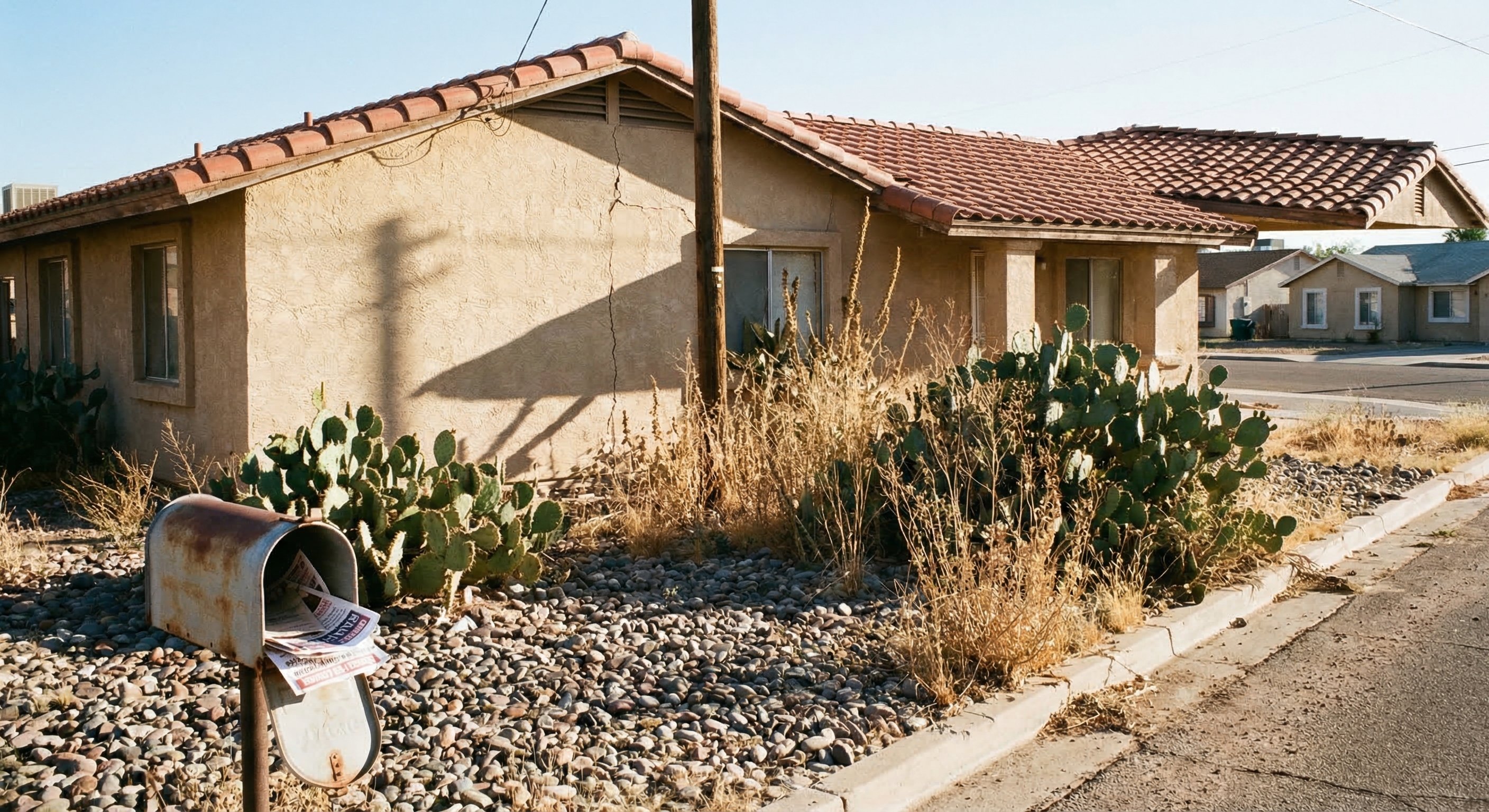
Arizona municipalities actively enforce code violations on neglected and vacant properties. When an absentee owner receives city code violations — overgrown vegetation, unsecured structures, deteriorating exterior conditions, pool safety issues — they face mounting fines and required repairs on a property they rarely visit. This is an excellent stacked signal because it identifies specific properties deteriorating under absentee management.
Probate + Absentee (Inherited Properties)
Arizona heirs who live out-of-state and inherit in-state property often prefer a quick sale. Probate in Arizona runs through Superior Court and typically takes 4–12 months for an informal probate. Heirs managing a Phoenix rental from Michigan or California frequently want to liquidate rather than take on remote management. These leads appear in public court filings and are particularly high-quality when stacked with absentee ownership data. For more, see our guide: How to Find Absentee Owners →
Long-Hold Absentee Owners (10+ Years)
Owners who purchased Arizona properties 10–15+ years ago often carry substantial equity positions. Many are approaching retirement age and consolidating portfolios. They may not be distressed in the traditional sense — but equity-rich, long-hold absentee owners respond well to fair cash offers framed around convenience and a clean, fast close. They're not facing a crisis; they're facing a decision they've been deferring.
How to Work the Arizona Absentee Owner Market
Verify Mailing Addresses Before You Mail
The single biggest ROI killer in absentee owner campaigns is outdated mailing addresses. Mailers go to a forwarding address that stopped forwarding. Calls go to a wrong number. Ensure your list uses current mailing addresses verified against National Change of Address (NCOA) postal databases — not the address recorded with the county two years ago.
Lead with a Specific Property Reference
Generic "I buy houses" mailers get trash-binned at scale. Mention something specific about the property — the address, the county, the property type, the neighborhood. It signals research rather than spray-and-pray. This is especially important in Phoenix, where investor outreach volume is high and owners have learned to tune it out.
Triage by Distress Depth Before You Dial
Don't cold-call every absentee owner on your list. Start with the ones carrying additional distress signals. A tax-delinquent absentee owner in Glendale with a code violation filed last month is dramatically more motivated than a clean absentee rental in North Scottsdale. Work the hottest signals first. See our guide to vacant property leads in Arizona → for signal-stacking applied to the overlap between vacancy and absentee ownership.
Know Arizona's Non-Judicial Foreclosure Timeline
Arizona is a non-judicial (trustee sale) foreclosure state. Once a lender records a Notice of Trustee's Sale, the process can move to auction in as few as 91 days. For absentee owners already in pre-foreclosure, the timeline is tighter than in judicial states — making early identification and outreach more time-sensitive. Lis pendens filed against an absentee-owned property in Arizona means you have a short window.
Founding Member Pricing: DistressIQ is currently in early access. Lock in Starter at $89/mo, Pro at $174/mo, or Elite at $349/mo — 30% off for life, fewer than 50 spots remaining. Absentee owner leads with stacked distress signals across all 15 Arizona counties, updated daily from county assessor and court records. Explore plans →
Key Takeaways
- Arizona absentee ownership is driven by three structural forces: the snowbird economy (seasonal second homes from cold states), the California migration investment wave (2020–2023), and investor accumulation at peak pricing now facing compressed margins
- Maricopa County has the highest volume; Pima County (Tucson) offers a better competition-to-inventory ratio; Coconino and Yavapai counties have higher-value vacation and retirement home profiles
- Raw absentee owner lists aren't enough — layer in tax delinquency, code violations, or probate signals to identify motivated sellers rather than just distant ones
- Arizona's non-judicial foreclosure process is faster than most states — early identification of distressed absentee owners is time-sensitive once a lis pendens is recorded
- Verified mailing addresses are non-negotiable — stale county records kill direct mail ROI; always run NCOA verification before sending a campaign
Frequently Asked Questions
Q: What percentage of Arizona properties are absentee-owned?
According to U.S. Census Bureau American Community Survey data, approximately 20–30% of residential properties in major Arizona metros are non-owner-occupied. This figure includes rental properties, vacation homes, and seasonal residences. In some resort communities — Sedona, the Scottsdale vacation corridor, Sun City — the seasonal and part-time ownership rate can exceed 40% of total housing stock.
Q: Where can I find a free absentee owner list for Arizona?
Each Arizona county assessor publishes parcel data that includes owner mailing addresses. Maricopa County's Assessor's Office offers parcel data downloads (typically for a nominal fee), and most counties have GIS data portals. The raw data requires significant cleaning and cross-referencing before it's usable as a mailing list. Most active investors use a paid, pre-cleaned data service to save time.
Q: How is an absentee owner different from a vacant property owner?
Not all absentee owners have vacant properties. An absentee owner may have an active tenant — they simply don't live at the property address. A vacant property is unoccupied (no owner, no tenant). There's meaningful overlap: neglected absentee properties often trend toward vacancy over time. But they're distinct signals with different outreach approaches.
Q: What Arizona counties have the best absentee owner lead density for investors?
Maricopa County has the highest absolute volume by far. Pima County (Tucson) offers the best value-to-competition ratio — substantial inventory with less investor saturation than Phoenix. Pinal County is growing rapidly as a Phoenix spillover market with a strong investor-landlord absentee profile. Yavapai and Coconino counties have higher-value absentee owners (snowbirds, vacation homes) but lower volume.
Q: How often do absentee owner lists in Arizona need to be updated?
At minimum, quarterly — monthly is better for active campaigns. Arizona sees significant property transfers, address changes, and new tax delinquency records on a rolling basis. An absentee owner list from six months ago may carry 10–15% outdated records due to sales, refinances, and mailing address changes. DistressIQ pulls from county assessor and court records daily.
Q: What's the best signal combination to stack with absentee ownership in Arizona?
Start with absentee ownership as the base filter, then prioritize: (1) Tax delinquency — the strongest motivation signal, indicates financial strain, (2) Code violations — shows property deterioration and owner disengagement, (3) Lis pendens — active foreclosure on an absentee property means urgent timeline in AZ's non-judicial system, (4) Probate — out-of-state heirs inheriting Arizona property are highly conversion-ready. Two or more stacked signals dramatically increase lead quality.
Q: Is Arizona a good state for absentee owner investing compared to other states?
Yes — for several reasons. Arizona combines high absentee ownership density, a streamlined non-judicial foreclosure process (shorter timelines than judicial states), and a liquid resale market driven by sustained population growth. The Phoenix metro's strong ARV support benefits renovation projects. Competition is real in Maricopa County but drops significantly in second-tier counties (Pima, Pinal, Yavapai), where list quality often matches Phoenix at a fraction of the outreach volume.
Arizona's absentee owner market is large — but the investors who win in it aren't working the biggest list. They're working the most accurate one. Pair ownership distance with verified distress signals, focus on the counties that match your criteria, and triage before you dial. That's how you turn a 200,000-record county dataset into 200 high-probability conversations.
Ready to stop working cold lists and start working stacked signals? Explore DistressIQ's Arizona coverage →
The data behind this article
DistressIQ Monitors These Signals in Real Time
Pre-Foreclosures
NOD + NTS filings
Tax Delinquency
County treasurer records
Code Violations
Municipal inspection filings
Probate Filings
Superior Court records
Every lead is scored 0–100 for seller motivation based on signal type, duration, severity, and stacking. Nationwide coverage — every US county, updated daily.
Ready to find deals in your market?
See Live Distress Signals in Your County
Stop calling dead leads. Every lead in DistressIQ is scored 0–100 for seller motivation, with verified contact info included. Browse the free tier to see what's active in your market right now.
Browse Free Leads — No Credit Card