What Is a Distressed Property? The Investor's Guide to Finding and Evaluating Distressed Real Estate in 2026
What Is a Distressed Property? The Investor's Guide to Finding and Evaluating Distressed Real Estate in 2026
TL;DR: A distressed property is a home with a verified, documented reason for a fast sale — pre-foreclosure, tax delinquency, code violations, lis pendens, probate, or vacancy. Unlike generic below-market listings, these properties have public record evidence of urgency. Distress signals include 20-plus types tracked across 3,200-plus U.S. counties, updated daily from county records. The type and recency of the signal determines deal quality. Properties with stacked signals, such as a tax lien combined with an HOA foreclosure, tend to have the most motivated sellers and the most room for negotiation.
The Definition That Actually Matters
The real estate industry throws the phrase "distressed property" around loosely. Any listing that needs work gets labeled distressed. Any motivated seller gets filed under the same category. That imprecision costs investors real money.
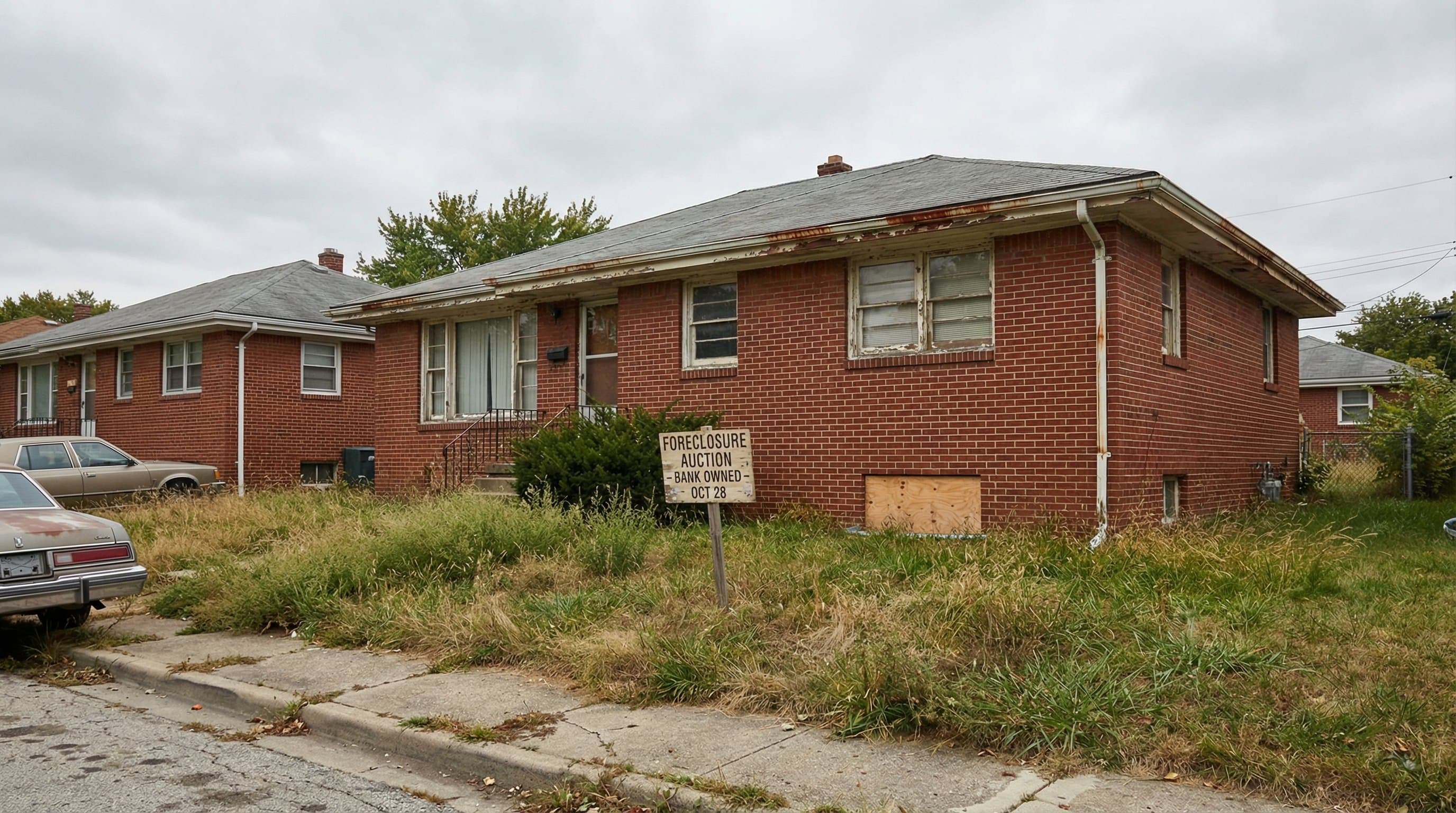
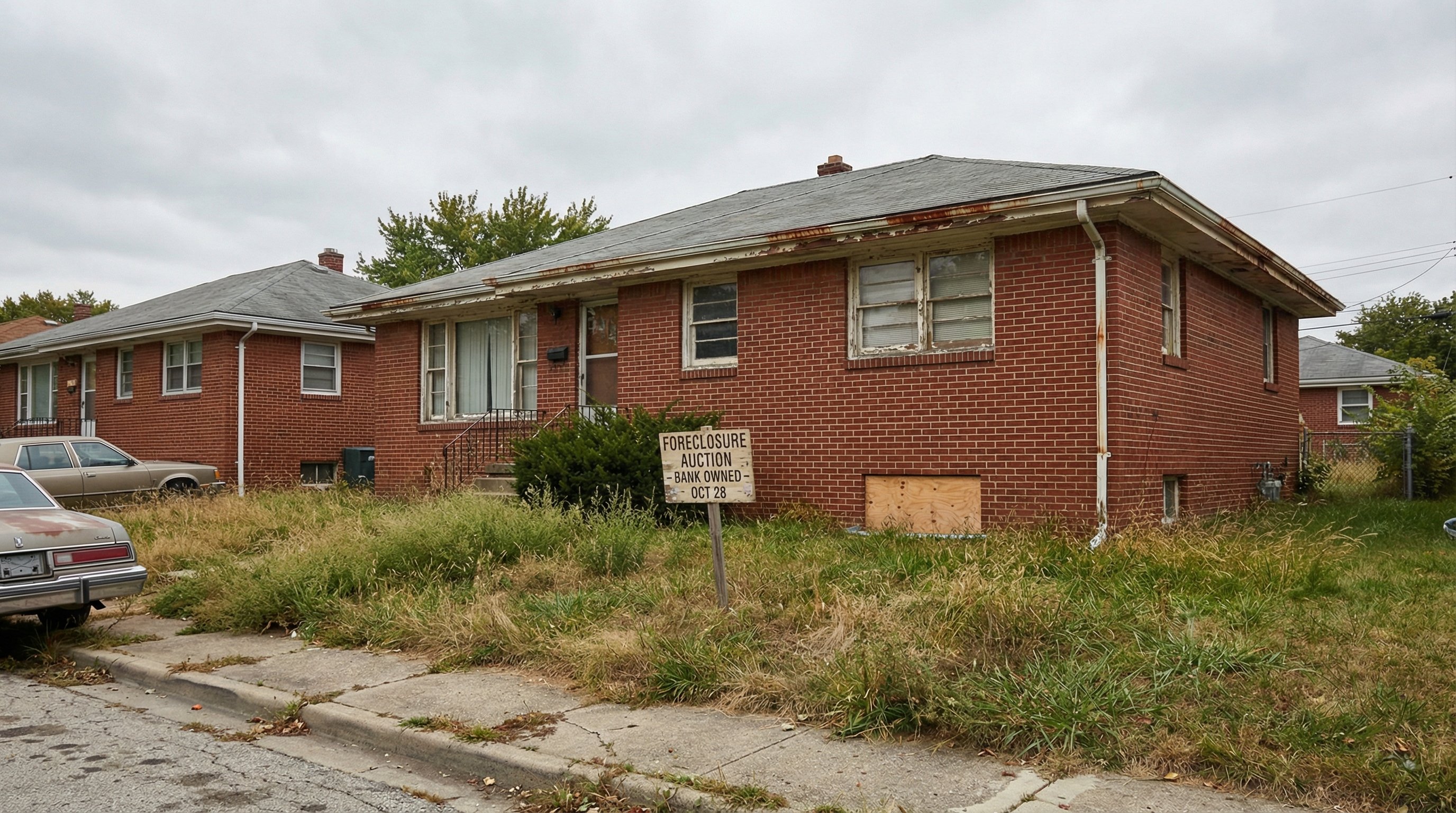
A distressed property, in the sense that matters to an investor who needs a deal to work, is a property where the owner has a verified, time-sensitive reason to sell fast. That is the operational definition. It is not about condition. It is about motivation and timeline. A home in perfect condition with a homeowner who needs to relocate for a new job is not distressed. A home in decent condition where the owner is three months behind on mortgage payments and facing a lis pendens filing is distressed. The second property has a documented, time-bound trigger that creates real negotiating leverage.
The distinction matters because cosmetic deferred maintenance is cheap to fix. A legal or financial trigger that forces a fast sale is what produces the pricing gap that makes wholesaling or fixing and flipping viable. Investors who chase surface-level "distress" end up competing with every other buyer who noticed the same peeling paint. Investors who target verified financial distress end up in a different market with less competition and more negotiating room.
The Six Distress Signals That Actually Move Deals
Not all distress is equal from an investing standpoint. Some signals correlate with highly motivated sellers and clean titles. Others correlate with complicated titles, hidden liens, or owners who are technically behind but emotionally resistant to selling. Here is how the major signal types stack up.
Pre-Foreclosure
Pre-foreclosure is the most common distress signal and the one most investors recognize. It occurs when a homeowner has defaulted on their mortgage and the lender has filed a notice of default, but the property has not yet been sold at auction. The homeowner is still the legal owner. According to ATTOM Data Solutions, which tracks foreclosure filings across all U.S. counties, pre-foreclosure filings averaged 45,000 to 60,000 per month nationally during the 2024-2025 period. They still have the property. But the clock is running.
Pre-foreclosure timelines vary dramatically by state. In judicial foreclosure states like New York and New Jersey, the process can stretch 12 to 18 months from default to auction. In non-judicial states like Texas and Georgia, the same arc can compress to three to six months. The longer the timeline, the more opportunity for an investor to make direct contact with the homeowner and negotiate a pre-auction purchase. The shorter the timeline, the less room to work and the more pressure the seller faces.
Pre-foreclosure properties work best for investors when the homeowner still has equity in the property. A homeowner who purchased for $200,000, owes $150,000, and is facing a $180,000 sale can often negotiate a short sale that pays off the mortgage and eliminates the foreclosure from their credit. A homeowner who owes more than the property is worth has less motivation to cooperate with a negotiated solution and more reason to simply hand the keys back to the bank.
Tax Delinquency
Property tax delinquency is one of the strongest distress signals an investor can find because it is completely non-negotiable. The homeowner cannot call the county assessor and work out a payment plan under threat of foreclosure. If taxes go unpaid beyond the redemption period, the county can sell the property at a tax sale. Unlike mortgage delinquency, which involves a lender who may offer loan modifications or forbearance, tax delinquency follows a strict statutory timeline with no soft landings.
Tax delinquent properties tend to be either genuinely distressed (the owner has no financial capacity to catch up) or occasionally administratively neglected (an investor who lives abroad and forgot to set up auto-pay on property taxes). Urban Institute research on tax lien sales has documented that jurisdictions with annual tax sale cycles produce the highest volume of investor opportunities because owners have limited redemption windows. The difference matters. An investor who can locate the administratively tax delinquent property has an easier negotiation because the owner is not in financial distress and may simply be relieved to have someone else handle the problem. The genuinely tax delinquent property requires more due diligence but also tends to be priced more aggressively.
Tax sale properties come in two forms across different states. Tax lien states sell the lien itself to investors, who then collect interest at the state's rate. Tax deed states sell the property outright. Investors in tax deed states who acquire a property at a tax sale are typically buying the property as-is, with no recourse for the previous owner and no warranties on title quality. That is a different risk profile than buying a pre-foreclosure from a cooperative seller.
Lis Pendens
Lis pendens is Latin for "pending lawsuit." When a lender files a lis pendens on a property, it is a public notice that a legal action affecting the title is underway. In most cases, that action is a foreclosure. The lis pendens puts potential buyers and creditors on notice that if the property is sold during the litigation, they take it subject to the outcome of that litigation.
Lis pendens is a strong distress signal for investors because it is a matter of public record that anyone can check at the county recorder's office. A property with an active lis pendens is almost always in pre-foreclosure, and the lis pendens provides documented legal standing that confirms the distress is real and time-sensitive. Some investors use lis pendens records as a primary lead source, tracking newly filed lis pendens cases in target counties and contacting homeowners within days of the filing.
The limitation of lis pendens as a signal is that it only covers mortgage foreclosure. A homeowner who is behind on taxes or facing an HOA foreclosure may not have a lis pendens filed yet. Cross-referencing lis pendens records with tax delinquency data and HOA foreclosure filings gives investors a more complete picture of the property's actual distress profile.
Probate
Probate is a legal process that occurs after someone dies. If the deceased owned property and did not have a transfer-on-death deed or living trust in place, the property must go through the probate court before it can be sold. The executor or administrator of the estate has the legal authority to sell the property, but the sale typically requires court approval and the process moves slowly.
Probate properties represent a distinct investing opportunity because the motivation is different from financial distress. The heir is not typically underwater or behind on payments. They have inherited a property they did not ask for, often in a location where they do not live, with carrying costs they did not budget for. Many heirs want to sell quickly not because they are financially desperate but because they have no emotional attachment to the property and want to settle the estate cleanly.
The probate process varies significantly by state. Some states require 60 to 90 days minimum before an executor can list a property for sale. Others allow immediate listing with court confirmation required before closing. Investors who understand the probate timeline in their target markets can reach out to estate executors during the waiting period, establish a relationship, and often secure the property at a discount in exchange for a clean, fast closing.
Probate requires sensitivity. These are properties where someone recently died, and the family is navigating a difficult legal and emotional process. The investor's value proposition should be providing a solution, not exploiting grief. A wholesaler who calls an heir within two weeks of a death and leads with "I understand your property is about to hit the market" is not running a respectful operation.
Code Violations
Code enforcement violations are among the most underutilized distress signals in real estate investing. Municipalities issue code violations for conditions that affect habitability, safety, or neighborhood standards. Common violations include overgrown lawns, accumulation of junk or debris, structural deterioration, unregistered rental properties, and unsafe structures. When violations go uncorrected, the municipality can levy fines, place liens on the property, or eventually order the demolition of the structure.
Code violations are strong signals because they create a financial and legal pressure on the property owner that compounds over time. Each month the violation remains uncorrected, the fine accrues. If the fines exceed a threshold, the municipality may accelerate the enforcement process, which can include a forced sale of the property to collect the outstanding liens. An investor who acquires a property with active code violations typically negotiates a price that reflects the cost of remediation and the complexity of dealing with the municipality.
Vacant properties are particularly prone to code violations because there is no occupant to maintain the exterior or address early warning signs of deterioration. A property that has been vacant for six months or longer in most municipalities will almost certainly have code violations on file, whether for the structure itself or for the yard. Many municipalities maintain vacant property registries with specific compliance requirements. Investors who work with vacant properties in their target cities learn the local registry requirements and use code violation records as a primary signal to identify opportunities before they appear in the broader market.
Vacancy
Vacancy is both a distress signal and a multiplier for other signals. A vacant property is not necessarily distressed on its own. Some vacant properties are second homes that owners use seasonally. Others are homes between tenants that will be re-listed within weeks. But vacancy combined with other signals, particularly tax delinquency or code violations, is a reliable indicator of genuine distress.
Vacant distressed properties tend to deteriorate faster than occupied ones. Without an occupant maintaining the interior climate control, a vacant home in a humid climate can develop mold within three to six months. Without someone addressing minor repairs, small leaks become major ones. Without someone monitoring the property, trespassers may cause damage or steal fixtures. The longer a property sits vacant, the more the repair costs accumulate, which ultimately benefits the investor who acquires it at a steep discount.
DistressIQ tracks vacancy signals alongside other distress indicators, flagging properties that have been vacant for extended periods and combining that data with other distress types to build a more complete picture of the property's situation and the owner's motivation.
Signal Stacking: Why One Signal Is Rarely Enough
The most actionable distressed properties typically have multiple independent distress signals active simultaneously. A property facing both a first mortgage foreclosure and an HOA foreclosure has two separate legal proceedings creating pressure on the owner. A property that is both tax delinquent and vacant is deteriorating every month without rental income to offset carrying costs. A probate case combined with a tax delinquency means the heir cannot easily walk away from the property.
Signal stacking is the practice of identifying properties where multiple independent distress indicators converge on a single property. Each additional signal raises the probability that the seller is highly motivated and reduces the probability that they have other options. A homeowner who is only pre-foreclosure may still qualify for a loan modification that keeps them in the property. A homeowner who is pre-foreclosure, tax delinquent, and facing an HOA foreclosure has run out of other doors.
The DistressIQ platform stacks 31 distress signal types across every U.S. county and assigns each property a motivation score based on the number, type, and recency of signals. Properties with three or more active signals are flagged for priority review. This is not a marketing claim about deal quality. It is a statement about documented probability. When a homeowner has multiple independent financial and legal pressures converging, the likelihood that they need to sell fast approaches certainty.
Free Weekly Alerts
See What's Distressed in Your Market
Get free weekly alerts — new distressed properties, motivation scores, and hot neighborhoods in your area. Addresses and contact info available inside DistressIQ.
Free forever · No credit card · Unsubscribe anytime
How Investors Actually Find Distressed Properties
The public record is the starting point. Every distressed property signal exists somewhere in a government database. Pre-foreclosure notices are filed with the county circuit court. Tax delinquent properties are listed with the county assessor and treasurer. Code violations are maintained by the municipal code enforcement department. HOA foreclosures are recorded with the county recorder.
Accessing these records manually requires navigating multiple incompatible systems. County court dockets are not standardized. Assessor databases use different search interfaces in every county. Code enforcement records are often maintained in systems with no public search functionality, requiring physical visits or phone calls to obtain basic information. For investors targeting a single county, this is manageable. For investors working multiple markets or multiple counties, the manual research burden becomes prohibitive.
DistressIQ aggregates these records across more than 3,200 U.S. counties and updates the data daily as new filings are recorded. The platform does not pull information from MLS listings or third-party aggregators. The data comes directly from county assessor records, court filing systems, and municipal code enforcement databases. Investors who use the platform to search for distressed properties can filter by signal type, county, price range, and motivation score, and can export contact information for skip tracing in minutes rather than days.
Frequently Asked Questions
What is the difference between a distressed property and a fixer-upper?
A fixer-upper needs cosmetic or structural work. A distressed property has a verified, time-sensitive reason for a fast sale. A home with outdated fixtures and worn carpet is a fixer-upper. A home where the owner is three months behind on mortgage payments and facing a foreclosure auction in 60 days is a distressed property. The distress signal creates the negotiating leverage and the pricing gap that makes the investment work. Cosmetic work alone does not produce that leverage.
How do I verify that a property is genuinely distressed?
Check the public record directly. A pre-foreclosure notice is filed with the county circuit court and is a matter of public record. A tax delinquency appears in the county assessor's database. A code violation is on file with the municipal code enforcement department. DistressIQ aggregates these verified public record signals across every U.S. county and flags properties that have multiple active signals, so investors do not have to navigate multiple incompatible government databases to confirm a property's status.
What are the main types of distressed properties?
The six primary distress signal types are pre-foreclosure, tax delinquency, lis pendens, probate, code violations, and vacancy. Pre-foreclosure and tax delinquency tend to produce the most aggressive pricing gaps because they involve secured creditors with legal authority to force a sale. Probate properties often have clean titles because the court must confirm the transaction. Code violations and vacancy are strong signals when combined with other distress types and tend to indicate properties that need significant remediation.
Can I buy a distressed property with financing?
Most distressed property purchases, particularly pre-foreclosure and tax sale acquisitions, require cash or hard-money financing because conventional loans cannot close fast enough and have stricter property condition requirements. Pre-foreclosure purchases negotiated directly with the homeowner before the auction may allow for conventional financing if the timeline permits, but short sales and auction purchases typically do not. Hard-money lenders specialize in short-term distressed property financing and can close in days, but they charge higher interest rates than conventional loans.
Are distressed properties always sold as-is?
Most distressed properties are sold as-is because the seller does not have the financial capacity or time to complete repairs before the sale. Investors who buy pre-foreclosure properties directly from homeowners typically conduct their own inspection before closing and negotiate the purchase price accordingly. Properties acquired at a tax sale or foreclosure auction are almost always sold as-is with no warranties on condition or title, which is why due diligence before bidding at auction is essential.
What does DistressIQ track for distressed properties?
DistressIQ tracks 31 distress signal types across 3,200-plus U.S. counties, updated daily from county assessor records, court filing systems, and municipal code enforcement databases. The platform assigns each property a motivation score based on the number, type, and recency of active signals. Properties with multiple stacked signals are flagged for priority review. Investors can search by signal type, county, price range, and motivation score, and can export leads for skip tracing immediately.
All information reflects publicly available government records. Individual investment outcomes depend on specific property condition, title status, local market conditions, and the investor's due diligence.
See verified distressed properties in your target market on DistressIQ. Browse free at distressiq.ai.
The data behind this article
DistressIQ Monitors These Signals in Real Time
Pre-Foreclosures
NOD + NTS filings
Tax Delinquency
County treasurer records
Code Violations
Municipal inspection filings
Probate Filings
Superior Court records
Every lead is scored 0–100 for seller motivation based on signal type, duration, severity, and stacking. Nationwide coverage — every US county, updated daily.
Ready to find deals in your market?
See Live Distress Signals in Your County
Stop calling dead leads. Every lead in DistressIQ is scored 0–100 for seller motivation, with verified contact info included. Browse the free tier to see what's active in your market right now.
Browse Free Leads — No Credit Card