Vacant Property Leads in North Carolina: How to Find and Work Them in 2026
Vacant Property Leads in North Carolina: How to Find and Work Them in 2026
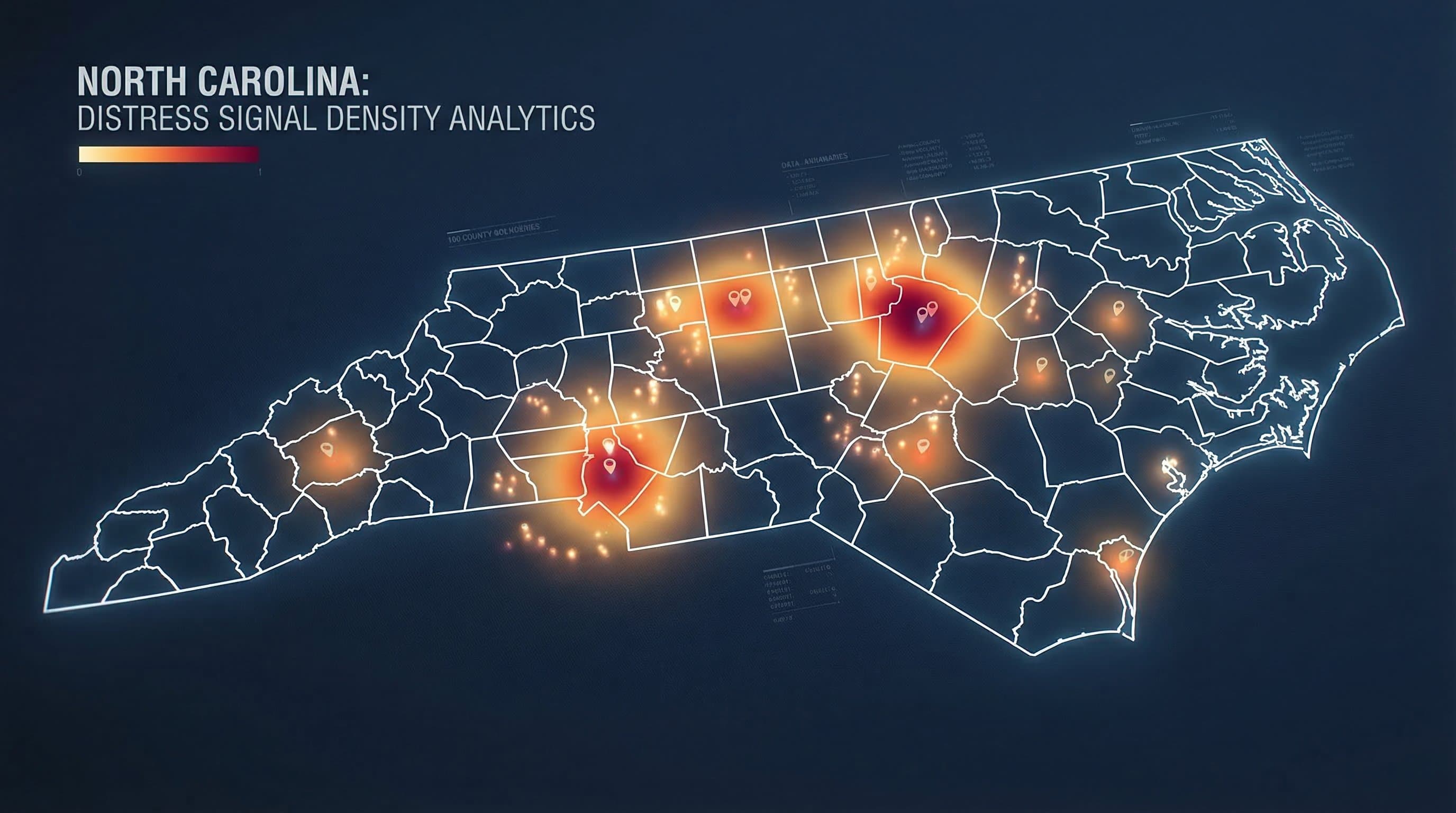
TL;DR: Vacant property leads in North Carolina are most reliably found by cross-referencing county tax delinquency rolls, code enforcement violation records, and municipal vacant building registries. Charlotte, Raleigh, and Durham are the top NC markets. North Carolina is a tax deed state — counties foreclose directly with no redemption period — so delinquent vacant properties move to auction faster than in lien states. DistressIQ stacks 31 distress signals including vacancy, tax delinquency, and code violations to surface the highest-priority NC leads before they hit the auction block.
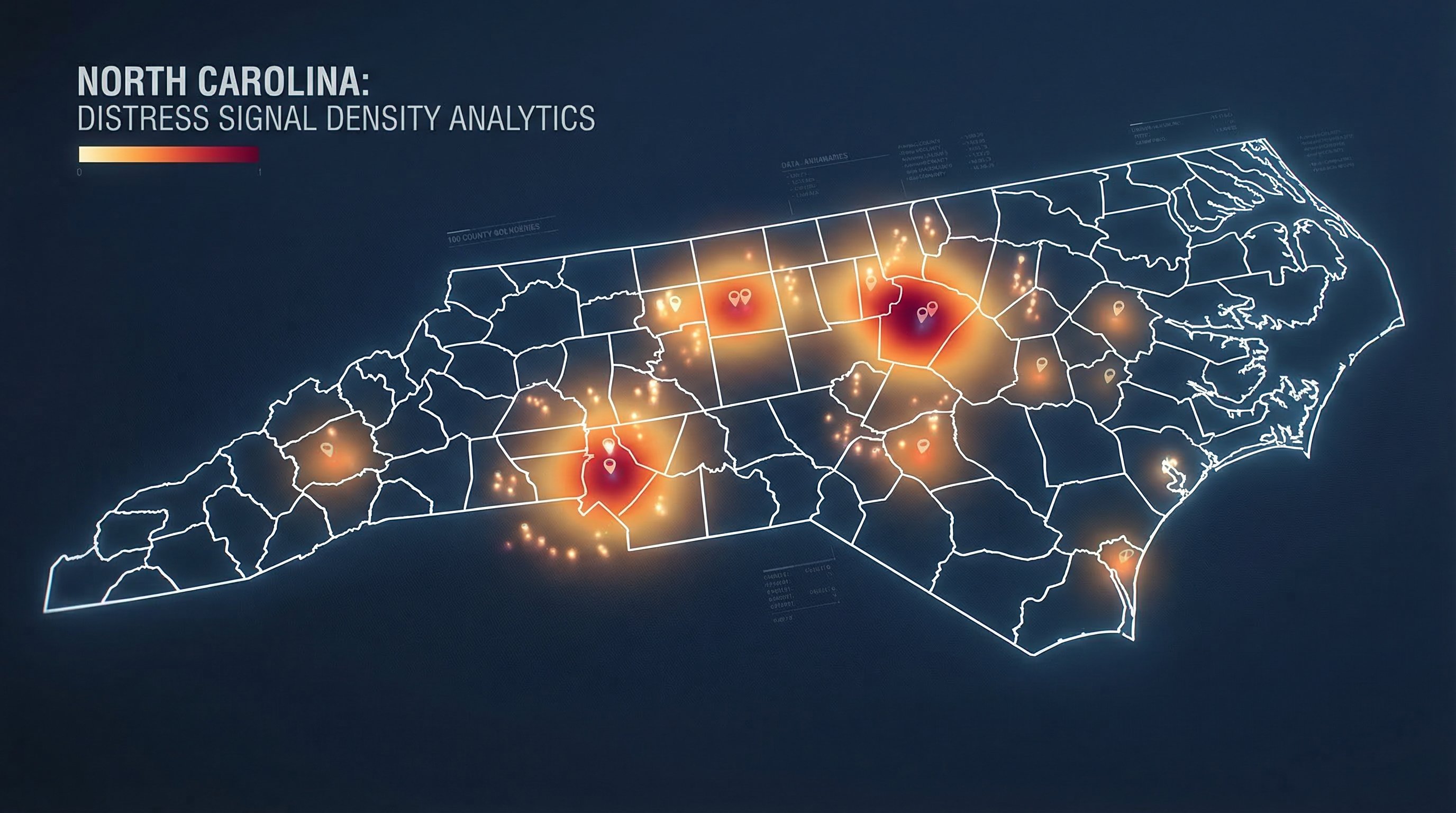
North Carolina added over 400,000 new residents between 2022 and 2025 — yet vacancy rates in transitional neighborhoods across Charlotte, Greensboro, and the rural tobacco belt counties haven't budged. Rapid growth creates pockets of intense demand alongside stubborn neglect, and that gap is exactly where real estate investors find their best deals. If you know how to read the signals.
Why Vacant Properties in North Carolina Are a Serious Lead Category
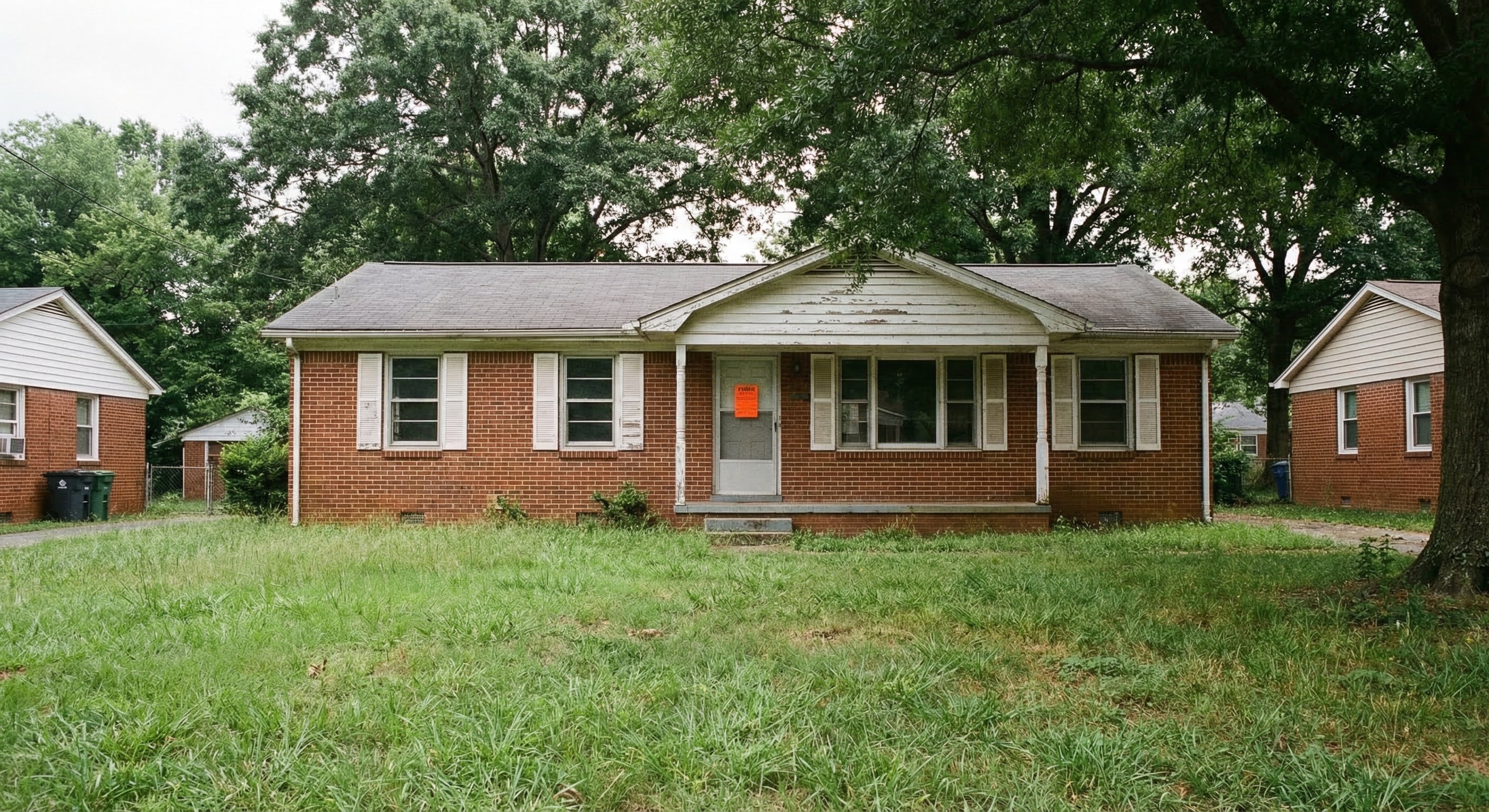
Vacancy in North Carolina isn't uniform. The Research Triangle — Raleigh, Durham, Chapel Hill — has been running hot, with sub-2% vacancy in many zip codes. But walk ten minutes off the main corridors in Greensboro, Rocky Mount, or Wilson, and you'll find entire blocks of brick ranch homes with six-inch grass and utility shutoffs.
According to the U.S. Census Bureau's American Community Survey, North Carolina has approximately 415,000 vacant housing units — roughly 9.4% of all housing stock. That's a substantial pool. The challenge isn't locating vacant properties; it's finding motivated owners behind them.
That's where signal stacking matters. A vacant home alone tells you very little. A vacant home with:
- Delinquent property taxes for 2+ years
- Active code enforcement violations (overgrown vegetation, unsecured structures)
- Out-of-state owner mailing address
- No active mortgage (free-and-clear or equity-rich)
...that's a lead worth pursuing. That combination of signals means the owner is disengaged, financially stretched, or simply doesn't know what to do with an inherited property they haven't touched in three years. Those are the conversations that lead to off-market deals.
How North Carolina Handles Vacant Properties (The Legal Framework)
Understanding state law shapes your strategy. North Carolina has a few mechanics every investor working vacant property leads needs to know.
NC Is a Tax Deed State
North Carolina doesn't sell tax lien certificates to private investors like Florida or Arizona. Instead, counties foreclose directly on delinquent properties through in rem tax foreclosure proceedings under N.C.G.S. Chapter 105. Once a tax foreclosure is complete, the county takes title and sells the property at public auction.
What this means for investors: You can't buy a lien position and earn interest while the owner redeems — NC doesn't work that way. Your play is to contact the owner before the county starts foreclosure proceedings. Two to three years of tax delinquency is typically when counties begin in rem actions, which gives you a window that's tighter than people assume.
No Statutory Right of Redemption After Foreclosure
Unlike Ohio, Michigan, or other states with 6-12 month post-foreclosure redemption periods, North Carolina's power-of-sale foreclosure process has no statutory redemption period after the sale is confirmed. Once the clerk of superior court approves the sale, the transaction is final. This compresses your timeline if you're pursuing a deal at the courthouse steps — and it adds urgency to the conversation when you're negotiating with a distressed owner.
City Vacant Building Registries
Charlotte, Raleigh, Durham, Greensboro, and several other NC municipalities require owners to register vacant structures after a set holding period — typically 90 to 180 days depending on the city. These registries are public records, and they're a lead source that most investors overlook.
Charlotte's Vacant Building Registration (VBR): Applies to properties vacant for six months or more with open code violations. Registration costs $200/year and non-compliance generates escalating fines. The city's enforcement database is searchable through Charlotte Code Enforcement — Neighborhood & Business Services.
Raleigh's Minimum Housing Code tracks properties receiving repeat complaint-driven inspections, mapping directly onto neglected and often vacant properties. Greensboro and Winston-Salem maintain similar systems.
Where to Find Vacant Property Leads in North Carolina
1. County Tax Records (Free + Public)
Every NC county assessor maintains a searchable database of property records. Properties with delinquent taxes can be cross-referenced with each county's published delinquent tax roll — released annually before the tax sale, typically in late summer or early fall.
Top NC counties for vacant property volume:
- Mecklenburg County (Charlotte) — Largest market. Delinquent tax list published annually by the county tax collector before the fall tax sale.
- Wake County (Raleigh) — Fast-growing market with pockets of lingering vacancy in eastern and southern areas.
- Guilford County (Greensboro/High Point) — Post-industrial decline left higher structural vacancy in older manufacturing-adjacent neighborhoods.
- Durham County — Transitional neighborhoods adjacent to rapidly appreciating areas create motivated vacant property sellers.
- Forsyth County (Winston-Salem) — Older housing stock, higher vacancy concentration.
- Eastern NC counties (Nash, Wilson, Lenoir, Edgecombe) — Higher vacancy rates, lower investor competition, deeply motivated sellers.
2. Code Enforcement Databases
North Carolina municipalities are required to maintain records of code enforcement actions. Many are searchable online. Properties accumulating repeat violations for overgrown vegetation, unsecured structures, or utility disconnection are textbook vacant property indicators.
Charlotte's Community Asset Management division publicly tracks open violations — this data can be cross-referenced with ownership records to build targeted outreach lists. Raleigh's development services portal includes similar complaint and violation history.
3. Probate Court Records
A significant percentage of NC vacant properties are tied to estate situations — someone passed away, the property transferred to heirs who never moved in or can't agree on how to handle it. Wake County and Mecklenburg County superior courts handle probate filings, which are public record accessible through the NC Courts system.
Properties in open probate with no active mortgage often sit vacant for years. These owners inherited an asset they didn't plan for and are frequently open to a reasonable offer — especially when the property is generating code enforcement fines and property tax bills with no offsetting income.
4. USPS Vacancy Data and Utility Records
The U.S. Postal Service maintains vacancy data by mail route. Some municipalities obtain this data and integrate it into their vacant property programs. In North Carolina, housing advocates and city housing departments have used USPS data — in some cases accessible via public records requests — to build vacancy maps.
Utility disconnection records (where accessible through public records requests to municipal utilities) provide another confirming signal, particularly in cities where the utility company is a municipal operation.
5. Multi-Signal Stacking with DistressIQ
The manual approach — bouncing between county tax records, code enforcement databases, probate court filings, and municipal registries — is workable, but it's time-intensive and generates gaps. You'll miss properties that show up in code enforcement but aren't yet tax-delinquent. You'll miss the estate property that just opened probate last month.
DistressIQ pulls from 3,200+ county sources nationwide and stacks 31 distress signals per property. For North Carolina investors, this means a ranked feed of properties showing vacancy + tax delinquency + code violations + probate flags + absentee owner status — all in one view, updated multiple times daily from county-verified sources.
DistressIQ covers all major North Carolina counties with county-verified data updated multiple times daily. Founding member pricing — Starter $89/mo, Pro $174/mo, Elite $349/mo — locked for life while fewer than 50 spots remain.
Free Weekly Alerts
See What's Distressed in Your Market
Get free weekly alerts — new distressed properties, motivation scores, and hot neighborhoods in your area. Addresses and contact info available inside DistressIQ.
Free forever · No credit card · Unsubscribe anytime
Top North Carolina Markets for Vacant Property Leads
Charlotte (Mecklenburg County)
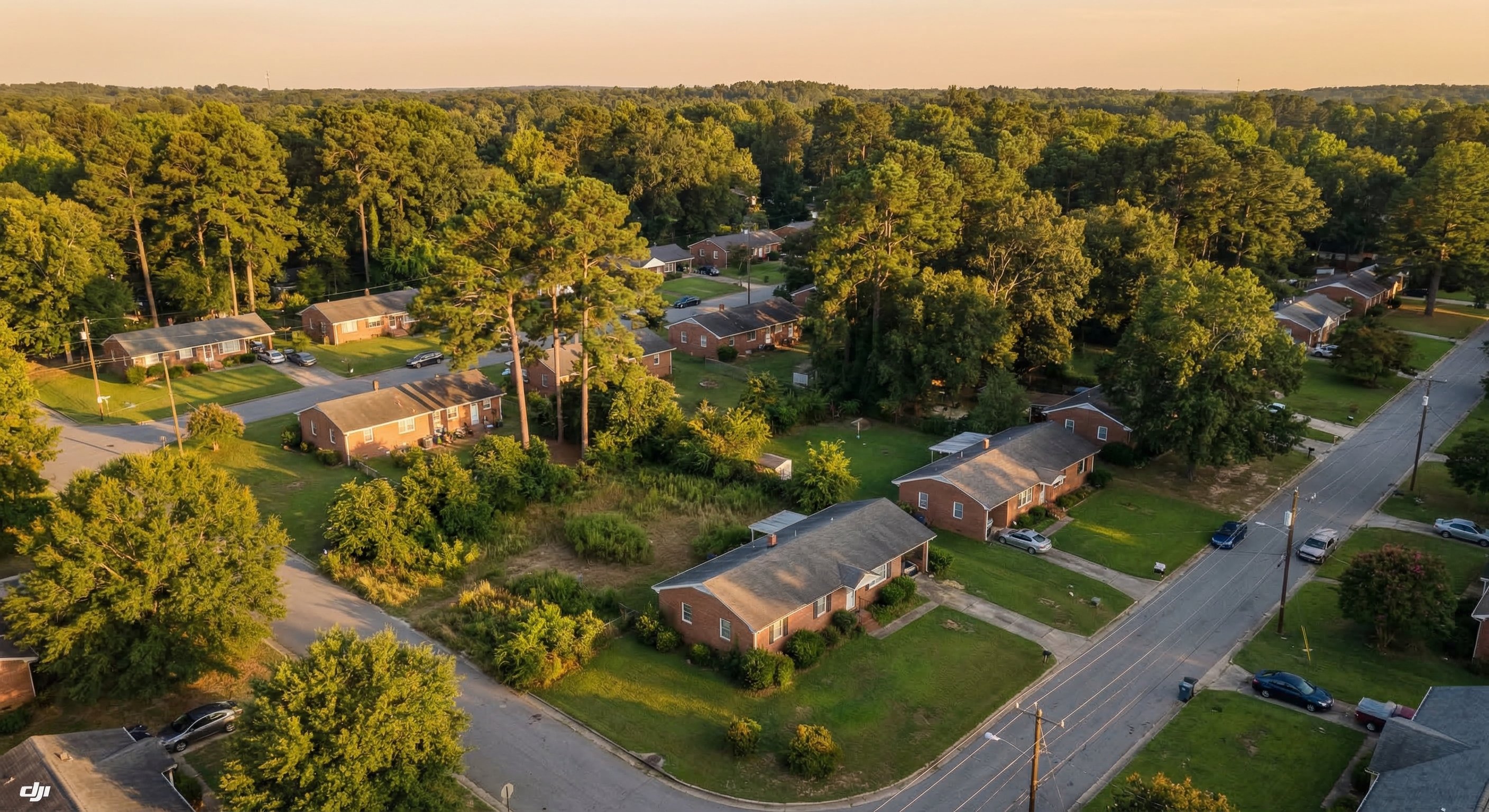
Charlotte is NC's largest investment market and arguably the most dynamic for vacant property investors. Rapid appreciation in South End, NoDa, and Plaza-Midwood has created pressure on adjacent transitional areas where vacancy is concentrated. The Westside, corridors around North Tryon, and parts of east Charlotte still show meaningful vacancy alongside code enforcement activity.
Charlotte's VBR program means the city has already done part of the identification work — properties on that registry are officially flagged as problematic vacant structures.
Raleigh-Durham (Wake and Durham Counties)
The Research Triangle's rapid growth has pushed demand east and south, creating conditions where older neighborhoods in South Raleigh and east Durham still carry vacant properties at significant discounts to the renovated comps two neighborhoods over. ARV spreads can be substantial — east Durham, for instance, frequently shows vacant distressed properties in the $160-$200K range alongside renovated comps at $320-$380K in adjacent blocks.
Greensboro (Guilford County)
Guilford County has one of North Carolina's higher structural vacancy rates, tied to manufacturing decline in the Greensboro/High Point metro. Older mill-district housing, tobacco warehouse conversions, and dated single-family stock create a supply of genuinely vacant and often tax-delinquent properties. Investor competition here is notably lower than in Charlotte or Raleigh.
Eastern NC (Nash, Wilson, Lenoir, Edgecombe Counties)
Rocky Mount, Wilson, and Kinston consistently show elevated tax delinquency and vacancy rates with relatively little institutional competition. If you're willing to work in smaller markets, acquisition costs are substantially lower and the motivated-seller ratio is higher. The Eastern NC tobacco belt represents a meaningful underserved opportunity for investors who can operate outside the major metros.
How to Work Vacant Property Leads in North Carolina
Step 1: Layer and Prioritize Signals
Not all vacant properties are equal leads. Stack the signals:
- Vacant + tax delinquent (2+ years): High priority — county foreclosure likely beginning
- Vacant + out-of-state owner: High priority — disengaged owner, likely motivated
- Vacant + code violations + probate: Very high priority — the owner may not know what they have
- Vacant only, current on taxes, local owner: Lower priority — may not have urgency
Step 2: Skip Trace the Owner
NC property records include owner mailing addresses. For vacant properties, the owner is often living somewhere else. Match that mailing address to a phone number and email. Many vacant property owners have moved two to three times since the address on file — a good skip tracing tool bridges that gap.
Step 3: Direct Mail + Consistent Follow-Up
Yellow letters and handwritten postcards still move in NC markets. The key is consistency — vacant property owners often aren't in a rush, and your offer lands when another life pressure triggers (another tax bill, a city fine notice, a family conversation about the inherited house nobody's touched). Most investors underestimate the follow-up required. Seven to twelve touches is common before a vacant property lead converts.
Step 4: Structure the Deal
In Charlotte and Raleigh, vacant properties in transitional neighborhoods typically pencil as BRRRR deals or fix-and-flip, with renovation costs ranging from $35-$65 per square foot depending on scope. In eastern NC, lower ARVs make rehab margins tighter, but acquisition discounts are correspondingly steeper — wholesale assignments often work better in those markets.
Key Takeaways
- NC is a tax deed state — counties foreclose directly, no lien purchase available. Contact owners in year 1-2 of delinquency before the county files.
- No redemption period after power-of-sale foreclosure in NC — timeline pressure on distressed owners is real and compressed.
- Charlotte, Raleigh-Durham, and Greensboro are the top three NC markets for vacant property leads by volume.
- Eastern NC (Nash, Wilson, Lenoir, Edgecombe counties) offers lower competition and stronger motivated-seller ratios.
- Stack signals: vacant + tax delinquent + out-of-state owner + code violations = the highest-quality lead profile in NC.
- City registries — Charlotte VBR, Raleigh minimum housing code — are free public databases that map directly to motivated sellers.
- Probate + vacancy is a powerful combination that most investors overlook. Heirs often don't want what they inherited.
Frequently Asked Questions
Q: How do I find the tax delinquent property list in North Carolina?
Each county publishes its delinquent tax roll annually, typically in late summer or early fall ahead of the county tax sale. Contact the county tax collector directly, or search the county's online property lookup portal. Mecklenburg, Wake, Guilford, and Durham County all have searchable online databases. DistressIQ pulls this data for 3,200+ counties nationwide and layers it with additional distress signals automatically.
Q: Does North Carolina have a right of redemption after foreclosure?
No. North Carolina does not have a statutory right of redemption after a power-of-sale foreclosure is confirmed. Once the clerk of superior court approves the sale, it is final — the prior owner cannot reclaim the property by paying the debt. This makes NC foreclosure timelines relatively fast compared to judicial-only states, and it increases urgency for distressed owners who are running out of options.
Q: What is North Carolina's tax sale process?
North Carolina counties use in rem tax foreclosure under N.C.G.S. Chapter 105 to foreclose on delinquent properties. Unlike Florida or Arizona, NC does not sell tax lien certificates to private investors. The county files suit, obtains a judgment, and conducts a public auction — typically through the county sheriff's office or an assigned auctioneer. After the sale, a 10-day upset bid period allows any party to submit a higher bid before the sale is confirmed.
Q: What is the difference between a tax lien state and a tax deed state like North Carolina?
In tax lien states (FL, AZ, CO), private investors purchase tax lien certificates and earn interest while the owner redeems. In tax deed states like North Carolina, the county handles the entire foreclosure process and sells the property directly. Investors in NC can bid at county tax auctions to acquire the property outright — but cannot buy a lien position in advance of the foreclosure.
Q: How do I find out if a property in Charlotte is registered as vacant?
Charlotte's Vacant Building Registration records are maintained by the Charlotte Code Enforcement division under Neighborhood & Business Services. You can search for open code violations through Charlotte's public code enforcement portal or contact the department directly. Properties on the VBR list are officially identified as vacant structures and subject to registration fees and compliance requirements.
Q: What types of properties make the best vacant property leads in North Carolina?
The highest-value leads combine: (1) confirmed vacancy via code enforcement, postal data, or utility shutoff, (2) two or more years of tax delinquency, (3) out-of-state owner mailing address, (4) no active mortgage or equity-rich ownership, and (5) one or more active code enforcement violations. Properties meeting three or more of these criteria in markets like Charlotte, Durham, or Greensboro typically represent the most motivated sellers with the largest potential discount to ARV.
Q: Do I need a real estate license to work vacant property leads in North Carolina?
You do not need a license to purchase properties directly for yourself. However, if you are marketing properties for sale on behalf of others or acting as a buyer's representative, NC Real Estate Commission regulations may apply. Most investors operating as wholesalers use assignment contracts or double closings. Consult a North Carolina real estate attorney to ensure your deal structure complies with state law.
Ready to stop building lists by hand? DistressIQ covers North Carolina with county-verified data — see exactly which properties are vacant, tax-delinquent, out-of-state owned, and code-violation flagged, all in one ranked feed.
Founding member pricing: Starter $89/mo, Pro $174/mo, Elite $349/mo — fewer than 50 spots remain at these rates.
Sources: U.S. Census Bureau American Community Survey 2023 (B25002 Vacancy Status), North Carolina General Statutes Chapter 105 (Property Tax), North Carolina General Statutes Chapter 45 (Mortgages and Deeds of Trust — Power of Sale Foreclosure), City of Charlotte Neighborhood & Business Services — Vacant Building Registration Program, North Carolina Courts Administrative Office — Superior Court Records.
The data behind this article
DistressIQ Monitors These Signals in Real Time
Pre-Foreclosures
NOD + NTS filings
Tax Delinquency
County treasurer records
Code Violations
Municipal inspection filings
Probate Filings
Superior Court records
Every lead is scored 0–100 for seller motivation based on signal type, duration, severity, and stacking. Nationwide coverage — every US county, updated daily.
Ready to find deals in your market?
See Live Distress Signals in Your County
Stop calling dead leads. Every lead in DistressIQ is scored 0–100 for seller motivation, with verified contact info included. Browse the free tier to see what's active in your market right now.
Browse Free Leads — No Credit Card