Vacant Property Leads Michigan: What Makes the Motor State Different
Vacant Property Leads Michigan: What Makes the Motor State Different
TL;DR: Michigan ranks among the top states for vacant and abandoned property inventory, driven by a combination of urban vacancy in Detroit and Flint, post-industrial transitions in legacy manufacturing regions, and a judicial foreclosure process that extends timelines beyond what investors see in neighboring states. Vacant property leads in Michigan require geographic precision: urban core properties carry different risk and rehab profiles than suburban foreclosures, and the distressed inventory mix shifts dramatically between counties. DistressIQ aggregates verified vacancy signals from county records across Michigan's 83 counties, updated daily, so investors can filter by signal type, motivation score, and property characteristics before spending time on any individual lead.
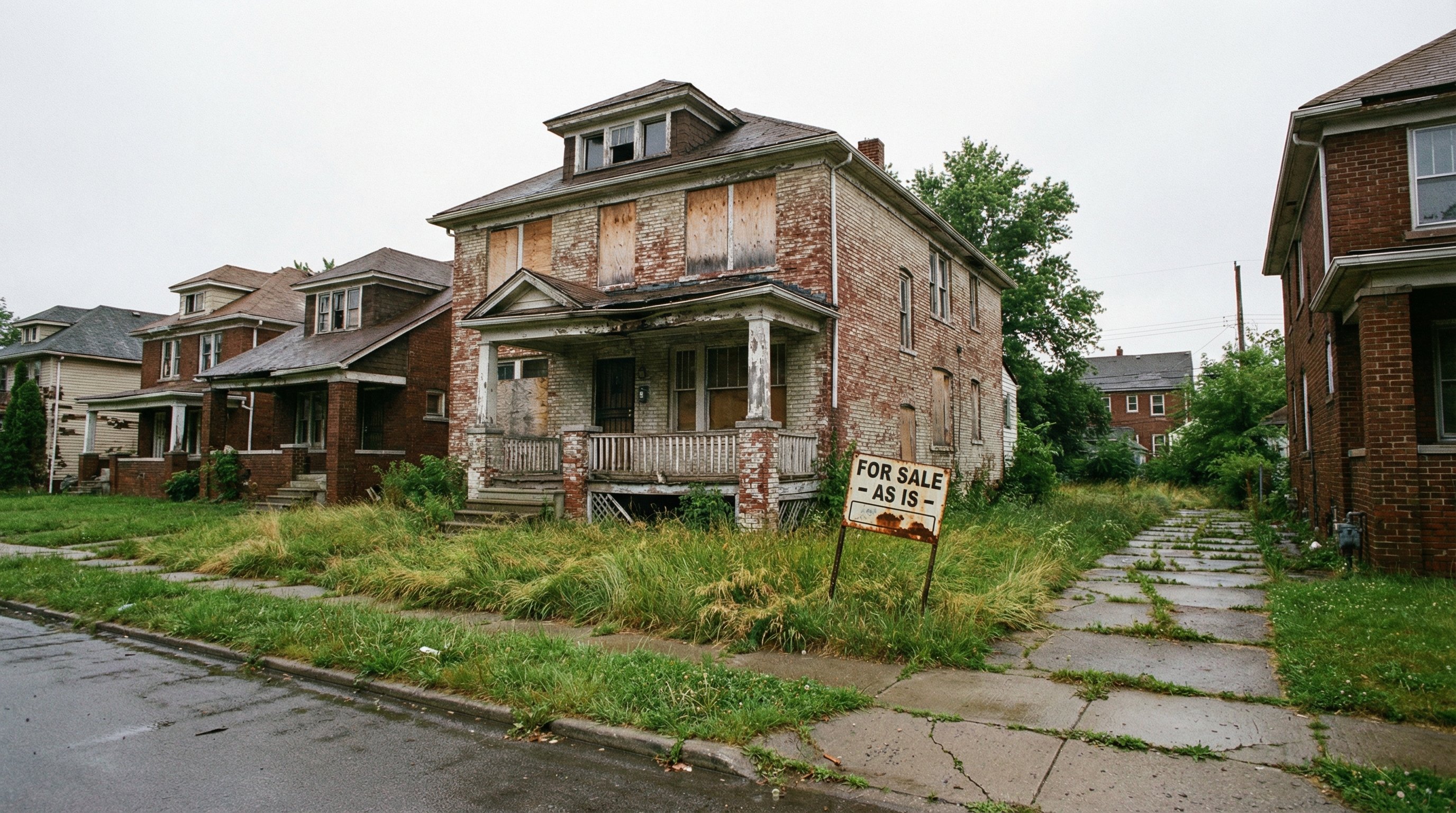
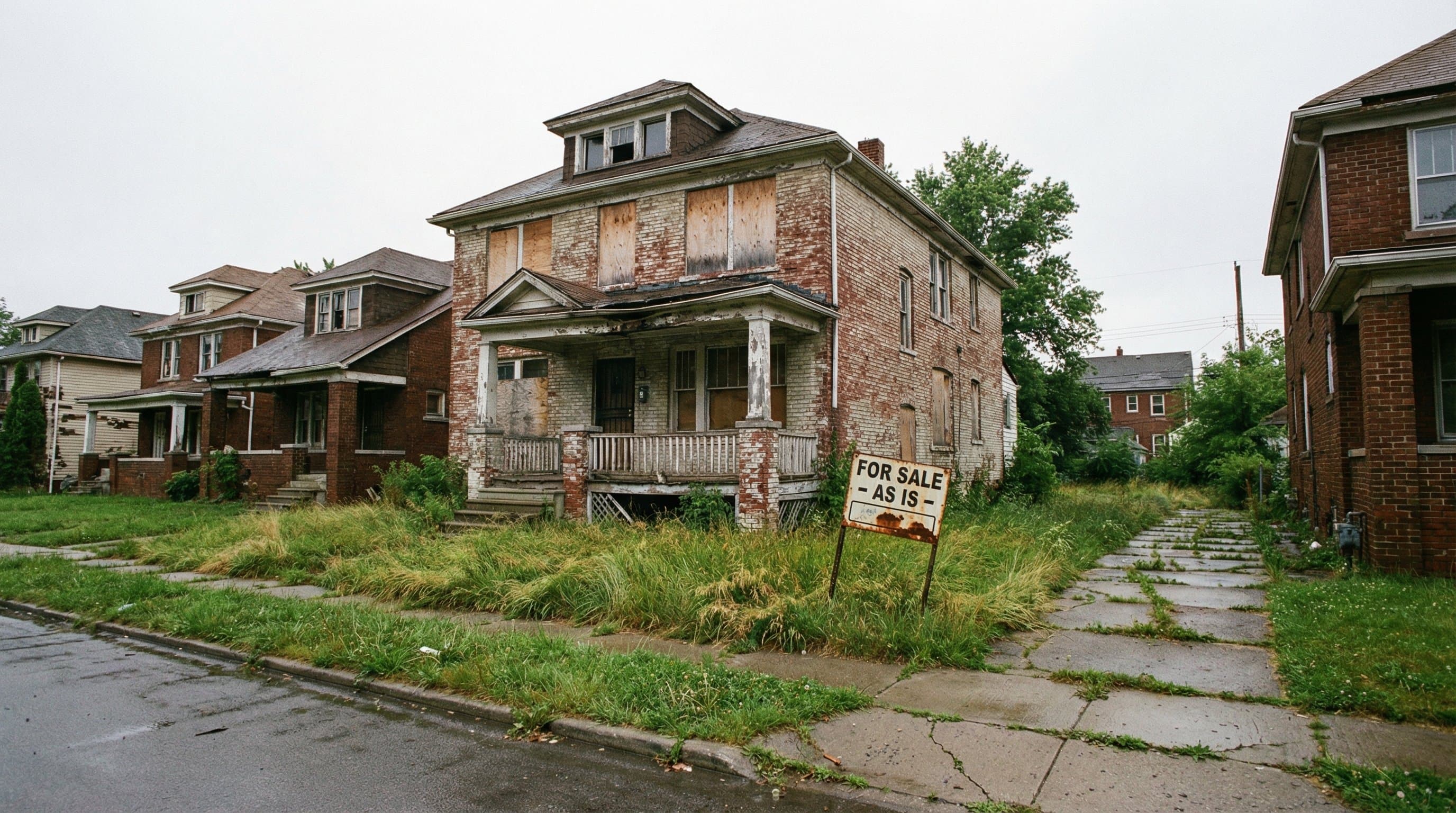
Detroit's skyline rises behind a landscape that tells a more complicated story than any billboard can convey. Roughly 10 percent of the city's housing stock sits vacant, a figure that has slowly declined since its mid-2010s peak but remains high enough to rank Michigan among the most vacant-property-dense states in the country. Across the broader Motor State, the pattern repeats in smaller cities: Saginaw, Flint, Pontiac, and Benton Harbor each carry significant distressed inventory created by decades of economic restructuring. For real estate investors who know how to work them, Michigan's vacant property leads represent a category of opportunity that behaves very differently from the pre-foreclosure or tax-delinquent lists found in faster-moving markets.
Why Michigan Produces More Vacant Property Leads Than Most States
Michigan's vacancy problem has deep roots. The state's economy depended heavily on manufacturing employment, particularly in the automotive sector, and the contractions that began in the 1970s and accelerated after 2000 left entire cities hollowed out. When families lost income and could no longer afford mortgage payments or property taxes, the result was a cascade of vacancies that outpaced anything seen in Sun Belt markets experiencing growth-driven foreclosures.
Several structural features keep vacant property leads elevated in Michigan compared to national norms.
The judicial foreclosure process extends timelines. Michigan is a judicial foreclosure state, meaning every defaulted mortgage must go through the court system before a lender can take title. This adds months to the pre-foreclosure window, and during that extended period, properties often sit vacant while owners await court dates. For investors, this creates a wider window to identify and approach motivated sellers before a property reaches auction.
Property tax burdens in legacy cities are volatile. In cities like Flint and Saginaw, fluctuating tax assessments and delinquencies have produced clusters of tax-reverted properties representing genuine vacant inventory with clear title issues. Understanding how tax delinquency translates into actionable leads separates investors who consistently find deals from those chasing the wrong addresses.
The land bank infrastructure is mature. Michigan established its first land bank authority in 2003, and county-level land banks have proliferated since. These entities acquire tax-foreclosed and vacant properties and sell them at a discount to investors who commit to rehabilitation. Investors who understand land bank acquisition gain a parallel channel for sourcing leads that does not rely solely on county auction calendars.
Michigan Vacant Property by Region: Where the Real Inventory Lives
Michigan is too geographically diverse to treat as a single market. The vacant property leads that matter for a Detroit-based flipper are categorically different from the leads relevant to an investor targeting vacation homes around Traverse City. Breaking the state into its key submarkets reveals where the actionable inventory actually concentrates.
Southeast Michigan: Detroit and Wayne County
Wayne County, which encompasses Detroit and several inner-ring suburbs, represents the epicenter of Michigan's vacant property inventory. The city of Detroit alone accounted for roughly 21,000 vacant structures as recently as 2023, though demolition programs have reduced the most deteriorated stock. What remains is a mix of owner-occupied homes in transitional neighborhoods, properties in various stages of the foreclosure process, and city-owned lots that sell for nominal amounts to adjacent landowners.
For investors, Wayne County vacant property leads require careful screening. Some properties carry significant environmental or title issues. Others have valid owner-occupants who are behind on mortgage payments but still living in the home, meaning vacancy signals may not yet apply. Filtering by signal type and verifying current occupancy status through county assessor records makes the difference between chasing ghosts and finding genuine motivated sellers.
Flint and Genesee County
Genesee County, anchored by Flint, presents one of the most vacancy-dense markets in the country relative to population. The city's water crisis beginning in 2014 accelerated population loss, and the resulting vacant inventory is substantial. Many Flint properties are low-value relative to rehab costs, making them candidates primarily for cash buyers with established renovation crews who can work at volume. Investors who understand the economics of $15,000 to $35,000 purchase prices against $30,000 to $50,000 rehab budgets find consistent margin in Flint, but the numbers require precision.
Mid-Michigan and the Thumb
Saginaw, Bay City, and the Thumb region have experienced decades of gradual population decline tied to manufacturing job losses. Vacant properties here tend to be older frame homes in established neighborhoods. Property values are lower and the investor pool is thinner, meaning less competition on leads but requiring more precision on ARV estimates.

How to Find Vacant Property Leads in Michigan Using County Records
Michigan's 83 counties each maintain their own recording and assessment systems, and vacant property leads surface through multiple distinct channels. Understanding which county records to check, and in what order, determines how efficiently an investor can build a usable list.
Signal types that indicate vacancy include code enforcement violations, tax delinquency records (properties where taxes have gone unpaid for 12 months or more), mortgage default filings through the court system, and properties where the owner has filed for bankruptcy. None of these signals alone guarantees vacancy, but stacking multiple signals against a single property dramatically improves confidence that the address represents a genuine opportunity.
Geographic filtering by county is essential. Wayne, Genesee, Saginaw, and Muskegon counties consistently produce the highest volume of verifiable vacant property leads, while rural northern counties may have only a handful of active signals. Focusing on the top 10 to 15 counties by distressed inventory volume produces far better return on research time than attempting to cover the entire state uniformly.
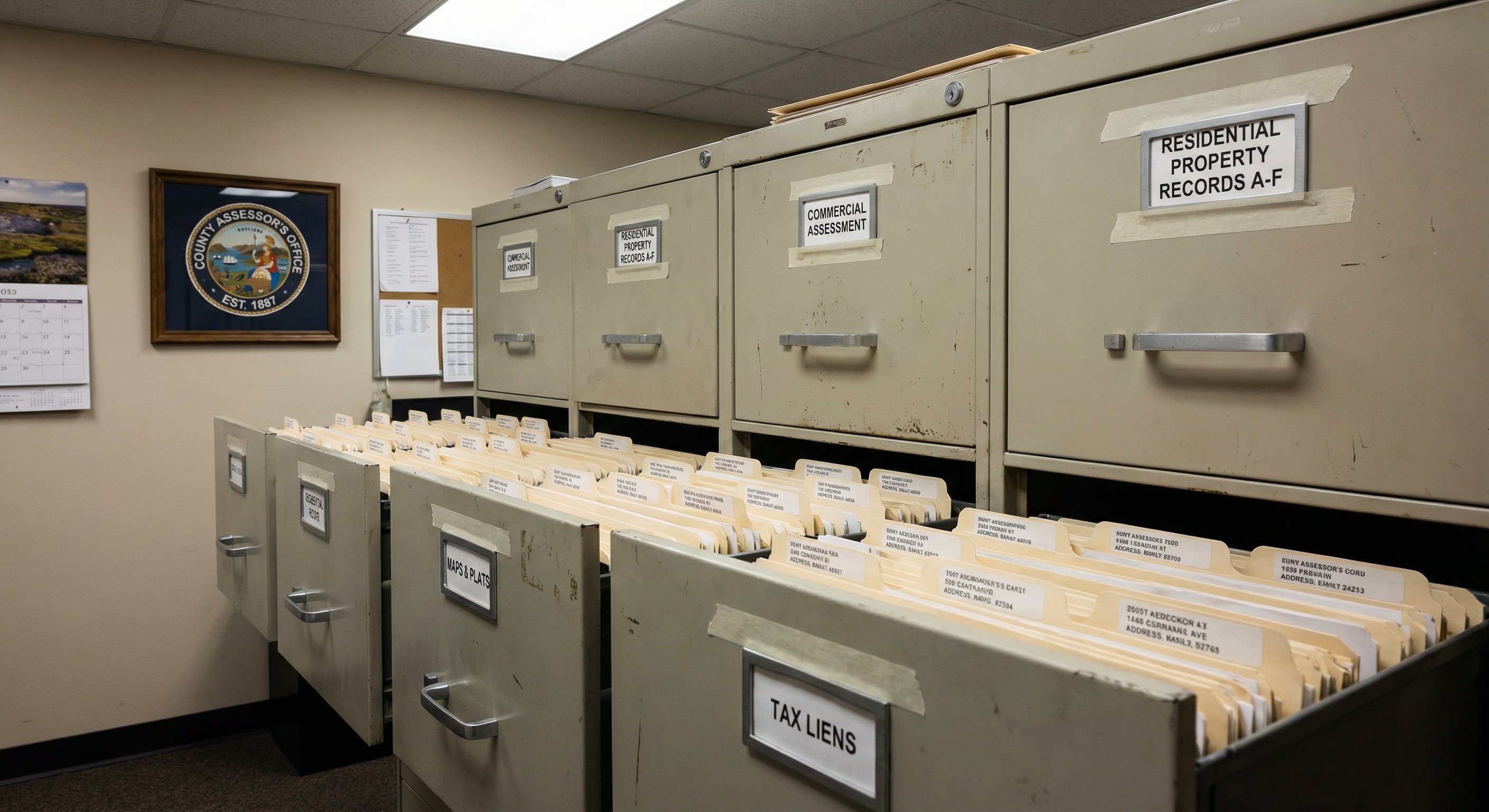
County assessor data includes occupancy status, last sale price, assessed value, and property tax history, allowing investors to calculate whether a property's ARV justifies the acquisition and rehabilitation costs. Assessor-verified property characteristics are especially valuable in Michigan where MLS coverage of distressed sales lags actual market activity.
Free Weekly Alerts
See What's Distressed in Your Market
Get free weekly alerts — new distressed properties, motivation scores, and hot neighborhoods in your area. Addresses and contact info available inside DistressIQ.
Free forever · No credit card · Unsubscribe anytime
The Code Enforcement Angle: How Municipal Violations Surface Vacant Property Leads
Code enforcement violations are one of the most direct signals of vacancy. When a property accumulates violations for overgrown vegetation, unboarded structural damage, or refuse accumulation, repeated failure to respond to enforcement notices typically indicates the property is unoccupied or the owner lacks resources to address the issues.
Detroit's Buildings, Safety Engineering, and Environmental Department maintains an online property search tool displaying open violations and enforcement actions. Smaller municipalities may publish notices through county court systems or maintain physical records at the city clerk's office. A property with three or more unresolved code violations and no recorded mortgage activity within the past 36 months represents a strong candidate for direct outreach.

Vacant Property Investment Economics in Michigan: What the Numbers Actually Say
Working vacant property leads in Michigan requires accepting that not every deal will pencil. The state's distressed inventory skews toward lower acquisition costs and higher rehab requirements than Sun Belt markets.
Acquisition prices for vacant properties in Detroit and Flint regularly fall in the $10,000 to $40,000 range for habitable but neglected structures. Properties requiring significant structural work can be had for under $10,000 in the most distressed neighborhoods. Mid-Michigan cities like Saginaw and Bay City price similarly, while northern vacation markets may carry distressed properties at $50,000 to $150,000 depending on location and condition.
Rehabilitation costs in Michigan run lower than national averages, with skilled trade labor at $35 to $65 per hour depending on market. A full kitchen and bath gut-rehab on a 1,200-square-foot home in the Flint area typically runs $30,000 to $50,000. Detroit metro comparable work costs $40,000 to $65,000 given higher contractor overhead.
After-repair values vary by submarket. A renovated 1,100-square-foot bungalow in a stable Flint neighborhood might appraise at $90,000 to $120,000. The same property in an improving Detroit neighborhood like Livernois or East English Village might reach $150,000 to $200,000. Investors who accurately assess ARV before acquiring leads consistently outperform those who estimate based on non-distressed comps.
Common Mistakes When Working Michigan Vacant Property Leads
Michigan's vacant property market punishes shortcuts harder than most markets because title issues and environmental complications are more prevalent here.
Buying without a title search is the most costly mistake. Michigan's judicial foreclosure process means that some properties carry undischarged mortgages, unpaid special assessments, or mechanic's liens from unfinished previous work. A $15,000 purchase price means nothing if the title carries $30,000 in unresolved liens. Every vacant property lead in Michigan should receive a full title search before any purchase agreement is signed.
Underestimating rehab costs is the second most common error. Properties vacant for five or more years in Michigan's freeze-thaw climate often have hidden water damage, mold, or foundation issues. Experienced Michigan investors budget 15 to 20 percent above their initial rehab estimate for contingencies.
Overpaying based on adjacent sale prices is the third pitfall. Comps in transitional neighborhoods shift dramatically within a single block. A renovated home on one street does not mean every home nearby is worth the same after renovation. Assessor-verified property data grounds ARV estimates in actual records rather than optimistic adjacent sales.
Using DistressIQ to Find Vacant Property Leads Across Michigan Counties
DistressIQ consolidates verified vacancy signals from county records across Michigan's 83 counties, organizing properties by distress type, motivation score, and physical characteristics. The platform surfaces leads with multiple concurrent signals, meaning a property flagged for code violations, tax delinquency, and mortgage default simultaneously ranks higher than a property with only one signal.
Instead of manually tabulating code enforcement records from Detroit's BSEED database, cross-referencing county tax rolls, and running parcel searches through multiple systems, investors get a single filtered view. Narrow results by county, signal type, assessed value range, and property type, then export for outreach. New signals appear within 24 hours of county publication.

Key Takeaways for Investors Targeting Michigan Vacant Property Leads
Michigan's vacant property inventory is structurally different from most other states. The Motor State combines urban vacancy in legacy cities, judicial foreclosure timelines that extend pre-foreclosure windows, and mature land bank infrastructure that creates alternative acquisition channels. Successful investors treat Michigan as a collection of distinct submarkets and filter leads accordingly.
Geographic precision is non-negotiable. Wayne, Genesee, Saginaw, Muskegon, and Kalamazoo counties generate the majority of actionable vacant property signals. Focusing on those five counties outperforms casting a net across all 83.
Signal stacking improves lead quality dramatically. Properties with multiple concurrent distress signals represent the highest-confidence opportunities. Single-signal leads require additional verification before committing acquisition resources.
Title issues are endemic in Michigan distressed inventory. Every vacant property lead should receive a full title search before purchase.
Rehab cost estimation requires local knowledge. Investors new to Michigan should build relationships with local contractors rather than relying on national cost databases.
Browse Michigan vacant property leads across all 83 counties scored and ranked by motivation on DistressIQ.
Frequently Asked Questions
Q: Does Michigan's judicial foreclosure process affect vacant property lead quality?
Yes. Michigan's judicial foreclosure process requires lender involvement with the court system before a property can proceed to sheriff's sale, adding two to four months to the pre-foreclosure window compared to non-judicial states. The extended timeline gives properties more time to accumulate vacancy signals and deteriorate, which can mean lower acquisition prices but higher rehab requirements. For investors, the longer window provides a better opportunity to identify and contact owners before the auction date.
Q: What Michigan counties have the most vacant property leads?
Wayne County, which includes Detroit, consistently holds the highest volume of vacant and distressed inventory. Genesee County (Flint), Saginaw County, Muskegon County, and Kalamazoo County round out the most active markets. Investors seeking volume should prioritize those five counties. Those seeking less competition may find better entry points in mid-sized cities like Bay City or Muskegon, where distressed inventory exists at lower density.
Q: How do Michigan land banks work for investors?
Michigan land banks, including the Michigan Land Bank Fast Track Authority and county-level authorities in Wayne and Genesee counties, acquire properties through the tax foreclosure process and resell them to investors who commit to rehabilitation. Land bank sales often offer properties at below-market prices with clear title, but purchase agreements typically require completion of rehabilitation within 12 to 24 months. Investors should review each land bank's specific acquisition terms before submitting an offer.
Q: Are Michigan vacant properties insurable during renovation?
Standard homeowner policies exclude coverage for properties vacant beyond 30 to 60 days. Investors should obtain a vacant building policy or a landlord policy immediately upon acquisition. These policies cover fire, vandalism, and weather damage but commonly exclude frozen pipe damage in unheated properties during Michigan winters, requiring winterization or smart monitoring systems as a precaution.
Q: What signals indicate a vacant property is a stronger investment opportunity?
Properties with multiple concurrent signals, such as active code violations, tax delinquency of 18 months or more, and an existing mortgage default, represent the highest-confidence leads. Positive indicators also include assessed values well above estimated land value and properties in neighborhoods with visible recent renovation activity indicating upward market momentum.
See Michigan vacant property leads across all 83 counties filtered by signal type and motivation score at DistressIQ.
The data behind this article
DistressIQ Monitors These Signals in Real Time
Pre-Foreclosures
NOD + NTS filings
Tax Delinquency
County treasurer records
Code Violations
Municipal inspection filings
Probate Filings
Superior Court records
Every lead is scored 0–100 for seller motivation based on signal type, duration, severity, and stacking. Nationwide coverage — every US county, updated daily.
Ready to find deals in your market?
See Live Distress Signals in Your County
Stop calling dead leads. Every lead in DistressIQ is scored 0–100 for seller motivation, with verified contact info included. Browse the free tier to see what's active in your market right now.
Browse Free Leads — No Credit Card