Vacant Property Leads in Georgia: How to Find and Work Them in 2026
Vacant Property Leads in Georgia: How to Find and Work Them in 2026
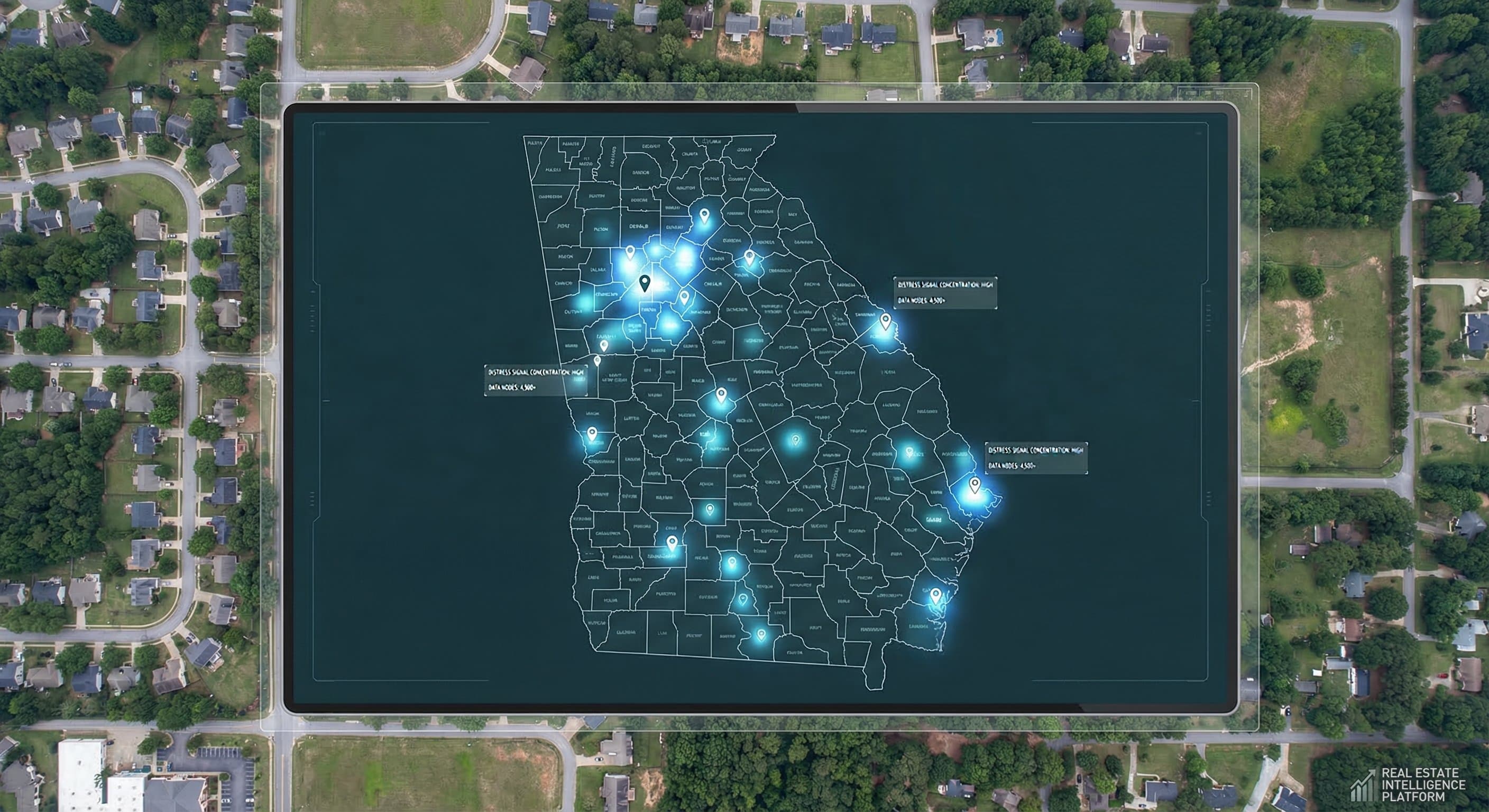
TL;DR: Georgia's non-judicial foreclosure process—one of the fastest in the country at 30-37 days—combined with its tax deed auction system creates a consistent flow of vacant properties. Investors find leads through county tax delinquency lists, USPS Vacancy Indicator Data, code violation databases, and city-level vacant property registries. The Atlanta metro produces the highest density of stacked-signal vacant leads, but Savannah, Augusta, and Macon all have active markets worth targeting.
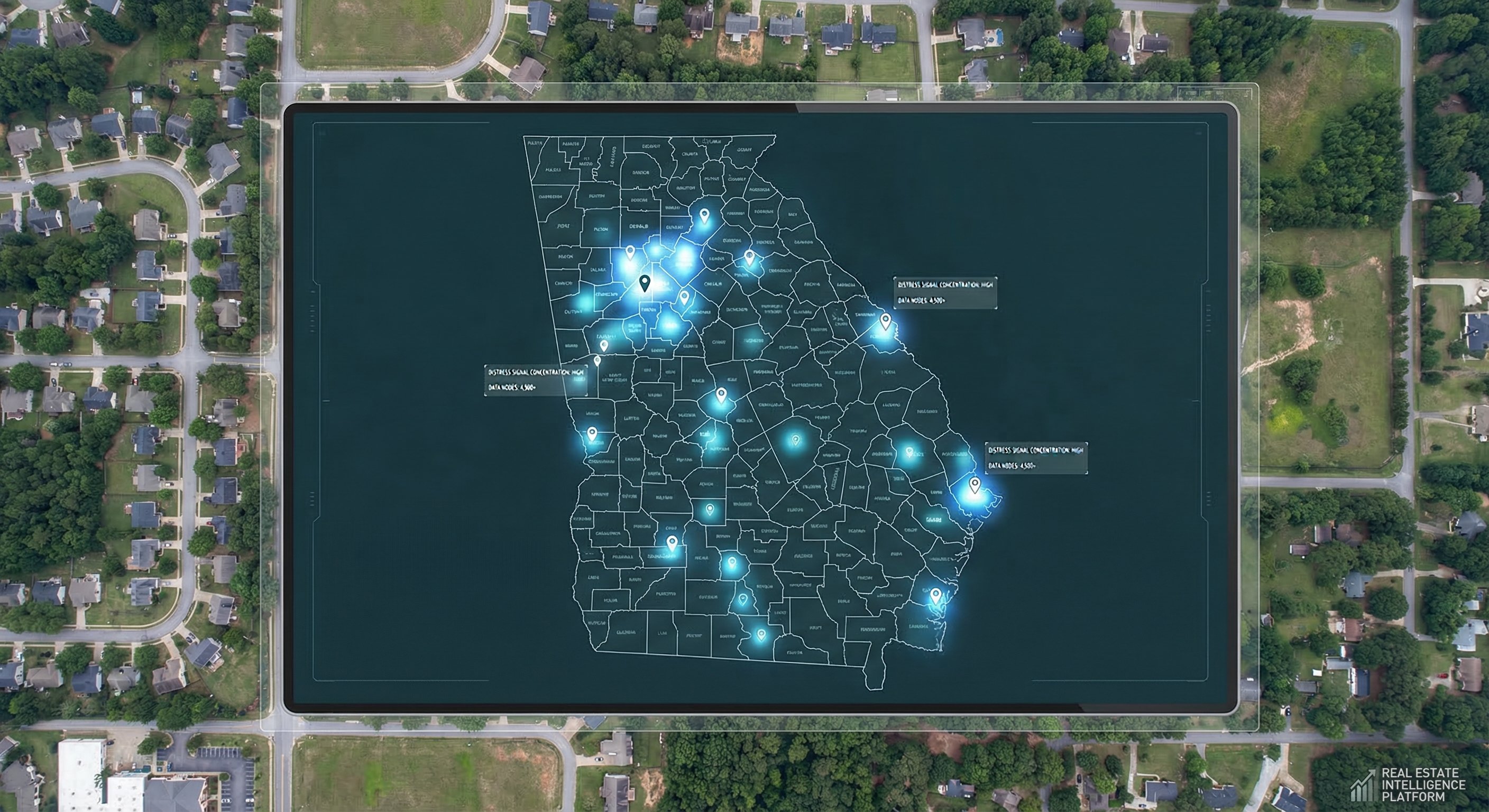
Georgia doesn't make national headlines the way Detroit or Cleveland do when vacant property comes up — but the numbers tell a different story. The Atlanta metro alone has hundreds of thousands of housing units, and vacancy rates in some suburban counties have lingered 3-5x above national averages since the 2008 crash. Add a non-judicial foreclosure process that converts delinquent owners to departed owners in under six weeks, and you've got a state that generates vacant property leads faster than most investors can work them.
The investors winning in Georgia aren't driving every street in DeKalb County hoping to spot an overgrown lawn. They're pulling county tax delinquency data, cross-referencing code violation databases, and stacking signals before they ever make a call. Here's how to do it right.
Why Georgia Has One of the Most Active Vacant Property Markets in the South
Georgia's vacant property problem is structural, not cyclical. Several forces compound it:
Post-2008 suburban sprawl hangover. Metro Atlanta's hyper-growth in the 2000s pushed development deep into surrounding counties — Cherokee, Henry, Paulding, Newton — that couldn't sustain prices when the market corrected. Owners who couldn't sell walked away. Many of those properties are still circulating in various stages of delinquency or vacancy nearly two decades later.
Absentee landlord concentration. Metro Atlanta has one of the largest investor-owned single-family rental markets in the country, fueled by institutional buying after 2012 and sustained by continued population growth. Many small landlords — particularly those who bought in the 2010-2015 recovery window — are now dealing with tenant vacancies they can't fill or deferred maintenance they can't fund. Out-of-state ownership means conditions deteriorate without the owner's awareness.
Fast foreclosure conversion. Georgia's non-judicial process means a lender can go from notice to courthouse steps in as little as 30 days once a mortgage crosses a delinquency threshold. Properties often sit vacant for months before any public notice appears — and then sit again after the sale if the bank doesn't move quickly to list or secure the asset.
Rural-to-metro migration. Secondary cities like Macon, Albany, and Valdosta have experienced steady population outflows as residents relocate to Atlanta or out of state. The properties left behind sit on thin rental markets with diminishing buyer pools and owners who often lack the motivation or capital to maintain them.
How Georgia's Legal Framework Shapes the Opportunity
Understanding Georgia's property laws isn't just academic — it determines where you look and when you move.
Non-judicial foreclosure state. Georgia lenders can foreclose without going to court. The process begins with a Notice of Default, requires public advertisement for four consecutive weeks in the county's designated legal organ (official legal newspaper), and concludes at the courthouse steps — typically on the first Tuesday of the month. Total timeline from notice to sale: 30-37 days. This speed creates a lead window: properties are often vacant weeks before any public record appears, giving informed investors a head start.
Tax deed state. Georgia counties sell actual tax deeds — not just certificates — at their annual tax sales. When a property sells at a Georgia tax auction, the buyer receives the deed subject to a 12-month right of redemption by the original owner. After that window closes with no redemption activity, the purchaser holds clear title. Knowing which properties recently went through tax auction — and whose redemption window is approaching expiration — creates a legitimate motivated-seller pipeline.
12-month right of redemption. Post-tax sale, the original owner (or heirs) can reclaim the property by paying the back taxes plus a 20% penalty. This means recent tax deed purchasers in that window are sometimes motivated to sell before the clock runs out, and original owners who can't redeem are under increasing pressure. Both parties are worth contacting.
City-level vacant property registries. Atlanta, Savannah, and several other Georgia municipalities require owners of vacant structures to register with the city and pay annual registration fees. These registries are public records — and a list of registered vacant properties with owner contact information is essentially a pre-built lead list that most investors ignore.
Where to Find Vacant Property Leads in Georgia
There are five primary sources for vacant property data in Georgia, each with different strengths:
1. County Tax Delinquency Lists
Every Georgia county tax commissioner publishes lists of properties with delinquent taxes before annual tax sales. These are public records. Search "[county name] county Georgia delinquent tax list" to locate each county's publication schedule and portal. Fulton, DeKalb, Clayton, and Gwinnett maintain searchable online databases.
Properties with 2+ years of tax delinquency correlate strongly with vacancy. When an owner stops paying taxes, they've usually stopped maintaining the property — and frequently stopped living there. This is your highest-volume, most reliable starting point.
Best counties to pull: Fulton (Atlanta), DeKalb (suburban Atlanta), Clayton (south metro), Chatham (Savannah), Richmond (Augusta), Bibb (Macon).
2. USPS Vacancy Indicator Data
The United States Postal Service tracks delivery-point vacancy at the address level. Properties flagged as "no mail delivery" for 90+ consecutive days are strong vacancy indicators. This data is licensed through property intelligence providers and forms one of the most reliable single-signal markers of true vacancy — as opposed to simply an absent owner who collects mail infrequently. According to the USPS, approximately 1 in 8 addresses in some Georgia metro zip codes carried an active vacancy flag as of recent reporting periods.
3. Code Violation Databases
Georgia's major cities maintain publicly searchable code enforcement databases. Atlanta's code enforcement portal (accessible through the city's online services), Savannah's code compliance system, Augusta-Richmond County's code enforcement office, and Columbus/Muscogee County's permit department all track open violations.
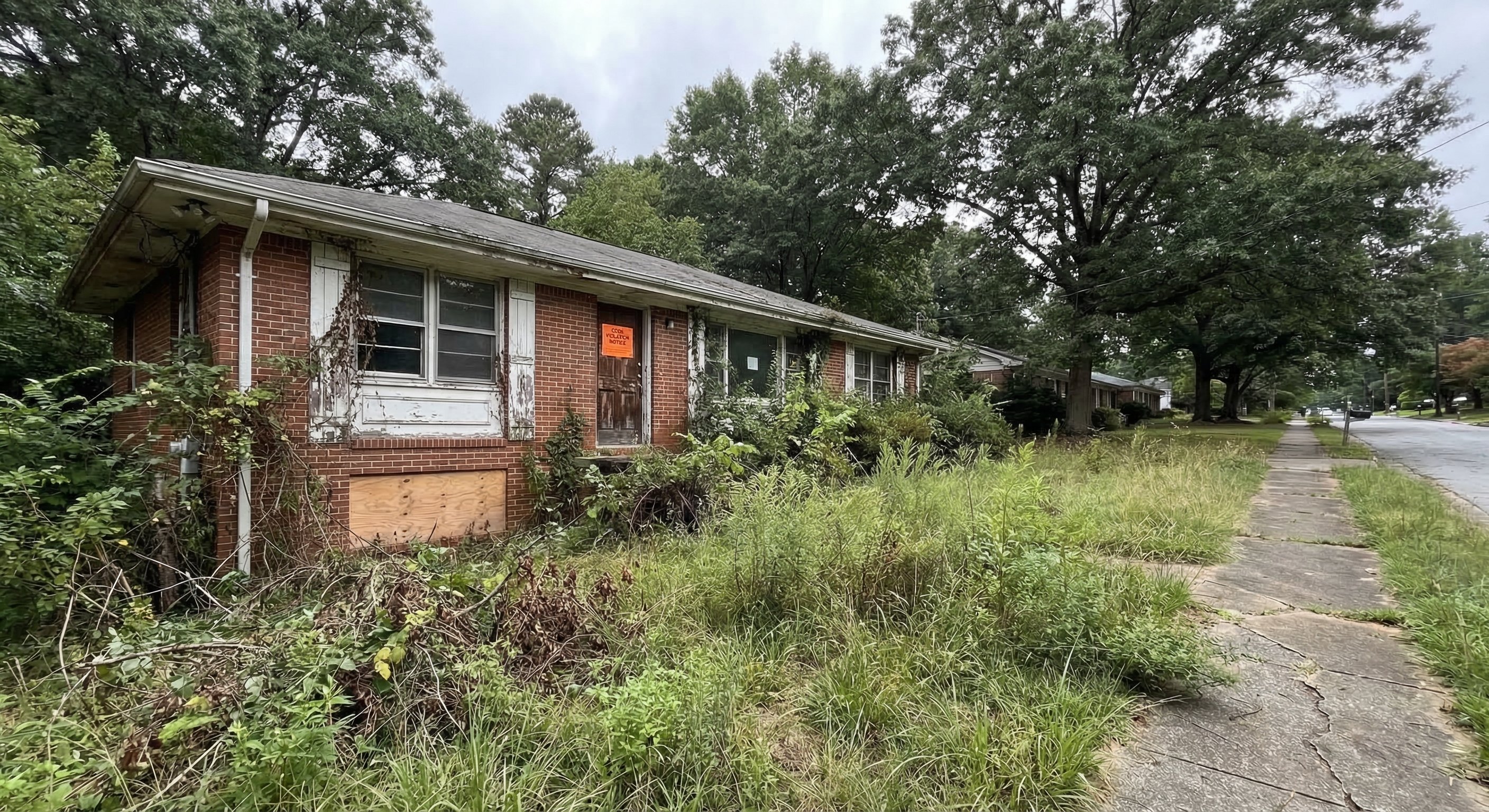
A code violation alone doesn't guarantee vacancy — but three or more violations (tall grass, unsecured structure, broken windows, deteriorated exterior) on a property that also appears on the tax delinquency list and carries a USPS vacancy flag is a near-certain signal of owner absence.
4. City Vacant Property Registries
Atlanta's Vacant Buildings Ordinance (Atlanta City Code Section 18-6) requires owners of vacant structures to register with the city and pay annual registration fees beginning at $1,000 for the first year, escalating for continued vacancy. Registration is required within 30 days of a structure becoming vacant and must include owner contact information. The registry is a public record — and an underused lead source.
Savannah maintains a similar vacant property program for its historic districts, driven in part by preservation pressure on long-vacant historic structures.
5. County Assessor Absentee Owner Records
Georgia county assessors maintain property records that include both the property address and the owner's mailing address. When those differ, the property is absentee-owned. Filtering for absentee owners who also appear on the delinquent tax list — particularly those with out-of-state mailing addresses — produces a highly motivated seller segment. Layer in a USPS vacancy flag and you've got a stacked-signal lead worth prioritizing immediately.
Free Weekly Alerts
See What's Distressed in Your Market
Get free weekly alerts — new distressed properties, motivation scores, and hot neighborhoods in your area. Addresses and contact info available inside DistressIQ.
Free forever · No credit card · Unsubscribe anytime
Key Georgia Counties for Vacant Property Leads
Not all Georgia counties are equal. Here's where the density is highest and why:
DeKalb County. One of the most consistently high-vacancy suburban counties in the state. A combination of post-foreclosure recovery, high tenant turnover, and a large absentee landlord investor base keeps the pipeline active. Code enforcement is aggressive here — which means the violation database is well-maintained and highly useful for lead sourcing. DeKalb's tax sale calendar typically runs in late summer.
Fulton County. Home to Atlanta proper plus significant unincorporated territory. Highly variable — some of the best neighborhoods in Georgia sit next to corridors with persistent vacancy. South Fulton, which underwent a complex municipal incorporation process in recent years, has had particular concentration of deferred maintenance and absentee-owned vacant properties.
Clayton County. Just south of Atlanta's Hartsfield-Jackson airport, Clayton has one of the highest combined foreclosure-and-vacancy rates in the metro. Fast population turnover, a heavily renter-occupied housing stock, and thin margins for small landlords keep vacancy elevated year over year.
Chatham County (Savannah). Savannah's historic district creates a unique dynamic — historic preservation requirements make renovation expensive, so some owners simply walk away from properties they can't profitably improve. The surrounding suburban areas also carry significant absentee investor concentration from out-of-state buyers attracted to Savannah's tourism-driven economy.
Richmond County (Augusta). Augusta sits at a distinctive inflection: Fort Eisenhower and Augusta University generate demand, but the city's aging housing stock — particularly in north Augusta residential corridors — generates consistent vacancy as structures age past the point of easy maintenance.

Why Stacking Signals Changes Everything
A vacant property with a single USPS vacancy flag is a lead. A vacant property with a USPS flag, two years of delinquent taxes, three code violations, and an absentee owner whose mailing address is in California is a deal.
Signal stacking turns a list of 500 generic addresses into a ranked pipeline of 50 high-probability motivated sellers. It also saves your skip tracing and direct mail budget for contacts who are actually worth reaching. Here are the three most powerful stacks for Georgia:
Stack 1: Vacancy + Tax Delinquency USPS non-delivery + 2+ years delinquent taxes = owner has disconnected entirely. They're paying nothing and maintaining nothing. They want out — they just haven't been approached by the right buyer with the right offer.
Stack 2: Code Violations + Absentee Owner Three or more open code violations stacked on an absentee owner record = an owner who isn't showing up to address problems. Georgia municipalities escalate unresolved violations to mandatory repair orders and eventually nuisance liens. Sellers facing active liens are substantially more motivated to negotiate.
Stack 3: Tax Deed + Approaching Redemption Deadline Properties that sold at Georgia tax auction in the past 9-11 months with no redemption activity are approaching the critical 12-month deadline. The original owner either can't redeem or has decided not to. A well-timed outreach before the deadline — offering to help them settle and exit cleanly — can produce deals at significant discounts.
How to Work Vacant Leads in Georgia
Finding leads is step one. Converting them is the work. Here's what actually moves the needle:
Direct mail to the owner of record. Use the county assessor's records to find the mailing address on file — not the property address, since the owner isn't there. Two letters, 30 days apart, with a simple offer. Response rates on stacked-signal vacant properties run 3-8x higher than generic cold absentee owner lists.
Code violation follow-up timing. When Atlanta, DeKalb, or another municipality issues a mandatory repair order with a compliance hearing date, the owner will either fix it (no deal) or ignore it (escalating motivated seller). Monitoring the compliance docket and reaching out 30-60 days before a scheduled hearing puts you in front of sellers at peak motivation.
Skip tracing for hard-to-find owners. Georgia's probate courts maintain publicly accessible estate records — heirs of deceased owners often don't know they own a vacant property and are highly motivated to sell when a legitimate buyer contacts them. Cross-referencing probate filings with vacant property addresses produces a niche but high-conversion lead type. The Uniform Probate Code doesn't apply in Georgia; each county handles probate through its own superior court.
Driving for dollars. Georgia's suburban grid is eminently driveable. Run a systematic loop through target zip codes and use a lead capture app to flag properties as you drive. The gap between what tax records show and what the property looks like from the street often reveals delinquency or vacancy before any database picks it up.

Key Takeaways
- Georgia's 30-37 day non-judicial foreclosure process creates vacant properties faster than most states — the pipeline is consistent and predictable
- Tax deed state: county auctions sell actual deeds with a 12-month right of redemption — know this timeline before bidding or contacting post-auction owners
- Best counties for lead volume: DeKalb, Fulton, Clayton (Atlanta metro); Chatham (Savannah); Richmond (Augusta)
- Stack at least 2-3 signals before prioritizing outreach — vacancy alone isn't enough to justify the contact cost
- Atlanta's Vacant Buildings Registry and similar city programs are underused public data sources with built-in owner contact information
- The 12-month post-tax-auction redemption window creates a motivated seller niche most investors overlook entirely
Finding every vacant property in Georgia manually would take a team and months of work. DistressIQ cross-references USPS vacancy data, county tax records, code violation files, probate signals, and 27 other signal types across 3,200+ counties — then stacks them on every address automatically.
Founding member pricing locks in 30% off for life — fewer than 50 spots remaining. Starter $89, Pro $174, Elite $349/mo.
Browse vacant property leads in Georgia on DistressIQ →
Frequently Asked Questions
Q: Is Georgia a tax lien or tax deed state?
Georgia is a tax deed state. When a property owner fails to pay property taxes, the county holds a tax sale and sells the actual deed — not just a lien certificate — to the highest bidder. The original owner retains a 12-month right of redemption, during which they can reclaim the property by paying the delinquent taxes plus a 20% penalty. After the redemption window expires with no action, the purchaser holds clear title. This system creates two distinct lead opportunities: pre-sale (reaching delinquent owners before the auction) and post-sale in the redemption window.
Q: How long does foreclosure take in Georgia?
Georgia uses a non-judicial foreclosure process — lenders can foreclose without court involvement. The required steps are: Notice of Default sent to the borrower, followed by four consecutive weeks of advertisement in the county's designated legal organ (official legal newspaper). Sale occurs at the courthouse steps, typically on the first Tuesday of the month. Total timeline from first notice to sale: approximately 30-37 days. This is among the fastest foreclosure timelines in the country, which means properties can transition from occupied-and-delinquent to vacant quickly.
Q: Where can I find a vacant property list in Georgia?
Multiple public sources exist: (1) County tax delinquency lists published before annual tax sales — search "[county] county Georgia delinquent tax list"; (2) Atlanta's Vacant Buildings Registry for properties within city limits; (3) Code enforcement violation databases maintained by Atlanta, Savannah, Augusta-Richmond County, and Columbus/Muscogee; (4) County assessor records identifying absentee owners. Platforms like DistressIQ aggregate and cross-reference these sources automatically across all Georgia counties, updated daily from county records.
Q: What are the best Georgia counties for vacant property investing in 2026?
DeKalb, Fulton, and Clayton counties in the Atlanta metro consistently produce the highest volume of stacked-signal vacant leads. Outside metro Atlanta: Chatham County (Savannah), Richmond County (Augusta), Bibb County (Macon), and Muscogee County (Columbus). For suburban metro Atlanta expansion, also target Henry, Rockdale, and Newton counties — post-2008 sprawl areas with above-average long-term vacancy rates and relatively thin investor competition compared to in-town Fulton and DeKalb.
Q: Do I need to worry about squatters on vacant properties in Georgia?
Yes. Squatter issues are a real consideration on long-vacant Georgia properties. Georgia's adverse possession law requires 20 years of open, continuous occupation for a squatter to establish a claim — but removal through the courts is a more immediate concern. Georgia's dispossessory (eviction) process for unlawful occupants typically takes 30-60 days through the magistrate court. Buyers should inspect before closing and factor in the cost and timeline of removal if the property shows signs of occupation.
Q: What is Atlanta's Vacant Buildings Ordinance?
Atlanta's Vacant Buildings Ordinance (City Code Section 18-6) requires owners of vacant residential and commercial structures to register with the city within 30 days of the structure becoming vacant. Annual registration fees begin at $1,000 and escalate for continued vacancy. Registration includes owner contact information, which becomes a public record. Non-compliance subjects owners to fines and eventually liens — creating additional motivation to sell. The registry is publicly searchable and represents an underused lead source for Atlanta-focused investors.
Q: How do I find absentee owner vacant properties in Georgia?
Start with the Georgia county assessor's property records, which include both the property address and the owner's mailing address. Where those differ, the property is absentee-owned. Filter that list for properties also appearing on the county delinquent tax roll — particularly those with 2+ years of delinquency. Cross-reference with USPS vacancy indicators if available. Out-of-state mailing addresses combined with delinquent taxes and a vacancy flag represent the highest-priority motivated seller segment in the state.
Ready to build your Georgia vacant property pipeline without spending weeks pulling county data? DistressIQ stacks 31 signal types — vacancy, tax delinquency, code violations, absentee ownership, probate, and more — across every Georgia county, updated daily from county records. Founding member pricing locks in 30% off for life.
The data behind this article
DistressIQ Monitors These Signals in Real Time
Pre-Foreclosures
NOD + NTS filings
Tax Delinquency
County treasurer records
Code Violations
Municipal inspection filings
Probate Filings
Superior Court records
Every lead is scored 0–100 for seller motivation based on signal type, duration, severity, and stacking. Nationwide coverage — every US county, updated daily.
Ready to find deals in your market?
See Live Distress Signals in Your County
Stop calling dead leads. Every lead in DistressIQ is scored 0–100 for seller motivation, with verified contact info included. Browse the free tier to see what's active in your market right now.
Browse Free Leads — No Credit Card