Vacant Property Leads in Florida: How to Find and Work Them in 2026
Vacant Property Leads in Florida: How to Find and Work Them in 2026
TL;DR: Florida has one of the highest concentrations of vacant and abandoned properties in the country, driven by seasonal owners, high foreclosure rates, and estate situations that leave homes sitting for months. Investors can find vacant property leads through county code enforcement databases, tax delinquency records, water utility shutoff lists, and tools like DistressIQ that stack multiple distress signals to surface the highest-priority vacant leads statewide. The best opportunities are properties showing vacancy plus at least one additional signal — tax delinquency, code violation, or pre-foreclosure status.
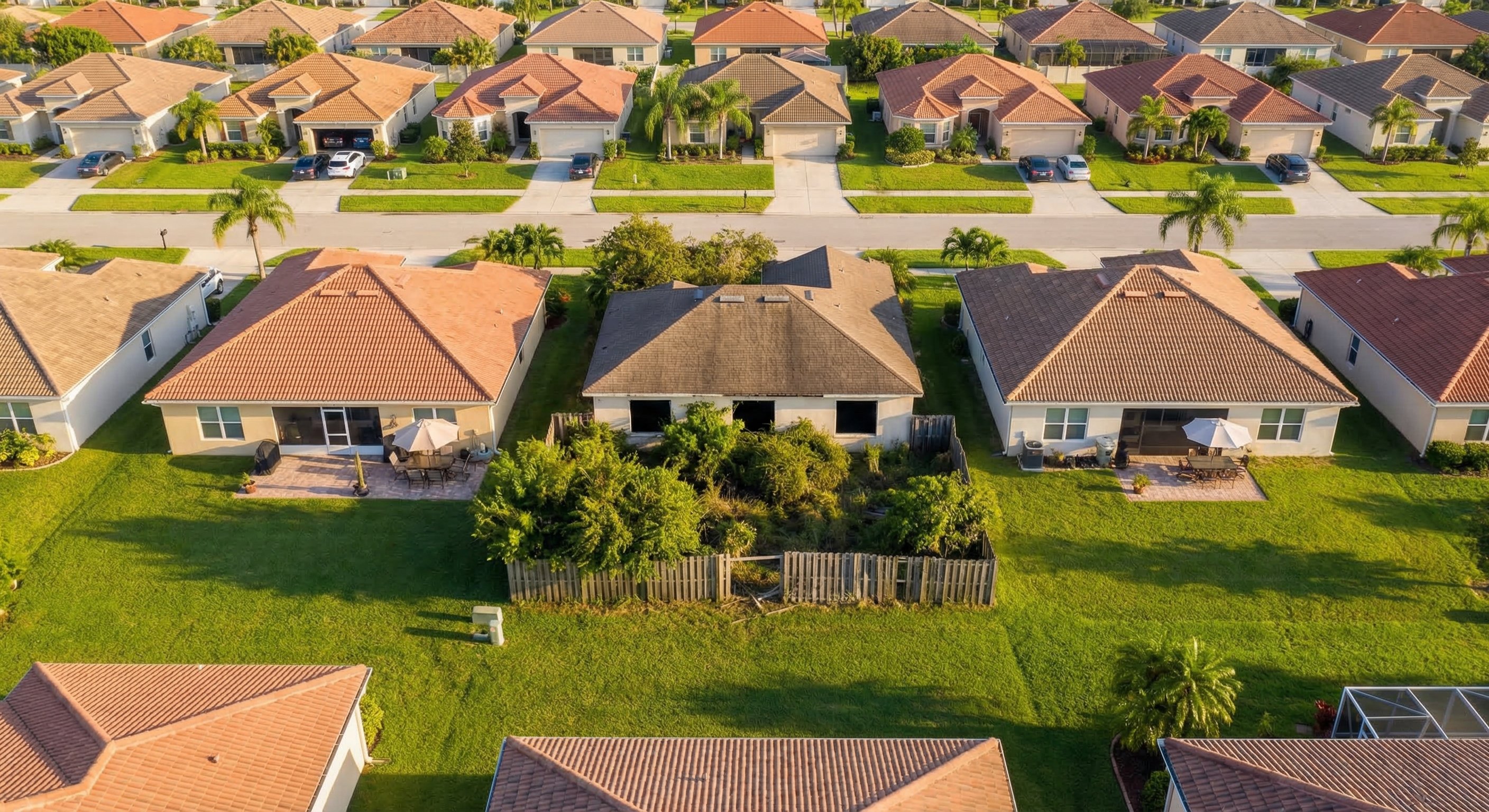
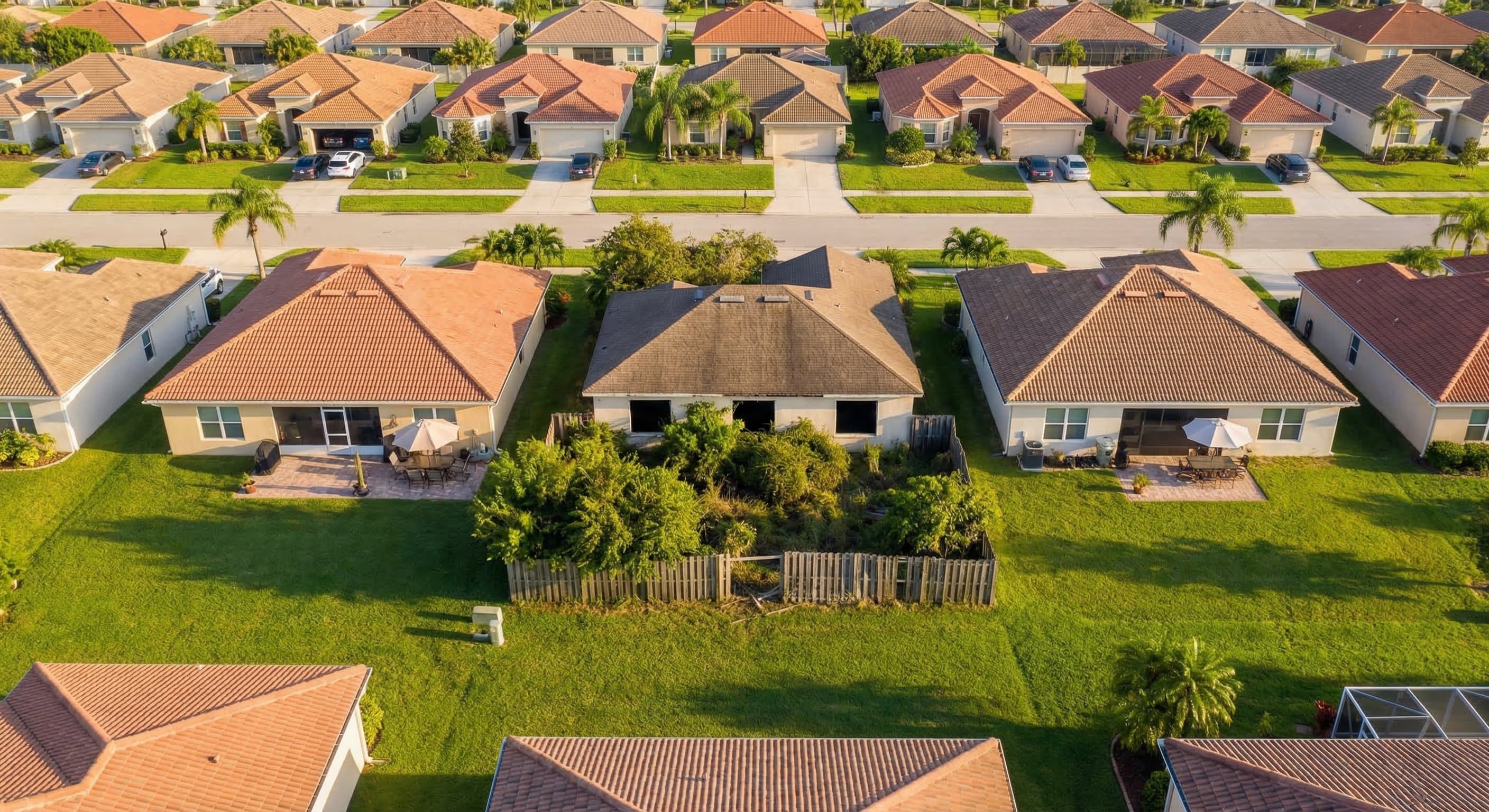
Florida consistently ranks among the top five states for vacant property volume. According to U.S. Census Bureau data, the state carries a vacancy rate roughly double the national average — partly because of its enormous snowbird population leaving properties empty nine months a year, and partly because post-foreclosure REO inventory and long probate timelines leave a trail of sitting assets in every county. For investors, that's a deep pool of motivated sellers. But "vacant" alone doesn't mean "deal" — the edge belongs to whoever identifies which vacancies actually have pressure behind them.
Why Florida Has So Many Vacant Properties
Florida's vacancy problem is structural, not cyclical. A few forces combine to keep it elevated year after year:
Seasonal ownership. Florida hosts roughly 1.5 million seasonal residents annually. Many own second homes they visit for 3-4 months and leave dark the rest of the year. When those owners age out, face health changes, or die — those properties enter a gray zone between active use and estate sale. Heirs in distant states often delay decisions for months or years.
High foreclosure throughput. Florida is a judicial foreclosure state, meaning every foreclosure must go through the court system. The upside for investors: the timeline is long (often 12-24 months from first filing to auction), creating a large pre-foreclosure window. The side effect: partially-foreclosed homes sit vacant for extended periods while courts process the case.
Estate and probate backlog. Florida's median age is among the highest of any state. Probate takes an average of 9-18 months in Florida even for simple estates — longer for contested ones or properties with title issues. During that period, nobody is maintaining the lawn, paying utility bills, or keeping the home marketable.
Code violation accumulation. Miami-Dade, Broward, Palm Beach, Hillsborough, and Duval counties all run active code enforcement programs. Properties with uncut grass, unsecured structures, or standing water get flagged quickly. A code violation on a vacant property almost always means the owner is absent — and often in a situation where they can't or won't deal with the property.
Understanding WHY a property is vacant matters because it determines how you approach the owner and what kind of deal structure makes sense.
Where to Find Vacant Property Leads in Florida
1. County Tax Collector Databases
Every Florida county publishes property tax data, and delinquency is often the first signal of vacancy. A property that's tax-delinquent AND vacant is a high-priority target. Florida has a 2-year redemption period before a tax deed sale, so properties often sit in delinquency for 1-2 years before anything happens — plenty of time for a direct approach to the owner.
Start with these high-volume counties for the most leads:
- Miami-Dade County: Search the MIAMI-DADE TAX COLLECTOR portal (miamidade.gov) for delinquent properties. The county also maintains a separate Vacant Property Registry.
- Broward County: broward.org/RecordsTaxesTreasury — tax delinquency records are publicly searchable.
- Palm Beach County: pbctax.gov — excellent data. Palm Beach has a disproportionate share of seasonal vacant homes.
- Hillsborough County: hillstax.org — Tampa metro, strong investor market.
- Orange County: octaxcol.com — Orlando metro, tourism-adjacent vacancies are common.
- Pinellas County: tpcollector.org — St. Pete/Clearwater, coastal properties with high vacancy rates.
- Duval County: coj.net — Jacksonville, the largest city by land area in the contiguous US. Massive inventory.
The limitation: pulling tax delinquency lists manually takes hours per county, and Florida has 67 counties.
2. Code Enforcement Violation Lists
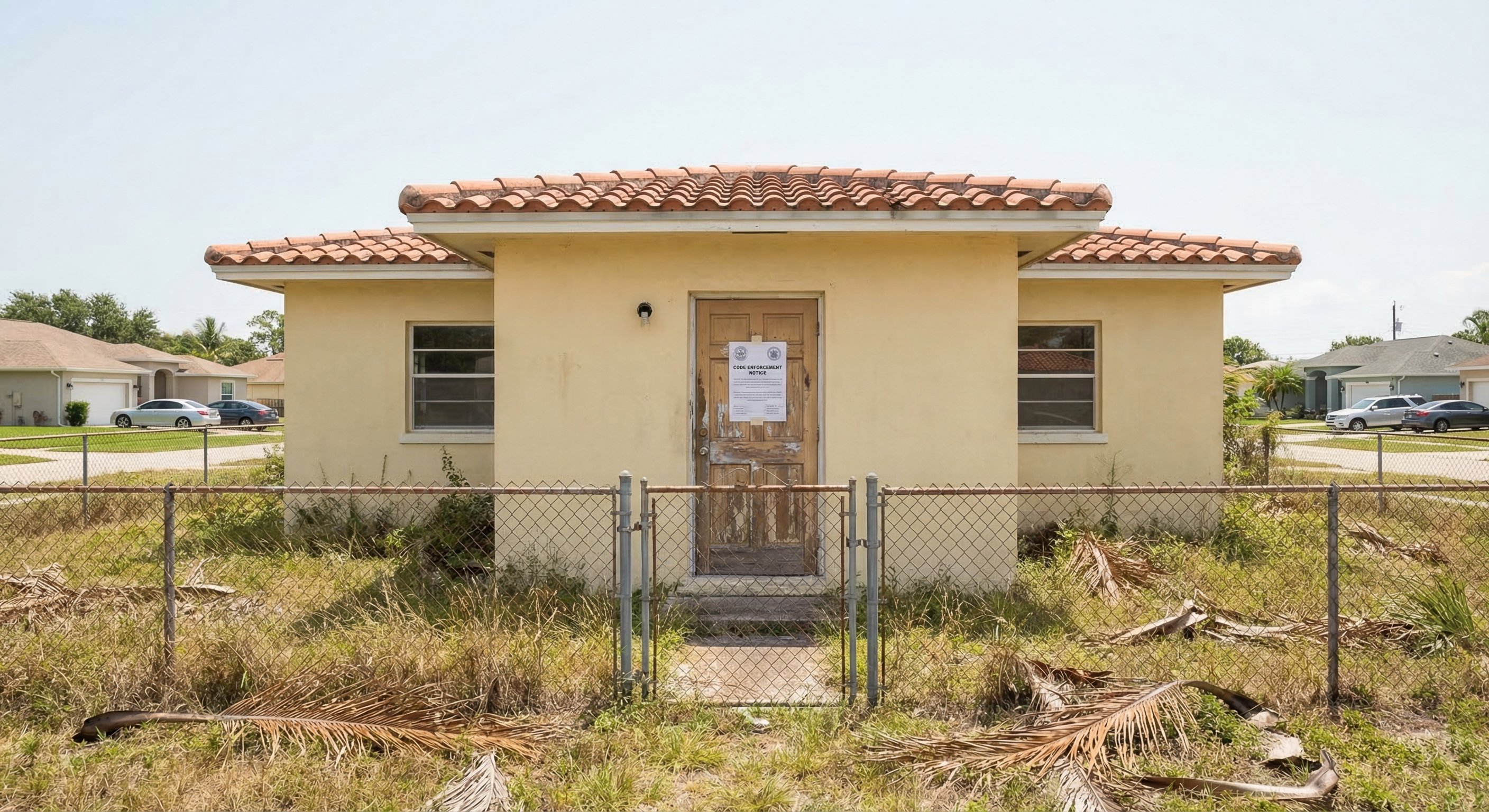
Code enforcement data is public record in Florida. Properties with active violations are almost always vacant or owner-absent. A home generating repeated code violations — uncut grass, unsecured structure, broken windows — signals an owner who either can't or won't maintain it. That's a motivated seller profile.
In Miami-Dade, the Building and Neighborhood Compliance division maintains a public violation tracker. In Broward, code enforcement cases are searchable through the county's online portal. Orange County (Orlando) publishes a searchable code case database online.
Practically, manually pulling these lists is time-consuming. The gold is in matching code violation properties to owner contact info — which requires skip tracing to find non-local owners.
3. Water and Utility Records (When Accessible)
Utility shutoffs are a strong vacancy proxy. A property with no water usage for 90+ days is almost certainly vacant. Florida utility data is technically public record in some jurisdictions under sunshine law, but accessibility varies. Some counties publish it; many require a formal records request.
Hillsborough County and some Orange County municipalities have provided utility data in response to public records requests. It's worth submitting a formal request to local utilities if you're focused on a specific market — the list you get back will be more current than tax records.
4. USPS Vacant Property Data
USPS tracks mail delivery status and publishes a Vacant and No-Stat address dataset updated monthly. It's available to licensed subscribers (aggregated by research firms and data providers). This is one of the cleanest vacancy signals because it comes directly from mail carriers who physically observe the property.
The limitation: USPS flags vacancy, but it doesn't tell you WHY — there's no indication of foreclosure status, tax situation, or probate. You need to layer other signals to find motivation.
5. Stacked Signal Platforms
The most efficient approach isn't pulling any one data source — it's finding properties where multiple signals overlap simultaneously.
A property that's:
- Vacant (USPS no-mail delivery or utility shutoff)
- Tax delinquent (missed 1-2 years of payments)
- Code violation active (enforcement flagged recently)
…is fundamentally different from a property that's just vacant. The first profile signals a genuine crisis — someone who can't or won't deal with the property. The second might just be a snowbird who's fine.
DistressIQ aggregates 31 signal types across 3,200+ counties nationwide, stacking them so investors see which Florida properties are showing multiple distress indicators simultaneously. Florida is one of the highest-coverage states — both county recorder data and code enforcement feeds are deeply indexed.
Florida Vacant Property Laws Investors Need to Know
The Florida Vacant Property Registration Ordinances
Many Florida municipalities require owners of vacant properties to register them with the city and pay an annual fee. These registries exist to:
- Track accountability for property maintenance
- Identify owners of long-vacant structures
- Assess fines for code violations
Miami has one of the most active programs — properties vacant more than 90 days must register with the city. Fort Lauderdale, Tampa, and St. Petersburg all have similar ordinances. The investor angle: these registries are public record. A property on the municipal vacant registry is, by definition, a confirmed vacancy with a known owner of record.
Florida Tax Deed Sales
Florida is a tax lien state — counties sell tax lien certificates at annual auctions (held June through September in most counties). Certificate holders receive interest (up to 18% in Florida). After 2 years of nonpayment, the certificate holder can apply for a tax deed, forcing a sale.
For investors focused on vacant properties:
- Tax lien certificates are a path to eventual ownership
- Vacant properties with delinquent taxes are prime targets at tax deed auctions
- Many Florida investors monitor tax deed sale calendars county by county
Key county tax deed auction resources:
- Miami-Dade: Miami-Dade Clerk of Courts
- Broward: browardclerk.org
- Palm Beach: mypalmbeachclerk.com
- Orange County: myorangeclerk.realforeclose.com
Florida's Homestead Exemption Does NOT Protect Vacant Properties
Florida's homestead laws protect primary residences from forced sale for most creditors — but homestead protection explicitly does not apply to vacant properties or investment properties. This matters because owners can't claim homestead protection as a negotiating shield if the property isn't their primary residence.
Free Weekly Alerts
See What's Distressed in Your Market
Get free weekly alerts — new distressed properties, motivation scores, and hot neighborhoods in your area. Addresses and contact info available inside DistressIQ.
Free forever · No credit card · Unsubscribe anytime
How to Evaluate a Vacant Property Lead in Florida
Not all vacancies are equal. Here's a prioritization framework:
Tier 1 — High Priority (work immediately):
- Vacant + tax delinquent 2+ years
- Vacant + active code violations
- Vacant + pre-foreclosure filing (lis pendens on record)
- Vacant + out-of-state owner address + probate case open
Tier 2 — Monitor and Approach:
- Vacant + tax current + clean title (snowbird scenario — lower motivation)
- Vacant + owned free and clear (no mortgage pressure, but may respond to lifestyle offer)
- Vacant + recent utility shutoff (early stage — owner may still be engaged)
Tier 3 — Low Priority:
- Vacant + active marketing (already in the sale process)
- Vacant + recent transfer (just sold or inherited, not enough time to create motivation)
The goal is Tier 1 leads. These are owners under genuine financial or logistical pressure. A snowbird who simply hasn't visited in 8 months is a different conversation than an out-of-state heir dealing with a code-violation property they've never seen.
Outreach Strategies for Florida Vacant Property Owners
Finding the Owner
Vacant properties often have mailing addresses different from the property address. Florida property records (available through each county's property appraiser site) show the owner's mailing address — frequently an out-of-state address for vacant properties.
For owners with no current address match, skip tracing is the standard next step. Quality skip tracing tools will find current phone numbers and addresses using phone carrier data, utility records, and credit header data.
The Right Message Angle
Avoid the "I know your house is empty" opener — it can feel invasive. Instead, frame around solutions:
For tax-delinquent vacant owners: "I'm a local investor and I noticed your property at [address] may have some challenges. If you're looking for a straightforward option to sell without the headache of listing, repairs, or carrying costs, I'd be glad to discuss options."
For probate/estate situations: This one requires empathy first. The owner may have recently lost someone. Acknowledge the situation if it comes up. Focus on removing their burden, not your opportunity.
For seasonal owners: "I'm reaching out because I work with homeowners in [area] who are considering their options on Florida properties. If the timing ever works for you to explore selling, I'd welcome a conversation."
The Florida market moves fast in season (October–April). Outreach timed to the spring transition period — when seasonal owners are heading home and reconsidering whether they want to return next year — tends to get higher response rates.

The High-Volume Florida Markets for Vacant Property Leads
Miami-Dade and Broward (South Florida)
The highest concentration of vacant investment-grade properties in the state. Miami-Dade had over 30,000 properties in some stage of delinquency as of recent reporting from the county tax collector. The key dynamics:
- Dense urban core with genuine distress (code violations, unpaid taxes, estate situations)
- Seasonal vacation properties in coastal zones
- Strong investor demand = competitive on pricing, but the deal volume justifies it
Tampa Bay (Hillsborough, Pinellas, Pasco)
Tampa metro has expanded rapidly, pushing more investors into surrounding counties where deals still exist. Hillsborough County specifically:
- Active code enforcement with a public-facing case tracker
- Post-hurricane vacancy clusters (Ian and subsequent storms left behind accelerated abandonment)
- Strong wholesale buyer network = good exit strategy once you have the lead
Orlando Metro (Orange, Osceola, Seminole)
Tourism-economy adjacent: lots of investor-owned rental properties in the short-term rental zone that go vacant between owners. Osceola County (Kissimmee area) has high concentrations of vacant short-term rental properties from investors who bought during the 2021 VRBO boom and couldn't sustain the carrying costs.
Jacksonville (Duval) and Northeast Florida
Jacksonville is underserved relative to its size. As the largest city by land area in the contiguous US, Duval County has enormous inventory spread across many micro-markets. Vacancy rates in some inner-city Jacksonville zip codes run well above state averages. Less investor competition than South Florida, which improves economics.
Panhandle (Escambia, Santa Rosa, Bay Counties)
Post-hurricane Bay County (Panama City area) still carries elevated vacancy from Hurricane Michael (2018). Properties that were damaged, partially repaired, and then abandoned are concentrated in certain neighborhoods — these show code violation stacks and delinquent taxes simultaneously.
Stacking Signals: The Florida Investor Advantage
Florida's data transparency gives sophisticated investors a real edge. Between:
- 67 county property appraiser sites (all online and searchable)
- Active code enforcement public trackers in major metros
- County clerk lis pendens and probate filings (publicly searchable)
- Municipal vacant property registries in major cities
- State-level foreclosure data (Florida requires lis pendens filing to initiate foreclosure)
…the raw data exists. The problem is assembly. Manually checking all these sources for a single county takes hours. For a statewide operation, it's impossible at scale.
This is the core value proposition of data aggregation tools: pulling all these sources into a unified view, stacking signals on each property, and surfacing the highest-priority leads. A property showing up vacant + tax delinquent + code violations + out-of-state owner mailing address + open lis pendens is a tier-1 lead. Finding that property without unified data requires hitting five separate sources.
With DistressIQ, Florida investors can filter by county, signal stack depth, and lead type — then export directly to a skip-trace and outreach workflow.
Ready to stop manually piecing together Florida vacant property lists? DistressIQ indexes 11M+ active distress signals across Florida's 67 counties — stacking vacant, tax delinquent, code violation, and pre-foreclosure data on every property. Founding member pricing: Starter $89, Pro $174, Elite $349/mo — 30% off locked for life, fewer than 50 spots remaining. Start finding Florida leads → distressiq.ai
Key Takeaways
- Florida vacancy is structural — seasonal ownership, judicial foreclosure timelines, probate backlogs, and hurricane-related displacement all contribute to elevated vacancy rates.
- County-level data is rich — Florida's public records laws make property appraiser data, tax records, code enforcement cases, and clerk filings accessible.
- Stack signals for Tier 1 leads — vacant alone is noise. Vacant + delinquent + code violation = signal.
- Target high-volume markets strategically — Miami-Dade, Tampa Bay, and Jacksonville each have different vacancy profiles. Match your strategy to the market.
- Florida tax deed timeline — 2-year redemption period creates a specific window for outreach before properties hit the auction.
- Seasonality matters for outreach — spring transition (March–April) is prime time to reach snowbird owners reconsidering Florida properties.
Frequently Asked Questions
Q: How many vacant properties are in Florida?
According to U.S. Census Bureau American Community Survey data, Florida consistently reports vacancy rates between 17-20% of total housing units — significantly above the national average of around 11%. The raw number fluctuates, but Florida typically has over 1.5 million vacant residential units at any given time. Not all of these are distressed; many are seasonal vacancies. The investable subset — truly abandoned or distress-signal-stacked properties — is smaller but still massive in a state with 9+ million housing units.
Q: Is Florida a tax lien or tax deed state?
Florida is a tax lien state. Counties sell tax lien certificates at annual auctions, typically held June–September. After 2 years of nonredemption, certificate holders can apply for a tax deed, forcing a public auction. The 2-year redemption period is a key window for investors to approach delinquent owners directly before they lose the property.
Q: How do I find vacant property owners in Florida when the mailing address is out of state?
Start with the county property appraiser website — each of Florida's 67 counties has a publicly searchable database showing owner name and mailing address. If the mailing address is outdated or you need a phone number, skip tracing services use phone carrier data, credit headers, and utility records to find current contact information. DistressIQ includes owner mailing addresses sourced from county assessor data on every lead.
Q: Do Florida municipalities require vacant property registration?
Yes — many do. Miami, Fort Lauderdale, Tampa, St. Petersburg, and other major municipalities require owners to register vacant properties after a set period (typically 30-90 days) and pay an annual registration fee. These registries are public record and represent a confirmed list of known vacancies with owner contact info. Check the code enforcement or neighborhood compliance department for each city you're targeting.
Q: What's the biggest mistake investors make with Florida vacant property leads?
Treating vacancy as motivation. A property can be vacant and completely fine from the owner's perspective — seasonal owners, estates with patient heirs, investors holding for appreciation. The mistake is reaching out to every vacancy the same way. Prioritize properties where vacancy stacks with another pressure signal: tax delinquency, code violations, open probate, or a pre-foreclosure filing. That's where genuine motivation exists.
Q: How long does probate take in Florida, and does it affect vacant property deals?
Florida probate typically takes 6-12 months for uncontested estates; more complex cases run 12-24 months or longer. During probate, the property is technically under the jurisdiction of the probate court, and the personal representative (executor) must get court approval to sell. Investors can absolutely buy probate properties in Florida — in fact, personal representatives are often motivated to sell to simplify the estate administration. Just verify the personal representative has authority to sell before putting a property under contract.
Q: Which Florida county has the most vacant investment properties?
By raw volume, Miami-Dade leads. By density and opportunity-to-competition ratio, Jacksonville (Duval) and Tampa (Hillsborough) offer favorable conditions. For less-saturated markets, Escambia County (Pensacola), Bay County (Panama City), and Polk County (Lakeland) all carry elevated vacancy and lower investor competition than the major metros.
Sources: U.S. Census Bureau American Community Survey Housing Vacancy Survey; Florida Department of Revenue property tax data; Miami-Dade County Building and Neighborhood Compliance; Florida Statutes Chapter 197 (Tax Collectors). For current county-level data, always verify directly with county tax collector and property appraiser offices.
Related articles:
The data behind this article
DistressIQ Monitors These Signals in Real Time
Pre-Foreclosures
NOD + NTS filings
Tax Delinquency
County treasurer records
Code Violations
Municipal inspection filings
Probate Filings
Superior Court records
Every lead is scored 0–100 for seller motivation based on signal type, duration, severity, and stacking. Nationwide coverage — every US county, updated daily.
Ready to find deals in your market?
See Live Distress Signals in Your County
Stop calling dead leads. Every lead in DistressIQ is scored 0–100 for seller motivation, with verified contact info included. Browse the free tier to see what's active in your market right now.
Browse Free Leads — No Credit Card