Tax Lien List Illinois: 36% Annual Returns, Scavenger Sales & How the Redemption System Works
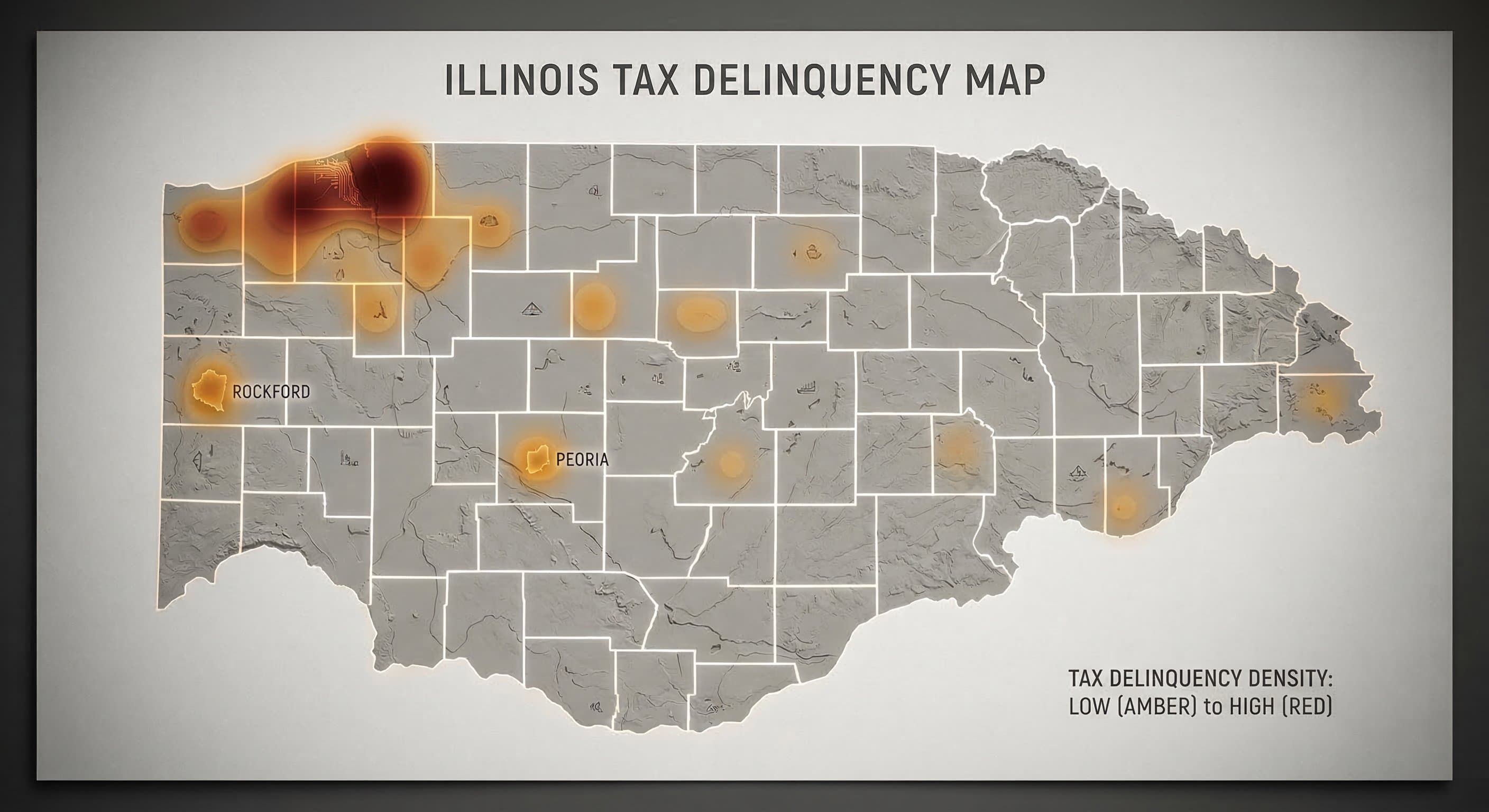
Tax Lien List Illinois: 36% Annual Returns, Scavenger Sales & How the Redemption System Works
TL;DR: Illinois is a tax lien certificate state with a maximum statutory penalty rate of 36% per year (3% per month). Each of Illinois's 102 counties holds an annual tax sale where investors bid on delinquent property tax liens. Cook County also runs a unique "Scavenger Sale" every two years — sealed bids starting at $0 — for properties that have missed two or more prior annual sales. The Illinois tax lien list is published by each county treasurer roughly 30 days before the sale, but DistressIQ surfaces these properties weeks earlier through county-verified assessor data.
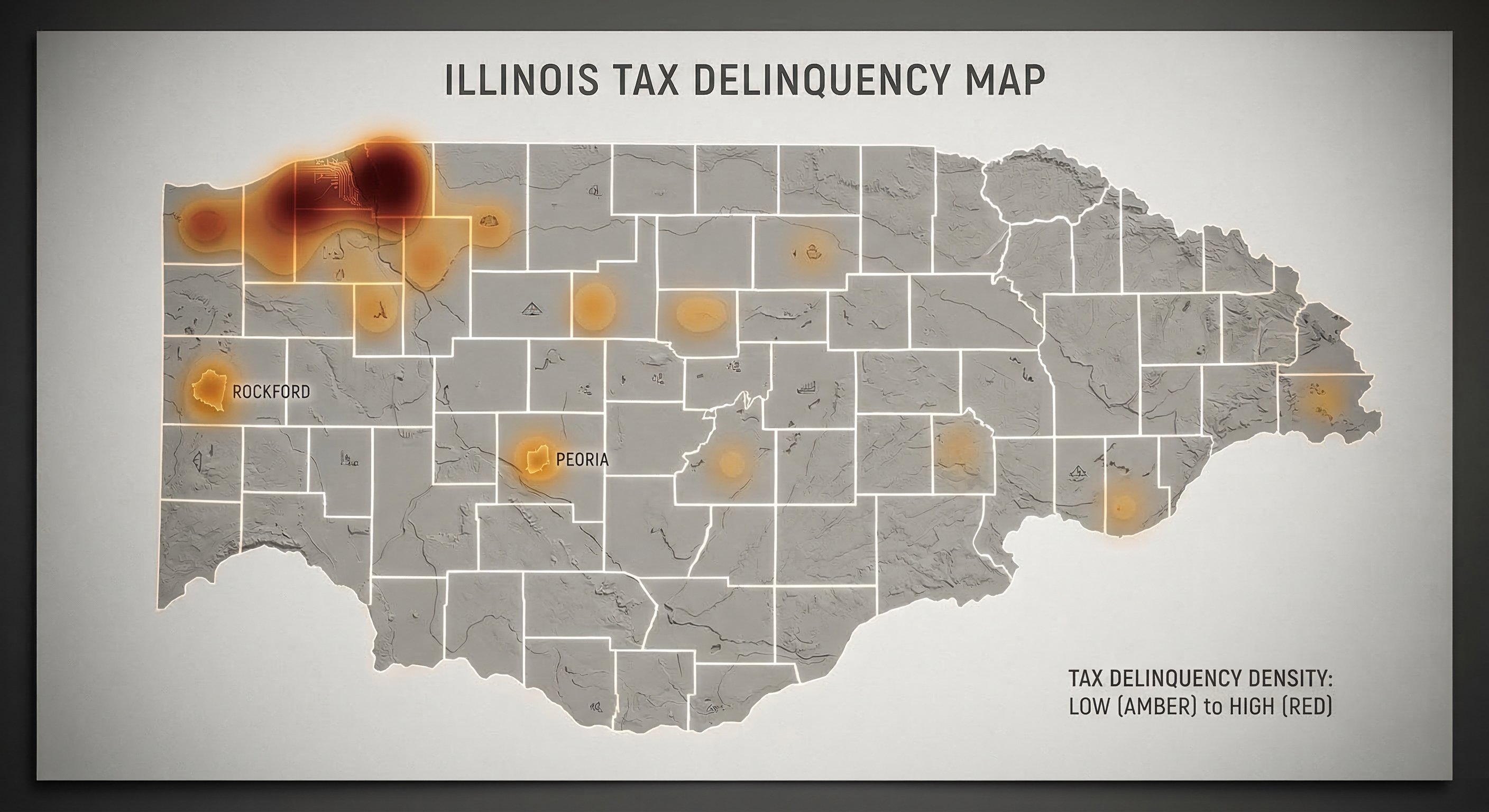
Illinois ranks among the most attractive states for tax lien investing — on paper. A 36% annual return on secured real estate debt sounds extraordinary. But the Illinois system has more moving parts than most states, and Cook County (home to Chicago) operates under its own unique rules that change the math entirely. Investors who arrive at an Illinois tax sale without understanding the penalty auction structure, redemption timelines, and Circuit Court deed process often get outbid, outmaneuvered, or stuck waiting three-plus years for a return they never factored in.
Here's what actually matters.
What Is Illinois's Tax Lien System?
Illinois is a tax lien certificate state — when a property owner falls behind on taxes, the county doesn't immediately move to take the property. Instead, the county sells the delinquent tax debt to investors through an annual public sale. The investor pays the overdue taxes, receives a Certificate of Purchase, and earns interest (called a "penalty") while the property owner has a statutory window to redeem.
The maximum penalty rate under Illinois law (35 ILCS 200/21-150 et seq.) is 18% per six-month period — which equals 36% per year, or 3% per month. That's one of the highest statutory rates in the country, significantly higher than Florida (18% annually), Ohio (18%), or Georgia (20%).
The critical nuance: Illinois uses a penalty bid auction. Instead of bidding up a price, investors bid the penalty rate DOWN. The lien goes to whoever accepts the lowest penalty from the delinquent owner. In highly competitive counties like Cook, experienced institutional buyers routinely bid down to near 0% — accepting no interest return — in exchange for securing a lien on high-value properties and banking on the deed outcome if the owner never redeems.
In smaller downstate counties, where institutional competition is lower, liens frequently sell close to the statutory maximum. That 36% headline rate is real downstate. In Chicago, it's often a fiction.

How to Access the Illinois Tax Lien List
There is no single statewide Illinois tax lien list. The state has 102 counties, each running its own sale with its own independently published delinquency roll. Here's how to access each:
County Treasurer / Collector Offices Each county's treasurer or collector compiles and publishes the delinquent tax roll prior to the annual sale. Many county treasurer websites post the list directly or make it available for purchase. Contact each county's office to confirm the format and any applicable fees.
Newspaper Publication (Legally Required) Under Illinois law, counties must publish the delinquent property list in a newspaper of general circulation within the county — typically 30 days before the sale date. These are public legal notices, and many newspapers now post them online. Searching a county's local newspaper site for "tax sale notice" will often surface the list.
Third-Party Data Aggregators For investors targeting multiple Illinois counties simultaneously, data services compile county delinquency lists and append owner contact information. This is faster than navigating 102 county websites — though the lists are only as fresh as the county's last update.
DistressIQ — The Earlier Signal DistressIQ monitors Illinois county assessor and tax records continuously, identifying tax-delinquent properties weeks or months before the county list publishes. This advance window allows investors to contact distressed owners directly before the lien goes to public auction — often producing more motivated sellers and better deal economics than competing at a sale. The platform stacks tax delinquency with pre-foreclosure filings, vacancy indicators, code violations, and absentee ownership signals, so you're surfacing genuinely distressed situations rather than chasing a single flag on a property whose owner is still financially stable.
Illinois Tax Sale Timeline — When and How Counties Sell
Illinois county tax sales generally follow this annual pattern:
January–March: Counties process prior-year tax payments and compile delinquency rolls for the previous tax year's unpaid balances.
Spring / Early Summer: County collectors certify the delinquent tax rolls. Owners begin receiving delinquency notices.
August–September: Most counties begin publishing their delinquent lists in local newspapers. The publication period is typically 30 days before the sale.
September–November (peak sale season): Annual tax sales occur across the state. Most downstate counties hold their sales in September or October. Cook County traditionally conducts its annual sale in November.
After the Sale: The winning bidder receives a Certificate of Purchase. The property owner then has the statutory redemption period to pay the back taxes, the agreed penalty rate, and any subsequent taxes that accrue — before the lien holder can pursue a tax deed.
One important detail: the county's published delinquency list is always larger than the final auction inventory. Owners frequently redeem between publication and sale day, reducing what's actually available to bid on. Plan for attrition.
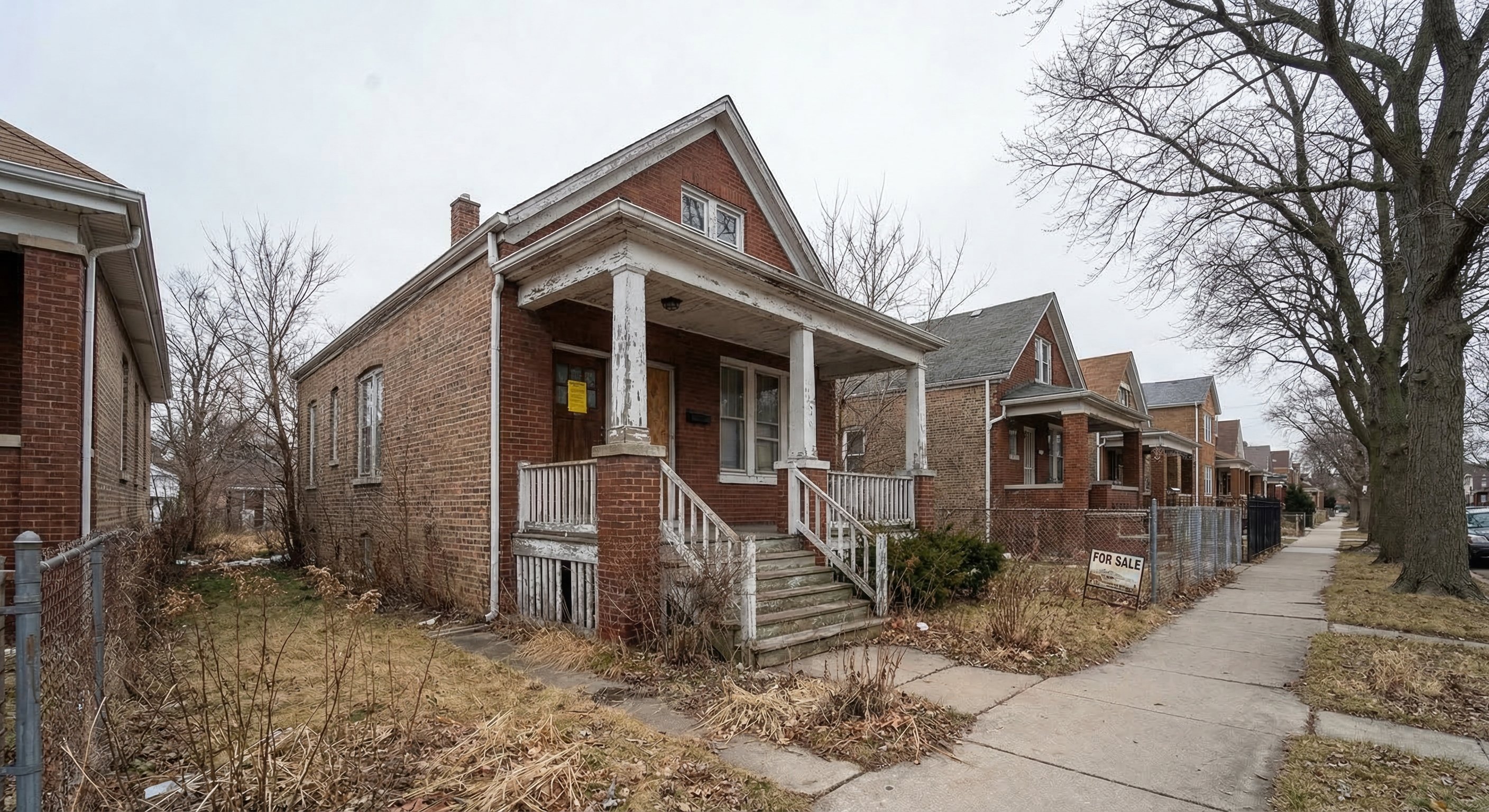
Free Weekly Alerts
See What's Distressed in Your Market
Get free weekly alerts — new distressed properties, motivation scores, and hot neighborhoods in your area. Addresses and contact info available inside DistressIQ.
Free forever · No credit card · Unsubscribe anytime
Cook County's Scavenger Sale — Illinois's Unique Anomaly
Cook County operates the most distinctive tax sale mechanism in Illinois — and one of the most unusual in the country.
Every two years (held in November of even-numbered years), Cook County runs a Scavenger Sale for properties that failed to sell at two or more prior annual tax sales. These are the hardest-to-move parcels in the system: heavily delinquent, title-clouded, environmentally complicated, or in markets where prior buyers simply passed.
How the Cook County Scavenger Sale works:
- Bidding starts at $0 — unlike the annual sale (where the minimum bid equals the full delinquent tax amount), Scavenger Sale bids can be as low as $1
- Bids are submitted in sealed format — the highest bidder wins whatever they bid, not the full delinquency amount
- The winning bidder receives a Certificate of Purchase at their bid price
- Redemption period and Circuit Court deed process function identically to the annual sale
The Scavenger Sale attracts investors seeking extremely distressed properties at deep discounts. It's not uncommon for properties carrying $40,000 in delinquencies to attract bids of a few hundred dollars.
The tradeoff is significant: these properties are Scavenger candidates for a reason. Environmental liabilities, contested ownership, structural condemnation, or title complications that deter ordinary buyers are common. A real property and title search is essential before any Scavenger Sale bid.
According to the Cook County Treasurer's Office, recent Scavenger Sales have offered more than 25,000 parcels — representing the full scale of Chicago's deeply delinquent inventory.
Interest Rates and Redemption — The Actual Return Math
Here's the math Illinois investors need to run before bidding:
If you bid at maximum penalty (18% per six-month period): An owner who redeems at 12 months pays your original investment plus 36% in penalties. On a $10,000 lien, you receive $13,600. On a $40,000 lien, you receive $54,400.
If you bid the penalty down to 0%: You earn no interest return if the owner redeems. Your entire profit depends on obtaining a tax deed — meaning you're betting the owner won't redeem and you'll get the property.
Illinois redemption periods:
- 2.5 years for owner-occupied residential properties (additional protections apply)
- 2 years for non-owner-occupied, commercial, and vacant land
- Redemption periods can be extended if the property is subject to an active bankruptcy stay
During the redemption period, the original property owner retains the right to reclaim their property by paying all delinquent taxes, the applicable penalty, and any subsequent taxes that have accrued. You cannot take possession during this window.
Subsequent taxes: If additional taxes become delinquent on the same property after you purchase the original lien, you have the right to pay those subsequent taxes and add them to your Certificate of Purchase (with additional penalty accruing). This protects your lien position if the owner continues to fall behind.
Getting Your Tax Deed: The Illinois Circuit Court Process
Unlike some states that automatically issue deeds after the redemption period expires, Illinois requires active court action. The process adds both cost and time to your investment horizon.
Step 1: File a Petition in Circuit Court After the redemption period expires, the Certificate of Purchase holder must file a petition for a tax deed in the Circuit Court of the county where the property is located. Filing fees vary by county.
Step 2: Proper Notice to All Interested Parties Illinois law mandates the petitioner serve notice on the property owner, all mortgagees, judgment creditors, and other parties with recorded interests. Notice requirements have strict timelines and service methods. This is the most legally complex and mistake-prone step.
Step 3: Court Hearing A Circuit Court judge reviews the petition. If all notice requirements were properly met and the redemption period has genuinely expired without redemption, the court issues an Order directing the County Clerk to issue a tax deed.
Step 4: Record the Tax Deed The issued tax deed is recorded with the county recorder, establishing title in the lien holder's name. At this point you own the property.
Attorney required: Every experienced Illinois tax lien investor uses an attorney for the deed petition process. Errors in notice procedure — the most common failure point — can result in the petition being dismissed, requiring you to restart with additional cost and delay. Budget for legal fees when calculating your net return.
Total timeline from lien purchase to recorded deed: 3–4 years is realistic. Factor this into your capital allocation.
What the Sharpest Illinois Investors Do Instead
Many experienced investors use the Illinois tax lien list not for lien certificate buying — but for direct seller outreach before the auction.
When a property appears on the county's delinquency roll, the owner is under genuine financial pressure: years of unpaid taxes, mounting penalties, and the looming prospect of losing the property in a public sale. A direct cash offer that resolves their tax problem and puts money in their pocket is often far more appealing than fighting through a multi-year lien redemption dispute.
The economics for the investor are also better:
- No auction bidding competition driving your return toward zero
- No 2.5-year wait through the redemption period
- No Circuit Court petition and attorney fees
- A property acquired at a price you negotiate, not one derived from a tax sale process
DistressIQ identifies tax-delinquent Illinois properties weeks before the county list publishes — stacked with vacancy signals, pre-foreclosure filings, and code violations to surface the owners most likely to respond. The National Tax Lien Association estimates that well over 40% of tax-delinquent owners are interested in selling if approached before their situation becomes public at auction.
The investors consistently doing deals across Illinois counties aren't competing for crumbs at county tax sales. They're reaching sellers six to twelve months earlier, when the conversation is still private.

Key Takeaways
- Illinois is a tax lien certificate state with a maximum 36% annual penalty rate — but competitive counties like Cook often produce near-0% returns due to institutional bidding
- Annual tax sales run September–November across 102 counties; Cook County typically sells in November
- Cook County also runs a Scavenger Sale every two years (sealed bids starting at $0) for properties with two or more prior missed sales
- Redemption periods: 2.5 years for owner-occupied residential; 2 years for all other property types
- After redemption, lien holders must file a Circuit Court petition for a tax deed — attorney representation is essential, adding cost and time
- The published county delinquency list underestimates the auction — many owners redeem between publication and sale day
- The highest-leverage Illinois strategy: use tax delinquency data to reach owners directly before the county list publishes
Illinois has real opportunity in tax-delinquent real estate — but the edge goes to whoever gets there first.
DistressIQ surfaces tax-delinquent properties across Illinois's 102 counties before the official county lists publish, stacked with 30 additional distress signals so you reach motivated sellers at exactly the right moment. Founding member pricing — Starter $89/mo, Pro $174/mo, Elite $349/mo — locks in 30% savings for life. Fewer than 50 spots remain.
Browse verified Illinois tax-delinquent leads on DistressIQ →
Frequently Asked Questions
Q: Where can I find the Illinois tax lien list?
There is no single statewide list. Illinois's 102 counties each publish their own delinquent property roll through the county treasurer or collector's office. By law, counties must publish this list in a local newspaper of general circulation approximately 30 days before the annual tax sale. Many county treasurer websites also make lists available for purchase or download. Contact each target county's treasurer directly for current availability and format.
Q: What interest rate do Illinois tax liens pay?
Illinois law caps the penalty rate at 18% per six-month redemption period (36% annually, or 3% per month). However, Illinois tax sales are penalty bid auctions — investors bid the rate DOWN, not up. In competitive markets like Cook County, institutional buyers regularly bid to near 0%, accepting no interest return. In smaller downstate counties, bids frequently stay close to the statutory maximum.
Q: What is the redemption period for Illinois tax liens?
Redemption periods are 2.5 years for owner-occupied residential properties and 2 years for all other property types, measured from the original sale date. During this window, the owner can reclaim the property by paying delinquent taxes, the agreed penalty, and any subsequent taxes that have accrued. Redemption periods may be extended if the property is in active bankruptcy.
Q: How does Cook County's Scavenger Sale work?
Cook County conducts a Scavenger Sale every two years (typically November of even-numbered years) for properties that missed two or more prior annual tax sales. Unlike the annual sale, Scavenger bids are sealed and start at $0 — the highest bidder wins at whatever they bid, not the full delinquency amount. These properties carry higher risk (title complications, environmental issues) but can be acquired for minimal capital. Recent sales have featured over 25,000 parcels.
Q: Do I need an attorney to get an Illinois tax deed?
Practically yes. The Circuit Court deed petition process requires strict compliance with notice requirements — serving all interested parties within specific timeframes and using proper methods. Errors in notice are the leading cause of dismissed petitions. Experienced Illinois tax lien investors consistently use attorneys for this stage. Factor legal fees into your projected return before bidding.
Q: Can I buy Illinois tax liens over the counter after the annual sale?
Some Illinois counties sell unsold liens over the counter at the maximum statutory penalty rate after the annual sale. This varies by county and depends on what remains from the most recent auction. Contact individual county treasurer offices to ask about post-sale OTC availability.
Q: How does Illinois compare to Florida or Ohio for lien investing?
Florida conducts online tax lien auctions statewide (bid down from 18%), making them accessible but intensely competitive — institutional buyers dominate. Ohio uses an 18% maximum rate with county-by-county processes and no scavenger mechanism. Illinois offers the highest statutory rate (36%) but with penalty bidding that often compresses real returns to near zero in urban markets. Illinois also has the distinctive Cook County Scavenger Sale and requires the Circuit Court petition process — adding legal cost and years to your timeline.
Find Illinois's most motivated tax-delinquent sellers before the county list goes public. DistressIQ monitors assessor data across Illinois daily — stacking tax delinquency with pre-foreclosure filings, vacancy signals, and code violations. 11M+ active distress signals. 3,200+ counties nationwide. Updated multiple times daily.
The data behind this article
DistressIQ Monitors These Signals in Real Time
Pre-Foreclosures
NOD + NTS filings
Tax Delinquency
County treasurer records
Code Violations
Municipal inspection filings
Probate Filings
Superior Court records
Every lead is scored 0–100 for seller motivation based on signal type, duration, severity, and stacking. Nationwide coverage — every US county, updated daily.
Ready to find deals in your market?
See Live Distress Signals in Your County
Stop calling dead leads. Every lead in DistressIQ is scored 0–100 for seller motivation, with verified contact info included. Browse the free tier to see what's active in your market right now.
Browse Free Leads — No Credit Card