Tax Lien List Florida: The Smart Investor's Guide to Certificate Investing
Tax Lien List Florida: The Smart Investor's Guide to Certificate Investing
TL;DR: Florida is a tax lien state where investors buy delinquent tax certificates at annual county auctions and earn up to 18% annual interest. The catch: competitive counties drive bid rates down near zero. After a 2-year redemption period, unredeemed liens can lead to tax deed sales and eventual ownership. Success depends on county selection, pre-auction distress research, and understanding Florida's unique bid-down auction model before you register.
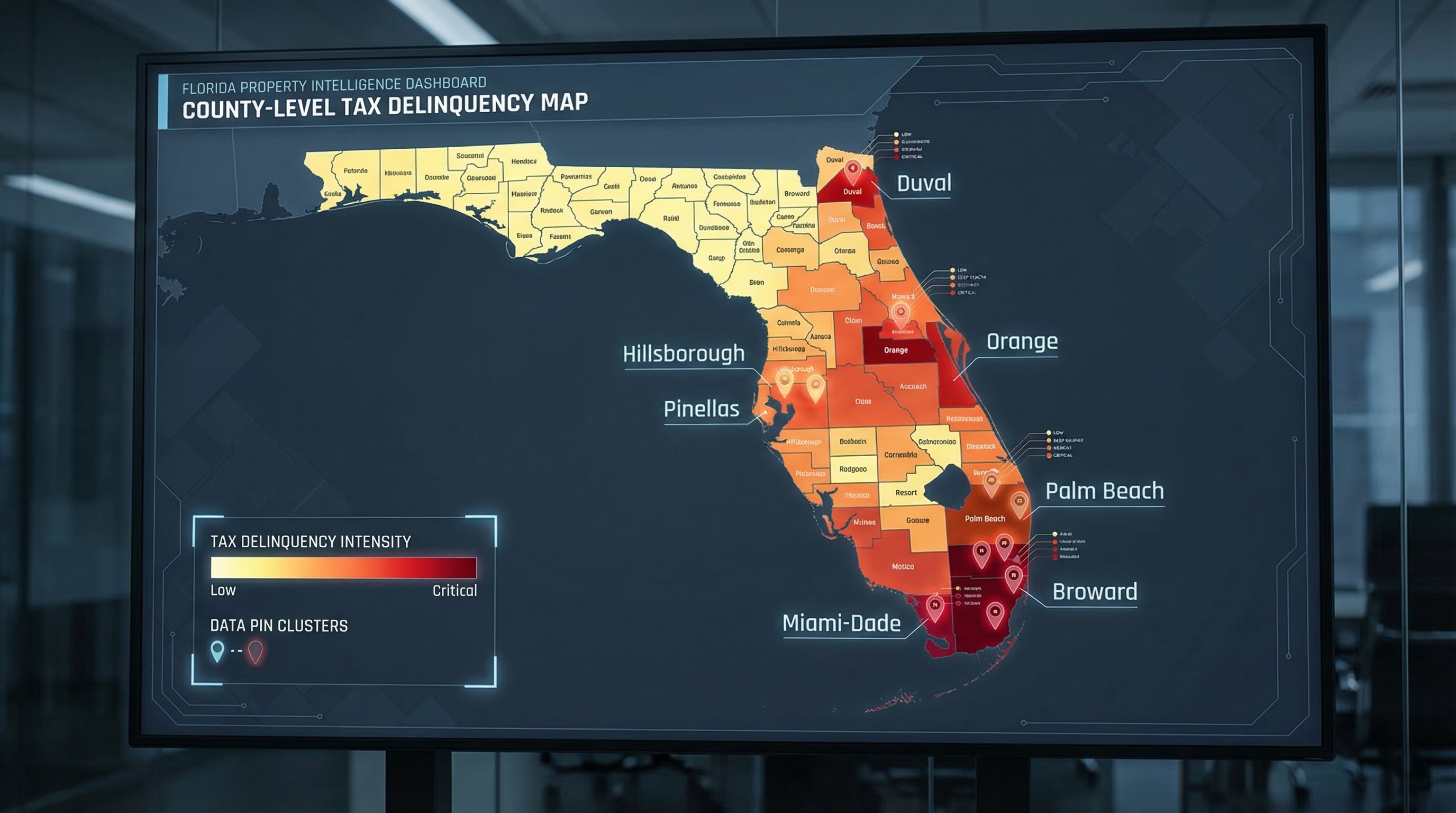
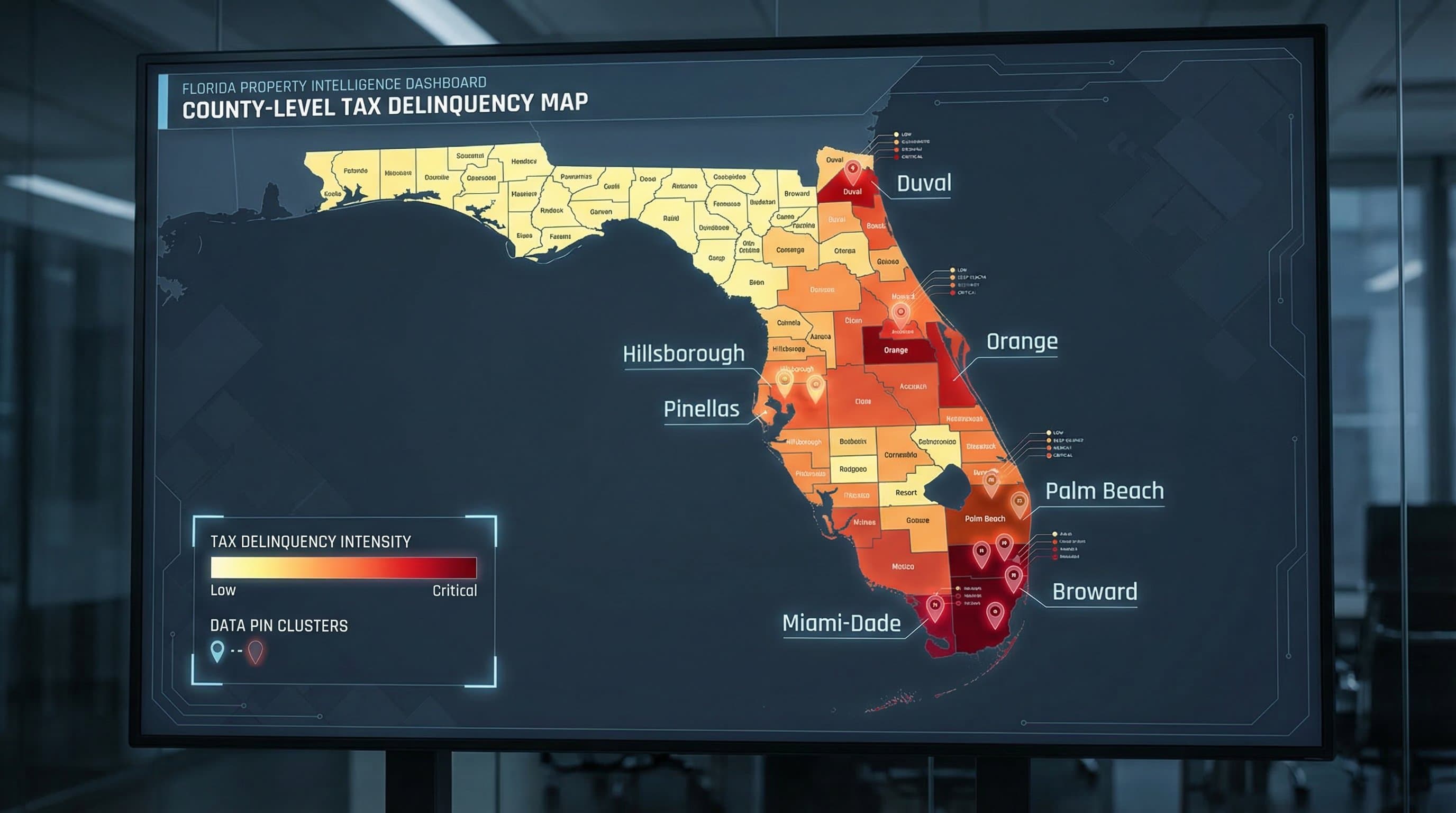
Every spring, Florida's 67 counties quietly auction off thousands of delinquent property tax certificates — and savvy investors earn guaranteed interest while they wait for owners to pay up. Florida's tax lien system is one of the most investor-friendly in the nation. The problem: online auctions have opened the market to institutional players nationwide, and in the wrong counties, you can "win" a certificate and earn less than a savings account.
Here's everything you need about Florida's tax lien list — how to access it, which counties still offer real returns, how the bid-down model works, and how to use stacked distress data to find the liens most likely to eventually become properties.
What Is a Tax Lien Certificate in Florida?
When a Florida property owner fails to pay their property taxes, the county doesn't seize the property immediately. Instead, it holds an auction where investors can pay the outstanding tax debt and receive a tax lien certificate in return.
The certificate earns interest — set by Florida law at up to 18% per annum — which accrues until the owner redeems the lien by paying back the certificate holder plus interest and fees. If the owner doesn't redeem within two years, the certificate holder can file for a tax deed, initiating the process that can ultimately lead to property ownership.
Florida Statute §197.172 governs certificate interest rates. The statutory framework makes Florida tax lien certificates a secured investment — the lien carries first-priority status on the property, senior to mortgages and most other encumbrances.
Key mechanics at a glance:
- Auction type: Bid-down interest rate (investors compete by accepting lower rates)
- Starting rate: 18% (Florida statutory maximum)
- Minimum bid: Face value of the certificate (taxes owed + fees)
- Redemption period: 2 years minimum before tax deed application
- Certificate lifespan: 7 years (file for deed or it expires)
- Path to ownership: Tax deed application filed with county clerk after 2-year hold
The critical nuance: you bid DOWN the interest rate, not up in price. The investor willing to accept the lowest interest wins the certificate. In competitive South Florida counties, popular residential properties regularly sell at rates near 0.25% — barely worth the paperwork for a small investor. In mid-tier and rural counties, 10-18% is still achievable.
How Florida's Tax Lien Auctions Work
Florida holds county tax certificate sales each spring (May–June). Exact dates vary by county but are published well in advance. As of 2024, virtually all Florida counties conduct auctions online, eliminating the old in-person chaos but opening competition to investors from everywhere.
Step-by-Step: The Auction Process
- Register — sign up with the county's auction platform (most use Realauction.com, BidSpotter, or a county-specific portal) 1–3 weeks before the sale
- Deposit — place a required security deposit (typically $2,000–$10,000 depending on county) before bidding
- Review the delinquent list — counties publish the tax delinquent property list weeks before the auction; this is your research window
- Bid — enter your minimum acceptable interest rate; the lowest bid wins each certificate
- Pay — wire payment due within 24–48 hours of winning
- Certificate issued — county issues the tax lien certificate with your locked-in rate
The 5% floor rule: Florida law requires that any certificate not sold at auction (issued to the county) earns a minimum of 5% interest. Investor-purchased certificates are bid down from 18%, but this floor exists as a reference point for how competitive markets are.
Auction Platforms by Major County
| County | Platform | Sale Timing |
|---|---|---|
| Miami-Dade | Realauction.com | Late May |
| Broward | Realauction.com | May–June |
| Palm Beach | Realauction.com | May |
| Hillsborough | Realauction.com | June |
| Orange (Orlando) | County online portal | May–June |
| Duval (Jacksonville) | BidSpotter | June |
| Pinellas | Realauction.com | June |
Registration opens 2–4 weeks before the sale. The delinquent property list is published within 30 days of auction per Florida Statute §197.402. Don't wait until the day of — research the list the moment it drops.
Florida's Best Counties for Tax Lien Investing
Not all 67 counties are worth your attention. The smart move is matching your strategy to the competitive landscape before you register anywhere.
High Volume, High Competition: South Florida
Miami-Dade, Broward, and Palm Beach generate thousands of certificates annually — the volume is real. The problem: institutional investors and hedge funds have dominated these auctions for a decade. Residential properties in decent condition routinely sell at 0.25–1%. The math doesn't work for most individual investors.
Where the opportunity survives in South Florida:
- Commercial properties and vacant lots (less institutional interest)
- Multi-family in C-class neighborhoods
- Liens with face values over $15,000 (smaller investors pass on large tickets)
- Properties showing stacked distress signals (more on this below)
Mid-Tier Volume, Better Rates: The Sweet Spot
Tampa (Hillsborough), Orlando (Orange), Jacksonville (Duval), and St. Pete (Pinellas) offer a better balance. Significant delinquency volumes but less institutional saturation. Residential certificates here regularly clear at 4–10% — workable for individual investors who do their homework.
These counties also tend to have healthier eventual redemption rates, which is fine — you collect your interest and redeploy capital.
Overlooked Counties: Best Risk/Reward
Polk (Lakeland/Winter Haven), Volusia (Daytona Beach area), Lee (Fort Myers/Cape Coral), Pasco, and Manatee offer the best combination of volume, rate, and path-to-ownership opportunity. Less institutional competition, solid property values in most submarkets, and certificates often clearing at 8–15%.
These are also the counties where stacked distress signals matter most — a Polk County property that's tax delinquent, vacant, and has a pending code violation is a candidate for eventual deed, not just a certificate-and-wait play.
Small/Rural Counties: Maximum Rate, Minimal Opportunity
Okeechobee, Glades, Hamilton, Jefferson, Madison — zero institutional competition. You can win certificates at 12–18% routinely. The tradeoff: underlying property values are low, and if the owner doesn't redeem, the path to tax deed leads to rural parcels with limited resale potential. Viable if you understand rural Florida land markets; dangerous if you don't.
Free Weekly Alerts
See What's Distressed in Your Market
Get free weekly alerts — new distressed properties, motivation scores, and hot neighborhoods in your area. Addresses and contact info available inside DistressIQ.
Free forever · No credit card · Unsubscribe anytime
The Traps That Cost Florida Investors Real Money
Trap 1: Bidding Down to 0.25%
It happens constantly in Miami-Dade and Broward. You "win" a certificate at 0.25% on a $6,000 lien. The owner redeems in 11 months. You earned $13.75 on a $6,000 commitment. Your $10,000 deposit was tied up the whole time.
Fix: Set your absolute floor rate before the auction and don't move off it. Many experienced investors won't bid below 5% for anything under $20,000 face value. Let institutional players have the zero-return certificates — they're playing a volume game you can't win.
Trap 2: HOA Super Priority Liens
Florida allows HOA liens on condominiums to hold super priority status under certain conditions. If you hold a tax lien on a condo in an HOA-governed community, a pending HOA foreclosure can extinguish your certificate. Always check for HOA delinquency and pending HOA actions before bidding on any condo unit. This is Florida-specific and catches out-of-state investors constantly.
Trap 3: Environmental Contamination
Tax liens on former gas stations, dry cleaners, or industrial sites can become money pits if you eventually take a deed. In Florida, environmental cleanup liability transfers with ownership. County assessor records won't flag this. Pull Florida DEP records (dep.state.fl.us) for any property with a commercial or industrial history before bidding.
Trap 4: Federal Tax Liens
Tax certificates ARE senior to most mortgages, but federal IRS liens have special priority rules under the Internal Revenue Code. Before pursuing a tax deed on any property, run a title search. A federal tax lien discovered after you've paid for a deed application is a nasty surprise. The $200 title search before filing saves a $2,000 problem after.
From Tax Lien Certificate to Property: Florida's Tax Deed Process
After holding a certificate for the 2-year minimum, you file a tax deed application with the county clerk — governed by Florida Statute §197.502.
The timeline:
- File application (pay back taxes + fees accrued since your certificate purchase)
- County orders title search (examines encumbrances, verifies chain)
- 30-day notice and publication (property owner and all lienholders notified)
- Tax deed auction (property goes to public sale; your lien amount is a credit)
- If no qualified bidders — you may be able to take the property for the outstanding amount
- Surplus proceeds — any sale price above your lien amount generally goes to the former owner
From application to deed takes 4–6 months in most Florida counties. Larger counties (Miami-Dade) can run longer due to case volume.
One important note on title insurance: Not all title companies issue clean title immediately following a Florida tax deed. Some require a quiet title action — a court proceeding that typically takes 3–6 months — before they'll insure. Budget for this if you plan to resell or finance post-deed. The path from certificate to freely marketable title is real, but it's not always a straight line.
Using Distress Signals to Build a Smarter Florida Tax Lien List
The county's published delinquent list is a starting point, not a strategy. The investors with the best outcomes cross-reference every potential certificate against layered distress data before auction day.
The signals that matter:
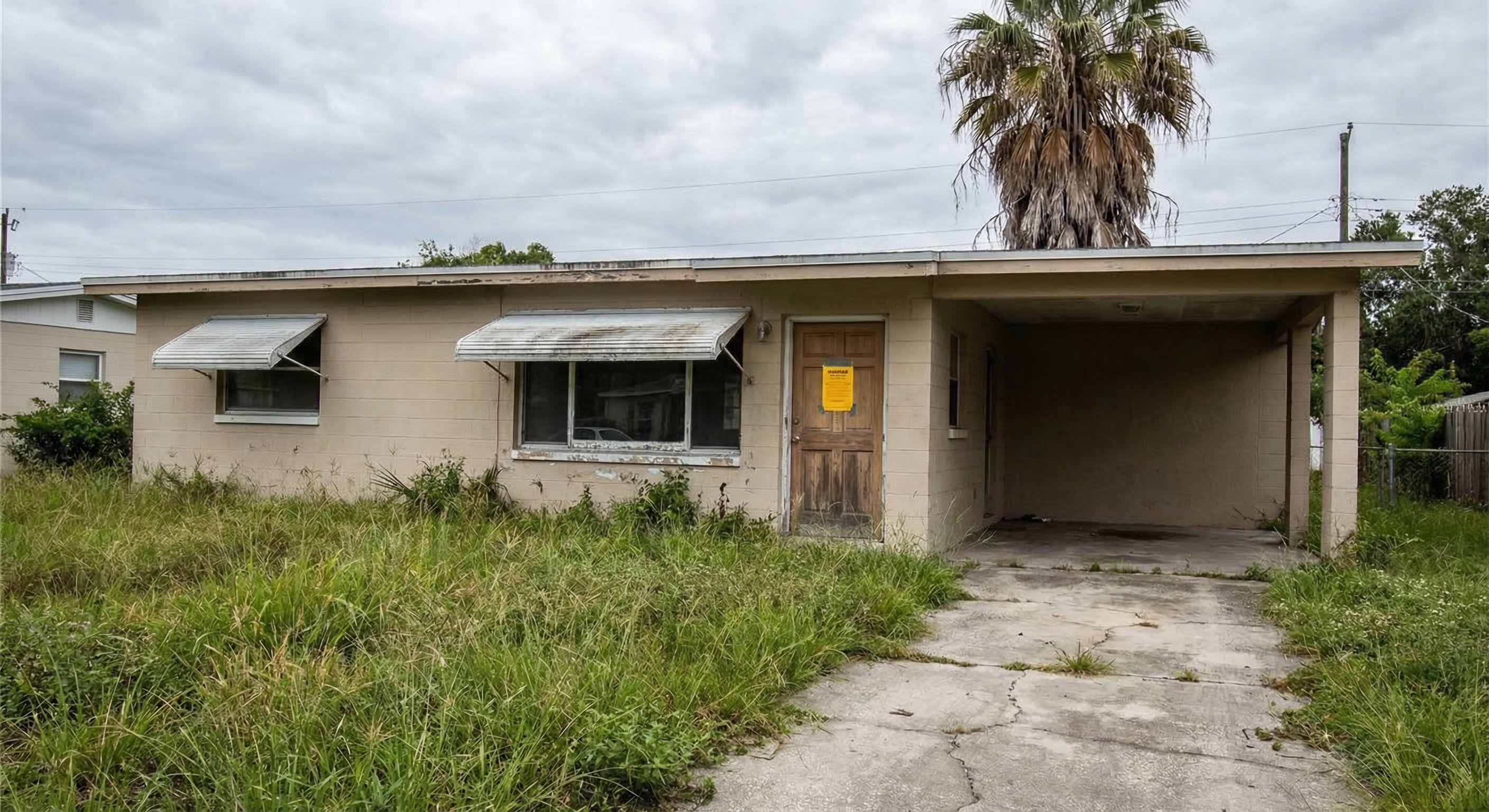
- Vacancy: Is the property currently occupied? A vacant property with 2+ years of tax delinquency is exponentially more likely to NOT redeem than an occupied home where the owner just fell behind.
- Code violations: Active violations from county code enforcement indicate an owner who's checked out — financially and physically.
- Lis pendens: A pending foreclosure action on top of tax delinquency means the owner is already dealing with multiple creditors and unlikely to suddenly become current.
- Absentee ownership: Out-of-state owners of vacant Florida properties have the lowest redemption rates of any owner segment. They've often already written off the property mentally.
- Assessor data: When assessed value dramatically exceeds realistic market value (common in post-2008 holdovers), the property is underwater and the owner has weak incentive to redeem.
Stacked signals = highest redemption risk. A Broward County property that's tax delinquent + vacant + code violation pending + absentee owner is virtually screaming that a deed is in your future, not just a certificate check.
DistressIQ aggregates 31 distress signal types — including tax delinquency, vacancy, lis pendens, code violations, probate status, and absentee ownership — across all 67 Florida counties, updated multiple times daily from county sources. Run the filter, stack the signals, and build a Florida tax lien target list that's actually worth the research time.
🏠 Explore Florida Tax Delinquency and Distress Data on DistressIQ → — Founding member pricing locked for life: Starter $89, Pro $174, Elite $349/mo. Fewer than 50 spots remaining.
Key Takeaways
- Florida is a tax lien state — investors buy debt certificates, not properties
- Interest maxes at 18% but competitive bidding drives rates down, especially in South Florida
- Bid-down model requires a firm floor rate strategy before auction day
- 2-year minimum hold before filing for tax deed; certificates expire after 7 years
- County selection is everything — Polk, Volusia, Lee, and Pasco offer better rates than South Florida
- HOA super priority, environmental contamination, and federal liens are Florida-specific traps
- Stack distress signals to identify the liens with lowest redemption probability
- Title insurance after tax deed may require quiet title action before freely marketable
Frequently Asked Questions
Q: Where can I find the Florida tax lien list for a specific county?
Each county publishes its delinquent property tax list before the annual auction (typically May–June). County tax collector websites post the list 3–4 weeks ahead of the sale date as required by Florida Statute §197.402. Most counties also publish through their auction platform (Realauction.com or BidSpotter). For real-time, cross-county distress data stacked with other signals, DistressIQ covers all 67 Florida counties updated multiple times daily.
Q: What is the maximum interest rate on a Florida tax lien certificate?
Florida Statute §197.172 sets the maximum at 18% per year. However, the bid-down auction model means the actual rate you earn depends on competition for each specific certificate. High-competition counties regularly see popular residential properties clear at 0.25–2%. Overlooked counties and less-desirable property types still routinely achieve 8–18%.
Q: How long does a Florida tax lien certificate last?
A Florida tax lien certificate is valid for 7 years from the date of purchase. You must file a tax deed application within those 7 years or the certificate expires with no recourse. The minimum holding period before filing for tax deed is 2 years.
Q: Is Florida a tax lien state or a tax deed state?
Florida is primarily a tax lien state. Investors first purchase lien certificates at the annual spring auction. Tax deed sales are a downstream consequence for unredeemed certificates — they are a separate, second step. Some counties also hold separate tax deed auctions for county-held certificates that didn't sell at the initial lien sale. This two-step structure is frequently misunderstood by investors coming from tax deed states.
Q: Can you lose money on a Florida tax lien certificate?
Yes, though it's uncommon. Main risk scenarios: (1) property is destroyed and insurance proceeds don't cover your lien amount; (2) environmental contamination makes the property worthless even after a deed; (3) a federal IRS lien has priority you didn't discover; (4) you bid so low that the interest earned doesn't justify the capital and time commitment. Running a title search before bidding on any certificate you plan to hold to deed is essential.
Q: What happens to a Florida tax lien if the property owner files bankruptcy?
Bankruptcy invokes an automatic stay that pauses collection actions, including tax deed applications. Tax liens generally survive bankruptcy as secured claims against the property — they don't disappear. But the timeline to deed can extend significantly during bankruptcy proceedings. If you're holding a certificate on a property showing bankruptcy signals, consult a Florida real estate attorney before filing your deed application.
Q: How competitive are Florida's online tax lien auctions compared to in-person?
Far more competitive. The shift to online platforms (Realauction.com, BidSpotter) opened the auctions to institutional buyers and out-of-state investors who couldn't previously attend in person. South Florida auctions in particular now attract hedge funds and REITs that routinely bid residential properties to near-zero rates. Mid-tier and smaller counties have seen less dramatic rate compression — which is exactly why county selection matters before you register.
Start With Better Data, Not Just the Delinquent List
The investors who consistently earn strong returns and occasionally acquire Florida properties through the lien process don't treat the delinquent list like a catalog — they work a research-driven shortlist built from layered distress signals, not just who missed a tax payment.
Vacant properties. Absentee owners. Active code violations. Lis pendens filings. Probate status. Each layer narrows the universe of certificates from "all of Florida's delinquencies" down to the 50 properties in your target counties where the owner is most likely to walk away, giving you both a real return on your certificate and a potential path to ownership.
DistressIQ monitors 11M+ active distress signals across 3,200+ counties nationwide — including every Florida county — updated multiple times daily from county sources. Build a smarter Florida tax lien list before auction season opens.
🏠 Start your free DistressIQ trial → — Founding member pricing: Starter $89, Pro $174, Elite $349/mo. Founding spots are limited.
Sources: Florida Statute Chapter 197 (Tax Liens, Certificates, and Deed Processes); Florida Department of Revenue, Property Tax Oversight; National Tax Lien Association (NTLA) State Investor Survey 2024.
The data behind this article
DistressIQ Monitors These Signals in Real Time
Pre-Foreclosures
NOD + NTS filings
Tax Delinquency
County treasurer records
Code Violations
Municipal inspection filings
Probate Filings
Superior Court records
Every lead is scored 0–100 for seller motivation based on signal type, duration, severity, and stacking. Nationwide coverage — every US county, updated daily.
Ready to find deals in your market?
See Live Distress Signals in Your County
Stop calling dead leads. Every lead in DistressIQ is scored 0–100 for seller motivation, with verified contact info included. Browse the free tier to see what's active in your market right now.
Browse Free Leads — No Credit Card