Tax Lien List California: What Every Investor Needs to Know Before the Auction

Tax Lien List California: What Every Investor Needs to Know Before the Auction
TL;DR: California is a tax deed state — it does not sell tax lien certificates. Instead, chronically delinquent properties enter a 5-year tax-default period, after which counties can auction the deed at public sale. The "tax lien list" investors search for is actually the county's Notice of Power to Sell list. DistressIQ tracks tax-delinquent signals across all 58 California counties so you can find these properties years before the auction — not just days before.
California holds some of the largest tax-defaulted property auctions in the country. Los Angeles County alone clears hundreds of properties every auction cycle. Yet most investors searching "tax lien list California" are operating under a fundamental misunderstanding of how the state's system works — one that can cost them months of misdirected research and missed deals.

California Is a Tax Deed State — Not a Tax Lien State
This is the single most important thing to understand before you start searching.
In tax lien states (like Florida, Arizona, or New Jersey), counties sell certificates representing the delinquent tax debt. Investors buy those certificates, earn interest, and can eventually foreclose if the debt goes unpaid. The process can take 2–7 years to reach deed acquisition.
California doesn't work this way. Under California's Revenue and Taxation Code (RTC) Section 3691, when a property owner fails to pay property taxes, the property doesn't generate a lien certificate for sale. Instead, it enters tax-defaulted status — and the county waits.
After five years of continuous default, the county Tax Collector gains the power to sell that property outright at public auction. The buyer receives a deed, not a certificate. There are no interest rates to earn, no redemption periods post-sale. You either buy the property or you don't.
This is why searching "tax lien list California" gets confusing fast. What you're really looking for is the tax-defaulted property list — specifically, properties that have received a Notice of Intent to Sell or have been scheduled for the county's next auction.
How California's Tax Default Timeline Works
Understanding the timeline helps you figure out when to act:
Year 1 — Property becomes "tax-defaulted" If a property owner misses the April 10 deadline for the second installment of property taxes (or the December 10 first installment), the property becomes tax-defaulted as of July 1 of that fiscal year. At this point, penalties and interest begin accruing.
Years 2–5 — Redemption window During this period, the owner can redeem the property by paying all delinquent taxes, penalties, and accrued interest. The redemption amount grows monthly. For investors, this is actually the best window — owners are feeling the pressure but still have options, and that creates motivated seller conversations.
Year 5+ — Notice of Power to Sell Once a property has been tax-defaulted for five consecutive years, the county Tax Collector can officially publish a "Notice of Power to Sell" under RTC 3691. This is the closest thing California has to a traditional tax lien list. These properties are publicly posted, typically on the county Tax Collector's website.
Auction After proper notice, properties are scheduled for public auction. Most California counties now use online platforms — Bid4Assets is widely used across Southern California counties. Riverside County, San Bernardino County, and Los Angeles County all conduct online auctions through third-party platforms.
The owner retains the right to redeem (pay the full delinquent amount plus costs) up until the moment of sale. After the gavel falls, the new deed owner typically receives clear title with prior liens extinguished.
Where to Find California's Tax Defaulted Property Lists
Unlike tax lien certificate states, there's no single centralized California tax lien list. Each of the state's 58 counties manages its own delinquent property process. Here's where to look for the major markets:
Los Angeles County The Los Angeles County Treasurer and Tax Collector (ttc.lacounty.gov) publishes a list of properties subject to the Power to Sell. Auctions are typically held twice a year. LA County's list often includes thousands of properties — everything from urban vacant lots in South LA to neglected SFRs in the San Fernando Valley.
San Bernardino County One of the most active auction counties in California. The Auditor-Controller/Treasurer/Tax Collector's office publishes upcoming auction dates and property lists. San Bernardino County has a large inventory of vacant desert-adjacent parcels alongside residential properties.
Riverside County The Riverside County Treasurer-Tax Collector holds regular auctions. The county's geographic diversity — from the Inland Empire to the Coachella Valley — creates varied inventory.
Sacramento County The Sacramento County Tax Collector publishes annual tax sale information. Sacramento is often an overlooked market given the focus on SoCal and the Bay Area, but it has solid investor activity and growing inventory.
Smaller Counties Counties like Kern, Fresno, San Joaquin, and Stanislaus hold auctions less frequently but often have less competition for individual properties. For investors willing to do the legwork, these mid-size Central Valley counties can be gold.
Free Weekly Alerts
See What's Distressed in Your Market
Get free weekly alerts — new distressed properties, motivation scores, and hot neighborhoods in your area. Addresses and contact info available inside DistressIQ.
Free forever · No credit card · Unsubscribe anytime
The Problem With Waiting for the Auction
Here's what most investors get wrong: if you're waiting for the official auction list, you're already competing with every other investor in the state who has access to the same list.
The smarter move is identifying tax-delinquent properties before they appear on the auction calendar — ideally when the owner still has options and might be open to a conversation.
Properties that have been tax-defaulted for 2–4 years represent a window most investors miss entirely. The owner isn't facing immediate auction, but the debt is growing every month. Many of these owners — especially absentee owners, inherited property holders, or owners who've fallen on hard times — are already considering selling. They just haven't received an offer.
This is exactly the inventory DistressIQ was built to surface. Instead of scraping auction lists, the platform tracks tax-delinquency signals at the county assessor level across all 58 California counties — updated multiple times daily — and stacks those signals with other indicators like vacant status, absentee ownership, and probate filings.
A single-family home in Riverside County that shows up as tax-delinquent and vacant and owned by an out-of-state heir is a fundamentally different lead than a delinquent property with an owner-occupant actively fighting to stay. DistressIQ shows you the difference.
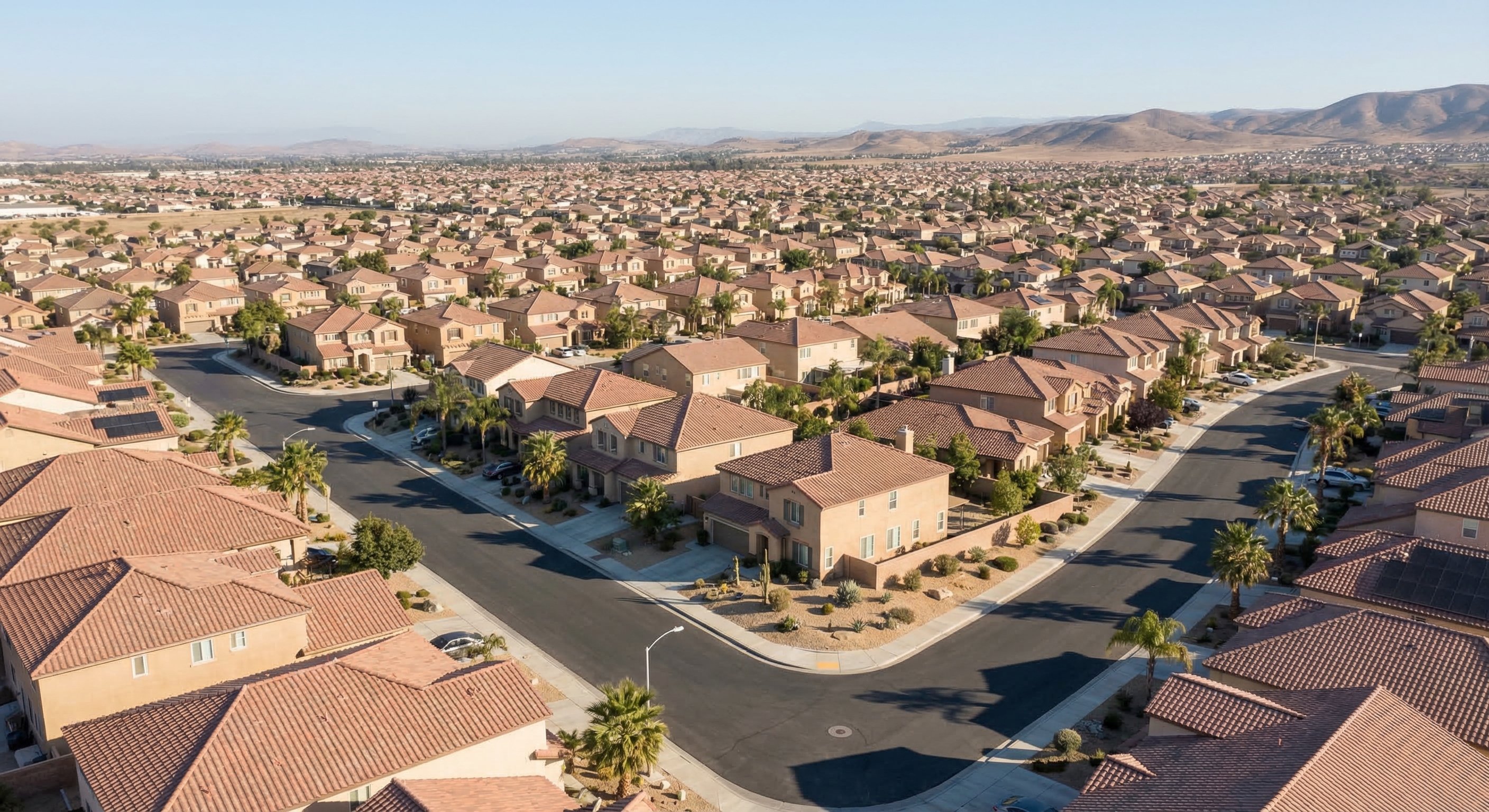
Top California Counties for Tax-Defaulted Property Investors
Not all California counties are equal for this strategy. Here's a breakdown by market characteristics:
Los Angeles County — Largest volume. Highest competition at auction. Best edge: finding pre-auction owners in neighborhoods like Compton, Lancaster, Palmdale, and East LA. The assessor rolls here are massive, and DistressIQ's coverage captures the full picture.
San Bernardino County — Strong mix of urban (Ontario, Victorville, Hesperia) and rural parcels. Less competitive than LA. Redemption-period outreach works particularly well here.
Riverside County — Growing population, strong rental demand in the Inland Empire. Tax-delinquent SFRs in Moreno Valley, Hemet, and Desert Hot Springs are common targets.
Kern County (Bakersfield area) — Often overlooked. Lower price points, less competition, and steady auction inventory. Investors who work Kern County consistently report solid margins.
Sacramento County — State capital market. Mix of urban infill and suburban properties. Sacramento has been appreciating steadily, making tax-delinquent acquisition here more valuable than it was five years ago.
Fresno County — High poverty rate = higher delinquency rates. Prices are low enough that even smaller margins work. Investors focused on volume plays often target Fresno.
What the Auction Doesn't Tell You
Attending a California tax-defaulted property auction gives you access to the same list as every other bidder in the room (or on the screen). Prices get bid up. The "deal" evaporates.
What the auction list doesn't tell you:
- Which properties have additional environmental or structural issues
- Whether the assessed value reflects actual market value (California's Prop 13 means assessed values often lag significantly)
- What the owner's actual situation is — are they an absentee heir, a distressed occupant, or an investor who got overextended?
- Whether the property has additional signals layered on top of tax delinquency (code violations, utility shutoffs, lis pendens, probate filing)
That last point matters most. A property that shows up as tax-delinquent alone might have a single-digit motivation score. A property that shows up tax-delinquent, vacant, absentee-owned, and flagged with a code violation is almost certainly a situation where the owner is ready to deal.
DistressIQ stacks 31 signal types across 11M+ active distress indicators. In California alone, that translates to tens of thousands of properties with multi-signal distress — the kind of inventory you can't build from a single county list.
How to Approach Tax-Defaulted Property Owners in California
If you're targeting owners during the redemption window (before auction), a few practical notes:
Mail campaigns still work. California property records are public. You can mail directly to the owner of record at their mailing address (often different from the property address for absentee owners). A handwritten envelope with a direct offer outperforms postcards in response rate.
Don't lead with "I know you owe back taxes." That framing puts owners on the defensive. Lead with: "I'm interested in purchasing properties in [neighborhood] and noticed yours might be available." Let them bring up the tax situation.
Know the payoff amount. Before you make an offer, pull the current redemption amount from the county Tax Collector's website. That amount represents a hard floor on what the owner needs to clear to get out from under. Factor it into your offer.
Be aware of probate overlaps. In California, a disproportionate percentage of tax-defaulted properties are inherited properties where heirs either don't know about the tax obligation or can't agree on what to do with the property. If you see a probate filing stacked with tax delinquency on the same property, that's often your most motivated seller.
If you want to stop waiting for auction calendars and start finding California's motivated sellers 12–36 months earlier — check out DistressIQ. Founding member pricing is still available: Starter $89/mo, Pro $174/mo, Elite $349/mo — locked for life for early members. Fewer than 50 spots remain. See plans at distressiq.ai
Key Takeaways
- California is a tax deed state — there are no tax lien certificates to purchase
- The 5-year default timeline creates a pre-auction window where motivated seller outreach works
- Each of 58 counties manages its own tax-defaulted property list — there's no single statewide source
- The best deals come from finding multi-signal properties during the redemption period, not at the auction
- DistressIQ tracks tax-delinquent signals across all California counties, stacked with 30+ additional distress indicators
Frequently Asked Questions
Q: Does California sell tax lien certificates?
No. California is a tax deed state. When properties become chronically tax-delinquent (5+ years), the county sells the deed directly at public auction — not a certificate representing the debt. Investors who expect to earn interest on tax lien certificates will find that California doesn't offer that investment vehicle.
Q: Where can I find the official tax-defaulted property list in California?
Each county publishes its own list. For major markets: Los Angeles County (ttc.lacounty.gov), San Bernardino County (auditorcontroller.sbcounty.gov), Riverside County (countytreasurer.org). Most counties post properties 30–60 days before the scheduled auction.
Q: How long does a property have to be delinquent before it can be sold in California?
Under California Revenue and Taxation Code Section 3691, a property must be tax-defaulted for a minimum of 5 years before the county Tax Collector gains the power to initiate a sale. The owner retains the right to redeem the property (pay all delinquent amounts) up until the moment of auction.
Q: Do California tax-defaulted property sales clear prior liens?
In most cases, yes. A properly conducted California tax-defaulted property sale generally extinguishes prior liens, including mortgages and mechanics liens, with the proceeds distributed according to priority. However, certain government liens (like IRS liens with proper notice) may survive. Always conduct a full title search before bidding.
Q: What's the best way to find California tax-delinquent properties before the auction?
County Tax Collector websites list properties scheduled for upcoming auctions, but you're competing with every other investor who has access to the same list. The smarter approach is identifying tax-delinquent properties during the 5-year redemption window — when the owner may be motivated to sell but isn't yet facing imminent auction. DistressIQ surfaces these properties across all 58 California counties, updated multiple times daily from county assessor data.
Q: Are California tax-defaulted properties sold online or in person?
Most major California counties have moved to online auctions. Los Angeles, San Bernardino, and Riverside counties use platforms like Bid4Assets for online bidding. Some smaller counties still conduct in-person auctions. Check the specific county Tax Collector's website for current auction formats.
Q: What's the minimum I need to bid at a California tax-defaulted property auction?
The minimum opening bid is typically set at the amount of delinquent taxes, penalties, and costs owed to the county — not market value. This can create significant upside when properties have substantial equity above the delinquent amount. However, popular properties in competitive markets often bid well above the minimum opening bid.
Start Finding California Tax-Defaulted Leads Now
California's 58 counties generate some of the highest-volume tax-delinquent inventory in the country — but the best deals don't go to investors who show up at auction. They go to investors who identify motivated sellers months in advance, when outreach actually works.
DistressIQ tracks 11M+ active distress signals nationwide, including tax-delinquency data across all California counties — stacked with vacancy, absentee ownership, probate filings, code violations, and 26 additional signal types. Every lead comes with Street View and aerial imagery so you can assess the property before you ever make an offer.
Founding member pricing — Starter $89/mo, Pro $174/mo, Elite $349/mo, locked for life — is still available for the first 50 members. Start your free trial at distressiq.ai
Sources: California Revenue and Taxation Code § 3691–3731 (tax-defaulted property sale authority); California State Controller's Office, Property Tax Publications; Los Angeles County Treasurer and Tax Collector, Annual Tax Sale Overview.
The data behind this article
DistressIQ Monitors These Signals in Real Time
Pre-Foreclosures
NOD + NTS filings
Tax Delinquency
County treasurer records
Code Violations
Municipal inspection filings
Probate Filings
Superior Court records
Every lead is scored 0–100 for seller motivation based on signal type, duration, severity, and stacking. Nationwide coverage — every US county, updated daily.
Ready to find deals in your market?
See Live Distress Signals in Your County
Stop calling dead leads. Every lead in DistressIQ is scored 0–100 for seller motivation, with verified contact info included. Browse the free tier to see what's active in your market right now.
Browse Free Leads — No Credit Card