How to Find Pre-Foreclosure Leads in Washington (2026 Investor Guide)

How to Find Pre-Foreclosure Leads in Washington (2026 Investor Guide)
TL;DR: Washington State uses a non-judicial foreclosure process called a trustee's sale, giving homeowners 90 to 120 days from Notice of Default to auction. That extended window is where smart investors find the best opportunities. Properties in King, Pierce, and Spokane counties with stacked distress signals — tax delinquency, code violations, and lis pendens filings — convert at higher rates because they identify multiple compounding problems. Investors should focus on the 60-day period immediately following the NOD, use county recorder data to identify properties with stacked signals, and make direct contact before the trustee's sale date.

Most investors hear "pre-foreclosure" and assume it means a 30-day window. That assumption costs deals.
Washington is a non-judicial foreclosure state. Instead of going through the court system, lenders use a trustee's sale process governed by the Deed of Trust. The practical result: the timeline from first missed payment to auction is longer than most investors expect. Homeowners in default have 90 to 120 days before the trustee's sale date is reached in most cases. In some counties with higher procedural requirements, the window stretches closer to 150 days.
That extended timeline is the opportunity.
What Makes Washington Pre-Foreclosure Different
The Deed of Trust structure creates several features that shape investor strategy in the Evergreen State.
The Trustee's Sale, Not the Sheriff's Auction
Washington does not use judicial foreclosures for most residential loans. The lender works with a trustee — a neutral third party — rather than going through the court system. This trustee conducts the public sale. The practical difference for investors is procedural speed and transparency. Trustee sale dates are recorded with the county and publicly accessible, which means the pre-foreclosure window is visible and trackable if you know where to look.
The Required Notice of Default
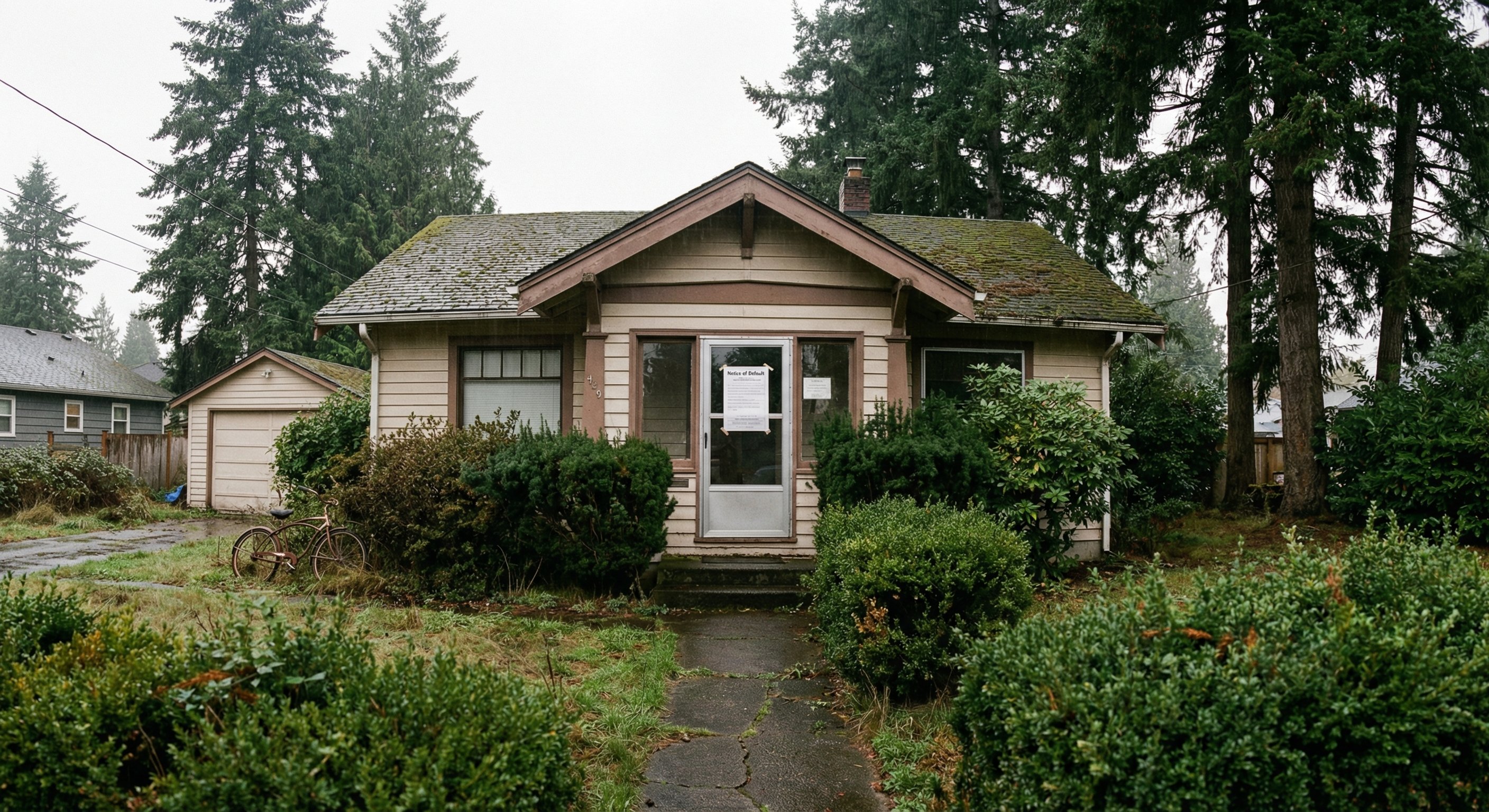
Before any sale can proceed, the lender must record a Notice of Default with the county auditor. This is the event that officially starts the pre-foreclosure clock. The NOD lists the loan number, the amount in arrears, and gives the homeowner a redemption period. Critically, the NOD is a public record. Investors with direct access to county recorder data can identify NOD filings within days of recording — often well before the information shows up in syndicated lead platforms.
The Washington State Homestead Exemption
Washington homeowners can claim a $125,000 homestead exemption under RCW 6.13. This matters for pre-foreclosure investors because it protects a meaningful portion of home equity even as the property moves toward sale. A homeowner with $350,000 in equity and a $125,000 homestead exemption has $225,000 in exposed equity — enough that a short sale or cash offer conversation is entirely realistic. Investors should factor homestead protection into offer strategy.
Mediation: A Window Within the Window
Washington courts offer mandatory mediation for owner-occupied properties facing non-judicial foreclosure. This mediation program, established under HB 1591, requires lenders to participate in a mediation session before proceeding to trustee's sale in some counties. For investors, this creates a specific sub-window: the period between the mediation session and the rescheduled sale date. Homeowners who emerge from mediation without a loan modification are often more motivated to explore alternative exit strategies.
County-by-County: Where the Leads Actually Are
Washington's population is heavily concentrated in a handful of metro areas. Investor opportunity follows the population.
King County (Seattle Metro)
King County dominates the state's foreclosure volume. Seattle's explosive home price growth between 2010 and 2022 created a class of homeowners who purchased at peak valuations and are now carrying mortgages that exceed current market value. A home purchased for $950,000 in 2021 with a conventional loan at 3.25 percent now carries a balance that may exceed current assessed value in some submarkets.
The result: a concentration of underwater and near-waterfront properties that have stopped generating equity for their owners. Pre-foreclosure leads in King County skew toward high-value properties where the equity gap is manageable and a direct sale solves a real problem for the owner.
Key cities: Seattle, Bellevue, Kent, Renton, Federal Way, Auburn
Pierce County (Tacoma Metro)
Pierce County operates at a lower price point than King County, which changes the math for investors. Median home prices in Tacoma have historically run 30 to 40 percent below Seattle levels, but the gap has narrowed. Pierce County saw significant investor activity during the 2021 to 2023 period as buyers priced out of King County pushed south. That influx created a cohort of recent buyers with adjustable-rate mortgages or high loan-to-value ratios who are now vulnerable.
Pierce County NOD filings tend to cluster in the Lakewood, Parkland, and South Tacoma neighborhoods. Investors looking for lower entry points with solid ARV potential after renovation should watch Pierce County closely.
Spokane County
Spokane represents a fundamentally different market. The city saw rapid appreciation during the COVID migration as remote workers relocated from West Coast metros. Unlike Seattle, Spokane's price growth has partially corrected, creating a different pre-foreclosure profile. Properties that sold for $350,000 in 2022 may now assess at $310,000 to $330,000, leaving recent buyers with tight equity cushions.
Spokane County uses the same non-judicial process as the rest of Washington. The advantage for investors: a lower median price point means distressed sellers are often highly motivated to exit rather than continue carrying a property at a monthly loss.
Clark County (Vancouver Area)
Clark County sits on the Oregon border and has historically tracked Portland real estate patterns more closely than Seattle's. The border effect creates specific investor dynamics: Clark County properties sometimes attract interest from Oregon residents seeking Washington residency without income tax implications. That cross-border demand provides a floor that limits how far distressed property values can fall, which is a structural positive for investor exit strategies.
The Distress Signal Advantage in Washington
Pre-foreclosure status alone tells an investor that a lender has started the process. It does not tell them whether the homeowner is motivated, whether the property has compounding problems, or how quickly they need to act. Properties with multiple stacked distress signals answer those questions.
Tax Delinquency as a Stacking Signal
A property in pre-foreclosure where the homeowner has also stopped paying property taxes has two problems compounding. Washington property tax bills are due in two installments in April and October. A homeowner who has missed both installments is signaling financial distress beyond the mortgage. These properties convert at higher rates because the homeowner is not in a position to cure either debt without selling.
Properties with stacked tax delinquency also tend to come with back-tax liens that must be cleared at closing — information an investor needs before making an offer. Discovering this through title search after underwriting is a waste of time. Discovering it before making contact allows an investor to price the deal correctly from the start.
Code Violations as a Stacking Signal
Code enforcement filings indicate that a property has been flagged by local authorities for conditions ranging from overgrown vegetation to unpermitted construction to structural hazards. In Washington's climate — wet winters that accelerate deferred maintenance — a code violation on a pre-foreclosure property often means the homeowner has not maintained the property for an extended period. The cost to bring the property into compliance adds a concrete number to the renovation budget before the investor ever walks the property.
Lis Pendens as a Stacking Signal
A lis pendens filing on a Washington property indicates that a lawsuit affecting title is in progress. This can include mechanic's liens from contractors who were not paid, boundary disputes with neighbors, or divorce proceedings where the property is an asset being contested. A homeowner in pre-foreclosure who is also fighting a title issue is operating on multiple distress fronts simultaneously. The motivation to resolve all of them through a clean sale is typically very high.
Properties that stack three or more distress signals — pre-foreclosure plus tax delinquency plus code violations, for example — represent the highest-conversion leads in any market. The pre-foreclosure date provides the urgency. The additional signals confirm that the homeowner has real problems beyond a missed mortgage payment.

Free Weekly Alerts
See What's Distressed in Your Market
Get free weekly alerts — new distressed properties, motivation scores, and hot neighborhoods in your area. Addresses and contact info available inside DistressIQ.
Free forever · No credit card · Unsubscribe anytime
How to Find Pre-Foreclosure Leads in Washington
The process has three layers: finding the list, filtering by signal quality, and making contact.
Step 1: Access County Recorder Data
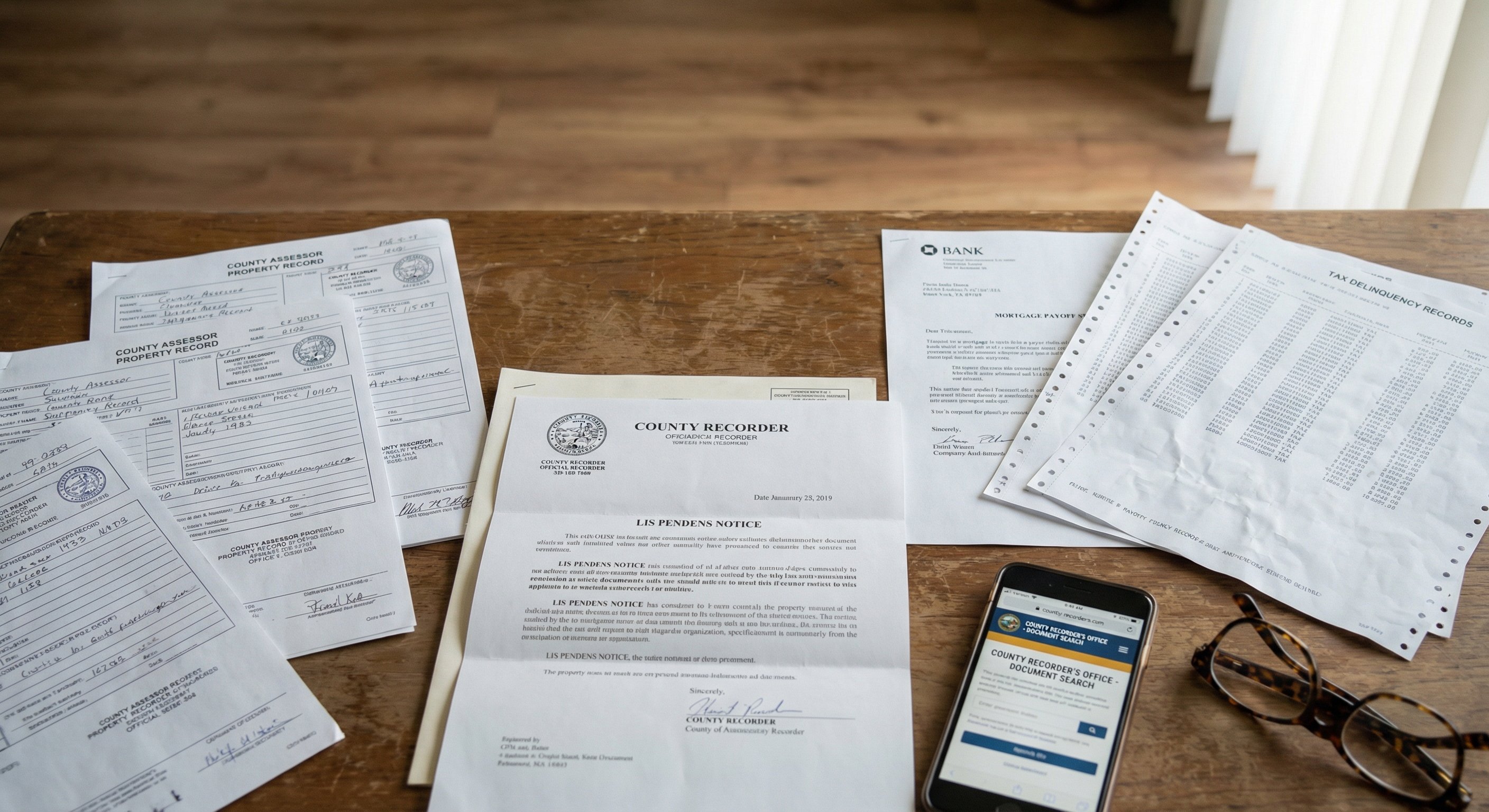
Washington county auditors maintain online search portals for recorded documents. King, Pierce, and Spokane counties all offer digital document search. The Notice of Default is recorded under document type codes tied to deeds of trust. An investor who knows how to search by document type and date range can build a current NOD list within hours.
The limitation of manual county search: it shows pre-foreclosure status but not the signal stack. To understand whether a given property also has tax delinquency, code violations, or lis pendens, an investor needs to cross-reference multiple county systems. That is a time-intensive process that does not scale.
A distressed property intelligence platform that pulls from county-direct sources and cross-references multiple signal types against each property gives investors a pre-filtered view of the highest-conversion leads. Rather than pulling 200 NOD records and researching each one manually, an investor can pull a list of properties with NOD filings crossed against tax delinquency and code violation records in a single view.
Step 2: Filter by Motivation Indicators
Not all pre-foreclosure leads convert equally. Three factors separate high-probability leads from time-wasting lookie-loos:
Equity position. A homeowner with meaningful equity above the homestead exemption has something to negotiate with. They can do a short sale, accept a cash offer below market, or bring money to closing. A homeowner who is underwater or barely above the homestead exemption is often waiting for the bank to take the property through the trustee's sale because they cannot bring money to a transaction.
Occupancy status. Owner-occupied properties in Washington have access to the mediation program and may have more motivation to resolve the situation before auction. Tenant-occupied properties are a different conversation: the tenant is not motivated by the foreclosure, and the owner may be more interested in a cash-for-keys arrangement than a traditional sale.
Timeline proximity. Properties within 30 to 45 days of the trustee's sale date are the hottest leads. The homeowner has exhausted most options by that point and the urgency is real. Investors who monitor NOD filings weekly and reach out within two weeks of recording consistently report higher contact rates than investors who work stale lists.
Step 3: Structure the Outreach
Washington's non-judicial process does not require investor contact with the homeowner before the sale. But the homeowners who respond to investor outreach are almost always the ones who want to avoid the auction. The conversation framework that works:
Start with the situation, not the offer. Ask the homeowner to confirm what they understand about where they are in the process. Many homeowners in pre-foreclosure have been dealing with lender communications for months and are confused about their actual timeline. Providing clear information about the trustee's sale date and the remaining redemption period establishes credibility and reduces defensive reactions.
Present options, not ultimatums. A short sale, a cash offer, or a deed-in-lieu of foreclosure are all potential exits. Each has different implications for the homeowner's credit and timeline. Investors who present the full menu of options and walk the homeowner through the practical implications of each tend to generate more signed purchase agreements than those who lead with a lowball offer.
Move fast. The pre-foreclosure window in Washington is real, but it is not infinite. An investor who takes two weeks to negotiate a verbal agreement after first contact may find the property has moved to the trustee's sale calendar by the time contracts are drafted.
Building a Washington Pre-Foreclosure Pipeline
The investor who wants consistent deal flow from Washington pre-foreclosure leads needs a systematic approach rather than a one-time list pull.
County recorder data should be reviewed weekly. New NOD recordings in King, Pierce, and Spokane counties should be cross-referenced against tax delinquency records and code enforcement filings within 48 hours of recording. Properties that stack two or more distress signals should be flagged for immediate outreach.
Signal recency matters. A tax delinquency from three years ago is a historical problem. A tax delinquency recorded in the current or prior tax year is a live signal. An investor who filters for current-year delinquency gets a more accurate picture of the homeowner's actual financial stress.
DistressIQ tracks pre-foreclosure filings, tax delinquency records, code violations, and lis pendens across all Washington counties, updated daily from county-direct sources. Investors can filter by signal type, county, and motivation score to surface the highest-probability leads without manually cross-referencing multiple county systems.
Frequently Asked Questions
How long does pre-foreclosure last in Washington State?
Washington's non-judicial foreclosure process typically runs 90 to 120 days from the Notice of Default to the trustee's sale. The homeowner has a redemption period that may extend this timeline, but the trustee's sale date is set at the outset. Investors should target outreach within the first 30 days of NOD recording for the highest motivation.
Can you stop a foreclosure in Washington?
A homeowner can stop a non-judicial foreclosure by bringing the loan current, negotiating a loan modification with the lender, completing a short sale, or paying off the debt in full before the trustee's sale date. Investors who contact homeowners early enough can often structure a transaction that satisfies the lender and gives the homeowner a clean exit.
What is the homestead exemption in Washington?
Washington's homestead exemption under RCW 6.13 protects $125,000 in equity for an owner-occupied primary residence. This exemption survives foreclosure and can be claimed against the proceeds of a trustee's sale. Investors should account for homestead protection when evaluating the equity position of any pre-foreclosure lead.
Does Washington have a redemption period after foreclosure?
Washington does not have a statutory post-sale redemption period for non-judicial foreclosures. Once the trustee's sale is completed and ratified, the winning bidder receives title immediately. This is different from judicial foreclosure states where redemption periods can extend 6 to 12 months after sale. For investors, this means the pre-foreclosure window is the primary opportunity — the auction is close to the end of the deal pipeline.
What counties in Washington have the most pre-foreclosure activity?
King County leads the state in pre-foreclosure volume due to its population size and the high concentration of mortgages originated during the 2015 to 2022 appreciation cycle. Pierce County and Spokane County are the next most active markets. Clark County near Portland also generates consistent pre-foreclosure volume tied to the cross-border buyer market.
Investors who understand Washington's non-judicial foreclosure process have a structural advantage over those using national lead platforms that treat every state identically. The deed of trust process, the mediation program, and the homestead exemption are features that shape deal strategy specifically in Washington. The investors who know how to use them find more deals and structure them more accurately.
See pre-foreclosure leads in Washington, filtered by distress signal stack and motivation score, on DistressIQ.

The data behind this article
DistressIQ Monitors These Signals in Real Time
Pre-Foreclosures
NOD + NTS filings
Tax Delinquency
County treasurer records
Code Violations
Municipal inspection filings
Probate Filings
Superior Court records
Every lead is scored 0–100 for seller motivation based on signal type, duration, severity, and stacking. Nationwide coverage — every US county, updated daily.
Ready to find deals in your market?
See Live Distress Signals in Your County
Stop calling dead leads. Every lead in DistressIQ is scored 0–100 for seller motivation, with verified contact info included. Browse the free tier to see what's active in your market right now.
Browse Free Leads — No Credit Card