Foreclosure Leads Tennessee: The Investor's Guide to Finding Deals Before the Auction

Foreclosure Leads Tennessee: The Investor's Guide to Finding Deals Before the Auction
TL;DR: Tennessee's non-judicial foreclosure process moves fast — 60 to 90 days from default notice to auction — and there is no post-sale redemption period in most standard residential foreclosures. That combination makes early-stage lead sourcing critical. Investors who identify pre-foreclosure homeowners in Shelby County (Memphis) and Davidson County (Nashville) before the auction notice hits the newspaper are the ones closing deals. County-direct data updated daily gives you the window manual researchers miss.

The Tennessee Foreclosure Market Is Not What Most Investors Think
Every investor who comes into Tennessee thinking they'll "find foreclosures" treats it like every other state. They subscribe to a national portal, pull a list of properties flagged "pre-foreclosure," and start mailing postcards.
They get killed.
The problem is not Tennessee. Tennessee is a productive market — Shelby County alone had a foreclosure rate of 1 in every 1,800 homes in early 2026, one of the highest urban concentrations in the South. The problem is timing. Tennessee's non-judicial foreclosure process runs 60 to 90 days from the moment a lender sends a default notice to the moment a property sells at the courthouse steps. Most investor outreach does not hit the homeowner's mailbox until week six or seven — after the newspaper publication has already run, after the auction date is set, after the window for a pre-foreclosure purchase has functionally closed.
By the time a generic lead list surfaces a Tennessee property, the distressed homeowner has already received three letters and two phone calls from other investors running the same playbook.
The investors winning in Tennessee are not working harder. They are getting the data earlier.
How Tennessee Foreclosure Actually Works
Tennessee is what's called a non-judicial foreclosure state, meaning the lender does not need to go through the court system to sell a property at auction. This is standard for most of the South and Midwest, and it is the primary reason the process moves so quickly.
Here is the sequence:
A homeowner misses a payment. Around day 30 to 60, the lender or trustee sends a formal demand letter — the notice of default. That triggers the publication requirement: the trustee must advertise the sale in a local newspaper once per week for three consecutive weeks. The publication runs in the county where the property sits. The auction happens at the county courthouse steps, between 10 a.m. and 4 p.m. on the scheduled date.
From the first missed payment to the auction date, you are looking at roughly 60 to 90 days in an uncontested case.
The critical investor insight here is the publication requirement. Newspaper ads are public record. Anyone with access to county-level publication schedules — not just the final ad, but the draft listing that runs before each weekly insertion — can see a foreclosure sale coming before it appears in the final edition. That gap between the first publication and the final ad run is where the smart money moves.

Once the sale happens, Tennessee typically does not provide a post-sale statutory redemption period in standard residential foreclosures. New Jersey and Illinois next door do. Tennessee does not. What you bid at the auction is what you own. This changes the math on how you analyze a property at the courthouse steps — there is no redemption period eroding your timeline after you win the bid.
Tennessee's Three Investor Markets Operate on Completely Different Logics
Tennessee is one state, but it is three distinct real estate investment environments. Investors who apply a Memphis strategy to Nashville or a Nashville framework to Knoxville are leaving money on the table every time.
Memphis and Shelby County is the highest-volume, lowest-price market in Tennessee. Median foreclosure list price sits around $175,000. The area has historically attracted buy-and-hold investors targeting strong cash-on-cash returns in a market with relatively affordable entry costs and a large tenant base. Foreclosure concentration is the highest in the state — 1 in 1,800 homes. The signal to watch here is not just lis pendens filings but tax delinquency on vacant or poorly maintained properties, which clusters heavily in specific zip codes within the Memphis metro. The investor advantage in Shelby County is volume — there are enough distressed properties that a data-driven investor can build a meaningful pipeline without relying on personal referrals.
Nashville and Davidson County is a high-appreciation market where distressed properties are comparatively rarer but the margin on each deal is significantly wider. Median home prices in the Nashville metro run $380,000 to $430,000. The investor looking at Nashville foreclosure leads is typically either a fix-and-flip operator who can sell a renovated home into a $450,000 to $500,000 market, or a buy-and-hold investor who wants a long-term rental in a high-demand location with strong rent growth. The key difference from Memphis: Nashville's competitive buyer market means distressed properties that do come available get offers fast. Speed of outreach matters more here than in any other Tennessee market.
Knoxville and Knox County operates as a university town market — steady tenant demand, moderate entry prices around $325,000 median, and a growing migration pattern from higher-cost states that is compressing days on market and stabilizing rents. Foreclosure activity in the Knoxville metro is lower than Memphis or Nashville, which means the investor who can find them first captures deals that out-of-state migration will make increasingly competitive. Knoxville's investor edge is the long game: buy a distressed property in a high-demand rental zone, hold it, and let the appreciation and rent growth work. Active foreclosures as of early 2026 sat at 57 properties for the entire metro — low volume, but each one matters more when supply is tight.

Beyond those three, Clarksville and Murfreesboro function as growth corridor markets driven largely by military tenant demand (Fort Campbell proximity) and Nashville overflow. Chattanooga operates as an amenity-driven market attracting remote workers and retirees at a lower price point than Nashville. Each of these secondary markets follows different timing and concentration patterns than the primary three.
Free Weekly Alerts
See What's Distressed in Your Market
Get free weekly alerts — new distressed properties, motivation scores, and hot neighborhoods in your area. Addresses and contact info available inside DistressIQ.
Free forever · No credit card · Unsubscribe anytime
The Specific Signals That Matter in Tennessee
General foreclosure data tells you a property is in distress. Tennessee-specific signals tell you whether the distress is likely to resolve — which means the deal disappears — or whether it is likely to compound, creating the motivated seller situation that generates actual investment opportunities.
Lis pendens filings are the first signal in Tennessee. A lis pendens is recorded when a lender initiates the non-judicial foreclosure process, and it becomes public record at the county clerk's office. In Tennessee, the lis pendens is filed before the newspaper publication begins, which means it is the earliest publicly available indicator that a property is moving toward auction. Investors who monitor county clerk records directly — not just the final ad but the actual filing date — can identify a property weeks before the auction schedule becomes public knowledge.
Deed of trust power-of-sale clauses determine whether a non-judicial process is even available. Most Tennessee mortgages use a deed of trust structure that includes a power-of-sale clause, which permits the non-judicial process without court involvement. This is the structural reason Tennessee moves faster than states like New York or New Jersey, which require judicial foreclosure. When you are evaluating a Tennessee property, confirming the deed of trust structure tells you whether the property will follow the fast 60 to 90 day timeline or whether an unusual clause is extending the pre-foreclosure window.
Post-auction deficiency judgments are legal in Tennessee, which means lenders can pursue the borrower for the difference between what the property sells for at auction and what was owed on the mortgage. This matters for investor strategy because it affects how motivated sellers think about pre-foreclosure negotiation. A homeowner who knows a deficiency judgment is coming has a different urgency profile than one who believes the auction satisfies the debt. Understanding which borrowers face potential deficiency exposure helps you calibrate how much discount is realistic in a pre-foreclosure negotiation.
No income tax policy does not directly create foreclosure leads, but it shapes Tennessee's investor population in a way that affects deal dynamics. Out-of-state investors concentrate in Tennessee partly because the no-income-tax structure improves net returns, which means more buyers in the market competing for distressed inventory. This is particularly relevant in the Nashville metro, where out-of-state capital is active and distressed properties that might have sold at a modest discount three years ago are now getting multiple offers from buyers who can pencil a Nashville deal at a lower cost of capital than a California or New York buyer.
Why Manual Research in Tennessee Leaves Money on the Table
The standard manual approach to finding Tennessee foreclosure leads goes like this: check the county clerk's website for lis pendens filings. Look at the newspaper publication schedule. Cross-reference with property records. Build a list. Call the homeowners.
This works for one or two properties. It does not scale.
The county clerk's office in Shelby County alone processes thousands of filings per year. The publication schedule for Davidson County runs dozens of foreclosure sales per month across multiple newspapers. The investor trying to manually track all of this across Tennessee's 95 counties is spending 15 to 20 hours per week on data collection and zero hours on actual deal analysis. The moment they find a property, by the time they call the homeowner, three other investors have already made contact because all four of them were pulling from the same county website at the same time.
The specific inefficiency in Tennessee is the gap between the lis pendens filing and the newspaper publication. That gap exists because legal notices have to be formatted, submitted, and reviewed before insertion. County-direct data sources that pull from the filing date rather than the publication date surface the property three to ten days earlier than sources that only monitor published auction schedules. In a 60 to 90 day foreclosure timeline, that three to ten day head start is the difference between calling a homeowner who has received zero offers and calling one who has received four.

The investor who understands Tennessee's courthouse-level data systems — the county assessor, the chancery court clerk, the trustee's sale calendar — has a structural advantage over the investor who only monitors aggregated third-party foreclosure lists. This is not about being first by one day. It is about understanding which data source the other investors are not using and building your pipeline around that gap.
The Practical Steps to Find Tennessee Foreclosure Leads in 2026
Step one: identify your target market within Tennessee. Memphis and Shelby County for cash flow and volume. Nashville and Davidson County for margin and appreciation. Knoxville and Knox County for stable long-term holds. Clarksville, Murfreesboro, and Chattanooga for secondary market opportunities where competition is lower.
Step two: establish your monitoring system at the county level. The lis pendens filing date is your earliest signal. Cross-reference it with the county assessor's property record to confirm ownership, assessed value, and any existing tax delinquency. Tennessee is a tax deed state, which means properties with long-standing tax delinquencies often surface as additional distress signals on top of the foreclosure itself — those stacked signals are where the most motivated sellers hide.
Step three: run a motivation score analysis across your Tennessee leads before you start calling. Not all pre-foreclosure homeowners in Tennessee are equally motivated. A homeowner in Nashville who bought at the peak and is now underwater by $80,000 has a very different situation than a Memphis investor who has been renting a property at negative cash flow for five years and is finally losing it to the lender. Motivation score — which stacks equity position, time on market, payment history, and local market velocity — tells you which calls to make first.
Step four: target your outreach timing. In Tennessee's 60 to 90 day process, the highest-value outreach window is between the lis pendens filing and the first newspaper publication. After the publication runs, you are competing with every other investor who monitors the newspaper schedule. Before the lis pendens, you have no legal publicly available signal. The filing-to-publication gap is where your competitive advantage lives.
What Makes Tennessee Different From Its Neighbors
Kentucky to the north requires judicial foreclosure, meaning every foreclosure goes through the court system and timelines run significantly longer. Investors who work Kentucky are accustomed to a 6 to 12 month pre-foreclosure window. Coming into Tennessee from Kentucky, the 60 to 90 day timeline feels like a sprint.
Georgia to the south has a similar non-judicial structure but a fundamentally different investor demographic. Georgia's investor market is heavily influenced by the Atlanta metro's rapid growth, which has pushed median prices high enough that some traditional Georgia foreclosure strategies no longer pencil. Tennessee's price points — particularly in Memphis — remain lower, which preserves the gross margin on distressed property acquisitions in a way that Atlanta's appreciating market does not.
North Carolina uses a hybrid judicial/non-judicial system that is more complex than Tennessee's straightforward non-judicial process. Investors who work the Carolinas are accustomed to a longer, more procedurally involved timeline that requires active monitoring of court filings in addition to county recorder data.
The practical implication is this: if you are an investor working multiple southeastern states, Tennessee is your fastest-moving market. The non-judicial process rewards rapid response and punishes delayed outreach. The lack of a post-sale redemption period means your timeline from winning bid to clean title is shorter than in most neighboring states. And the price points in Memphis, combined with the appreciation potential in Nashville and the stability of Knoxville, give you three different investment profiles within a single state.
The Bottom Line on Tennessee Foreclosure Leads
Tennessee's foreclosure market rewards investors who understand two things: the speed of the non-judicial process, and the data gap between filing and publication.
Most investors are working from the publication date. The ones closing deals are working from the filing date. That three to ten day gap, across Shelby County's high-volume foreclosure market and Davidson County's high-margin opportunities, is where deals happen before the competition knows they exist.
The other structural advantage is the lack of a post-sale redemption period. Once you win at the auction, the property is yours without an extended waiting period where the former owner can reclaim it by paying the sale price back. That finality is worth something in the deal analysis.
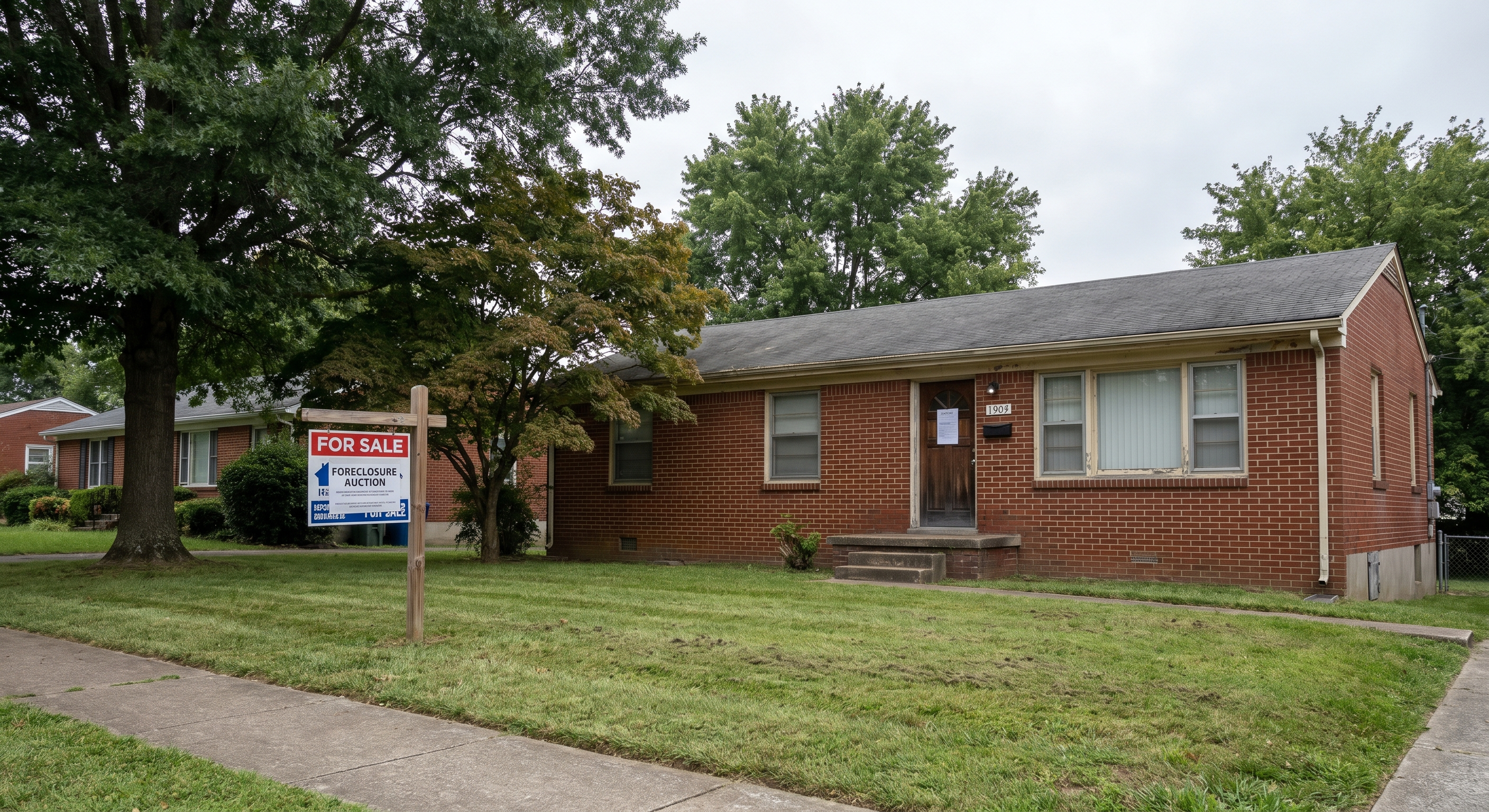
Find Tennessee foreclosure leads by motivation score — see pre-foreclosure, lis pendens, and tax delinquent properties across all 95 Tennessee counties, scored and ranked for outreach priority. Browse Tennessee leads free on DistressIQ →
The investors who are winning in Tennessee in 2026 are not the ones who found some secret strategy. They are the ones who understood the timeline, built the right monitoring system at the county level, and stopped showing up to the auction after everyone else already owned the deal.
Frequently Asked Questions
How long does it take to foreclose on a property in Tennessee?
Tennessee's non-judicial foreclosure process typically runs 60 to 90 days from the first missed payment to the auction date. The timeline depends on whether the case is contested and the lender's procedural compliance, but in an uncontested residential foreclosure, 60 to 90 days is standard.
Is Tennessee a judicial or non-judicial foreclosure state?
Tennessee is primarily a non-judicial foreclosure state. Most foreclosures proceed under a deed of trust with a power-of-sale clause, which allows the lender to sell the property without court involvement. Judicial foreclosure is available but rarely used, typically only when the deed of trust does not contain a power-of-sale clause.
Does Tennessee have a redemption period after foreclosure?
Tennessee does not provide a post-sale statutory redemption period in most standard residential foreclosures. Once the auction is complete, the winning bidder owns the property. This differs from states like Michigan and Illinois, which have extended post-sale redemption periods that can delay the investor's ability to take possession.
Which Tennessee counties have the most foreclosure activity?
Shelby County (Memphis metro) has the highest foreclosure concentration in Tennessee, with a rate of approximately 1 in every 1,800 homes. Davidson County (Nashville metro) and Knox County (Knoxville metro) are the next most active markets. Shelby County is particularly attractive for cash flow investors due to lower entry prices, while Davidson County offers higher margins for flip-and-sell operators.
Can a lender pursue a deficiency judgment after a Tennessee foreclosure sale?
Yes. Tennessee allows deficiency judgments. After the foreclosure sale, if the sale price does not cover the full outstanding loan balance, the lender can seek a judgment against the borrower for the difference. This is a relevant consideration when analyzing pre-foreclosure negotiation scenarios with homeowners who may face deficiency exposure.
The data behind this article
DistressIQ Monitors These Signals in Real Time
Pre-Foreclosures
NOD + NTS filings
Tax Delinquency
County treasurer records
Code Violations
Municipal inspection filings
Probate Filings
Superior Court records
Every lead is scored 0–100 for seller motivation based on signal type, duration, severity, and stacking. Nationwide coverage — every US county, updated daily.
Ready to find deals in your market?
See Live Distress Signals in Your County
Stop calling dead leads. Every lead in DistressIQ is scored 0–100 for seller motivation, with verified contact info included. Browse the free tier to see what's active in your market right now.
Browse Free Leads — No Credit Card