County Records Search: How Real Estate Investors Find Distressed Properties Before Everyone Else

County Records Search: How Real Estate Investors Find Distressed Properties Before Everyone Else
TL;DR: County records are the most accurate source of property ownership, tax status, and court activity available to real estate investors. Manual searches across multiple county websites, assessor databases, and court record systems take hours and produce fragmented results. Modern investor platforms now aggregate county-direct data into a single search interface, updated daily, so investors can find properties with tax liens, code violations, probate filings, and pre-foreclosure activity in minutes instead of days.

Most real estate investors know county records exist. Fewer know how much opportunity lives inside them, and almost none enjoy searching them manually.
The investor who figures out how to work county records efficiently has a permanent edge over the competition. Every distressed sale begins with a public record. Tax delinquency, court filings, inheritance, code enforcement actions. All of it lives in county systems. The question is not whether to use county records. The question is how to search them without spending your entire week on it.
What Are County Records and Why Do They Matter for Real Estate Investors
County records refers to the official documents and data maintained by local county government. For real estate investors, the most relevant categories are:
Assessor records. Every county maintains a tax assessor database that tracks property characteristics, ownership, assessed value, and tax payment status. This is the legal record of what a property is worth according to the government, and it is almost always more accurate than MLS data. The assessor also knows whether taxes are current or delinquent.
Clerk and recorder records. The county clerk handles property transfers, mortgages, liens, and recorded documents. When a mortgage goes unpaid long enough, the lender files a notice of default with the county recorder. That notice is a public record that signals a pre-foreclosure situation before the auction date is set.
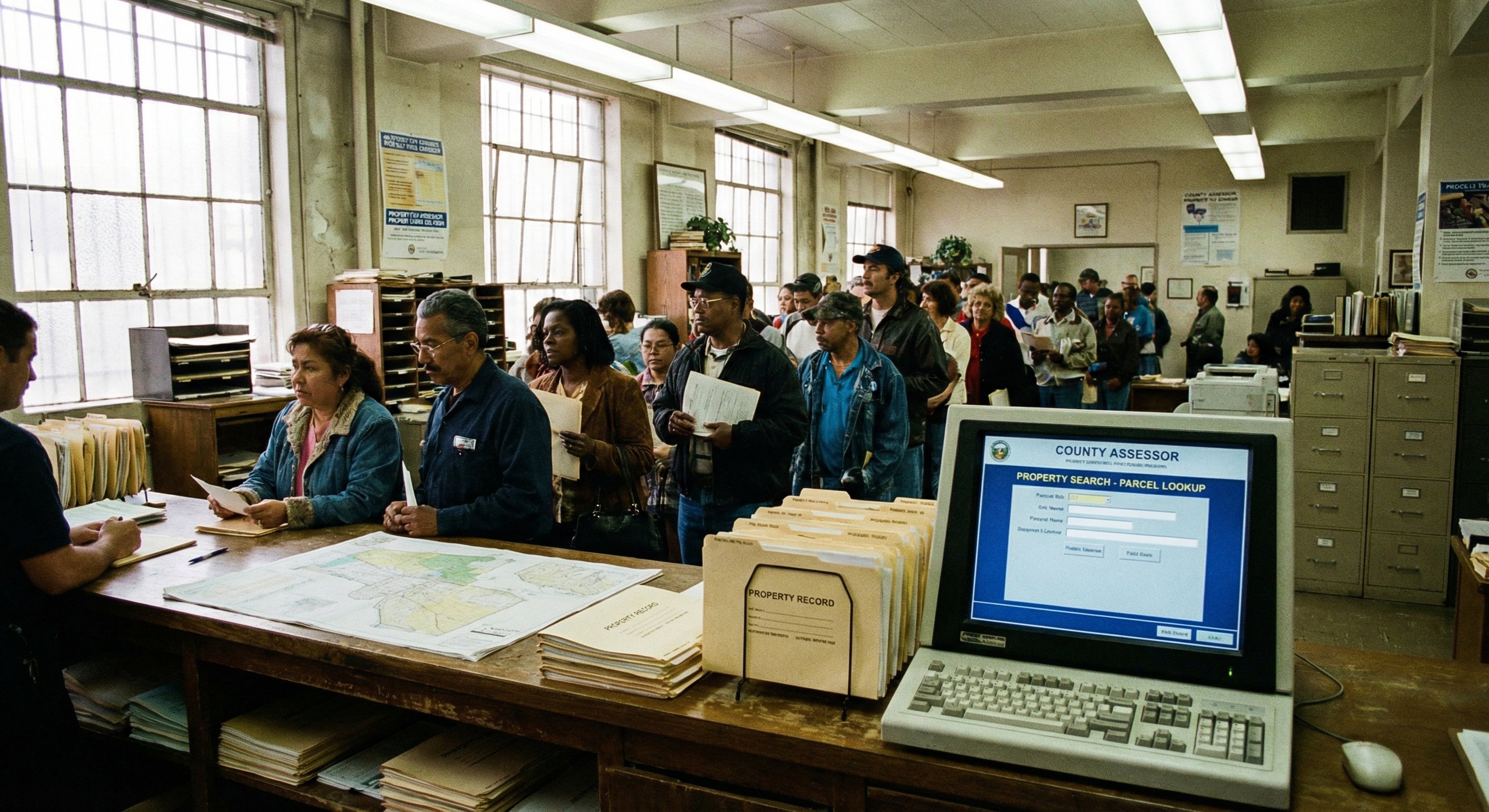
Court records. County courts handle eviction filings, probate cases, divorce proceedings that involve real property, and civil judgments that create liens against specific parcels. These records identify motivated sellers that most investors never hear about until the deal is already done.
Code enforcement records. When a property violates local housing codes, the violation is filed with the county or city code enforcement department. Properties with open code violations often sit abandoned, and the owner has a financial incentive to sell rather than pay the fines.
The common thread is that all of this information is public. The challenge is not access. The challenge is volume and fragmentation.
The Manual Search Problem: Why Doing It Yourself Costs More Than You Think
An investor who wants to run a proper county records search across a target market faces an immediate structural problem. There is no national county records database. There are 3,200 counties in the United States, and each one maintains its own system on its own schedule.
In practice, a manual county records search looks like this: open the county assessor website, search by owner name or parcel number, note the tax status, then open the county recorder website to check for liens, then navigate to the county court website to pull eviction or probate filings, then check the code enforcement database if one exists, and repeat for every county in your target area.
Each county website was built at a different time by a different vendor. The interfaces are incompatible. The search syntax differs. Some counties publish records digitally; others require an in-person visit or a written request. The investor who spends four hours running this gauntlet across five counties is not building a competitive advantage. That investor is running in place.
The real cost of manual county records searching is not the time. It is the opportunity cost. While one investor is tab-switching between eight county portals, a competitor with better data infrastructure is already calling the motivated seller.
What Experienced Investors Actually Look For in County Records
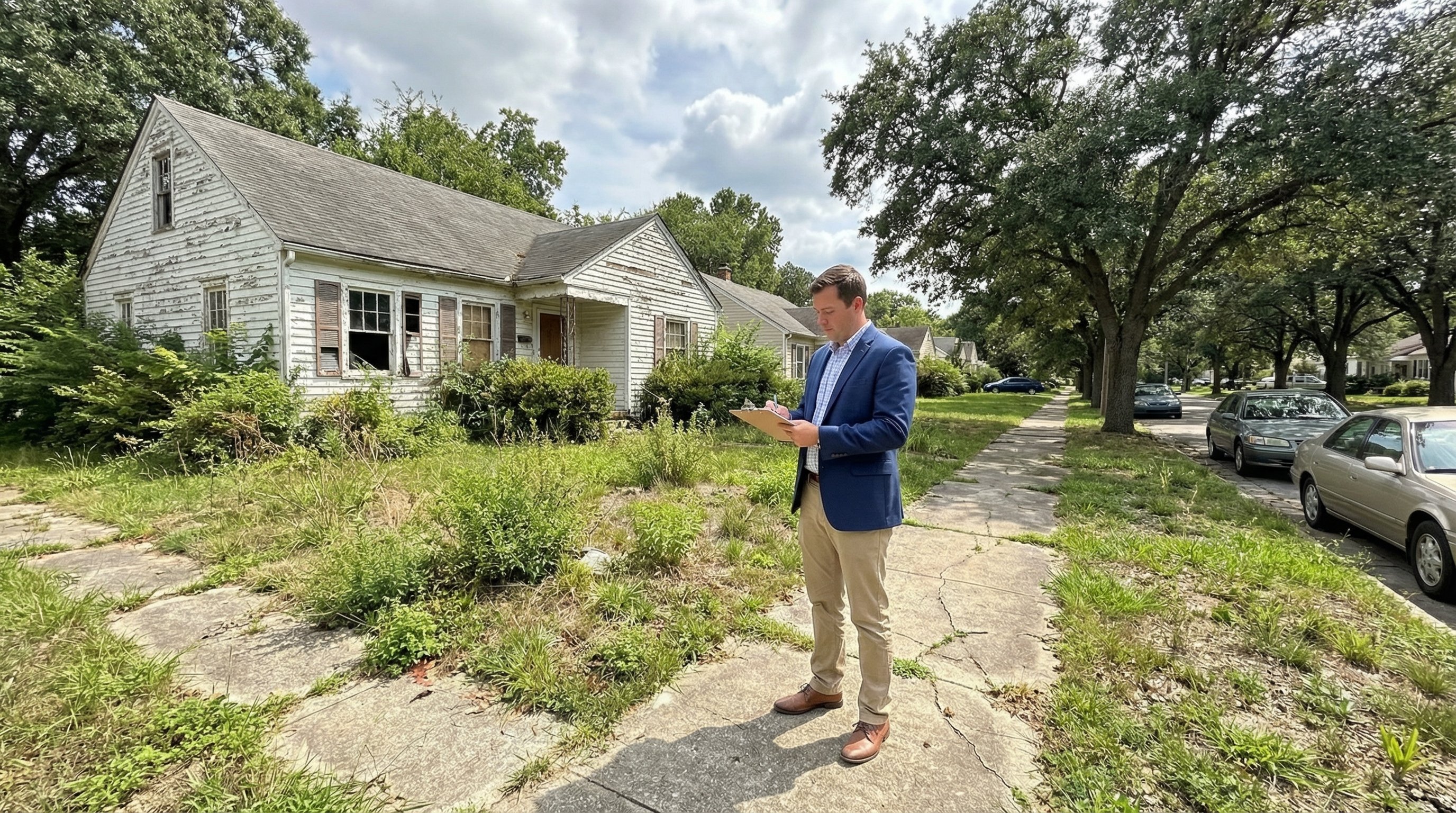
A county records search is only as good as the investor's ability to interpret what they find. Three categories of findings consistently indicate motivated sellers worth pursuing.
Tax delinquency signals. Properties with delinquent property taxes are among the most motivated-seller-adjacent records available. The county assessor shows exactly which properties owe money and how much. Owners who are behind on taxes are often behind on other fronts as well. The tax delinquency itself does not make someone a motivated seller, but it is a strong leading indicator. A property with two years of unpaid taxes and a declining assessed value is worth a phone call.
Court filing activity. Lis pendens filings, probate court cases, eviction proceedings, and divorce filings involving real property all create legally documented distress situations. The county court system is a matter of public record, and a lis pendens notice filed three weeks ago means the property is already in the pre-foreclosure pipeline. Investors who find it at that stage are calling before the auction date is set.
Ownership and occupancy patterns. Absentee owners, meaning investors who live out of state while holding local property, appear clearly in assessor records. The mailing address on file tells the story. Absentee owners are statistically more likely to sell than owner-occupied property owners, and they are often more flexible on price because they are managing the property from a distance and absorbing costs they no longer want to carry.
The investor who masters these three patterns and can run them across a wide geography consistently has deal flow. The investor who can only react to what they find on the MLS or a paid lead list is always one step behind.
Free Weekly Alerts
See What's Distressed in Your Market
Get free weekly alerts — new distressed properties, motivation scores, and hot neighborhoods in your area. Addresses and contact info available inside DistressIQ.
Free forever · No credit card · Unsubscribe anytime
How to Run a County Records Search: The Practical Workflow
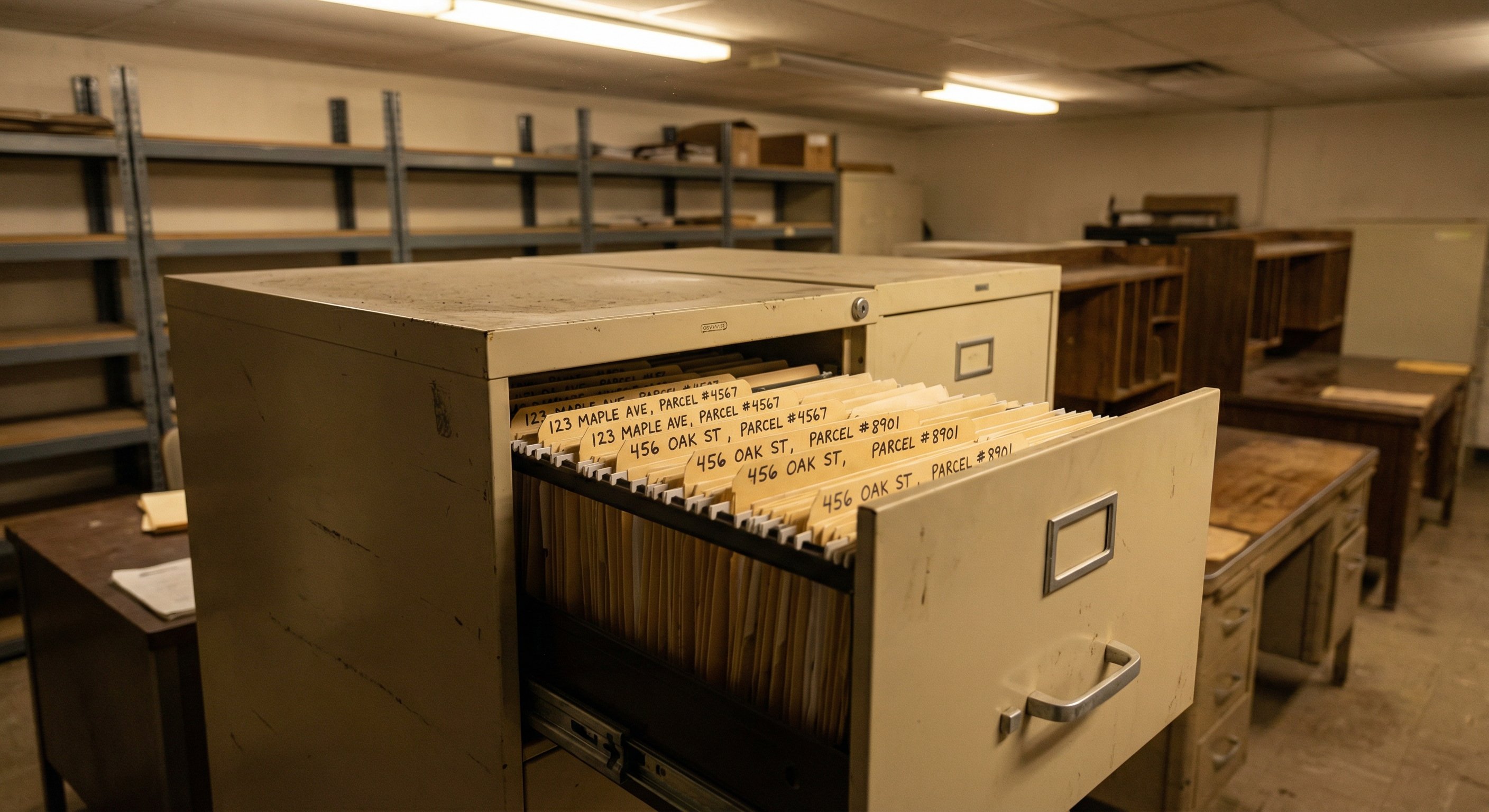
For an investor who wants to do this manually, the process has a few essential steps.
Start with the county assessor website. Most counties publish their assessor data online through a search portal. Search by address, owner name, or parcel number. Look specifically for the tax status field, which shows whether the property is current or delinquent, and the prior year tax status, which shows how long the delinquency has been running. Also note the mailing address. If it differs from the property address, that is an absentee owner signal.
Check the county recorder or clerk database for liens. After confirming tax status, search the recorder database for the same parcel number or owner name. A recorded lien, notice of default, or assignment of deed of trust tells you the property is already in the foreclosure pipeline. The filing date matters: the closer the filing date is to today, the fresher the opportunity.
Check the county court for eviction and probate filings. Eviction filings are public record in every state. A property with an active eviction case has a tenant who may be leaving, a landlord who may be selling, or both. Probate filings identify properties that changed hands through an estate. The executor of an estate has the legal authority to sell the property and is often highly motivated to close quickly.
Cross-reference the findings. A property that shows up in all three systems, namely delinquent taxes, a recorded lien, and a probate filing, is not a coincidence. It is a stacked distress situation, which is exactly the type of lead that converts. One signal might be a coincidence. Three signals pointing at the same property means the owner has a genuine problem and a genuine reason to sell fast.
The limitation of this workflow is that it scales poorly. Running it across 20 counties for a geographic investment strategy takes days. Running it across 100 counties is a full-time job.
The Modern Alternative: Using Aggregated County Data
The investor who is serious about using county records at scale needs a platform that does the aggregation work. A service that pulls from county assessor databases, court record systems, and code enforcement databases and consolidates them into a single searchable interface gives investors the data advantage of a manual search without the time sink.
This is where platforms like DistressIQ fit into the picture. Rather than replacing county records, these platforms sit on top of them and do the work of checking across thousands of counties simultaneously. The investor types in a city or county, applies filters for the distress signals they care about, and sees every property in that area that matches, ranked by the number and recency of signals.
The practical difference is not subtle. Four hours of manual county website browsing becomes four minutes of map-based searching. The signals are pre-organized by type. The ownership information is pulled into a lead card. The investor spends their time on outreach instead of data collection.
The data is only as good as its source. County-direct data, meaning records pulled directly from county assessor and court systems rather than resold from a third-party aggregator, is more accurate and more current. When a county updates its records, a platform built on county-direct data reflects that update faster than a platform that relies on weekly data feeds from a national reseller.
Where to Find County Records by Record Type
Knowing which county office handles which type of record is a practical skill that separates effective investors from frustrated ones.
The county assessor or tax assessor's office handles property characteristics, assessed values, exemptions, and tax payment status. Most assessor websites allow public searches without an account. The critical fields are tax year, assessed value trend (rising or falling over three to five years), and the tax status flag.
The county clerk, recorder, or register of deeds handles property ownership history, mortgage recordings, liens, lis pendens notices, and deed transfers. Recorder databases typically require a free account and allow searches by grantor, grantee, or parcel number.
The county circuit court or superior court handles eviction filings, probate cases, divorce proceedings involving real property, and civil judgments that may create liens. Court record searches are typically free for basic case information.
The county code enforcement or building department handles open violations, unregistered rentals, and condemned properties. Some counties publish this data online; others require a public records request.
Building a relationship with the recorder's office staff in your target counties is an underrated strategy. County employees can often tell you which types of records are most frequently requested, which indicates what other investors in the area are looking at.
How Data Freshness Changes the Entire Calculation
Data freshness is the variable that most investors underestimate. A county recorder files a notice of default on Monday. By Friday, that information is available online. By the following Monday, it has been indexed by every major lead platform. By two weeks later, dozens of investors have already sent mail to the property address.
The investor who finds that notice on day one has a window. The investor who finds it on day 14 is working with a lead that has already been worked by a dozen competitors.
County-direct data platforms that update daily from the source systems give investors the best chance of operating inside that freshness window. Platforms that refresh their data on a weekly or monthly cycle are selling information that is already weeks old by the time it reaches the investor.
For an investor who is trying to build a consistent deal flow from distressed property signals, stale data is not just inconvenient. It is strategically destructive. Every day a lead sits in a stale database is a day that lead is being worked by someone else who found it first.
Common Mistakes Investors Make with County Records Research
The investor who approaches county records without a system tends to make a few predictable errors.
The first is chasing single signals. A tax delinquent property is interesting. It is not a deal until other signals confirm genuine motivation and urgency. Investors who build entire marketing campaigns around one signal type without cross-referencing tend to generate high call volumes and low contract rates.
The second mistake is ignoring the ownership data entirely. The mailing address field in the assessor record tells you whether the owner is local or absentee, whether they are a private individual or an entity (LLC, trust, corporation), and whether the mailing address corresponds to the property or somewhere else entirely. Ownership data is often more useful than the property data itself.
The third mistake is failing to verify what they find. County records contain errors. Properties get mis-indexed. Names get spelled multiple ways. Parcel numbers change when properties are subdivided or combined. An investor who pulls a list of tax delinquent properties and calls every number without verifying ownership and current status will spend a significant portion of their time talking to the wrong people.
The fourth mistake is geographic inconsistency. Running a county records search in one county and ignoring the adjacent counties means leaving opportunity on the table. Market dynamics do not respect county boundaries. Investors who think in counties rather than metros often miss the neighborhoods that are one zip code over from their target area.
The Practical Case for Using a Platform Instead of Going Direct
There is a version of this work that is genuinely fun. Going county by county, building relationships with recorder staff, developing an intimate knowledge of local market dynamics. It is also a version that does not scale.
The investor who is buying one or two properties a year can afford to spend weeks researching each one manually. The investor who is trying to build a consistent pipeline of 10, 20, or 30 distressed properties per year needs data infrastructure that matches that ambition.
A platform approach does not eliminate the need for investor judgment. It eliminates the time sink that prevents investors from exercising that judgment at scale. The platform finds the properties. The investor evaluates them, makes the call, runs the numbers, and negotiates the deal.
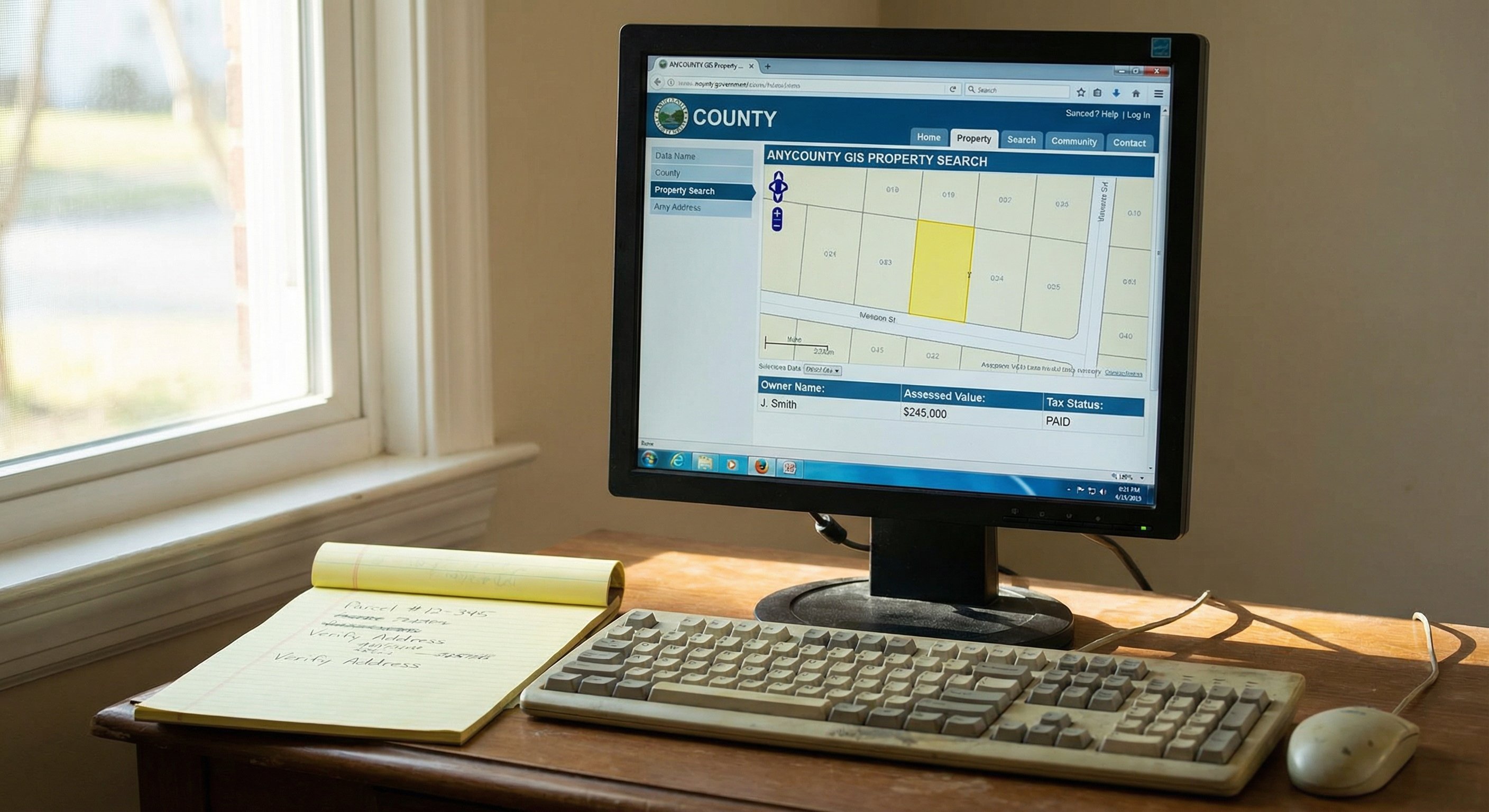
The investors who are winning in competitive distressed property markets are not the ones with the best instincts. They are the ones who saw the opportunity first. Seeing it first requires fresh data. Getting fresh data across 3,200 counties requires infrastructure, not just effort.
Frequently Asked Questions
How do I search county property records for free?
Most county assessor and recorder websites offer free public searches. The county assessor's site typically requires no account. The recorder or clerk database usually requires a free registered account. Court record searches are free at the county courthouse or through the court's online portal. The limitation is that free searches are manual, one property or owner at a time, and there is no consolidated index across multiple counties.
What is the difference between county assessor records and MLS data?
County assessor records come directly from the local government and reflect the data used to calculate property taxes. This includes legal ownership, assessed value, property characteristics, and tax payment status. MLS data is entered by real estate agents and reflects what sellers are asking for properties currently listed for sale. MLS data does not include off-market properties, and studies have found measurable discrepancies between MLS-reported square footage and the legal record. For distressed property investing, assessor data is more useful because it covers every property, not just those actively listed.
Can county records show if someone is facing foreclosure?
County recorder records show lis pendens filings and notice of default recordings, which are the first formal steps in the foreclosure process. The county assessor record shows whether property taxes are delinquent, which often precedes or accompanies mortgage distress. The county court system shows eviction filings, which sometimes coincide with mortgage problems. Together, these three record types give a reasonably complete picture of whether a property is in or near the foreclosure process.
How often are county records updated?
It depends on the county and the record type. Assessor records are typically updated annually after tax assessments are completed, though tax payment status may be updated more frequently as payments are processed or delinquent lists are generated. Recorder databases update as documents are filed, which can be daily or several times per week. Court records update as cases are filed or modified, typically daily. The freshness of the data an investor sees depends on how often the platform they are using refreshes its connection to county source systems.
Is county record data accurate enough to make investment decisions on?
County assessor and recorder data is among the most accurate property data available because it is the legal record of the property. Errors exist but are less common than in MLS or third-party aggregated databases. However, county records alone do not tell you whether a motivated seller wants to sell, what price they will accept, or whether there are other liens on the property beyond what appears in the recorder database. County records identify opportunities. Physical inspection, direct outreach, and title work verify them.
DistressIQ aggregates county-direct property records across 3,200+ counties, tracking tax delinquency, court filings, code violations, and other distress signals in a single searchable interface. Browse distressed property signals free on DistressIQ.
The data behind this article
DistressIQ Monitors These Signals in Real Time
Pre-Foreclosures
NOD + NTS filings
Tax Delinquency
County treasurer records
Code Violations
Municipal inspection filings
Probate Filings
Superior Court records
Every lead is scored 0–100 for seller motivation based on signal type, duration, severity, and stacking. Nationwide coverage — every US county, updated daily.
Ready to find deals in your market?
See Live Distress Signals in Your County
Stop calling dead leads. Every lead in DistressIQ is scored 0–100 for seller motivation, with verified contact info included. Browse the free tier to see what's active in your market right now.
Browse Free Leads — No Credit Card