BatchLeads Review 2026: Is It Still Worth It After the PropStream Acquisition?
BatchLeads Review 2026: Is It Still Worth It After the PropStream Acquisition?

TL;DR: BatchLeads is a capable real estate lead platform with a large property database, decent list-building tools, built-in skip tracing, and a driving-for-dollars app. But PropStream acquired BatchLeads in July 2025, and that changes the calculus. You're now paying a competitor's parent company, pricing has shifted upward, and the data quality complaints that plagued BatchLeads before the acquisition haven't gone away. For wholesalers who need raw volume, it's still viable. For investors who need fresh, verified distress signals, there are sharper tools built specifically for motivated seller identification.
The real estate lead gen tool market consolidated fast in 2025. PropStream, already the dominant player, acquired BatchLeads. Now one company controls two of the most widely used platforms in the wholesale space.
That matters more than most reviews are acknowledging.
If you're evaluating BatchLeads right now, you're not just choosing a data tool. You're choosing whether to put your prospecting workflow inside a company that also owns your main comparison point. Before we get into features and pricing, that context is worth sitting with.
What BatchLeads Actually Does
BatchLeads is a real estate investor platform built around three core functions: list building, skip tracing, and driving for dollars.
List building: You get access to a large national property database (comparable in scope to PropStream's 160+ million records). Filter by property type, ownership status, equity position, days on market, pre-foreclosure status, and other attributes to pull targeted prospect lists.
Skip tracing: Unlike platforms where skip tracing is a separate, additional-cost service from a third-party vendor, BatchLeads bundles skip tracing credits into their plans. Pull a list, skip trace within the platform, and export contact data. For wholesalers running high-volume direct mail or cold calling campaigns, this is a real convenience.
Driving for dollars: The mobile app lets investors mark properties while driving through neighborhoods, add notes and photos, and route those properties into their skip trace workflow. This is a genuinely useful feature for anyone who still wants to ground-truth their lead lists with physical scouting.
These core functions work reasonably well. The question isn't whether BatchLeads does these things. It's whether they do them well enough to justify the price, especially given what's happened to the ownership structure.
BatchLeads Pricing (2026)
BatchLeads has gone through pricing changes following the PropStream acquisition. As of early 2026, plan structure runs roughly:
- Basic plans starting around $97-$127/month for limited record exports and skip trace credits
- Mid-tier plans at $197-$249/month unlocking higher monthly volumes
- High-volume plans at $397+/month for teams and higher export caps
Skip trace credits have a monthly cap, and unused credits do not roll over. This is a persistent user complaint across both BatchLeads and PropStream. If you pull 1,000 skip traces in January but only needed 400, you're losing the difference.
Annual billing reduces the monthly effective rate by roughly 15-20%. For a platform you're committing to long-term, that discount is worth taking if you've validated the data quality for your market first.
One caveat: pricing is actively evolving post-acquisition. Check their current pricing page directly. The numbers above are representative of current tiers but specific credit limits and plan names are subject to change.
The Data Quality Question
This is where honest BatchLeads reviews diverge from the company's own marketing.
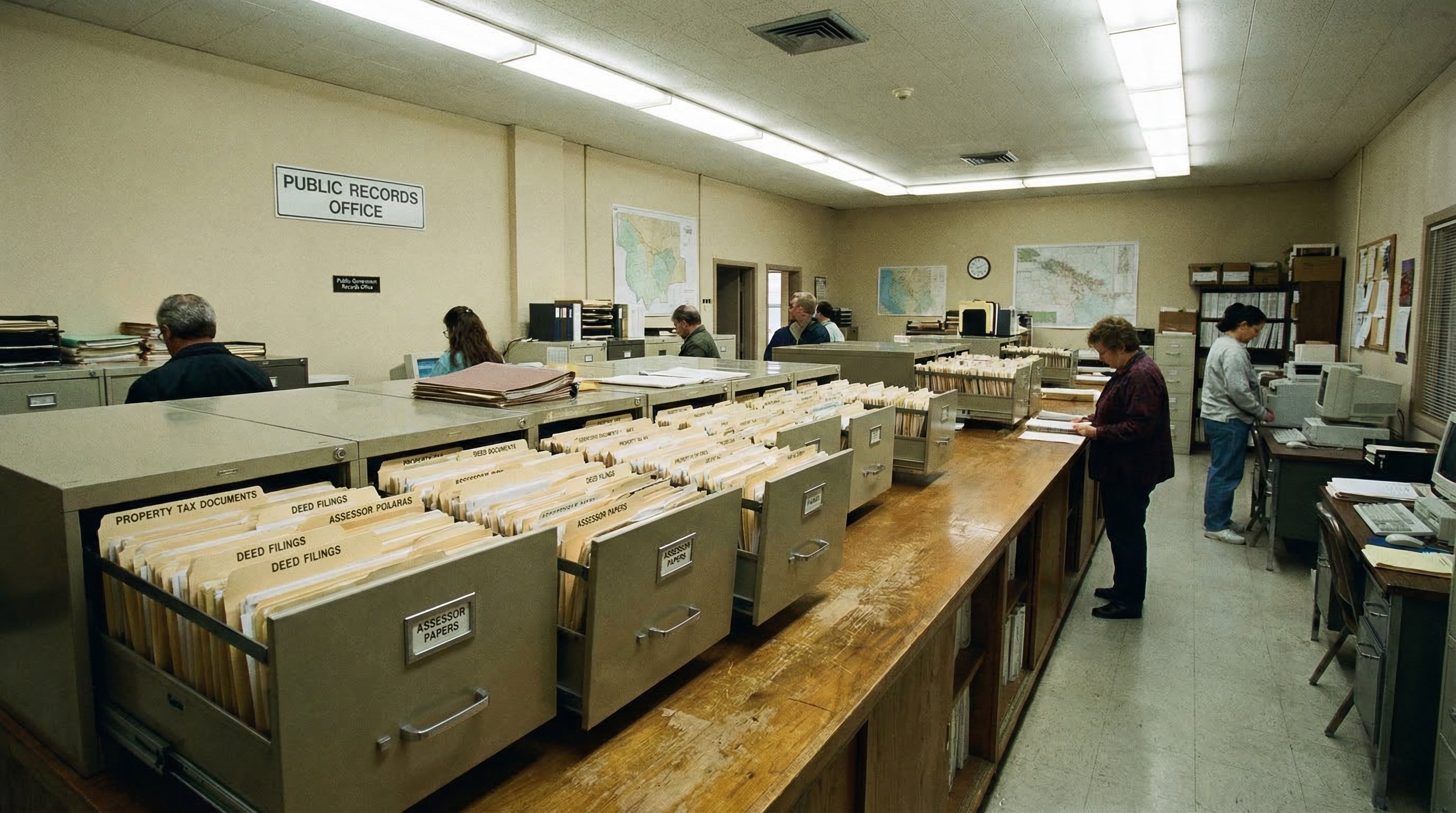
BatchLeads, like most large property database platforms, sources its data from aggregators: companies that buy, compile, and resell property data collected from county assessors, court records, and other public sources. The aggregator model introduces a delay between when something happens at the county level (a tax lien is filed, a lis pendens is recorded, a deed changes hands) and when that change appears in the platform.
In practice, that lag runs weeks to months depending on the county and the specific data type. In fast-moving markets, that's the difference between a lead that's still warm and one that 30 other wholesalers already mailed.
BatchLeads users consistently note this in community discussions:
- Pre-foreclosure data that's 60-90 days stale by the time it appears in the platform
- Skip trace hit rates that vary dramatically by market, strong in dense metros, weaker in rural counties
- Property characteristic data (square footage, bedroom count) that frequently doesn't match what's on the ground
The stale data problem isn't unique to BatchLeads. PropStream, DealMachine, and most similar platforms face the same underlying issue. They all pull from the same aggregator layer, which means the data freshness ceiling is the same regardless of which platform you're on.
This matters most for signal-specific lead types. If you're targeting pre-foreclosures, tax delinquents, or probate leads, you're dealing with situations where timing is critical and the window to contact someone before their situation resolves is measured in weeks. Stale data isn't just inconvenient in those cases. It's a direct hit to your conversion rate.
Free Weekly Alerts
See What's Distressed in Your Market
Get free weekly alerts — new distressed properties, motivation scores, and hot neighborhoods in your area. Addresses and contact info available inside DistressIQ.
Free forever · No credit card · Unsubscribe anytime
Skip Trace Performance
BatchLeads markets its bundled skip tracing as a cost advantage, since you don't have to pay a separate vendor like BatchSkipTracing or TLO. But bundled doesn't automatically mean better.
What works: For commonly held property types in metropolitan markets, BatchLeads' skip trace data is generally serviceable. Owner contact information for single-family homes in larger counties tends to be reasonably fresh and accurate.
Where it falls down: Rural counties, LLCs and entities that mask beneficial ownership, absentee owners who've moved multiple times, and recently transferred properties all see noticeable drops in hit rate. This is a broader problem with the aggregator data model, not a BatchLeads-specific failure, but it's worth benchmarking against your target market before committing to a plan.
A pragmatic approach: run a test batch of 100 records in your primary market, verify contact accuracy manually against a few properties you can ground-truth, and use that hit rate to project your actual cost-per-contact before scaling.
The PropStream Acquisition: What It Actually Means
In July 2025, PropStream's parent company acquired BatchLeads. The wholesale investor community's reaction was measured concern, and that concern is legitimate for several reasons.
Consolidation risk. When one company owns two of the three platforms you might choose between, competitive pricing pressure disappears. PropStream historically offered BatchLeads as its main comparison point. That comparison now benefits the same balance sheet. Platform-hopping becomes less of a negotiating threat.
Roadmap uncertainty. Post-acquisition, BatchLeads' product development priorities are set by PropStream's parent. Features that differentiate BatchLeads from PropStream may get deprioritized. Features that push users toward the higher-priced PropStream tier may get emphasis. This isn't cynicism. It's how acquisitions work.
Community anxiety is real. Reddit threads and investor forums have been processing this since the deal closed. The recurring question: "One company now owns both. What happens when they decide to sunset one?" Nobody knows the answer, and that uncertainty is a legitimate factor in any long-term platform decision.
To be clear: BatchLeads is still operational, still updated, and still viable as of this writing. The acquisition risk isn't a reason to panic. It's a reason to think carefully about your dependency on any single vendor in this space.
Who BatchLeads Is Right For
Despite the above, BatchLeads has a real use case, and for certain investor profiles it's still a solid tool.
High-volume direct mail campaigns. If your strategy is mailing large lists (5,000+ pieces per campaign) with broad filters, BatchLeads' volume model works. You're not looking for the 10 best leads; you're looking for 5,000 serviceable ones. Stale data is less damaging when you're blanketing a category rather than timing a specific signal.
Driving-for-dollars investors. The mobile app is genuinely good. If you're physically scouting neighborhoods and want to build lists on the go, BatchLeads' D4D workflow is one of the cleanest in the market.
Teams doing volume calling. Multi-seat plans with bundled skip traces keep cost-per-contact manageable for teams running high outbound volumes where per-call economics matter more than precision.
Who Should Look Elsewhere
Investors targeting specific distress signals. If your strategy depends on catching pre-foreclosures early, finding tax delinquents before the redemption window closes, or identifying probate situations while they're still active, you need data sourced directly from county records, not passed through an aggregator layer. The freshness gap matters enormously for these lead types.
Solo operators and small teams focused on ROI per lead. At BatchLeads' price points, paying for a large-volume database makes sense only if you're working that volume. If you're making 20 targeted calls per week rather than 200, you're paying for capacity you're not using.
Investors who want motivation scoring. BatchLeads gives you filters. It doesn't give you a ranked prioritization of which leads are most likely to sell. You're still building the list and figuring out who to call first on your own, which is exactly where most investors lose time.
How DistressIQ Compares
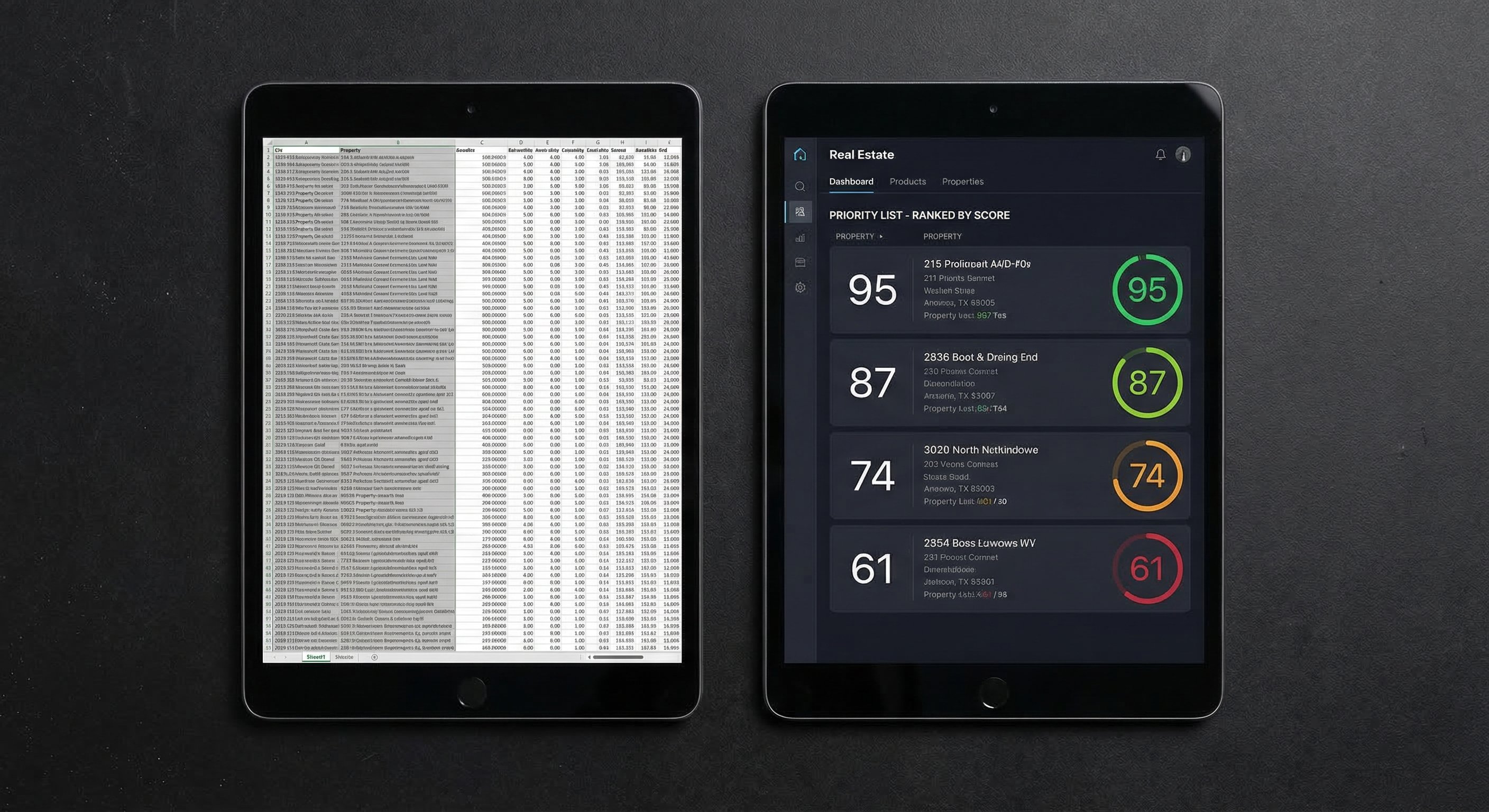
Where BatchLeads gives you volume, DistressIQ gives you precision.
Every property on DistressIQ has at least one verified distress signal, pulled directly from county records, not resold through an aggregator. Pre-foreclosures, tax delinquents, lis pendens filings, probate cases, code violations: each sourced from the county that holds the data, updated daily. No multi-week lag between a filing and when it shows up in your dashboard.
On top of that, DistressIQ stacks multiple distress signals per property into a single motivation score from 0-100. Instead of pulling a list of 500 pre-foreclosures and manually sorting them, you get the highest-urgency sellers already ranked at the top. The 20 properties most likely to result in a conversation are visible immediately, without any list manipulation on your end.
One more differentiator: browsing is free. You can explore the map, see the signal types, and verify coverage in your target market before paying anything. BatchLeads requires a subscription before you see what the data actually looks like for your specific markets.
BatchLeads is a broad net. DistressIQ is a targeted one. Neither is universally better. It depends entirely on your strategy.
BatchLeads vs. Alternatives: Quick Comparison
| Feature | BatchLeads | PropStream | DistressIQ |
|---|---|---|---|
| Database size | 150M+ records | 160M+ records | Distressed only (verified signals) |
| Data source | Aggregator | Aggregator | County-direct |
| Data freshness | Weeks-months lag | Weeks-months lag | Daily from source |
| Skip trace | Bundled (credits) | Separate cost | On-demand ($0.08/lead) |
| Motivation scoring | Filters only | Filters only | 0-100 score per lead |
| Browse before buying | No | No | Yes, free |
| Mobile D4D app | Yes | Yes | No |
| Ownership | PropStream parent | Independent | Independent |
| Starting price | ~$97/mo | ~$99/mo | $129/mo |

Final Verdict
BatchLeads does what it says. It's a large database, reasonably priced for high-volume list building, with convenient skip tracing and a solid driving-for-dollars app. For wholesalers running high-outbound strategies in competitive metros, it remains a viable platform.
The caveats are real:
- The PropStream acquisition introduces platform consolidation risk that didn't exist a year ago
- Data freshness issues are endemic to the aggregator model, and BatchLeads is not exempt
- No motivation scoring means you're doing prioritization manually on every list
- Unused credits expire monthly, so budget usage carefully
If you're evaluating BatchLeads for high-volume list building, it's worth a trial month. If you're evaluating it because you want to find the right motivated sellers faster, DistressIQ's free browse shows you what county-direct, daily-updated distress data looks like before you commit to anything.
Frequently Asked Questions
Is BatchLeads still a good platform in 2026?
BatchLeads remains functional and maintains a large user base, particularly among high-volume wholesalers. The core features, including list building, skip tracing, and driving for dollars, work reliably. The concerns worth tracking: data freshness (inherent to the aggregator model), the PropStream acquisition's long-term impact on pricing and roadmap, and whether the credit-expiration model fits your actual usage patterns.
Did PropStream buy BatchLeads?
Yes. PropStream's parent company acquired BatchLeads in July 2025. As of this writing, BatchLeads operates as a distinct platform with its own branding and pricing, but both are owned by the same parent company. This has raised legitimate questions in the investor community about long-term pricing stability and whether one platform will eventually absorb the other.
What's the difference between BatchLeads and PropStream?
Before the acquisition, the platforms were genuine competitors with meaningful differences: BatchLeads had stronger driving-for-dollars features, while PropStream had a larger raw database and more advanced filtering tools. Post-acquisition, both platforms continue to operate independently, but users should expect the distinction to blur over time as development priorities consolidate under shared ownership.
What is BatchLeads' skip trace hit rate?
Hit rates vary significantly by market and property type. Dense metropolitan areas with conventional single-family ownership typically see stronger hit rates. Rural markets, LLC-owned properties, and recently transferred properties see lower accuracy. BatchLeads doesn't publish a specific hit rate benchmark. The most reliable approach is running a test batch of 50-100 records in your primary target market before scaling your investment.
What's a better alternative to BatchLeads for finding motivated sellers?
For investors specifically targeting distressed properties (pre-foreclosures, tax delinquents, probate, lis pendens, code violations), platforms that source data directly from county records offer significantly better data freshness than aggregator-based tools like BatchLeads. DistressIQ pulls daily from county sources, stacks multiple distress signals per property, and scores leads 0-100 by motivation so you know who to contact first. You can browse properties free at distressiq.ai before committing to a subscription.
The data behind this article
DistressIQ Monitors These Signals in Real Time
Pre-Foreclosures
NOD + NTS filings
Tax Delinquency
County treasurer records
Code Violations
Municipal inspection filings
Probate Filings
Superior Court records
Every lead is scored 0–100 for seller motivation based on signal type, duration, severity, and stacking. Nationwide coverage — every US county, updated daily.
Ready to find deals in your market?
See Live Distress Signals in Your County
Stop calling dead leads. Every lead in DistressIQ is scored 0–100 for seller motivation, with verified contact info included. Browse the free tier to see what's active in your market right now.
Browse Free Leads — No Credit Card