Bankruptcy Leads Georgia: How Investors Find Chapter 13 Filings Before the Market Does


TL;DR: Georgia's Chapter 13 bankruptcy system produces motivated sellers at a higher rate than most investors realize. Approximately 32% of filed plans complete successfully, meaning roughly 68% of cases fail. When a plan fails, the automatic stay lifts, foreclosure resumes, or the property sells through trustee channels — and investors who monitor these cases can engage before the property ever reaches a public listing. The key is tracking filings in the Northern and Southern Districts of Georgia, focusing on cases where the filer owns real estate, and watching for plan payment failures in the months after confirmation.
The Statistic Most Georgia Investors Are Missing
Most real estate investors know bankruptcy creates motivated sellers. What they don't know is that Georgia's Chapter 13 system produces them at an unusually high rate, and most investors aren't watching the right signal to find them.
The number: approximately 32% of Chapter 13 plans filed in Georgia reach completion. That figure comes from a gap in what filers owe and what they can actually sustain over a 36 to 60-month repayment window. Job loss, unexpected medical expenses, and divorce are the most common reasons plans fail, and none of those are predictable from a distance. But the failure itself is observable if you know where to look.
When a Chapter 13 plan fails, the automatic stay that protected the debtor throughout the case is lifted. The lender can resume foreclosure proceedings, or the case converts to a Chapter 7 liquidation. Either outcome puts real property in play — often weeks or months before that property appears in any public listing.
That's the investor opportunity in Georgia bankruptcy leads. Not just the filing itself, but the window that opens when a plan collapses.

How Chapter 13 Bankruptcy Works in Georgia
Georgia has three federal bankruptcy court districts covering all 159 counties:
- Northern District of Georgia (Atlanta) — covers Fulton, DeKalb, Gwinnett, Cobb, and the surrounding metro counties. This is where the highest volume of filings occurs.
- Middle District of Georgia (Columbus, Macon, Albany) — covers central Georgia, including Muscogee and the Columbus area.
- Southern District of Georgia (Savannah, Augusta, Brunswick) — covers the coastal and southeastern counties.
A Chapter 13 filing starts with the petition, which triggers an automatic stay — a federal court order that stops all foreclosure proceedings, creditor lawsuits, and wage garnishments the moment the petition is filed. For real estate investors, this is the first signal: someone who was facing legal action on their property just got a legally enforceable pause.
The filing also schedules a Section 341 Meeting of Creditors, typically held 20 to 50 days after filing. This is a brief court proceeding where the trustee and any creditors can question the debtor under oath about their finances and proposed repayment plan.
From there, the plan goes to confirmation. Georgia uses the state median income to determine whether a filer must propose a 3-year or 5-year plan. For a household at or below Georgia's median income, the plan runs three years. Above median income, it runs five years. Plan confirmation usually happens 60 to 90 days after filing, once the court reviews that the proposed payments satisfy the legal standards.
Throughout the plan period, the debtor makes monthly payments to a standing trustee, who distributes funds to creditors. The debtor also continues making their regular mortgage payments directly to the lender.
This is where most plans in Georgia break down.
The Failure Rate: Where Investor Opportunity Lives
The 32% completion rate for Georgia Chapter 13 plans is the most underutilized statistic in the state's distressed property market. Most articles about bankruptcy leads focus on the filing itself — the moment of maximum distress. But the more actionable signal is the plan failure.
Here's why it works: Chapter 13 plans require sustained monthly payments over 36 to 60 months. The average Georgia household has limited financial cushion. When a filer loses a job, faces a medical emergency, or encounters a divorce-related cash crunch, they miss a trustee payment. The trustee moves to dismiss the case. The automatic stay terminates. The lender resumes foreclosure.
From the investor's standpoint, what's happened is this: someone who filed for Chapter 13 protection to save their home has failed in their repayment plan and is now back in the foreclosure pipeline — potentially within 30 to 60 days of the dismissal.
The properties that come out of failed Chapter 13 cases in Georgia tend to be in three conditions:
- Already in foreclosure — the Chapter 13 filing was an attempt to stop an active foreclosure. When the plan fails, the foreclosure resumes from wherever it left off.
- Behind on post-petition mortgage payments — some filers get their Chapter 13 plan confirmed but then miss their regular mortgage payments to the lender. The lender files a motion for relief from the automatic stay, and the case continues without the property protection.
- Converted to Chapter 7 — when a debtor cannot maintain a Chapter 13 plan, the case sometimes converts to Chapter 7, where non-exempt assets are liquidated to pay creditors. Real estate with equity above Georgia's exemption limits gets sold through the bankruptcy trustee.
The investor who monitors these transitions has a significant timing advantage. In the Northern District of Georgia — covering the Atlanta metro — these case events happen at volume, and they happen faster than most investors realize.
Free Weekly Alerts
See What's Distressed in Your Market
Get free weekly alerts — new distressed properties, motivation scores, and hot neighborhoods in your area. Addresses and contact info available inside DistressIQ.
Free forever · No credit card · Unsubscribe anytime
How to Find Bankruptcy Leads in Georgia
Finding bankruptcy leads in Georgia requires access to federal court records, which are public but not always easy to navigate. Here's what the actual research workflow looks like.
Step 1: Identify Active Chapter 13 Cases with Real Estate
The starting point is PACER (Public Access to Court Electronic Records), the federal court's online case management system. Each of Georgia's three districts has its own PACER interface:
- Georgia Northern District: ganb.uscourts.gov
- Georgia Middle District: gamb.uscourts.gov
- Georgia Southern District: gasb.uscourts.gov
Within PACER, you can search by:
- Case type (Chapter 13)
- Date filed range
- County where the property is located (if listed in the schedules)
- Asset indicator (cases where the debtor lists real property as an asset are the ones that matter to investors)
The asset search is critical. Most Chapter 13 cases involve only personal property and unsecured debt. Investors want cases where real estate is scheduled — because that's what becomes available when the plan fails.
Step 2: Track the Plan Confirmation Calendar
After filing, the confirmation hearing is typically scheduled 60 to 90 days out. Investors watching the docket can identify which cases involve real property in their target counties before the confirmation hearing occurs. At that point, the property is still protected by the automatic stay, but the case details — including the property address, estimated value, and any mortgage balance — are already part of the public record.
Step 3: Monitor for Plan Payment Failures
The signal that creates the most urgency is a motion to dismiss or a motion for relief from the automatic stay. These are filed when the debtor has missed trustee payments or failed to maintain regular mortgage payments post-confirmation. Both motions are docketed in PACER and are publicly accessible.
The timeline from missed payment to court action is typically 30 to 60 days, depending on the court's calendar and how quickly the trustee processes the default. An investor monitoring dockets daily can identify a case in distress within days of the motion being filed — well before the property reaches a public listing.
Step 4: Cross-Reference with County Records
Bankruptcy court filings in Georgia are cross-referenced with the county where the real property is located. Once you have a case number and property address from the bankruptcy docket, you can check the county assessor and recorder's office to see if there have been any subsequent filings — lis pendens, mechanic's liens, or tax delinquencies — that further signal the property's distress level.
This cross-reference step is where most investors lose time. Tab-switching between PACER, the county assessor site, and the county recorder is slow and manually intensive. The investors who win on these leads are the ones who have built workflows to move fast when the signal fires.
Where in Georgia to Focus
The Northern District of Georgia — centered on Atlanta and covering Fulton, DeKalb, Gwinnett, Cobb, Clayton, and the metro counties — accounts for the vast majority of the state's Chapter 13 filings. This is where the volume is highest, and where the most investor opportunities emerge from failed plans.
Specific counties where bankruptcy leads overlap with distressed property signals:
Fulton County — The highest volume county in the Northern District. Atlanta's urban core means higher property values, which makes Chapter 13 plan failures more consequential. Filers with properties in Fulton who fail their plans often have significant equity — either in their primary residence or in investment properties.
DeKalb and Gwinnett — Suburban metro counties with a mix of primary residences and small investment portfolios. The Chapter 13 cases here frequently involve both the primary mortgage and second mortgages or home equity lines of credit, which create the payment burden that drives plan failures.
Cobb County — Northwest of Atlanta, with median home prices higher than the state average. Chapter 13 filers here tend to have more debt relative to their income, which means tighter plan budgets and less cushion for unexpected expenses.
The Southern District of Georgia covers Savannah, Augusta, and the coastal counties. Volume is lower, but competition among investors watching for bankruptcy leads is also significantly lower. In rural and mid-sized Georgia markets, the signal is cleaner and the window between case failure and public listing is longer.
The Manual Research Problem
The workflow above sounds straightforward. The execution is where most investors drop the ball. PACER requires a paid account (currently $0.10 per page of documents viewed). The county assessor and recorder sites for Georgia's 159 counties are not uniform — each operates its own system, and many are not fully digitized. Cross-referencing bankruptcy dockets with county records means switching between multiple interfaces, often with no search function more sophisticated than a name lookup.
An investor working this manually might spend 45 minutes on a single case, only to find the property has already gone back to the lender or been listed. The signal-to-noise ratio is low, and the time cost per usable lead is high.
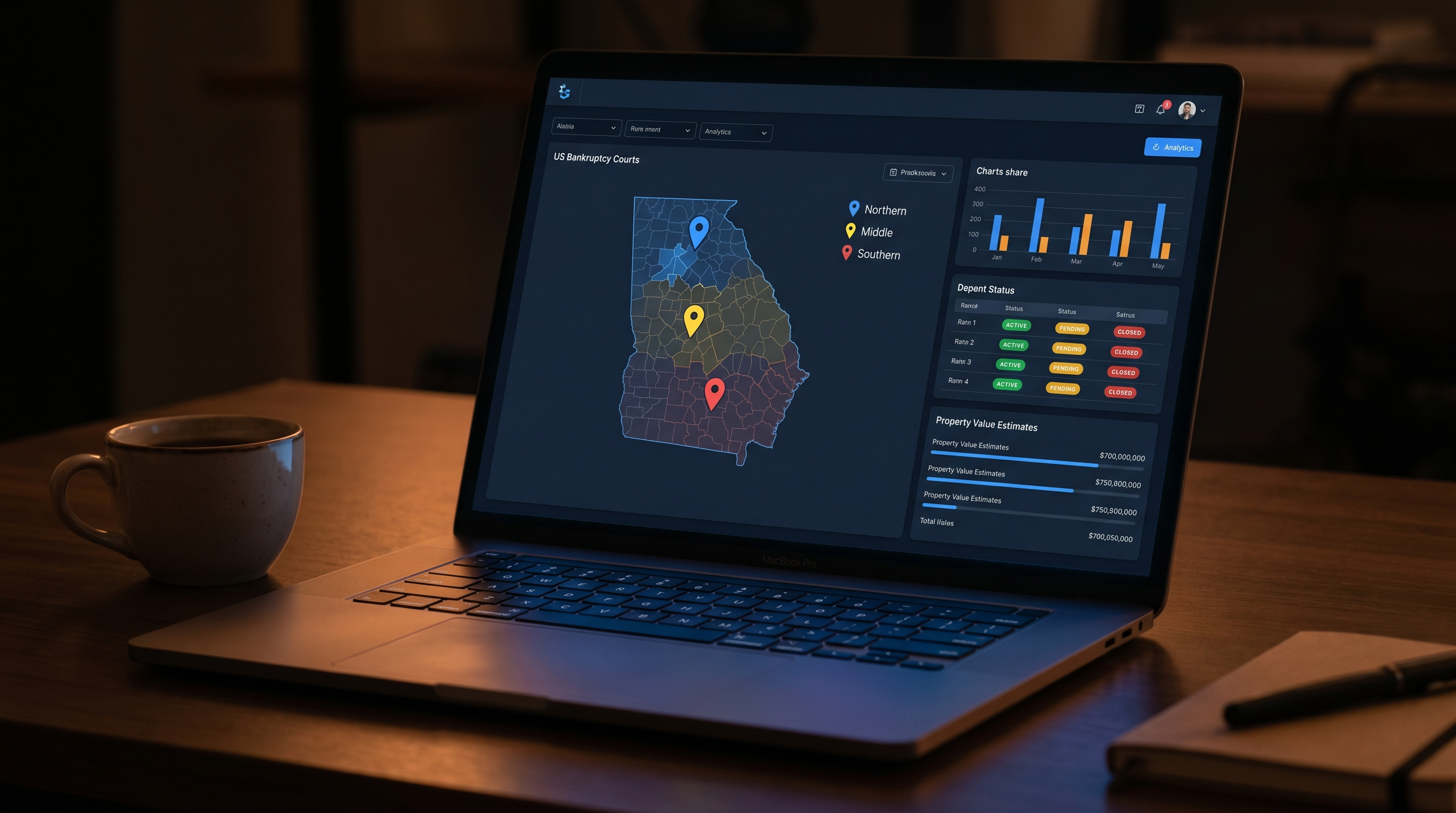
The practical result is that most real estate investors ignore bankruptcy leads entirely. They stick to tax delinquent lists, pre-foreclosure filings, and sheriff sale schedules — signals that are easier to aggregate and work with. That behavioral pattern is the investor's actual edge. When you do watch the bankruptcy docket, you encounter less competition from other investors making offers.
What to Do With a Bankruptcy Lead Once You Have One
Finding the case is the start. Working it effectively is where the strategy matters.
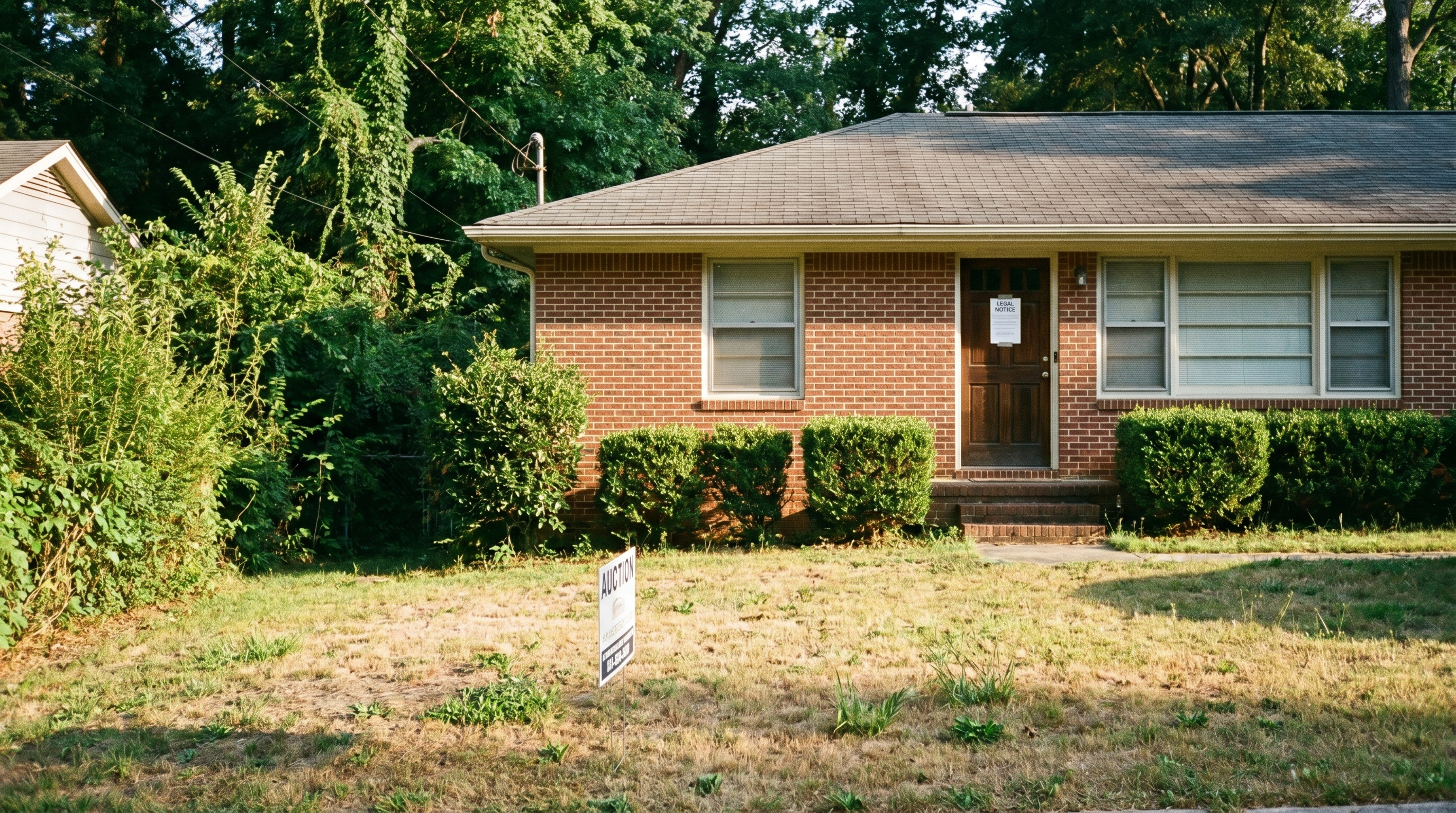
When a Chapter 13 plan fails and the automatic stay is lifted, the property is either already in foreclosure or about to re-enter the foreclosure pipeline. The investor's first call is to the debtor or their attorney. Many Chapter 13 filers in Georgia want to sell the property before the lender completes the foreclosure — they can often net more in a short sale than they would at a sheriff's auction, and a short sale clears their bankruptcy case more cleanly than a foreclosure.
The negotiation dynamic here is different from a typical motivated seller situation. The debtor has already filed bankruptcy, which means they've been through financial disclosure under oath and have a court-approved repayment plan. They're not in denial about their situation. They're often actively looking for a way out that doesn't involve losing the property at auction.
The investor who approaches a Chapter 13 debtor with a clean, fast cash offer during a plan failure is often the only offer on the table. That's the leverage. Use it.

Why DistressIQ Is the Faster Path
Manually monitoring Georgia's bankruptcy dockets across three federal court districts, cross-referencing with 159 county assessor and recorder systems, and tracking plan payment failures in real time is a full-time job. Most investors don't have the infrastructure to do it without burning hours they could spend on offers.
DistressIQ tracks bankruptcy filings alongside tax delinquency, pre-foreclosure, code violations, and other distress signals — pulling data from county records and court systems and updating daily. The motivation scoring across these signals tells you which cases are most likely to convert, so you're not wasting time on filings where the property has already gone dark.
Find bankruptcy leads in Georgia scored by motivation — browse all distressed property signals in Fulton, DeKalb, Gwinnett, and every other Georgia county on DistressIQ. Free to browse. No obligation. See Georgia leads now →
Frequently Asked Questions
What is the difference between Chapter 13 and Chapter 7 bankruptcy for real estate investors?
Chapter 13 involves a court-approved repayment plan over 3 to 5 years. Chapter 7 is a liquidation of non-exempt assets. For real estate investors, Chapter 13 cases are more useful because they involve ongoing income documentation and property schedules that are part of the public record. When Chapter 13 plans fail, the property typically returns to the foreclosure pipeline — giving investors a window to make offers before the property goes to auction.
How long does it take for a property to become available after a Chapter 13 plan fails in Georgia?
Once a motion to dismiss is filed for a failed Chapter 13 plan, the court typically rules within 30 to 60 days. After the dismissal, the automatic stay terminates immediately, and the lender can resume foreclosure proceedings. The property may appear at a sheriff's sale within 60 to 90 days of the dismissal, depending on the county and the lender's timeline. Properties in Fulton, DeKalb, and Cobb counties tend to move fastest because of lender volume in those markets.
Can investors buy property directly from a Chapter 13 debtor?
Yes. A Chapter 13 debtor can sell real property during the plan period, but the sale must be approved by the bankruptcy court. The process is called a "sale free and clear of liens," and it requires the debtor's attorney to file a motion. Investors working with a debtor's attorney can structure deals that close faster than a foreclosure auction and often at below-market prices, because both parties benefit from avoiding the auction process.
What percentage of Georgia Chapter 13 cases complete successfully?
Approximately 32% of Chapter 13 plans filed in Georgia reach completion. The remaining roughly 68% are dismissed, converted to Chapter 7, or discharged without completing the plan. This high failure rate is partly structural — Georgia's median income level determines plan length, and many filers above the median income level commit to 5-year plans they cannot sustain.
Is monitoring bankruptcy leads worth the effort compared to other distress signals?
For investors targeting motivated sellers in Georgia's metro markets, bankruptcy leads offer a distinct advantage: they involve properties where the owner has already been through financial disclosure, is operating under a court-supervised repayment plan, and has a documented need to resolve their real estate situation. The competition among investors for these leads is lower than for tax delinquent or pre-foreclosure leads, primarily because the research workflow is more involved. If you have access to a system that tracks bankruptcy filings alongside other distress signals, the effort-to-deal ratio is favorable.
The data behind this article
DistressIQ Monitors These Signals in Real Time
Pre-Foreclosures
NOD + NTS filings
Tax Delinquency
County treasurer records
Code Violations
Municipal inspection filings
Probate Filings
Superior Court records
Every lead is scored 0–100 for seller motivation based on signal type, duration, severity, and stacking. Nationwide coverage — every US county, updated daily.
Ready to find deals in your market?
See Live Distress Signals in Your County
Stop calling dead leads. Every lead in DistressIQ is scored 0–100 for seller motivation, with verified contact info included. Browse the free tier to see what's active in your market right now.
Browse Free Leads — No Credit Card