Absentee Owner List New York: Where Out-of-State Landlords Are Ready to Sell
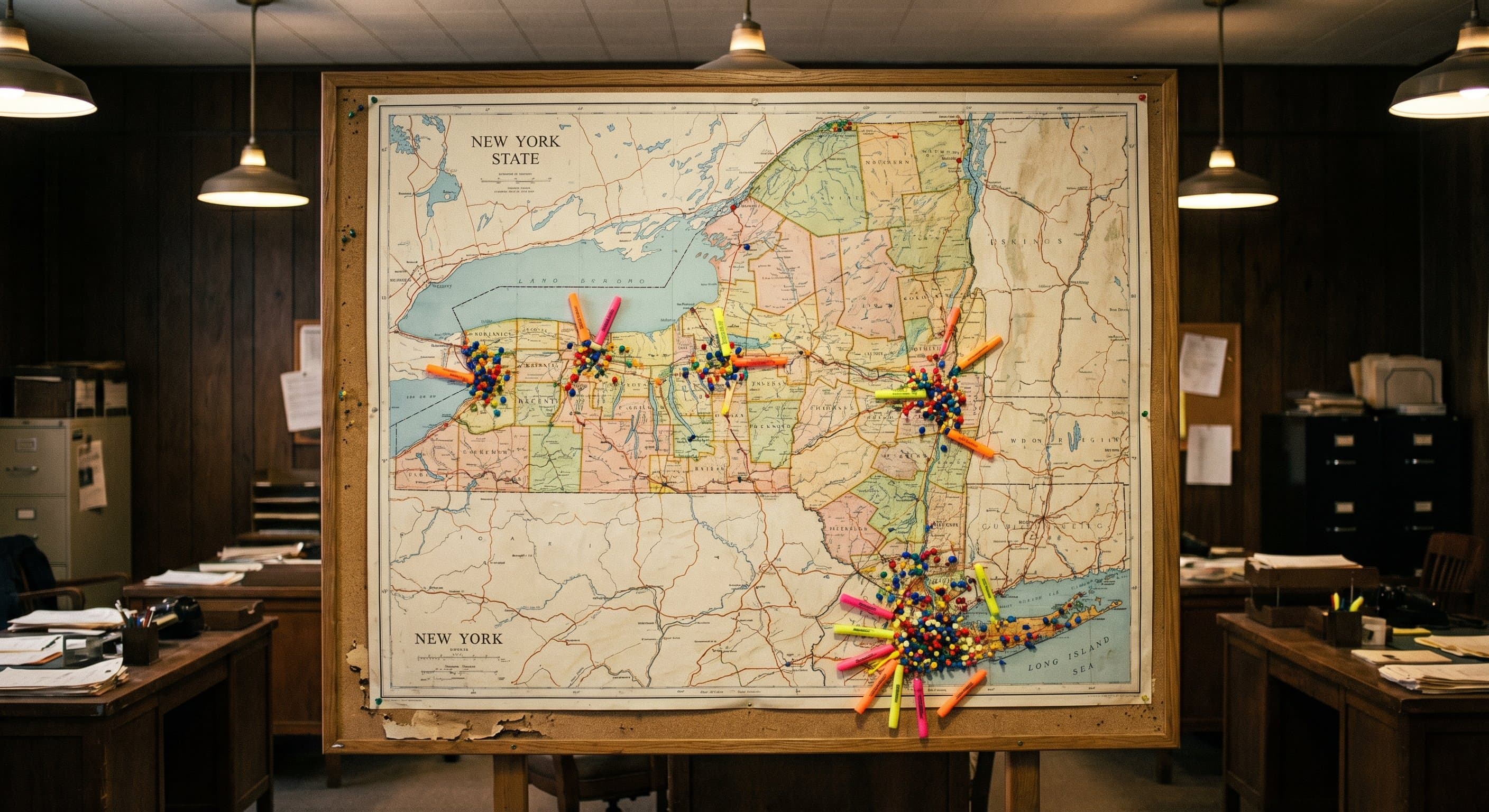
Absentee Owner List New York: Where Out-of-State Landlords Are Ready to Sell
TL;DR: New York has one of the largest and most stratified absentee owner populations in the country, driven by a sharp divide between high-value downstate markets and distressed upstate cities. The 2019 Housing Stability and Tenant Protection Act capped rent increases and eliminated vacancy decontrol for stabilized units, pushing many small landlords toward selling. Combined with property taxes that rank among the five highest nationally, out-of-state ownership in NY creates a rich pool of motivated sellers for investors who know where to look and how to filter for genuine motivation.
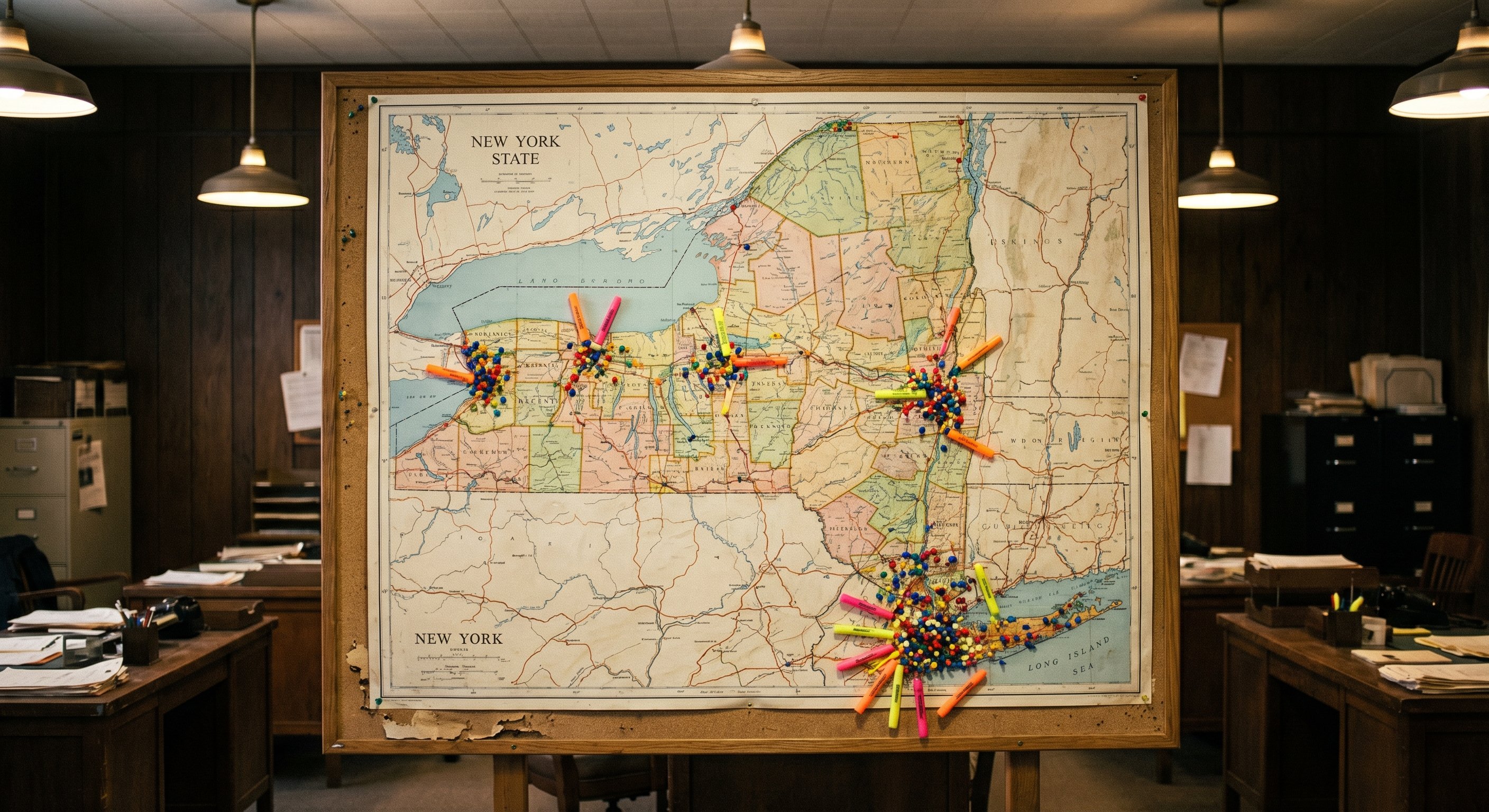
In 2019, New York passed the Housing Stability and Tenant Protection Act. The law eliminated vacancy decontrol for rent-stabilized apartments, limited security deposits to one month, and made it substantially harder for landlords to recover units for personal use. For thousands of small landlords living outside the state, the math changed overnight. Properties that once produced reliable cash flow became regulatory headaches with capped income and rising expenses.
That regulatory shock is still working its way through the market. And it makes New York's absentee owner landscape unlike anywhere else in the country.
Two Markets, One State
Any conversation about an absentee owner list in New York has to start with the geography. This state contains two completely different investment environments sharing a border.
Downstate, the five boroughs, Long Island, and the Lower Hudson Valley hold some of the highest property values in the world. Absentee owners here are often institutional investors, overseas buyers, or legacy landlords who inherited rent-stabilized buildings. Motivation to sell comes from regulatory fatigue, estate planning, or the simple fact that managing a building from another state under NY tenant law is a miserable experience.
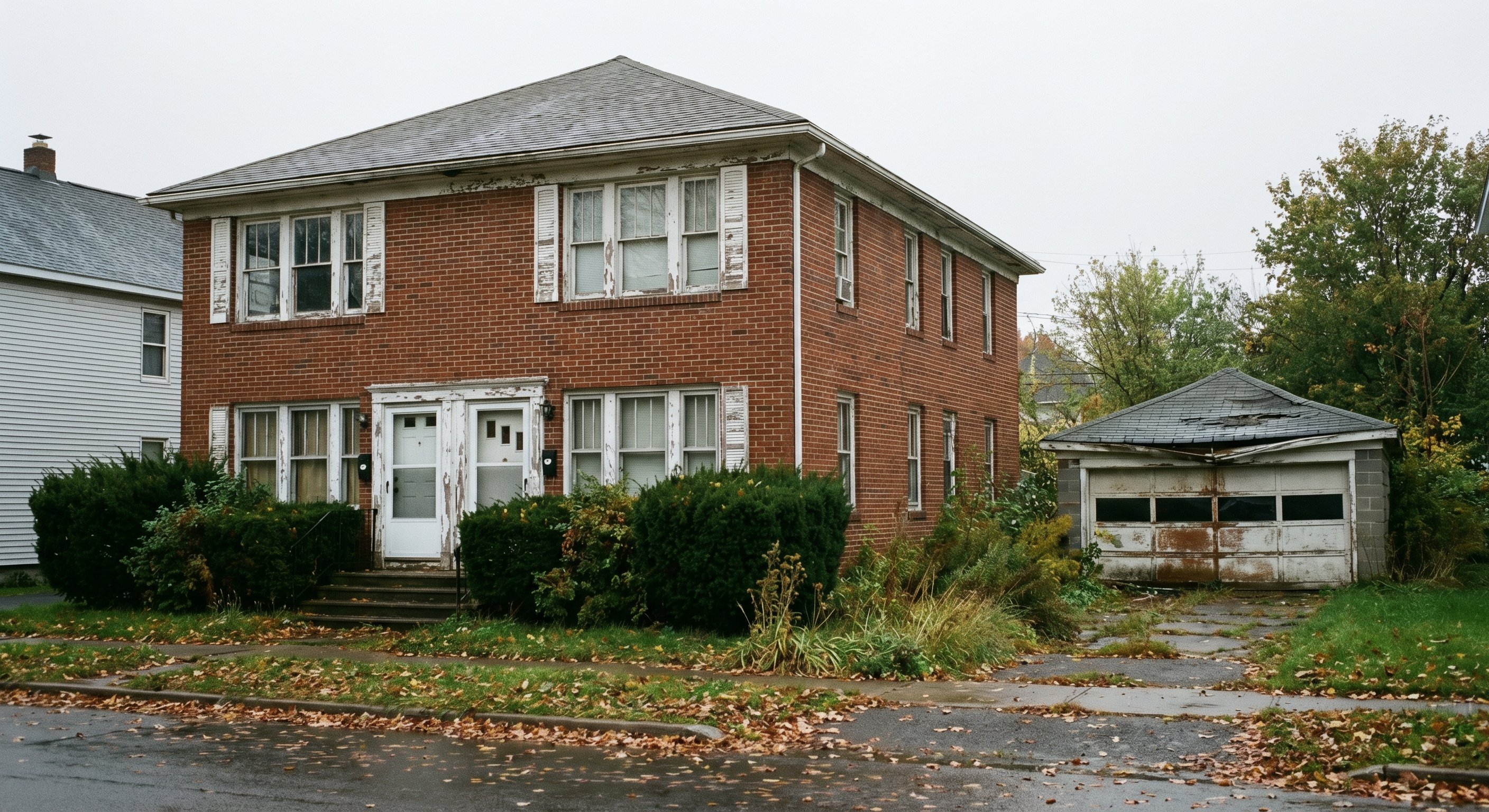
Upstate tells a different story. Buffalo, Rochester, Syracuse, and parts of Albany have been losing population for decades. Property values are a fraction of downstate levels. But the absentee owner problem is arguably worse. Owners who moved away years ago are holding properties worth less than the accumulated tax liens and code violations attached to them. These are the deals where the math actually works for investors.
The point: an absentee owner list in New York that does not distinguish between a $2.5 million Brooklyn brownstone and a $35,000 duplex in Buffalo is not useful. The filtering matters more than the raw count.
Where the Absentee Owners Cluster
The density of out-of-state ownership in New York is not evenly distributed. Five areas account for the majority of absentee-held properties.
Kings County (Brooklyn) and Queens County have the highest concentration of rent-stabilized buildings owned by non-resident landlords. Many of these owners purchased between 2005 and 2015 expecting stable appreciation and manageable tenant turnover. The 2019 law changed that calculus. These owners are often the most motivated to sell, particularly those holding smaller buildings (4 to 16 units) who lack the legal infrastructure to navigate the new regulatory environment.
Suffolk and Nassau Counties (Long Island) have a large stock of single-family rentals owned by investors who moved to Florida, the Carolinas, or New Jersey. Property taxes here regularly exceed $10,000 per year on a modest three-bedroom home. When those owners retire or reassess their portfolios, the carrying costs push them toward selling.
Erie County (Buffalo) and Monroe County (Rochester) have high vacancy rates and aging housing stock. Census data shows residential vacancy rates in these metros above the national average, and a significant share of those vacant units are owned by people who no longer live in the state. These properties often stack multiple distress signals: tax delinquency, code violations, and prolonged vacancy.
Bronx County sits in a unique position. Property values are lower than Manhattan and Brooklyn, but the rent-stabilized inventory is enormous. Absentee owners here are often smaller players who bought one or two buildings as retirement investments and now find themselves unable to raise rents enough to cover rising insurance, maintenance, and property tax bills.
Westchester County has a growing population of absentee owners who relocated during the remote-work shift. These tend to be higher-value single-family homes where the owner moved to a lower-cost state and rented the property temporarily before deciding to sell.
Identifying Motivated Absentee Owners in NY
Not every out-of-state owner is ready to sell. A landlord collecting rent on time from Florida has no motivation to offload the property. The key is identifying which absentee owners are carrying properties they no longer want.
The strongest signals in New York include:
Tax delinquency. NY property taxes are punishing. New York City holds an annual tax lien sale, and counties across the state maintain their own delinquent tax rolls. When an absentee owner falls behind on taxes, it usually means the property is costing more than it produces. The NYC Department of Finance publishes the annual tax lien sale list, and most county tax offices maintain searchable databases.
Code violations. HPD (Housing Preservation and Development) violations in the five boroughs are public record. An absentee owner with open violations is spending time and money on a property they cannot manage remotely. The violation count climbs, the fines accumulate, and motivation builds.
Vacancy combined with absentee ownership. This is the most powerful filter. A vacant property owned by someone in another state is a property nobody is watching. Insurance companies cancel policies on vacant homes. Pipes freeze in Buffalo winters. Squatters move in. The carrying costs compound quickly.
Stacked signals. The most motivated absentee owners are those where multiple distress signals overlap. A tax-delinquent, code-violated, vacant property owned by someone in Florida is not a borderline lead. That is a near-certain deal for an investor who reaches out with a fair offer.
Free Weekly Alerts
See What's Distressed in Your Market
Get free weekly alerts — new distressed properties, motivation scores, and hot neighborhoods in your area. Addresses and contact info available inside DistressIQ.
Free forever · No credit card · Unsubscribe anytime
County-Level Data Sources
New York has no single statewide absentee owner database. Investors work at the county level, and the fragmentation keeps lazy competitors out.
NYC (five boroughs): The NYC Open Data portal provides ownership records, HPD violations, and tax lien data. ACRIS handles recorded documents and transfers.
Long Island (Nassau and Suffolk): Both county assessor offices offer online databases filterable by mailing address zip code. Owners whose tax bills route to out-of-state addresses are your targets.
Upstate counties: Erie, Monroe, Onondaga, and Albany have digitized records. Smaller counties vary widely, some requiring in-person visits to the clerk's office. That friction is your friend.

What to Know Before You Reach Out
NY tenant law is among the most protective in the nation. Rent-stabilized buildings in NYC carry strict limits on rent increases and eviction, and the 2019 law eliminated the deregulation path entirely. A building with stabilized tenants may never reach market-rate income. The value is in the structure, not the current rent roll.
For single-family absentee deals, tenant complications are less relevant. The best opportunities are often vacant homes or small multifamily buildings in upstate cities where the owner walked away years ago.
Property taxes demand careful analysis. A $50,000 house in Syracuse can carry a $3,500 annual tax bill. The gross rent multiple looks attractive, but after-tax cash flow tells the real story.
Working the List
The investors who do well with absentee leads in New York share a few patterns.
Filter before calling. A raw absentee list converts under 2%. Filtering for tax delinquency, code violations, or vacancy pushes that above 10%. The filtering is the list.
Target long ownership duration. Owners who have held for 15-plus years have built equity and often reached a life stage where selling makes sense. Recent buyers may still be committed to the play.
Use direct mail and phone in sequence. A postcard arriving the same week as a phone call converts better than either alone. Reference the specific property and situation. Generic "we buy houses" mailers get ignored.
Price fairly. These owners are not desperate. They are inconvenienced. A fair offer that solves the remote-management problem wins more deals than a lowball that insults them.
The Advantage of Consolidated Data
Building an absentee owner list from scratch in New York means navigating 62 different county data systems, each with its own format, access method, and update schedule. ACRIS handles the five boroughs. Nassau and Suffolk have separate portals. Upstate counties run on a patchwork of systems, some modern, some barely functional.
DistressIQ consolidates these county-level records into a single platform, updated daily, with absentee ownership status cross-referenced against 31 distress signal types. Instead of manually cross-referencing tax rolls, code violation databases, and vacancy indicators across a dozen county websites, investors see every property where absentee ownership overlaps with verified motivation signals, scored and ranked. The map is free to browse at distressiq.ai.
Frequently Asked Questions
Q: What qualifies as an absentee owner in New York?
An absentee owner is someone who owns property in New York but receives their tax bill and official correspondence at an address in a different state or county. The standard investor definition compares the property address against the mailing address on the county tax roll. If they do not match and the mailing address is out of state, the owner qualifies as absentee. Some investors also include in-state owners who live more than 50 miles from the property, since distance creates the same management friction. The tax roll mailing address is the fastest filter, available for every county through the assessor's office.
Q: How did the 2019 Housing Stability and Tenant Protection Act affect absentee landlords?
The law eliminated vacancy decontrol, which previously allowed landlords to deregulate rent-stabilized units when the rent reached a threshold or the tenant moved out. It capped Individual Apartment Improvement increases, limiting how much renovation cost a landlord could pass through to rent. It reduced the security deposit maximum to one month's rent. And it restricted the "owner use" eviction provision, a common path for landlords to recover units. For absentee owners managing from another state, these changes made NYC rental properties significantly less attractive to hold, which is why many are now open to selling.
Q: Which New York counties have the most absentee-owned properties?
Kings County (Brooklyn) and Queens County have the highest raw numbers due to the density of rent-stabilized multifamily buildings. Suffolk and Nassau Counties on Long Island have large inventories of single-family rentals owned by out-of-state landlords who relocated to the Sun Belt. Upstate, Erie County (Buffalo) and Monroe County (Rochester) have disproportionately high rates of absentee ownership relative to property values, driven by decades of population decline. The U.S. Census Bureau's American Community Survey provides data on homeowner vs. renter occupancy by county, which helps estimate absentee ownership rates.
Q: Can I find absentee owner lists for free in New York?
Yes, but with significant effort. Every county maintains property tax records that include the owner's mailing address, and many are available online through county assessor websites. Building a usable list requires downloading records, filtering for out-of-state mailing addresses, then cross-referencing against tax delinquency, code violations, and vacancy data. For a single county, this might take a few hours. For the entire state, it becomes a multi-week project. Platforms like DistressIQ consolidate this data across all 62 New York counties and add distress signal filtering, which eliminates the manual assembly time.
Q: What is the average response rate on absentee owner direct mail in New York?
A raw absentee list without distress filtering typically generates a 1 to 2 percent response rate. Filtering for owners who also show tax delinquency, code violations, or long-term vacancy pushes that rate to 8 to 12 percent. The message matters. Postcards that reference the specific reason for contact, such as citing open code violations at the property address, outperform generic mailers by a significant margin. Most experienced NY investors plan to send 500 to 1,000 pieces per month and expect 5 to 15 meaningful conversations.
Q: Are there risks buying rent-stabilized buildings from absentee owners in NYC?
Yes, substantial ones. Rent-stabilized buildings come with restrictions that limit rent increases, eviction options, and deregulation. An absentee owner selling may be doing so precisely because the building is no longer profitable under the current regulatory framework. Buyers must underwrite based on the current regulated rent roll, not projected market rents. Due diligence should include a review of all tenant registrations, open HPD violations, pending rent reduction orders, and any potential litigation. The deals exist but require specialized knowledge of NY rent regulation.
Q: How do property taxes affect absentee owner motivation in New York?
New York has among the highest effective property tax rates in the country, particularly outside the five boroughs. Long Island homeowners regularly pay $10,000 to $20,000 annually on modest properties. Upstate cities like Syracuse and Buffalo have effective tax rates above 3 percent of assessed value in some neighborhoods. For an absentee owner who moved to a lower-tax state, carrying a NY property feels like a recurring penalty. When the property is also vacant or underperforming, the tax burden becomes the primary motivation to sell. Investors should always model the full tax obligation before making an offer.
The data behind this article
DistressIQ Monitors These Signals in Real Time
Pre-Foreclosures
NOD + NTS filings
Tax Delinquency
County treasurer records
Code Violations
Municipal inspection filings
Probate Filings
Superior Court records
Every lead is scored 0–100 for seller motivation based on signal type, duration, severity, and stacking. Nationwide coverage — every US county, updated daily.
Ready to find deals in your market?
See Live Distress Signals in Your County
Stop calling dead leads. Every lead in DistressIQ is scored 0–100 for seller motivation, with verified contact info included. Browse the free tier to see what's active in your market right now.
Browse Free Leads — No Credit Card