Absentee Owner List Georgia: What Metro Atlanta Investors Need to Know in 2026
Absentee Owner List Georgia: What Metro Atlanta Investors Need to Know in 2026
TL;DR: Georgia's absentee owner list is one of the most active off-market lead pools in the Southeast. Metro Atlanta drew massive waves of out-of-state investor-landlords from 2012 to 2022 — many of whom are now ready to exit. Absentee owners in Fulton, Gwinnett, Cobb, and DeKalb counties account for a disproportionate share of off-market deals. DistressIQ aggregates assessor-verified absentee owner data across all 159 Georgia counties, updated daily and stacked with 31 additional distress signals.
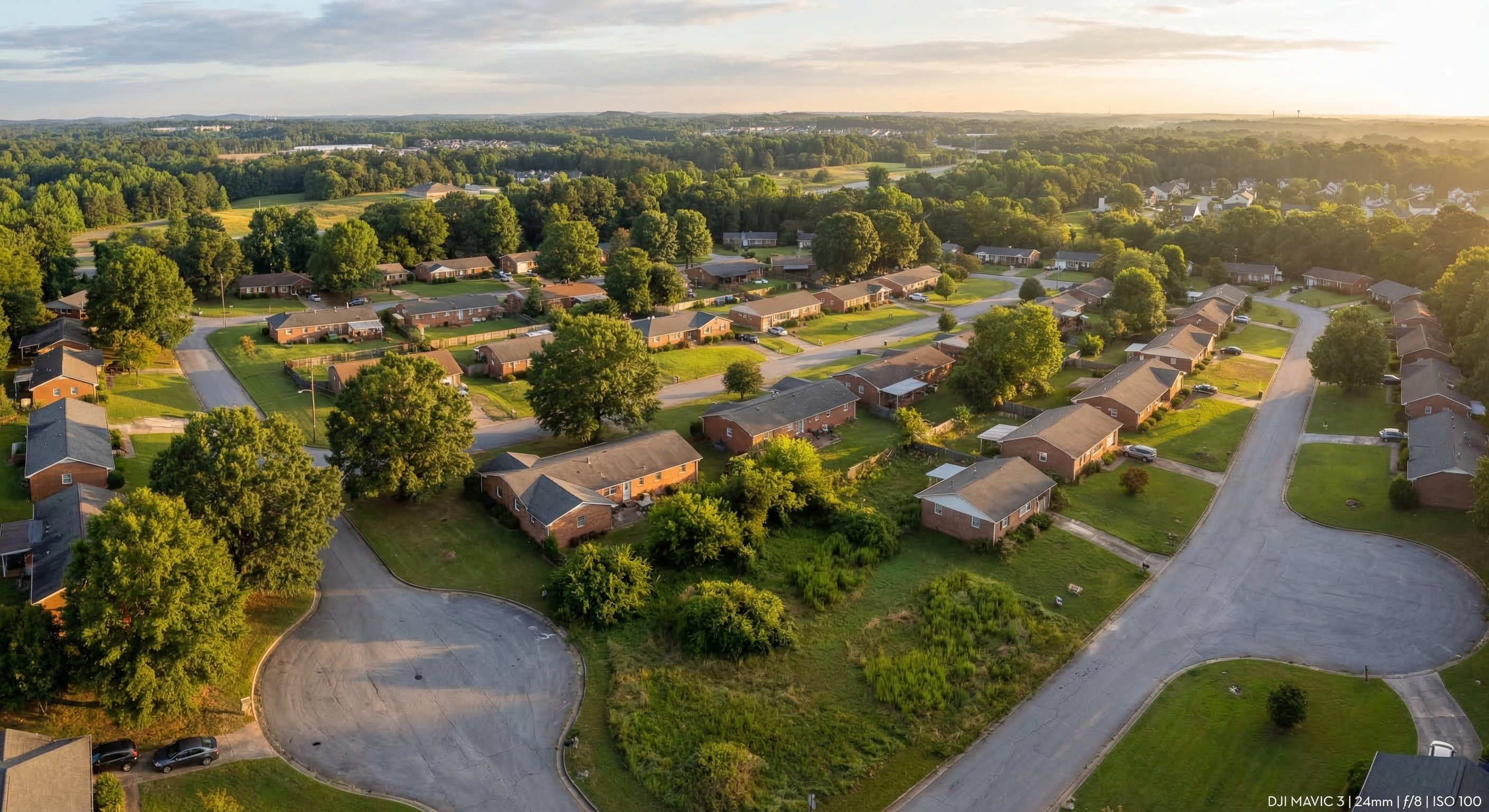
Atlanta didn't just survive the last decade of real estate volatility — it became one of the top investor destinations in the country. From 2012 to 2018, the metro drew waves of out-of-state capital looking for cheap entry points after the foreclosure crisis. Those investors bought, rented, and held. And now? Many of them are done.
That's what makes Georgia's absentee owner list so valuable heading into 2026. You're not chasing retail sellers who've been fielding offers for months. You're finding people who own properties 800 or 1,200 miles away, manage them through outdated property managers, and have slowly drifted from "investor" to "accidental landlord." That profile is a motivated seller — one that most competing investors never find because they're still working stale list services from last quarter.
What Is an Absentee Owner List in Real Estate?
An absentee owner list is a database of property owners whose mailing address doesn't match the property address. In practice, that means one of three things:
- Out-of-state investors who bought Georgia rentals and now manage them remotely
- Out-of-county landlords who live elsewhere in Georgia but don't occupy the property
- Inherited property owners who received a home through an estate but haven't moved in or sold
All three categories produce motivated sellers — but at different rates and for different reasons. Out-of-state investors with problem tenants or aging properties tend to move fastest. Heirs dealing with shared estate properties often move second-fastest once they understand their options. Long-term out-of-county landlords are the most patient, but the most receptive once you explain current market conditions relative to what they originally paid.
The key thing to understand: absentee ownership alone doesn't mean a seller is motivated. But stack absentee ownership with a tax delinquency, a code violation, or an approaching probate filing — and you've got a lead that most other investors will never surface. That signal layering is where the real edge lives.
Why Georgia Has One of the Richest Absentee Owner Pools in the South
Georgia — specifically the Atlanta metro — attracted more external real estate capital per capita than almost any market in the South during the post-foreclosure recovery. That wave created the absentee owner pool investors are working now.
The 2012-2018 buying wave. After Atlanta's housing market crashed harder than almost anywhere in the country (Fulton and DeKalb counties saw price declines exceeding 40% in many neighborhoods), institutional and individual investors flooded in from the Northeast and West Coast. They bought single-family rentals at 40–60 cents on the dollar. Over a decade later, those properties have appreciated 80–140%, and the economics of managing them remotely — across time zones, with increasingly complex tenant situations — have eroded significantly.
Institutional selloffs are creating retail ripples. According to ATTOM Data Solutions, Georgia ranks in the top five states nationally for investor-owned single-family rentals as a percentage of total housing stock. Major institutional landlords began quietly shedding Georgia assets starting in 2023, with a notable acceleration in Clayton, south Fulton, and DeKalb County. When institutional money signals it's time to exit, smaller operators follow.
Georgia's regulatory environment is shifting. Historically one of the most landlord-friendly states in the nation, Georgia has seen increased local pressure on tenant protections — particularly in Atlanta and DeKalb County. Out-of-state owners who bought on the premise of frictionless management are reassessing their exposure as local enforcement tightens.
COVID migration created new seller profiles. The pandemic brought a wave of residents from New York, Chicago, and Los Angeles into Atlanta — many of whom purchased Georgia properties as primary residences while retaining investment properties in their origin states. As circumstances change, those out-of-state holdings are often the first assets to sell.
According to data from the National Association of Realtors, approximately one in five single-family rentals in major Southern metros is owned by an investor whose primary residence is in a different state. In Atlanta's investor-heavy submarkets, that figure runs considerably higher — the investor concentration is not evenly distributed.
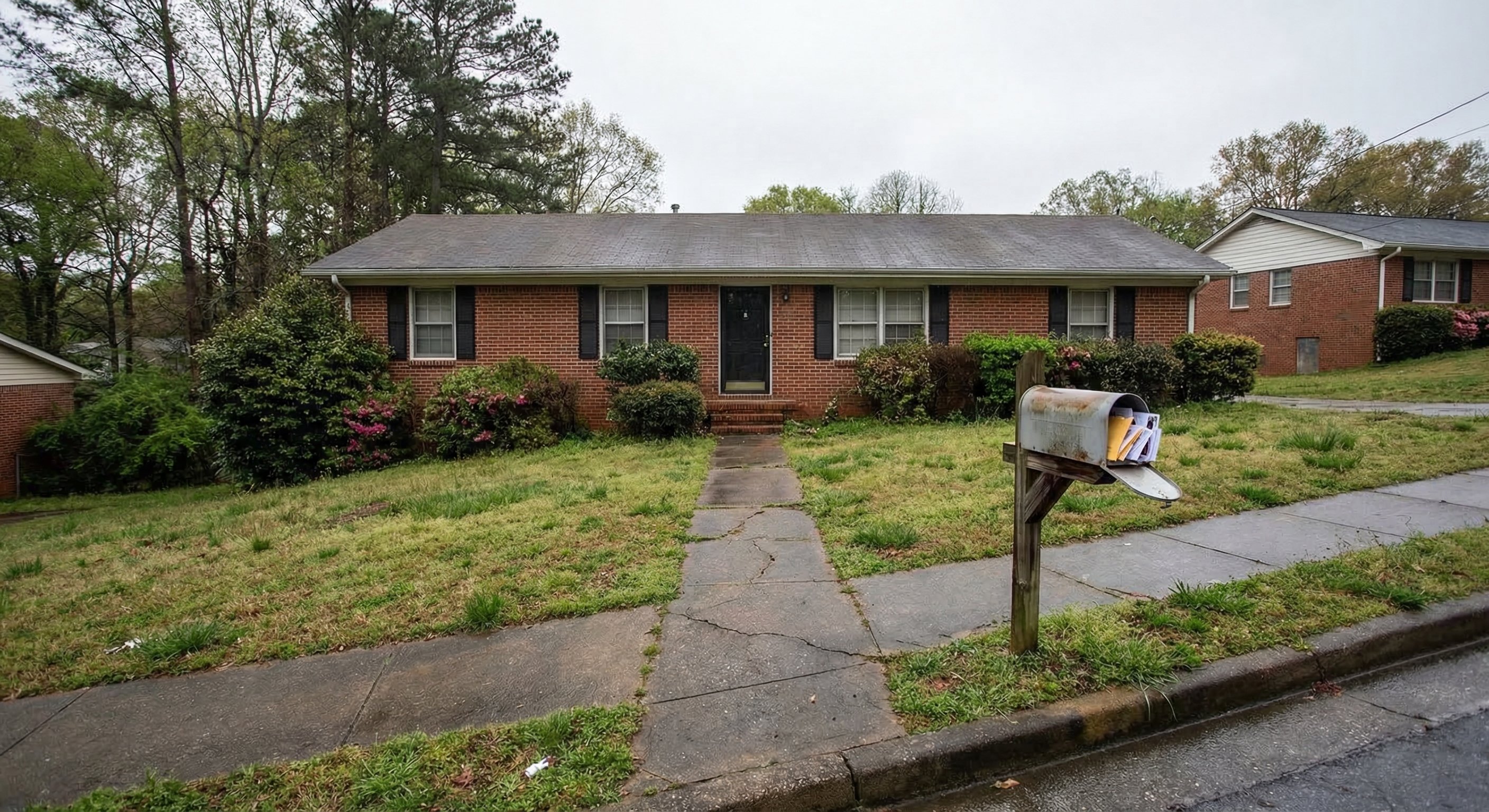
Top Counties for Absentee Owner Leads in Georgia
Georgia has 159 counties — more than any state except Texas. That geographic breadth means the absentee owner opportunity is distributed across far more jurisdictions than most investors recognize. Here are the highest-value markets to prioritize.
Fulton County (Atlanta Core)
The epicenter of Georgia's investor market. Fulton contains Downtown Atlanta, Midtown, Buckhead, and extends south through College Park, East Point, and Fairburn. The absentee ownership rate in south Fulton's residential corridors regularly exceeds 30% in specific zip codes. Fulton also generates the highest volume of probate and lis pendens filings in the state — making it the natural starting point for stacked signal searches.
DeKalb County
East of Atlanta, DeKalb absorbed heavy out-of-state buying activity from 2013 to 2019. Decatur, Stone Mountain, Lithonia, and Tucker attracted investors targeting affordable-entry neighborhoods with strong rental demand. Older housing stock, aging rental infrastructure, and rising maintenance costs are creating motivated seller conversations here at an accelerating rate.
Gwinnett County
The most populous county in Georgia outside Fulton, Gwinnett has seen rapid demographic shifts that have sometimes outpaced investor expectations regarding tenant mix and rental management complexity. Code enforcement activity in Gwinnett has also increased significantly since 2022. Out-of-state landlords with older properties here are increasingly fielding code notices and deferred maintenance decisions simultaneously.
Cobb County (Marietta, Smyrna, Powder Springs)
Northwest of Atlanta, Cobb attracts a somewhat different investor profile — typically higher-price-point buyers who purchased in appreciating suburban corridors. Absentee ownership rates are lower than DeKalb or south Fulton, but when motivated sellers appear here, they often control assets with ARVs in the $280,000–$450,000 range.
Clayton County (Jonesboro, Forest Park, Riverdale)
Often overlooked by investors new to the Atlanta market, Clayton has one of the highest concentrations of absentee-owned rental properties in the entire metro. Renter-to-owner ratios exceed 60% in many Clayton neighborhoods — which means more landlords, more management fatigue, and more potential sellers at any given time.
Secondary Markets: Chatham, Richmond, Bibb
Savannah (Chatham County) has seen investor interest surge since 2020, with out-of-state buyers targeting vacation rental and long-term rental properties near the historic district. Augusta (Richmond County) and Macon (Bibb County) both have established investor bases with aging rental stock — prime absentee lead territory with near-zero competition from wholesale buyers.
Free Weekly Alerts
See What's Distressed in Your Market
Get free weekly alerts — new distressed properties, motivation scores, and hot neighborhoods in your area. Addresses and contact info available inside DistressIQ.
Free forever · No credit card · Unsubscribe anytime
How to Access the Absentee Owner List in Georgia
There are three practical approaches to finding Georgia absentee owner data:
1. County Tax Assessor Records (Free, Fragmented) Each of Georgia's 159 counties maintains its own tax assessor database. Most allow you to search by comparing owner mailing address to property address. The challenge: you're working 159 different systems with 159 different interfaces and varying data quality standards. Fulton and Gwinnett have relatively modern portals; many smaller counties still use legacy systems that require manual PDF requests.
2. Paid List Services (Fast, but Often Stale) List vendors selling Georgia absentee owner data typically pull from consolidated public record aggregators. These lists are easier to obtain, but frequently 6–18 months out of date. You risk calling sellers on properties that have already been wholesaled, already sold retail, or already gone to tax sale.
3. County-Verified Daily Data (Professional Standard) DistressIQ pulls absentee owner data directly from county assessor records across all 159 Georgia counties. The data is assessor-verified — meaning it reflects what the county actually has on file, not a resold version processed months ago. Updates happen multiple times daily, not quarterly.
The real differentiator isn't just having the absentee owner list — it's knowing which absentee owners also have a tax delinquency, a code violation, or an active lis pendens. That's what 11M+ stacked signals across 31 signal types actually enables.

How to Work Georgia Absentee Owner Leads
Getting the list is step one. Knowing how to approach absentee owners in a way that actually converts is the real work.
Lead time matters more than volume. The highest-converting absentee owner conversations happen before the property becomes an obvious problem. Once a property goes tax delinquent or code violation notices start accumulating, the seller knows they have an issue. Arriving early — when they're still in "thinking about it" mode — positions you as an advisor, not a vulture.
Know the property before you call. Before making contact, understand the property's fundamentals: size and condition, purchase date and original price, current estimated value, hold period. If you know the owner has held for 10+ years and is out of state, you're not pitching the same conversation you'd have with someone who bought in 2022.
Respect the human context. Many Georgia absentee owners are individuals managing 1–3 properties they inherited, bought as a retirement investment, or acquired during a period of optimism that didn't pan out exactly as planned. Lead with genuine curiosity about their long-term plans, not urgency about their distress. "I invest in this neighborhood and have been interested in this block — have you given thought to your plans for the property?" is a real conversation. A scripted urgency call is not.
Use Georgia's foreclosure timeline as context, not a threat. Georgia is a non-judicial foreclosure state, which means the process moves fast — 60 to 90 days from notice of sale to auction in many cases, compared to 12–18 months in New York or New Jersey. Absentee owners falling behind on mortgages often don't know how narrow their window is. Explaining options respectfully — including the sell-now alternative — is more valuable than any cold script.
Stacking Signals: Why Absentee Alone Isn't Enough
Serious Georgia investors don't work absentee owner lists in isolation. They use absentee ownership as a filter, then layer additional signals to score and prioritize:
- Absentee + Tax Delinquent: Owner is behind on property taxes and lives out of state. Classic high-motivation profile.
- Absentee + Code Violation: Municipality has already flagged the property. Owner is receiving notices they need to act on.
- Absentee + Probate Filing: Property is in an estate managed remotely. Often a group of heirs who can't agree on anything except that they'd like to be done with it.
- Absentee + Long Hold (10+ years): Significant accumulated equity, declining management interest, and an easy conversation about current returns versus what they'd receive if they sold today.
DistressIQ tracks all 31 signal types simultaneously across Georgia's 159 counties. When an absentee owner property picks up a second signal — a tax delinquency, a code complaint, or a lis pendens — that property's distress score updates immediately, surfacing it before any competing investor finds it in a monthly list refresh.

Georgia-Specific Details Every Investor Should Know
Georgia is a tax deed state. Unlike tax lien states where investors buy the lien and earn interest during a redemption period, Georgia sells the actual deed at tax sale. This compresses the timeline for absentee owners with delinquent taxes — once a property is sold at tax sale, the original owner's redemption period is typically 12 months (or none, depending on the sale structure). Out-of-state owners who don't know Georgia's system often don't realize how close they are to losing the property outright.
Georgia tax sales run monthly. County superior courts hold tax sales on the first Tuesday of each month. Properties are publicly advertised for four consecutive weeks prior to the sale date. For active investors, this means a 30–45 day window to contact absentee owners before the sale — real urgency, not manufactured urgency.
Code enforcement is accelerating in metro Atlanta. Since 2022, code enforcement activity has increased noticeably in Clayton, DeKalb, and south Fulton — precisely the counties with the highest concentration of investor-owned rental stock. Out-of-state owners who can't easily coordinate repairs face fines that compound quickly. That pain point is one of the most reliable conversation starters in the market right now.
Georgia's transfer taxes are low. At $1 per $1,000 of sale price (0.1%), Georgia has some of the lowest real estate transfer taxes in the country. This removes one of the friction points that sometimes makes out-of-state sellers reluctant to act in higher-tax states.
Ready to find Georgia absentee owners before they show up on everyone else's list? DistressIQ verifies absentee owner data across all 159 Georgia counties from county assessors daily — and stacks it with tax delinquencies, code violations, lis pendens, probate filings, and 27 more signals. Founding member pricing: Starter $89/mo, Pro $174/mo, Elite $349/mo — fewer than 50 spots remaining at this rate. Start Your Free Trial at distressiq.ai
Key Takeaways
- Georgia's absentee owner pool is large and accelerating — driven by a decade of out-of-state investment and institutional selloffs that began in 2023.
- Metro Atlanta counties — Fulton, DeKalb, Gwinnett, Cobb, Clayton — hold the highest concentration of absentee-owned investor properties in the state.
- Georgia is a tax deed state. Absentee owners with delinquent taxes have less time than they typically realize.
- Stacking signals converts leads. Absentee ownership alone is a filter, not a deal. Absentee + tax delinquent + code violation is a priority lead.
- Daily county-verified data outperforms stale list services by months when it matters most.
Frequently Asked Questions
Q: How do I get a Georgia absentee owner list?
Georgia county tax assessors maintain public ownership records that include mailing addresses. You can identify absentee owners by comparing mailing addresses to property addresses county by county — or use a platform like DistressIQ that aggregates assessor-verified data across all 159 Georgia counties and updates it daily.
Q: Which Georgia county has the most absentee-owned properties?
Fulton County has the largest raw count of absentee-owned investor properties due to Atlanta's size and its decade-long history as a major investor target. However, Clayton and DeKalb counties have among the highest rates of absentee ownership as a percentage of total residential properties — often exceeding 30% in specific submarkets.
Q: What does "absentee owner" mean in real estate investing?
An absentee owner is a property owner whose mailing address differs from the property address. This includes out-of-state investors, landlords living in a different county, and heirs who inherited a property but don't occupy it. All three categories represent potential off-market sellers who are not actively listed on the MLS.
Q: Is the Georgia absentee owner list public record?
Yes. Property ownership records — including owner mailing addresses — are public record in Georgia and maintained by each county tax assessor. The data is available at no charge at the county level, though accessing it across all 159 counties requires significant manual effort or a data aggregation platform.
Q: How often is Georgia absentee owner data updated?
County tax assessors update ownership records when deeds are recorded, which happens on a rolling basis as transactions close. Stale list vendors refresh quarterly or less. DistressIQ pulls from county sources daily, so recent deed recordings and ownership changes surface quickly.
Q: How does Georgia's non-judicial foreclosure process affect absentee owners?
Georgia uses a non-judicial (power of sale) foreclosure process, meaning lenders don't need court approval to foreclose. From the date of the first published foreclosure notice, the process to auction can move in as little as 60–90 days. Many absentee owners — especially those out of state — don't recognize how fast this timeline moves relative to states they're more familiar with.
Q: What is the Georgia tax sale process for absentee-owned properties?
Georgia counties hold property tax sales on the first Tuesday of each month through superior court. Properties must be advertised in a local newspaper for four consecutive weeks before the sale. Georgia is a tax deed state, meaning the buyer at tax sale receives the deed directly — not just a lien. The original owner typically has a 12-month redemption period, though certain sale structures offer no redemption rights.
Want to find Georgia absentee owners before the rest of the market does? DistressIQ stacks absentee ownership data with 30 additional distress signals — tax delinquencies, code violations, probate filings, lis pendens, and more — across all 159 Georgia counties. Every lead is assessor-verified, updated daily.
The data behind this article
DistressIQ Monitors These Signals in Real Time
Pre-Foreclosures
NOD + NTS filings
Tax Delinquency
County treasurer records
Code Violations
Municipal inspection filings
Probate Filings
Superior Court records
Every lead is scored 0–100 for seller motivation based on signal type, duration, severity, and stacking. Nationwide coverage — every US county, updated daily.
Ready to find deals in your market?
See Live Distress Signals in Your County
Stop calling dead leads. Every lead in DistressIQ is scored 0–100 for seller motivation, with verified contact info included. Browse the free tier to see what's active in your market right now.
Browse Free Leads — No Credit Card