Vacant Property Leads Washington State: How Investors Find Vacant Properties in 2026
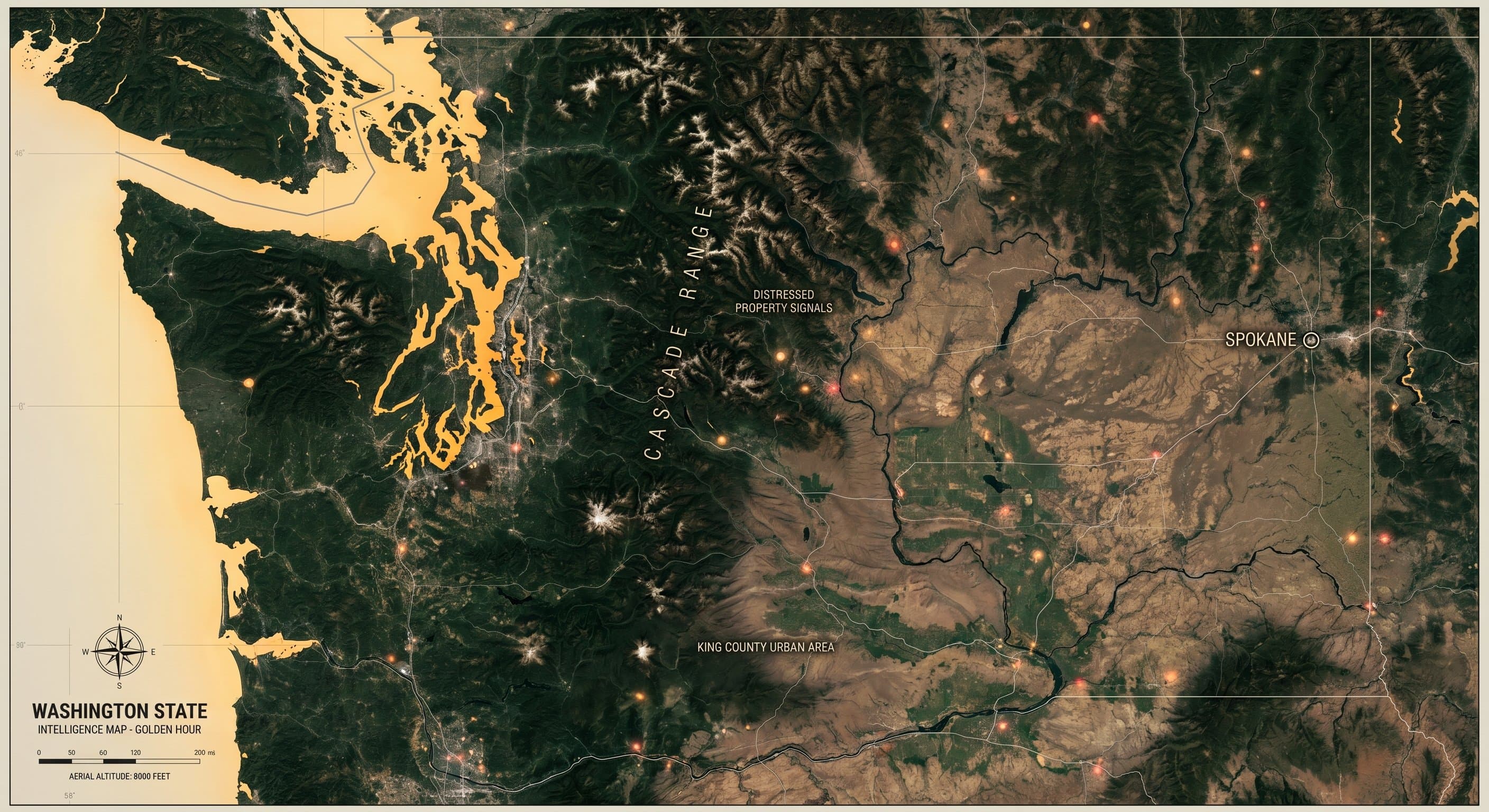
Vacant Property Leads Washington State: How Investors Find Vacant Properties in 2026
TL;DR: Washington State offers distinct advantages for investors targeting vacant property leads. The state's non-judicial foreclosure process via deed of trust takes roughly 240 days from notice of default to trustee sale, creating a predictable pipeline of distressed properties. King County (Seattle metro) properties carry the highest after-repair value potential but also the most competition. Eastern Washington markets like Spokane and Yakima offer lower acquisition costs with solid margins. The key to winning in any Washington market is identifying properties before they appear on institutional radar, which requires stacking multiple distress signals: vacancy combined with tax delinquency and code violations produces a motivation score that generic lead lists simply cannot replicate.
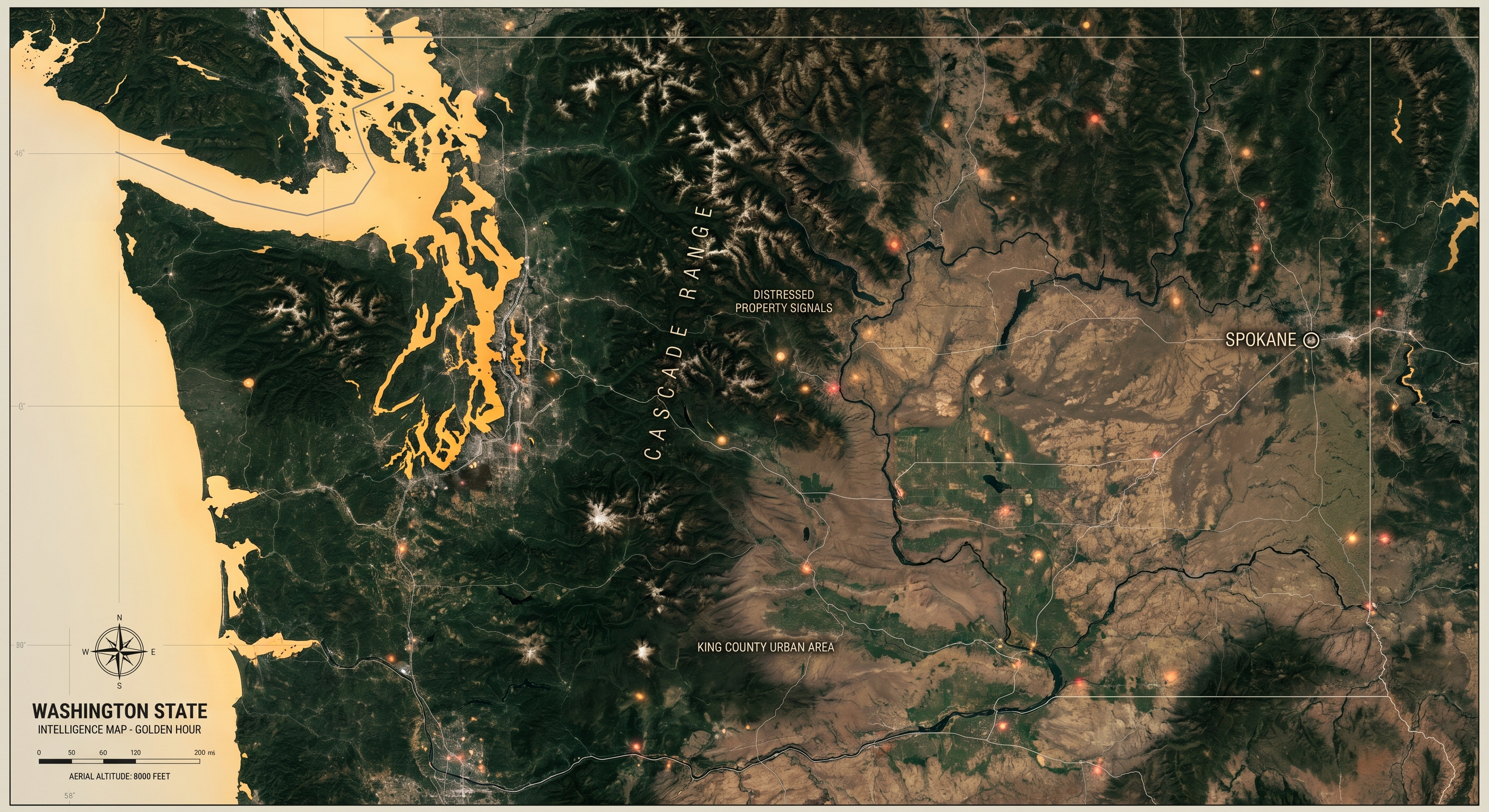
The Investor Opportunity in Washington Right Now
Every MLS listing in Seattle has twelve investors circling it. The same tired playbook, the same bandit signs, the same mailer campaigns. Meanwhile, Washington's vacant property pipeline runs quietly beneath the surface, fed by a foreclosure process that moves differently than most states.
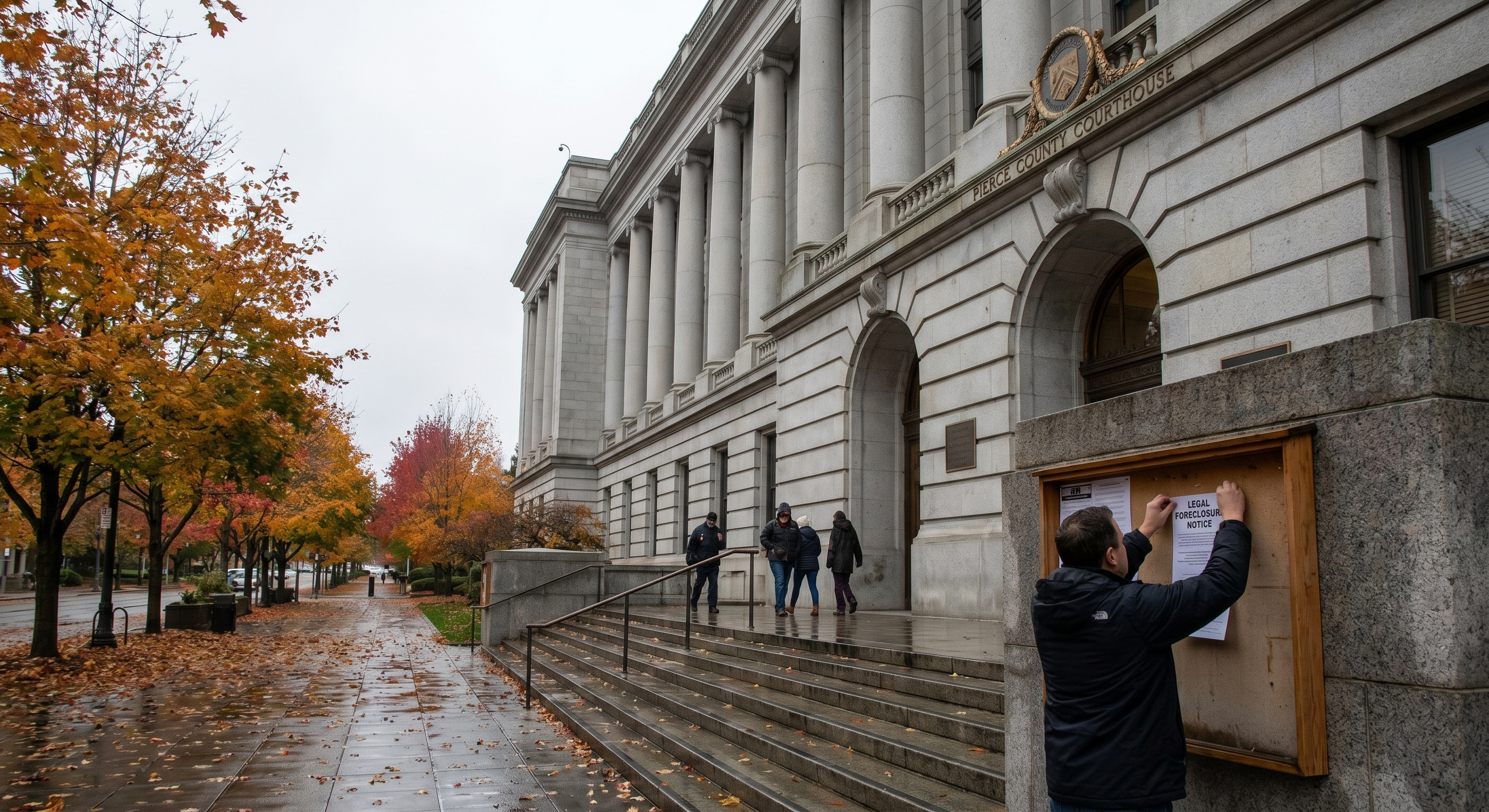
Washington is a non-judicial foreclosure state. Most residential mortgages written in the state use a deed of trust rather than a mortgage, which means lenders can foreclose without going through the court system. From the moment a borrower receives a notice of default, the clock starts on a roughly 240-day process that ends at a trustee sale on a Friday morning at the county courthouse, according to American Default Services. That timeline is not a bug for investors. It is the feature.
Most investors react to properties after they appear at auction or after they hit the market. By then, the motivated sellers have been picked over by institutional buyers with cash and instant decision-making capability. The opportunity for individual investors is finding properties before they reach that auction block.
DistressIQ stacks 20 plus distress signal types per property, sourced directly from county records and updated daily. Vacant property leads in Washington that also carry tax delinquency, code violations, or pre-foreclosure status are scored by motivation level. Hot leads rise to the top. The research happens before you ever pick up the phone.
Understanding Washington's Distressed Property Landscape
The Non-Judicial Foreclosure Timeline
Washington deed of trust foreclosures follow RCW 61.24, the Deeds of Trust Act. The timeline from first missed payment to auction typically runs approximately 240 days, broken into distinct phases:
Days 1-30: Notice of default issued. The trustee on behalf of the lender sends written notice to the borrower by both first-class and certified mail, and posts a copy on the property itself. This is the window where investor outreach can intercept the situation before it escalates. The borrower is still in the home and has the most motivation to negotiate a pre-foreclosure sale.
Days 31-90: Redemption period. Washington requires a minimum 30-day period between notice of default and notice of sale recording. During this window, borrowers can cure the default and stop the foreclosure. Many do not. Investors who contact owners during this phase often find the most motivated sellers.
Days 91-190: Notice of sale period. The trustee records the notice of sale with the county auditor and publishes it in a legal newspaper twice. The sale must be scheduled at least 90 days after notice of sale recording and at least 120 days after the notice of default. This is where you will see properties appearing on public foreclosure lists.
Day 191 plus: Trustee sale. Held on a Friday between 9am and 4pm, typically at the county courthouse steps. The property sells to the highest bidder. The beneficiary or lender can credit bid up to the amount owed. After the sale, the former owner has approximately 20 days to vacate before eviction proceedings begin.
Washington's mandatory mediation program adds a wrinkle. Borrowers can request mediation up to 90 days before the sale date under RCW 61.24. Washington Law Help provides free resources for homeowners navigating this process. This can occasionally extend timelines and gives motivated sellers a structured opportunity to find a solution before losing the property. The practical implication for investors: track the actual sale date on the county auditor's site, not just the projected timeline.
Why Vacant Properties Compound Distress
A home sitting vacant in Washington is not just one problem. It is multiple compounding problems, each one adding urgency for the owner.
Property taxes in Washington are assessed annually and accumulate fast. Washington has no state income tax but relies more heavily on property taxes relative to home value compared to some neighboring states. A vacant home with unpaid taxes accrues penalties and interest, and counties can eventually petition to sell the property at a tax sale if delinquency stretches past redemption periods.
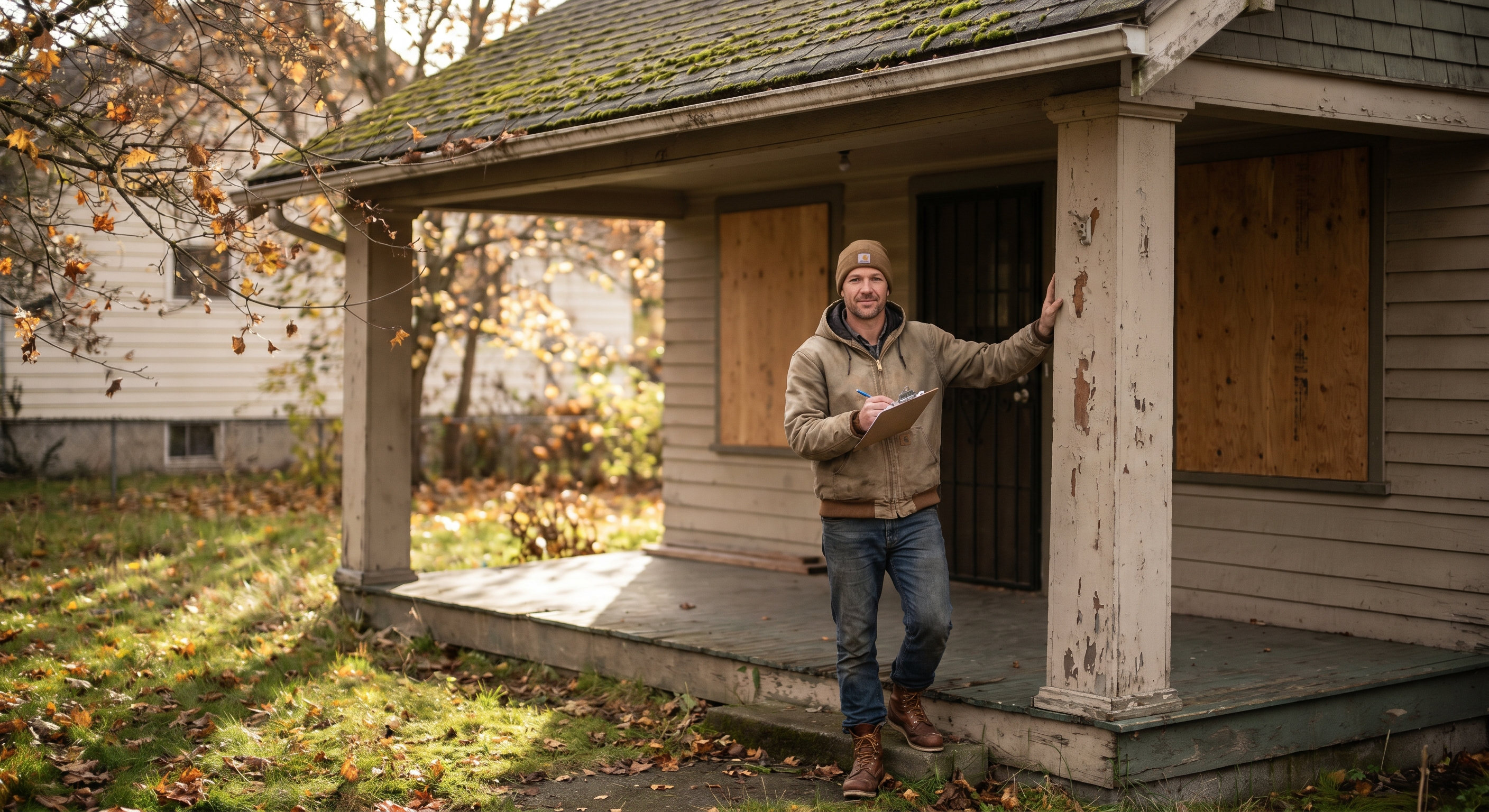
Maintenance does not pause when a property is vacant. Washington's wet climate accelerates deferred upkeep. Moss grows on roofs, moisture penetrates siding, and wooden structural elements deteriorate faster than in arid climates. A property that looked merely cosmetic from the outside often conceals water intrusion damage that adds tens of thousands to renovation budgets.
Squatter risk is real. Washington law provides certain protections for squatters that can complicate eviction timelines compared to other states. An investor buying a vacant property with unauthorized occupants faces a more involved legal process than a simple lock change.
The distress signal stacking approach works particularly well in Washington because vacant properties tend to accumulate multiple flags simultaneously. A property that is vacant AND tax delinquent AND has code violations from city inspection has been through a documented deterioration process. The owner has had multiple chances to resolve each issue and has not. That cumulative failure is what produces genuine motivation.
How to Find Vacant Property Leads in Washington Counties
County-Direct Data
Washington's 39 counties publish property records digitally through county assessor and auditor websites. Per RCW 61.24, trustee sales must be held on a Friday between 9am and 4pm at a public location specified in the notice. The trick is not finding the data. The trick is filtering it for distress signals without spending forty hours per county.
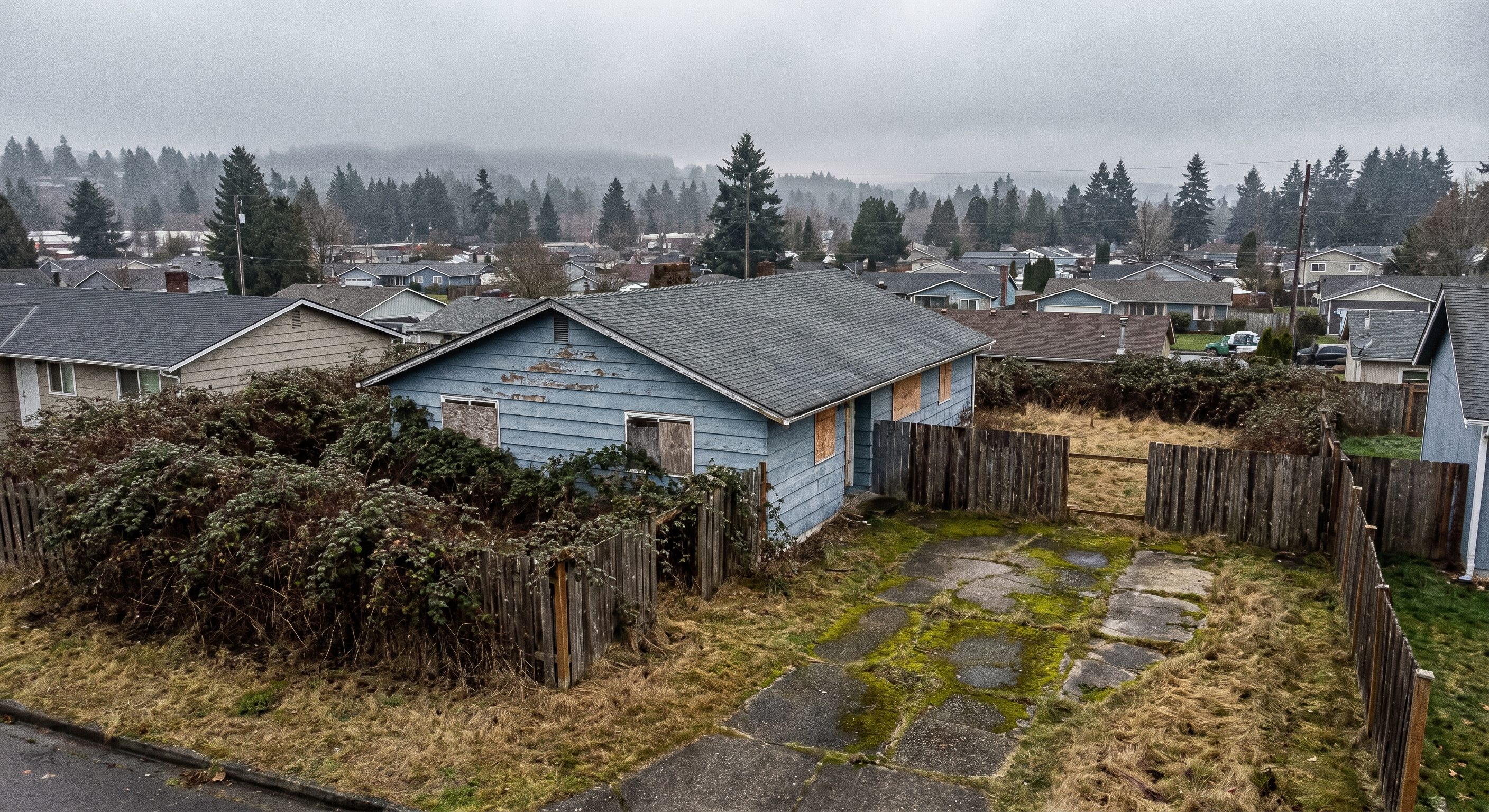
The distressed property signals that matter most for Washington vacant leads:
- Absentee ownership -- Properties where the mailing address differs from the property address. Absentee owners are the most likely to sell without occupying the property, and they are the primary target for cash offers. In King County alone, roughly 18-22% of residential properties are classified as absentee-owned.
- Tax delinquency -- Properties with delinquent taxes create urgency. Washington tax sales operate on redemption periods. If a property is past the redemption window, it may be available at a significant discount.
- Code violations -- Cities like Seattle, Tacoma, and Spokane maintain nuisance property registries. Properties on these lists have been inspected and found in violation. The city wants them resolved.
- Pre-foreclosure filings -- Properties with notice of default recorded but not yet sold at trustee sale. This is the highest-value window for investors because the owner is still there and still has legal standing to sell.
- Trustee sale recordings -- Properties scheduled for auction. These are time-sensitive leads where the owner has lost the ability to stop the sale except by reinstating the full loan amount, which most cannot do.
Manually pulling this data means visiting county auditor websites for King, Pierce, Snohomish, Spokane, Clark, and the remaining 33 counties. Cross-referencing assessor data with current occupancy assumptions. Filtering out properties that are merely seasonally unoccupied, such as vacation homes or snowbird properties. Validating that the property is actually vacant and not just an unconfirmed mailing address mismatch. This is the full-time work that automated data systems handle.
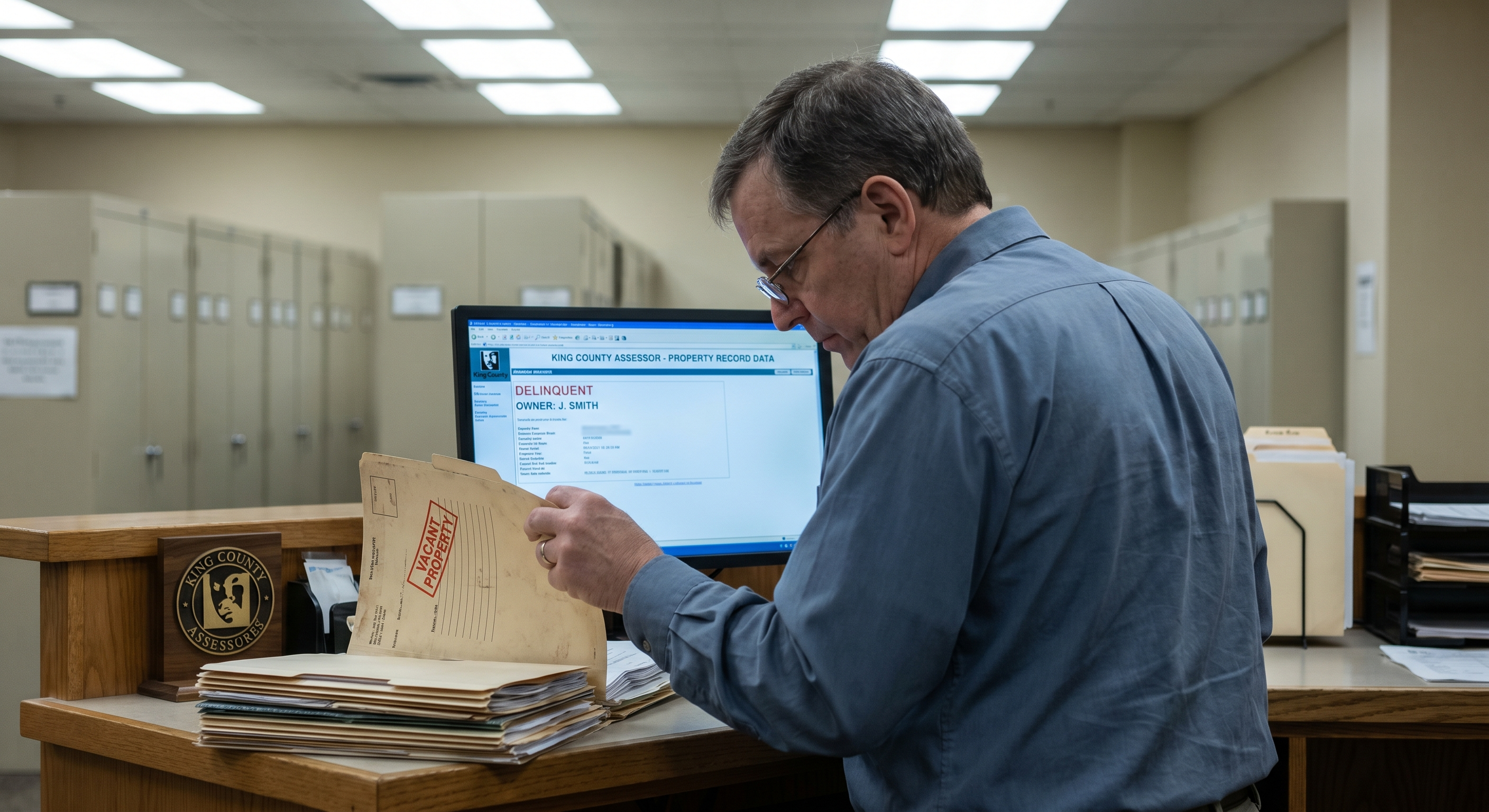
County-by-County Breakdown for Washington Investors
King County (Seattle Metro) The most competitive market in the Pacific Northwest. Median home values in Seattle proper exceed $800,000. Vacant distressed properties here carry the highest after-repair value potential but also the most aggressive competition from institutional buyers, iHouse cash offers, and well-funded fix-and-flip operators. Distressed properties that hit the market in Seattle typically receive multiple offers within the first week. The advantage for individual investors is finding properties before they are publicly listed. King County's nuisance property list is maintained by Seattle's Department of Construction and Inspections and includes properties with outstanding code enforcement cases.
Pierce County (Tacoma) The most affordable of the Seattle metro counties with median home values roughly 35-40% below King County. Tacoma's revitalization momentum, including the Stadium District, Proctor District, and Hilltop, creates active flip markets. Vacant properties in Pierce County tend to be older construction from the 1920s through 1960s with more deferred maintenance than Seattle properties but lower acquisition costs. The trustee sale volume in Pierce County runs higher than King County on a per-capita basis.
Snohomish County (Everett, Lynnwood) North of Seattle along the I-5 corridor. More suburban character than King or Pierce. Distressed properties here attract buyers priced out of Seattle who are looking for reasonable commute access. Foreclosure volume is moderate.
Spokane County (Eastern Washington) The largest city in eastern Washington with a distinct market from the Puget Sound corridor. Median home values run significantly lower than western Washington, in the $350,000-$450,000 range. Older housing stock, early 1900s Craftsman homes and mid-century ranches, is common. Renovation budgets tend to run higher per square foot than acquisition cost premiums suggest because old construction in a cold climate hides deferred maintenance well. The motivation level among vacant property owners in Spokane tends to be higher than Seattle because owners who abandon properties in a lower-appreciation market have fewer financial options.
Clark County (Vancouver, WA) Across the Columbia River from Portland, Oregon. Growing market with significant new construction activity. Clark County's proximity to Portland creates a regional investor pool. Distressed vacant properties here attract both Washington and Oregon investors. The cross-state dynamics mean competition can spike unexpectedly when Portland investor demand migrates across the river.
Yakima County and Tri-Cities (Richland, Kennewick, Pasco) Agricultural region with more affordable housing. Vacant and abandoned properties here tend to be rural homesteads, mobile homes on larger lots, or properties in small towns where employment bases have contracted. Acquisition costs can be very low. Renovation budgets are unpredictable because rural properties often have well and septic systems that require specialized inspectors.
Free Weekly Alerts
See What's Distressed in Your Market
Get free weekly alerts — new distressed properties, motivation scores, and hot neighborhoods in your area. Addresses and contact info available inside DistressIQ.
Free forever · No credit card · Unsubscribe anytime
The Investor Workflow for Washington Vacant Properties
Finding Properties Before the Market Does
The most common mistake investors make in Washington is waiting for vacant properties to appear on the public market. By the time a vacant home is listed, the owner has already explored other options and is at the point of accepting a below-market offer. You want to be there during the earlier phase, when the owner is actively avoiding the situation.
Monitoring county records directly is the foundation. Washington county auditor websites are public. The notices of default and trustee sale recordings are indexed by date and are searchable. A daily scan of recent recordings across King, Pierce, and Snohomish counties takes about twenty minutes with the right data system.
DistressIQ provides this monitoring across all 39 Washington counties, with daily updates from county sources. Properties are flagged the moment a distress signal appears, before most investors are aware the property has entered the pipeline. Vacant properties combined with tax delinquency or code violations surface with elevated motivation scores. This is the lead list.
Evaluating a Washington Vacant Property Lead
Once a property appears in your pipeline with multiple distress signals, the evaluation sequence:
Step 1: Street View and aerial preview. DistressIQ includes built-in Street View and aerial imagery on every lead. Before you drive to the property or call the owner, you can see whether it looks genuinely vacant, overgrown yard, accumulation of mail or flyers, visible deterioration, or whether it is a false positive, owner is home but mailing address is different. This is a ten-second check that prevents wasted trips.
Step 2: County assessor verification. Pull the property's current assessed value, tax status, and property characteristics from the county assessor. In King County, assessor data is updated annually and is available online. In Spokane County, assessor data is updated on a similar schedule. Verify that the assessed value supports your offer arithmetic before proceeding.
Step 3: Code violation check. For properties in Seattle, check the SDCI nuisance property database. For Tacoma, check the city's code enforcement records. A property with open code violations means the city has already documented the problem. Use this to adjust your renovation budget downward accordingly.
Step 4: Motivation call. Contact the owner directly using the skip-traced contact information. The opening should acknowledge what you know, that the property is vacant, that there are financial or property management pressures, without being aggressive. Owners in this situation respond better to directness than to a soft pitch.
What to Do This Week
The investors finding the best deals in Washington are not the ones who have been doing this the longest. They are the ones with the best data.
Sign up for DistressIQ and run a filter for Washington vacant properties with secondary distress signals: tax delinquency, code violations, or pre-foreclosure status. Sort by motivation score. You will have a ranked list of the highest-potential leads in the state within minutes. The properties that appear at the top are the ones that have accumulated multiple failure signals. Those are the calls to make this week.
Browse Washington distressed properties by county and signal type at DistressIQ.
Frequently Asked Questions
How long does foreclosure take in Washington State?
Non-judicial foreclosure via deed of trust typically takes approximately 240 days from the notice of default to the trustee sale. The timeline breaks down to roughly 30 days minimum between notice of default and notice of sale, then at least 90 days between notice of sale recording and the actual sale date. Washington also has a mandatory mediation program that can extend timelines if borrowers request it before the sale date.
Can I buy a property before the trustee sale in Washington?
Yes. A pre-foreclosure sale is possible at any point before the trustee sale is completed. The owner must generally have lender approval to accept less than the mortgage payoff, which requires demonstrating financial hardship. The window between notice of default and trustee sale recording is typically the most productive period for contacting owners who are still in the property and have not yet engaged legal representation.
What counties in Washington have the most distressed properties?
King County (Seattle metro) has the highest raw volume of distressed and vacant properties due to its size, but also the most competition from institutional buyers. Pierce County and Spokane County offer the best combination of distressed property volume and reduced competition. Clark County (Vancouver) has active distressed property markets driven by cross-state Portland investor demand.
Are Washington trustee sales open to the public?
Yes. Trustee sales in Washington are public auctions held at the county courthouse, typically on Fridays between 9am and 4pm. Any party can bid, including individual investors. The winning bidder must pay in cash or certified funds immediately following the auction. Properties sold at trustee sale typically go to the highest bidder, and lenders frequently credit bid the amount owed to protect their interest.
What is the redemption period for Washington tax deeds?
Washington does not have a single unified redemption period applicable to all tax sales. Redemption periods vary by county and by the type of tax sale. In general, property owners have a redemption period during which they can reclaim the property by paying the delinquent taxes plus interest and penalties. Once the redemption period expires and the county sells the property at tax sale, the new owner generally takes free and clear of the former owner's interest.
DistressIQ tracks vacant property leads across all 39 Washington counties, updated daily from county records.
The data behind this article
DistressIQ Monitors These Signals in Real Time
Pre-Foreclosures
NOD + NTS filings
Tax Delinquency
County treasurer records
Code Violations
Municipal inspection filings
Probate Filings
Superior Court records
Every lead is scored 0–100 for seller motivation based on signal type, duration, severity, and stacking. Nationwide coverage — every US county, updated daily.
Ready to find deals in your market?
See Live Distress Signals in Your County
Stop calling dead leads. Every lead in DistressIQ is scored 0–100 for seller motivation, with verified contact info included. Browse the free tier to see what's active in your market right now.
Browse Free Leads — No Credit Card