PropStream vs DistressIQ: Why the Data Source Matters More Than the Feature List
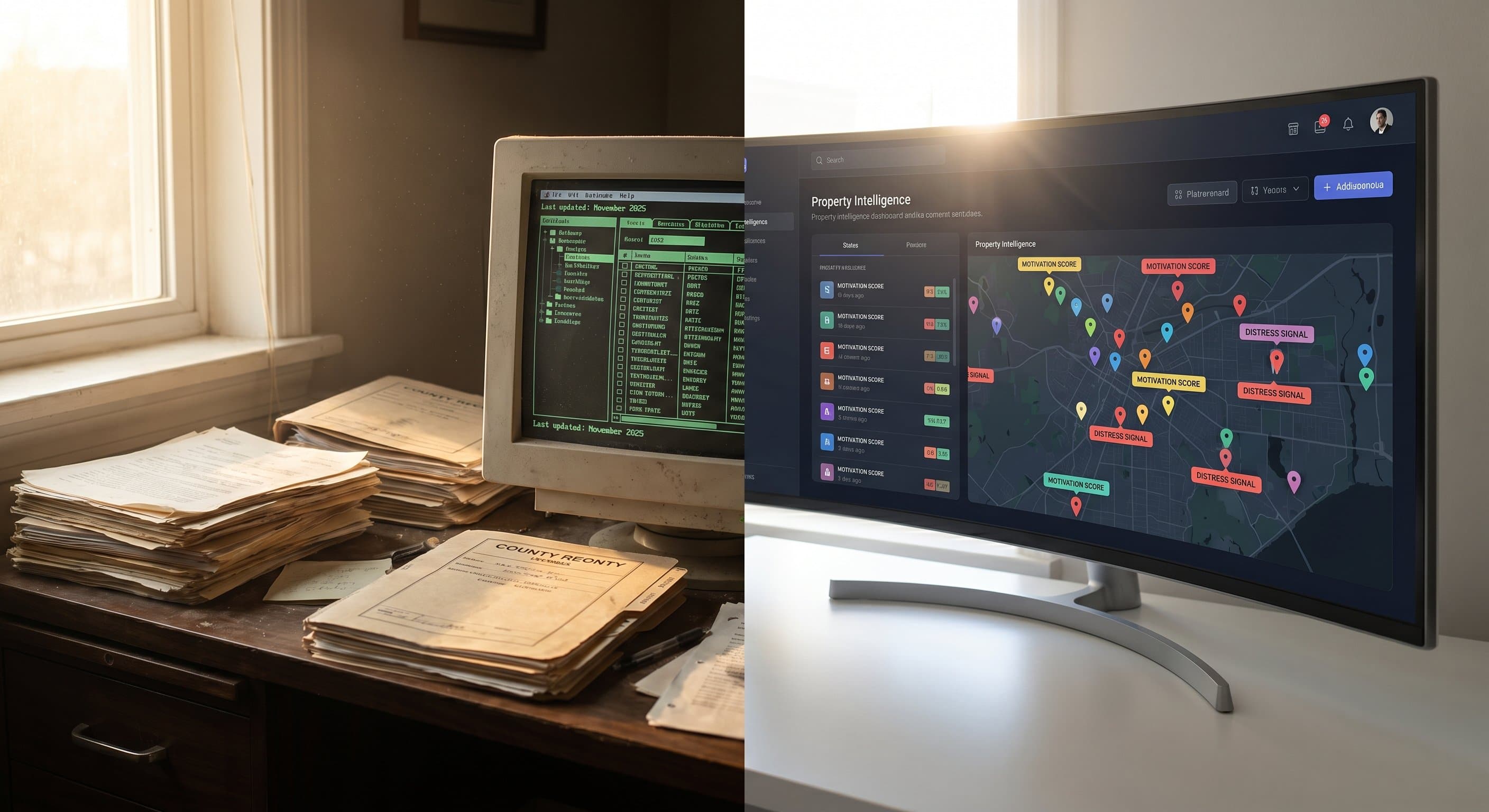
TL;DR: PropStream and DistressIQ are fundamentally different data architectures – PropStream aggregates from bulk data warehouses serving 160M properties, while DistressIQ pulls verified distress signals directly from county records updated daily. For investors hunting motivated sellers, this distinction determines whether you're calling people whose situation changed last week or last quarter. PropStream acquired BatchLeads in July 2025; data freshness complaints are documented across BiggerPockets, Reddit, and Trustpilot. DistressIQ wins on signal quality, data freshness, and pricing transparency.
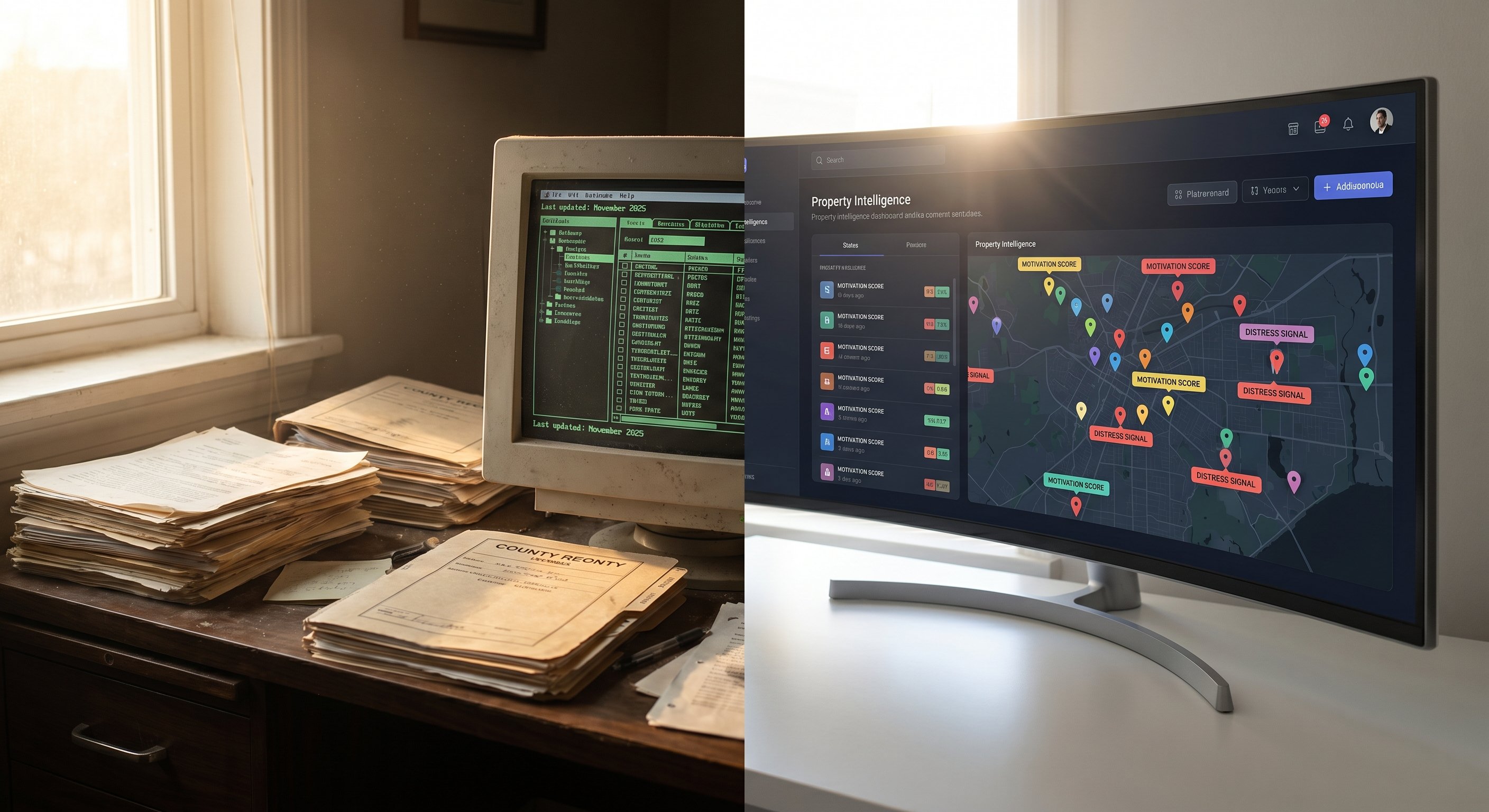
When you're doing 10 deals a month, the math is brutally simple. Every call that goes nowhere costs you the skip trace credit. Every mailing to a stale record is money down the drain. Every hour you spend fighting a clunky export process is an hour you're not talking to a motivated seller.
The platform you use shapes all three. And when PropStream acquired BatchLeads in July 2025, it didn't just consolidate two companies – it signaled where the property data industry is heading: fewer players, bulk data warehouses, and prices set by companies with decreasing incentive to improve.
Here's what the actual comparison looks like, and why the data source matters more than the feature count.
What the PropStream Acquisition Actually Changed

PropStream announced its acquisition of BatchLeads and BatchDialer on July 7, 2025. Both companies operate under Stewart Information Services Corporation (NYSE: STC). The combined entity now serves both platforms' customer bases – meaning thousands of investors who used BatchLeads for lead gen are now on a platform owned by the same parent company that owns PropStream.
The investor community noticed. Reddit threads on r/WholesaleRealestate filled with posts titled things like "Should I be looking for alternatives?" within weeks of the announcement. The concern wasn't just about competition – it was about data quality. When one company controls both PropStream and BatchLeads, there's less pressure to maintain data freshness or improve quality. You can't vote with your feet when there's nowhere to go.
BatchData – BatchLeads' underlying data supplier – acknowledged in its own press release that PropStream is now one of its largest customers. That's a significant detail: PropStream is both licensing data from BatchData and competing with it. For investors, this raises a straightforward question: if the data layer is shared, what exactly are you paying premium PropStream pricing for?
The acquisition also affects pricing dynamics. BatchLeads users who want to escape are now shopping for alternatives with the same data source potentially lurking under whatever new platform they choose. DistressIQ sidesteps this because its data architecture is different – county-direct, not aggregated from a bulk license.
The Core Architectural Difference
Most investors don't think about data architecture. They think about features, UI, and price. But the architecture is what determines whether a platform gives you current information or last quarter's snapshot.
PropStream operates as a data aggregator. It licenses bulk property data – ownership records, transaction histories, assessments – from companies like ATTOM Data and CoreLogic. That data is refreshed on a batch cycle. For most counties, PropStream's data is 30 to 90 days old at any given moment. This is not a secret; PropStream's own support documentation acknowledges that records "pulled from the county level" are updated daily – but that refers to when PropStream's systems refresh, not when county records change. The lag between a real – world event (a lis pendens filing, a sheriff's sale, a tax delinquency) and when that event appears in PropStream's database is measured in weeks.
DistressIQ operates as a county-direct platform. It pulls verified distress signals from individual county sources – court filings, tax assessor records, code enforcement databases – and updates daily. When a lis pendens is filed Tuesday morning in Harris County, Texas, DistressIQ can surface it Wednesday. The practical difference for investors: you're calling someone in week one of a pre – foreclosure situation instead of week nine, when fifty other investors have already left voicemails.
This is the distinction that actually matters, and it's why the "160 million properties" marketing number doesn't mean what PropStream implies. More properties with stale distress data is not better. It's just more noise.
Data Freshness: What the Numbers Say
A February 2025 BiggerPockets thread documented PropStream data failures in specific detail. One investor ran comps for a property in Springdale, Arkansas and found that PropStream showed a property as having sold – with a new owner – when the actual county records showed the transaction had closed eight months prior. The investor cross-checked with county records directly and confirmed PropStream was showing data from a 10-year-old sale as a comparable.
A Reddit review from February 2025 on r/WholesaleRealestate noted: "The data freshness issue is real. I had the same experience where properties showed as 'owner occupied' months after they'd sold."
Trustpilot reviews for PropStream from 2025 and early 2026 echo the same pattern. Common complaints: properties showing stale ownership information, inaccurate sales data, and comps pulled from records that predate the current decade.
A comparison study by Tracerfy in January 2026 found that data aggregator platforms (including PropStream's model) showed contact accuracy rates of 50 to 70 percent for records 90 to 180 days old, and nearly worthless accuracy for records over a year old. County – direct data pulled within 48 hours of ordering showed accuracy rates that were materially higher.
For real estate investors, stale ownership data isn't just annoying – it's expensive. Every skip trace credit you spend calling a property that sold six months ago is money lost. Every direct mail piece sent to a previous owner is wasted postage. The freshness gap compounds over time.
Free Weekly Alerts
See What's Distressed in Your Market
Get free weekly alerts — new distressed properties, motivation scores, and hot neighborhoods in your area. Addresses and contact info available inside DistressIQ.
Free forever · No credit card · Unsubscribe anytime
What DistressIQ Does Differently
DistressIQ was built around one observation: most investors don't need 160 million property records. They need the 200 to 500 distressed properties in their target market that have active, current distress signals. The difference between those two numbers is the entire value proposition.
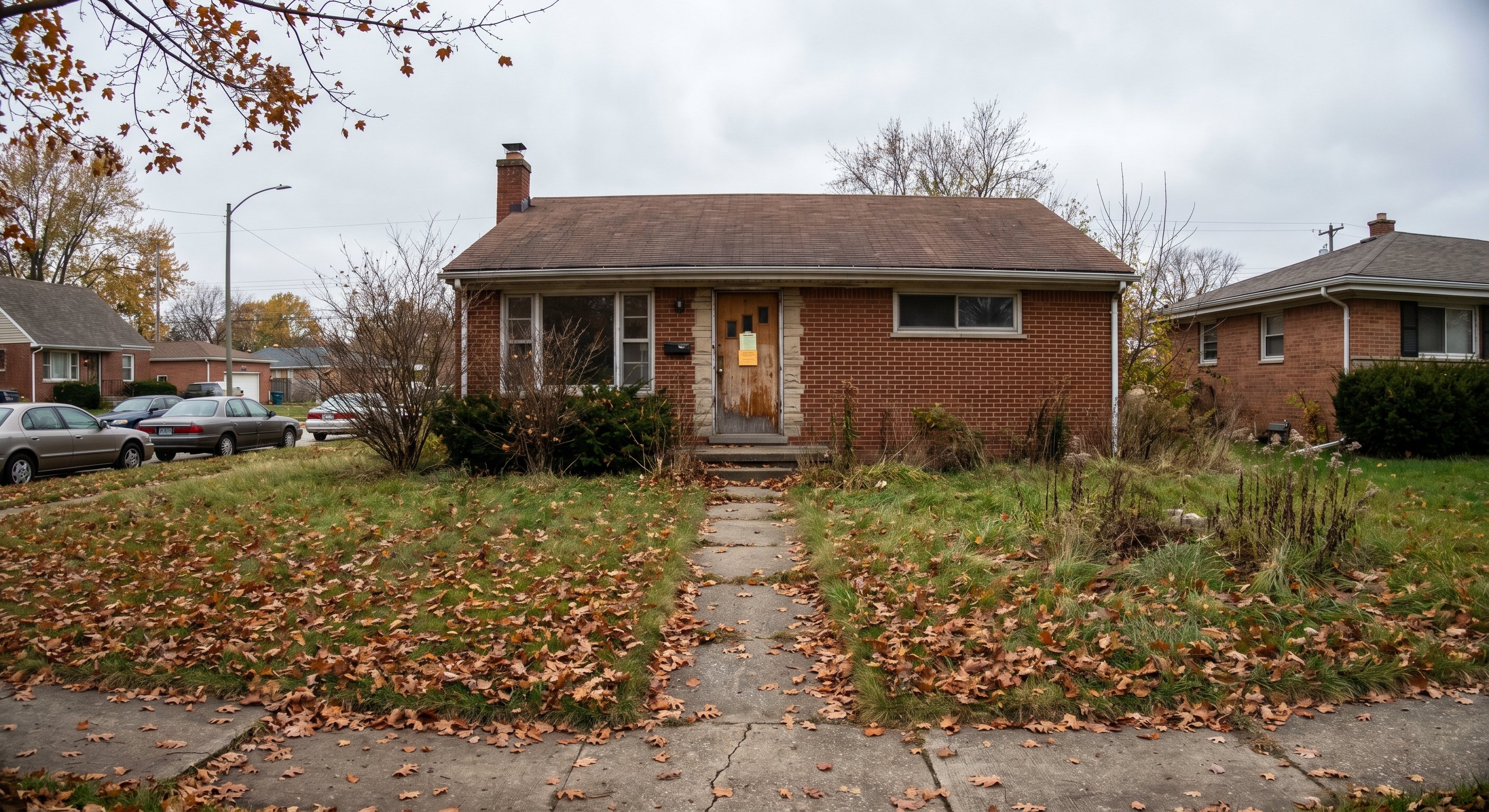
The platform surfaces only properties with verified distress – pre – foreclosure filings, tax delinquency, lis pendens, probate proceedings, code violations, and 20 – plus other signal types. Every property on DistressIQ has at least one active signal. PropStream shows you everything, and then relies on you to figure out who's motivated.
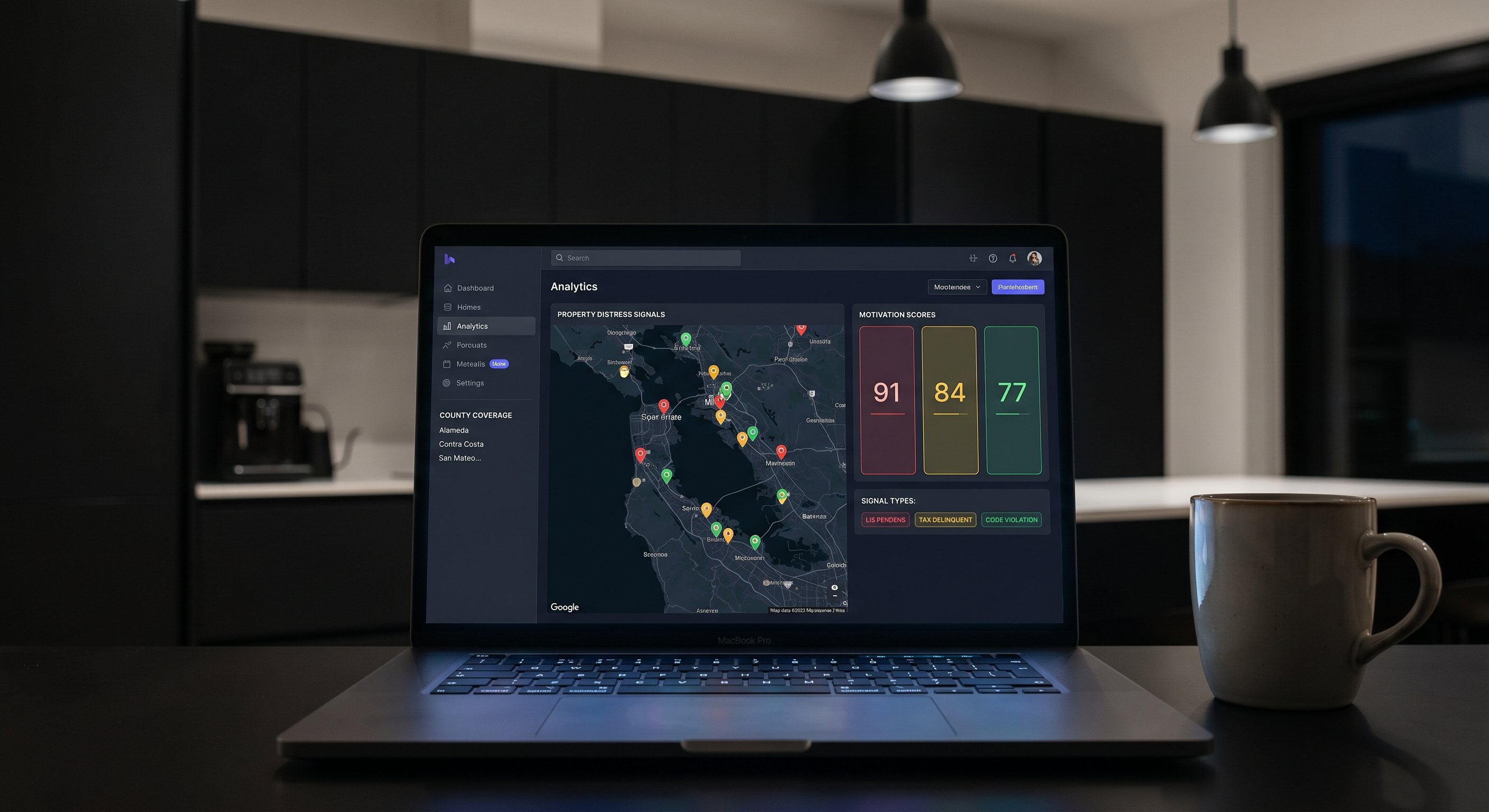
The motivation score (0 – 100) is the practical differentiator. PropStream shows you a property record and says "here's everything we know." DistressIQ shows you a property record and says "here's a 91 – score motivated seller with four stacked distress signals, including a recent lis pendens filing – call this person first." The score aggregates signal type, signal recency, stacking depth, and urgency indicators into a single number.
Stacking multiple distress signals matters because the same property showing tax delinquency and a code violation is more likely to need a solution fast than a property with a single, months – old tax delinquent filing. Investors working from single – signal lists miss this. They're calling people whose situation may have already resolved, or who aren't yet in acute enough distress to take action.
The Property Data Accuracy Problem
Beyond distress signals, there's a separate data quality issue that affects every investor's economics: property characteristics.
PropStream largely relies on MLS and public record data for property details – square footage, bedroom count, lot size. A 2024 investigation by a Kansas City investor found 3,800 MLS listings with fabricated bedroom and square footage data. An NAR study found that MLS sale prices differed from HUD – 1 actual settlement data in approximately 8.75 percent of transactions – meaning one in eleven MLS comps may be materially wrong.
County assessor records are the legal source of truth for property characteristics. They are independently measured, tax – code verified, and updated by the government. DistressIQ uses assessor – verified data where available – meaning when a lead card shows square footage or assessed value, it's based on what the county actually recorded, not what an agent typed into an MLS listing.
For investors calculating ARV (after repaired value), this matters. If you comp a property using MLS data that inflates square footage by 15 percent, you'll make an offer based on a comp that doesn't exist. The county assessor says 1,890 square feet. MLS says 2,400. Which one do you trust when the deposit is on the line?
Pricing and What You're Actually Paying For

PropStream's entry price is $99 per month for limited exports, with add – on costs for skip tracing ($0.10 to $0.12 per record), ringless voicemail, and direct mail. High – volume users report monthly costs of $300 to $500 once skip trace credits and export overages are included. The 10,000 export limit per month can feel restrictive for active investors – PropStream's own marketing acknowledges that their List Automator add – on is "almost essential for serious users."
DistressIQ pricing is transparent: Starter $129 per month (2,000 lead detail views), Pro $249 per month (5,000 views, team features, daily digest alerts), Elite $499 per month (10,000 views, real – time alerts, API access). Skip tracing costs $0.08 per record – slightly below PropStream's rate – with credits that never expire. Annual plans take 20 percent off. Founding member pricing locks in 30 percent off for life: Starter $89, Pro $174, Elite $349 per month.
The meaningful difference: DistressIQ browsing is free and unlimited. You can see the map, see the signals, see the motivation scores, and evaluate the data before spending a dollar. PropStream requires a subscription before you see what you're getting. For investors who want to verify data quality before committing, that distinction matters.
What PropStream Does Well
If your primary goal is comps and ARV analysis, PropStream has a legitimate use case that DistressIQ doesn't replicate. PropStream's CMA tools and MLS integration are more developed for agents doing traditional comparative market analyses for listing purposes. DistressIQ's sweet spot is investor acquisition: finding motivated sellers before the competition, with fresher data, at a lower per – contact cost. If your primary goal is finding motivated sellers faster, with fresher data, at a lower total cost per contact – the comparison tilts clearly toward DistressIQ.
The Bottom Line for Your Deal Flow
PropStream acquired BatchLeads in July 2025. One company now owns both platforms. Data freshness complaints are documented across BiggerPockets, Reddit, and Trustpilot. The pricing structure rewards high – volume users who can absorb export limits and add – on skip trace costs.
DistressIQ's county-direct model means fresher distress signals, a verified motivation score that tells you who to call first, and assessor – verified property data that doesn't require cross – checking against county records before you make an offer. The free browsing tier means you can verify the data quality in your target market before committing.
Stop searching 160 million properties. DistressIQ shows only verified distress signals, scored by motivation. Call the 90s first.
See your market free – no credit card required.
Frequently Asked Questions
Q: How is DistressIQ different from PropStream?
PropStream is a data aggregator that licenses bulk property data for 160 million properties. DistressIQ focuses only on properties with verified, active distress signals – pre – foreclosure, tax delinquent, lis pendens, probate, code violations, and 20+ other signal types. Where PropStream gives you everything and asks you to filter, DistressIQ gives you only the properties where a verified distress signal indicates a motivated seller. DistressIQ also updates daily from county sources rather than batch refreshing from a data warehouse.
Q: Does PropStream's acquisition of BatchLeads affect existing users?
It affects both PropStream and BatchLeads users. With one company now controlling both platforms, there is reduced competitive pressure to maintain data quality and freshness. BatchData – the underlying data supplier for BatchLeads – explicitly noted in its acquisition announcement that PropStream is now one of its largest customers, meaning the data layer is shared between the parent company and the competitor it acquired. Investors using either platform are essentially licensing from the same bulk data infrastructure.
Q: How much fresher is county-direct data compared to aggregated data?
County – direct platforms like DistressIQ update daily from county sources. When a lis pendens is filed or a property enters tax delinquency, that signal can appear in the platform within days. Data aggregators like PropStream batch refresh on cycles of 30 to 90 days for most counties. The practical difference: a homeowner in week one of a pre – foreclosure situation is a fundamentally different lead than one in week nine – yet a stale list may show both at the same stage without indicating how old the signal is.
Q: What is the motivation score on DistressIQ?
The DistressIQ motivation score (0 – 100) ranks properties by how likely the owner is to need a solution quickly. It aggregates signal type (some signal types correlate with higher urgency), signal recency (newer signals score higher), stacking depth (properties with multiple concurrent signals score higher), and severity indicators. A property with a 91 motivation score and four stacked signals – recent lis pendens, tax delinquency, code violation, absentee owner – is a different call target than a single – signal property from 2024.
Q: Is DistressIQ more expensive than PropStream?
The entry points are similar: PropStream starts at $99 per month for limited data, DistressIQ starts at $129 per month for the Starter plan. PropStream's add – on costs (skip tracing at $0.10 to $0.12 per record, ringless voicemail, direct mail, List Automator for higher export limits) can push effective monthly cost to $300 to $500 for active investors. DistressIQ's Starter plan at $129 includes 2,000 lead detail views, and founding member pricing locks in 30 percent off for life. Skip tracing on DistressIQ costs $0.08 per record with non – expiring credits.
Q: Can I use DistressIQ for comparable market analysis?
DistressIQ is designed for motivated seller acquisition, not listing – side comp analysis. Its strength is distress signal filtering and motivation scoring – finding properties with active, verified distress signals and ranking them by urgency. For traditional CMA work, PropStream's MLS integration and comp tools are more developed. For investors whose primary workflow is finding motivated sellers before the auction, DistressIQ's data freshness and signal stacking are purpose – built for that task.
Q: Does DistressIQ really have nationwide coverage?
Yes. DistressIQ covers every US county – more than 3,200 – with distress signals updated daily from county sources. Coverage is not limited to major metros; county-direct data aggregation covers all counties, not just the top 40 investor – heavy markets.
The data behind this article
DistressIQ Monitors These Signals in Real Time
Pre-Foreclosures
NOD + NTS filings
Tax Delinquency
County treasurer records
Code Violations
Municipal inspection filings
Probate Filings
Superior Court records
Every lead is scored 0–100 for seller motivation based on signal type, duration, severity, and stacking. Nationwide coverage — every US county, updated daily.
Ready to find deals in your market?
See Live Distress Signals in Your County
Stop calling dead leads. Every lead in DistressIQ is scored 0–100 for seller motivation, with verified contact info included. Browse the free tier to see what's active in your market right now.
Browse Free Leads — No Credit Card